REVIEW · LONDON
Thomas Cromwell’s Wolf Hall Tudor London Walking Tour
Book on Viator →Operated by Ye Olde England Tours · Bookable on Viator
Thomas Cromwell’s London feels like a puzzle. This private walking tour stitches together Tudor power, legal Inns, and City of London landmarks, then finishes at Traitors’ Gate with the Tower Hill scaffold site close by. I especially like the way it nudges you off the obvious sights and into places most people walk right past, and I like that hotel pickup helps you start without stress.
The route is built around London’s legal district and the City’s dramatic Tudor-era aftermath, so you get both mood and context—not just stand-and-photo stops. One thing to consider: it’s a lot of ground on foot in a short window, so you’ll want comfortable shoes and a steady pace.
A big part of what makes this tour click is the guide. In past tours, Stephen has been praised for being very on-the-ball with details, staying fun and factual at the same time, and steering you through small streets and tucked-away lanes where the stories land better.
In This Review
- Key things you’ll love on this Wolf Hall Tudor walk
- Wolf Hall to real streets: what this Thomas Cromwell walk is really about
- Price and timing: is $271.76 per person worth it?
- Getting set up: pickup, meeting point, and staying comfortable
- Stops 1–7: Staple Inn and the Inns of Court where law shaped Cromwell’s world
- Stops 8–11: Tudor theatre history, the Henry VIII divorce plot, and the shift into the City
- Stops 12–18: Great Fire lessons, executions, and memorials that replace the missing buildings
- Stops 19–25: Cromwell’s City base at Austin Friars, plus churches and landmarks with everyday calm
- Stops 26–27: Traitors’ Gate and Tower Hill scaffold site—how the ending lands
- How the guide makes the difference (and why it’s worth paying attention)
- Who should book this tour, and who might not love it
- Should you book the Thomas Cromwell Wolf Hall Tudor London Walking Tour?
- FAQ
- How long is the Thomas Cromwell Wolf Hall Tudor London Walking Tour?
- Where does the tour start and end?
- Is hotel pickup included?
- Is the tour private?
- Are entry tickets included for stops like Staple Inn or St Paul’s Cathedral?
- What language is the tour offered in?
Key things you’ll love on this Wolf Hall Tudor walk
- Hotel pickup included so you can start the day with less friction
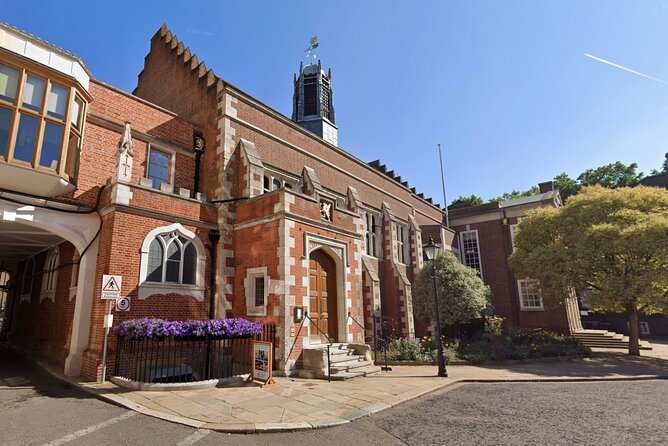
- Legal London focus at Gray’s Inn, Gray’s Inn Chapel, and Lincoln’s Inn
- Stops in non-touristy corners like Maughan Library and Playhouse Yard
- You’ll see major monuments from a smart angle, including St Paul’s Cathedral
- Clear emphasis on the Tudor world around Henry VIII, Cromwell, and the City of London
- The ending ties it all together outside Traitors’ Gate and at Tower Hill
Wolf Hall to real streets: what this Thomas Cromwell walk is really about
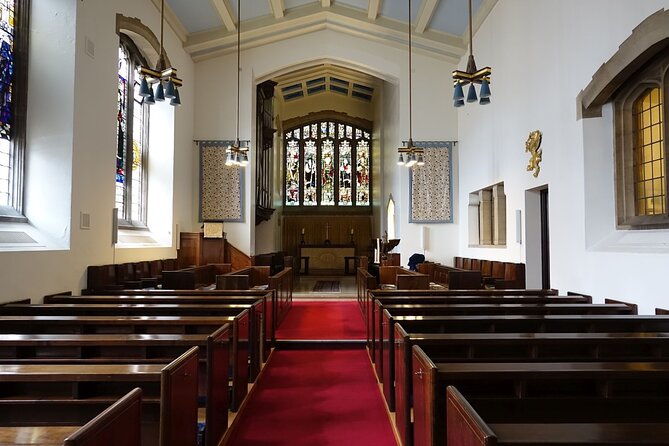
This isn’t a tour where you only chase famous buildings. It’s built like a guided route through the places where power, law, money, and punishment overlapped in Tudor London. If you like when history has fingerprints—signatures on documents, legal decisions, and old institutions that still shape the city—you’ll feel right at home here.
What I like best is the balance between “see this” and “understand why.” You’ll look at Tudor architecture like Staple Inn’s striking façade, then get the why: it was tied to wool trading, weighing, and taxes. Then the tour keeps moving, connecting those legal and civic institutions to the broader Cromwell story and to the consequences that followed.
You also get two London vibes in one afternoon. First, you’re in the older, quieter legal lanes around the Inns of Court. Then you shift into the City of London, where post-medieval upheavals, religious conflict, and the Great Fire leave visible traces—sometimes in memorial plaques and “only-in-London” corners.
You can also read our reviews of more tours and experiences in London.



Price and timing: is $271.76 per person worth it?
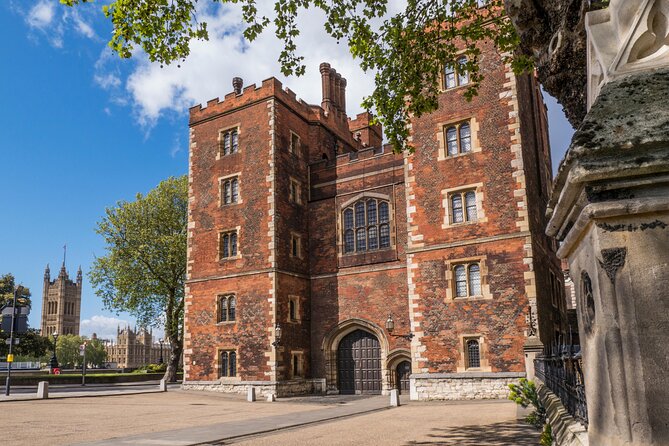
At about 3 hours for the private tour, the price—$271.76 per person—really makes sense if you value a focused route over a long, random wander. A private format means you’re not squeezed into a crowd and you can move at the pace that works for you. For many visitors, that’s the difference between collecting facts and actually following the thread of a story.
One practical note: past guests have also described a longer version (they mentioned a five-hour walk with Stephen). So if you want more time to ask questions at each stop and soak up the City’s geography, ask whether an extended version is available for your dates.
In terms of value, the tour is strong because many stops are free to view from outside or include free entry options (Gray’s Inn, Gray’s Inn Chapel, and multiple City memorials). A handful of places have separate admission (like Staple Inn, London Silver Vaults, and St Paul’s Cathedral viewpoints), so you’ll want to budget a little extra if you plan to go inside everything possible.
Getting set up: pickup, meeting point, and staying comfortable
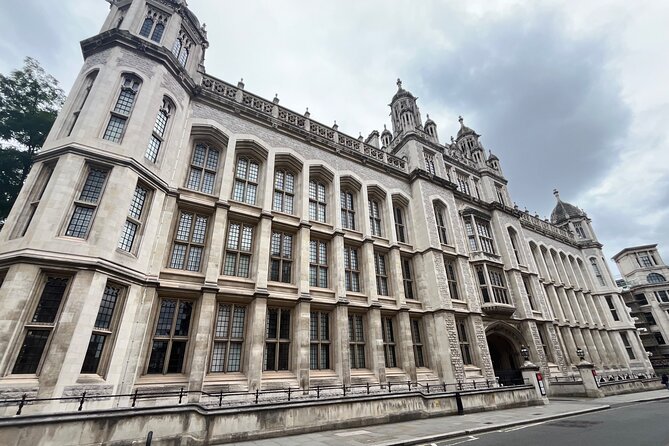
You start and finish at Traitors’ Gate (London EC3N 4AB), right by the Tower of London area. That’s a smart choice because it keeps the narrative tight: you’re building up to the Tudor consequences, then ending at the infamous entry point.
Hotel pickup is offered for convenience, and there’s also an option to meet near Chancery Lane Underground Station. Tube tickets are not included, so you’ll either use your own contactless/paid tickets or factor in how you’ll get to Chancery Lane and back. If you’re staying in central areas, that pickup option can save real time.
This walk also calls for moderate physical fitness. You’re hopping between neighborhoods with short viewing stops, which means you’ll be on your feet for the duration. The good news: because many stops are brief, you get a lot of story per minute.
Stops 1–7: Staple Inn and the Inns of Court where law shaped Cromwell’s world
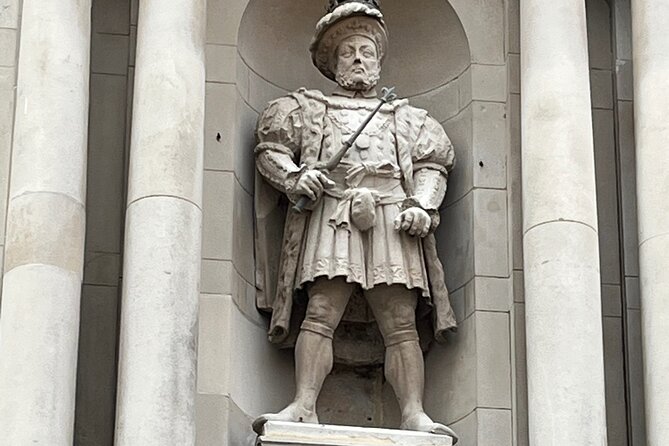
The tour starts with Staple Inn, one of the most prominent Tudor façades in London. The building’s original structure dates to 1585, when it functioned as a wool staple—where wool was weighed and taxed. It survived the Great Fire, was refaced later, restored in the 1800s and 1900s, and even took bombing damage in 1944. That layering matters: you’re seeing not just Tudor London, but how London kept rebuilding itself.
Next comes Gray’s Inn, tied directly to Thomas Cromwell’s life. He was elected as a member, so the area isn’t just backdrop—it’s part of how he’d have understood the institutions and the rhythms of the legal quarter. The tour includes time for the grounds and buildings, and you’ll want to know it can sometimes be closed on weekends.
Then you step into Gray’s Inn Chapel. Even though it was built for Inn members, it’s open to worship and respectful visitors, so you can experience the space without needing a scholar’s pass. It’s a calm break from the busy street edges—perfect for resetting your brain before the City gets louder.
After the Inn world, you pass The London Silver Vaults, where fine English silver, antiques, and objets d’art are stored in underground vaults. It’s a short stop, but it highlights the money-and-power side of the City: Tudor London wasn’t only about courts and sermons. It was also about trade, collections, and elite goods in places that feel deliberately protected.
You’ll then visit Lincoln’s Inn, another prestigious legal establishment. On weekdays, there’s a chance you might glimpse inside depending on access, while weekends can bring closures. Either way, the point is that Cromwell’s London was threaded through these Inns—institutions that shaped careers, networks, and influence.
By the time you reach this stretch, you’ll notice the tour’s main method: it keeps reminding you that Tudor England ran on systems. Buildings weren’t just scenery; they were infrastructure for decisions that affected real lives.
Stops 8–11: Tudor theatre history, the Henry VIII divorce plot, and the shift into the City
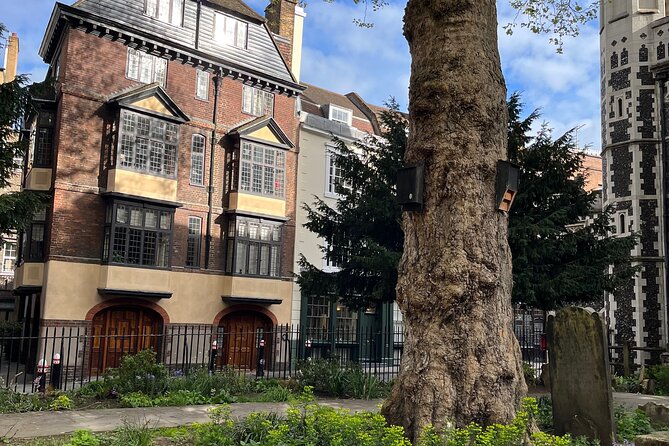
One of the clever parts of the route is that it keeps changing the tone of the street scene. At Playhouse Yard, you’re shown a location tied to a famed Tudor theatre. Even if you only get a quick look, it helps you remember that London wasn’t just law and politics—it had entertainment, spectacle, and culture packed into the same urban fabric.
The tour then highlights a crucial turning point for the Henry VIII and Queen Katherine of Aragon divorce. Near Church Entry, you’ll hear that the plans for the divorce were hatched from there. That’s the kind of detail that makes the tour feel like more than a list of monuments. You’re walking through an environment where decisions of enormous consequence were being worked out behind ordinary-looking doors and corridors.
Next is Blackfriars, with small surviving ruins of an abbey/prior that Henry VIII seized and closed down as part of the Reformation era. Nearby is Whitefriars, and you’ll also visit that area. This is where the story starts showing you the cost of religious and political change, not just the ideology.
Then you get a major skyline landmark: St. Paul’s Cathedral. The stop is short and focuses on what you can see from a distance, but it’s a big emotional marker. St Paul’s rose from the ashes after the Great Fire and narrowly escaped destruction in the Blitz. Even if you’ve seen photos before, standing near the City’s energy with St Paul’s in view gives you a strong sense of continuity—London rebuilds itself, again and again.






Stops 12–18: Great Fire lessons, executions, and memorials that replace the missing buildings
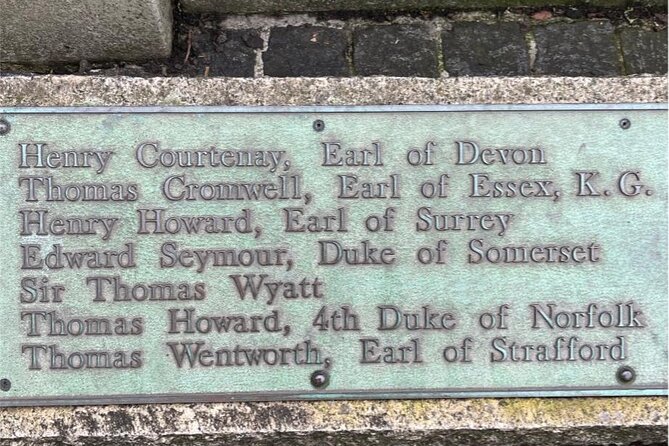
If you want Tudor London with sharp edges, this middle stretch delivers. You’ll learn about the Golden Boy of Pye Corner and its role in the story of the Great Fire of London. Then you move to the William Wallace Memorial, marking where William Wallace met his end. It’s a reminder that London’s punishment story isn’t only Tudor—it’s also about earlier conflicts and later interpretations.
The walk also pauses at the Great Rising of 1381 Memorial, which commemorates the Peasants Revolt. It’s the kind of stop that widens the lens: when you’re tracing Tudor power struggles, it helps to remember earlier moments when ordinary people pushed back against authority.
Next is St Bartholomew’s Gatehouse, a Tudor-looking gatehouse with remarkable history. Since admission isn’t included, you’ll decide on the spot whether you want to pay to step in, or simply take in the exterior and the explanation from outside.
You’ll then stand at the Smithfield Martyrs’ Memorial, where Protestant bishops were burned at the stake under Queen Mary. That’s one of the tour’s most sobering stops, and it matters because it shows how religion wasn’t a polite debate. It was punishment with witnesses, schedules, and smoke.
The route continues into Christchurch Greyfriars Church Garden, tied to Cromwell’s involvement with the dissolution of the church. The space is now a memorial garden after bombing in World War II. This is a powerful moment for anyone who likes the way London’s physical scars become part of the story.
Finally, you reach Milk Street, connected to Sir Thomas More’s birthplace. You’ll also hear how More later met his end at Tower Hill. The tour uses these points like bookmarks: you don’t just learn names—you learn where names link to locations you can stand on.
Stops 19–25: Cromwell’s City base at Austin Friars, plus churches and landmarks with everyday calm
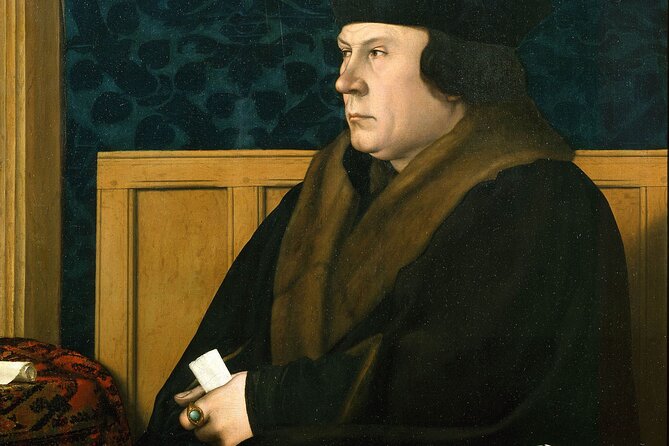
This part of the tour is where the “Wolf Hall” feel starts to deepen, because you move into places Cromwell is tied to more directly.
At Austin Friars, you’ll hear that after the dissolution it became one of Cromwell’s domains and his main residence in the City of London. That’s not a random historical footnote—it’s the anchor that explains why the route keeps returning to the same neighborhood logic: legal power and household power in close proximity.
Next comes Drapers’ Hall, now the grand home of the Drapers Livery Company. It’s described as one of the few reminders of Cromwell’s home in the City, which makes the stop more than a pretty building. Admission isn’t included, so you’ll likely appreciate the façade and the guide’s context rather than plan on an inside visit.
Then you’ll pause at the Dutch Church, once a church for friars and now a quiet refuge from the financial center. For me, stops like this are what turn a tour from “I saw stuff” into “I felt the places.” It gives you a breather and shows how the City can be both intense and oddly still.
After that, you’ll visit St Helen’s Church, Bishopsgate. It’s noted as the largest parish church in the City of London, and it sat atop suspected Roman or Saxon foundations. Before the Reformation, it was a nunnery. That layering is exactly why the route works: the Tudor era is present, but it sits on deeper foundations.
You’ll then pass Fenchurch Street, now transformed, while the tour references another Cromwell connection nearby. This is an example of the guide using streets like evidence markers—small comments that help you map Tudor London without needing to see every intact building.
At The Maypole of Shaft’s Court, the tour connects a street marker to a line from Wolf Hall, where Henry VIII mentioned the maypole when meeting Anne of Cleves and the thought of marrying her. The real-world point: it’s a physical object in the cityscape that helps a literary scene feel grounded.
Then you pass St Olave’s Church, described as ancient and associated with Charles Dickens and Samuel Pepys. The route also connects Pepys to the Great Plague and the Great Fire. This is one of those stops where you realize London history isn’t siloed—Tudor politics, 17th-century diarists, and 19th-century writers all occupy the same streets.
Stops 26–27: Traitors’ Gate and Tower Hill scaffold site—how the ending lands
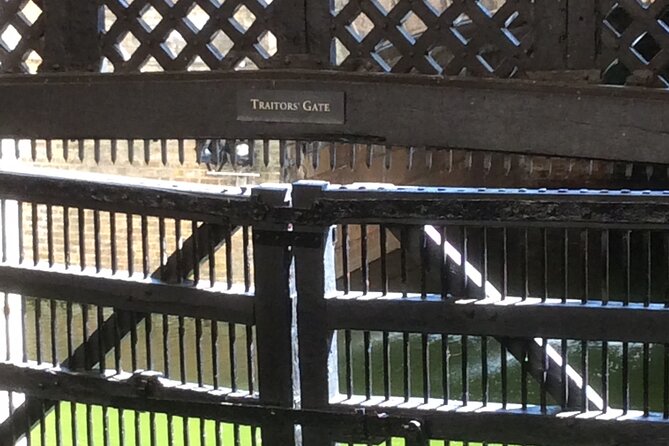
The tour finishes at Traitors’ Gate, outside the Tower of London. You’ll hear how it served as the infamous entry point for those likely never to leave again. Ending here makes sense because the Cromwell story isn’t only political maneuvering—it ends in a world where law and execution were intertwined.
Just outside the tour, you can also stand at the Tower Hill Scaffold Site, the memorial marking where Thomas Cromwell, Thomas More, and countless others were put to death. The stop is short, but the meaning is big. It’s the kind of ending that makes the earlier legal district stops feel earned, not just decorative.
If you’re the sort of person who likes to connect “beginning and consequence,” this finale delivers.
How the guide makes the difference (and why it’s worth paying attention)
The strongest praise for this tour centers on the guide’s command of place and detail. Stephen has been described as excellent with communication before and during, and as passionate about being factually correct while still keeping things enjoyable.
That matters more than it sounds. A Wolf Hall-themed tour can easily become either too literary (names and quotes) or too architectural (facts without story). This one aims at the middle: you learn what the building was, what it did, and how Cromwell would have fit into that system—then you move to the next piece of evidence.
You also get a pacing style that works well for navigating London’s smaller lanes and alleyways. Instead of forcing you into a single straight line of “top hits,” the route gives you the feeling of discovery, where the city’s quieter spaces explain the Tudor era better than a postcard view can.
Who should book this tour, and who might not love it
This tour is a strong match if:
- you’re a Wolf Hall / Thomas Cromwell fan and want locations that connect to the story’s power dynamics
- you like the Inns of Court and the idea that law and politics lived side by side
- you want a City of London walk that spends time on memorials and institutions, not just “big famous buildings”
It might be less ideal if:
- you want a slow, mostly seated tour with long indoor time
- you’re trying to do this with very limited mobility (there’s short walking between many points)
- you hate street-to-street walking and prefer one or two big attractions only
Should you book the Thomas Cromwell Wolf Hall Tudor London Walking Tour?
I’d book it if you want Tudor London that feels real and connected. The hotel pickup helps, the route focuses on legal and City-of-London power centers, and the ending at Traitors’ Gate gives the whole story a sharp conclusion. The biggest practical perk is value for people who enjoy learning while walking—this tour puts a lot of meaning into a compact time window.
If you’re unsure, here’s the simple decision rule: if you’d rather stand where decisions were made (and hear what happened after), book it. If you mainly want iconic landmarks with minimal walking, choose a different style of tour.
FAQ
How long is the Thomas Cromwell Wolf Hall Tudor London Walking Tour?
It’s listed as about 3 hours.
Where does the tour start and end?
It starts and ends at Traitors’ Gate (London EC3N 4AB).
Is hotel pickup included?
Yes. Hotel pickup is offered for convenience.
Is the tour private?
Yes. It’s a private tour/activity, and only your group participates.
Are entry tickets included for stops like Staple Inn or St Paul’s Cathedral?
No. Some stops specify admission tickets are not included (for example Staple Inn, The London Silver Vaults, and St. Paul’s Cathedral viewing is not included). Other stops are free to enter or view (for example Gray’s Inn and Gray’s Inn Chapel).
What language is the tour offered in?
The tour is offered in English.