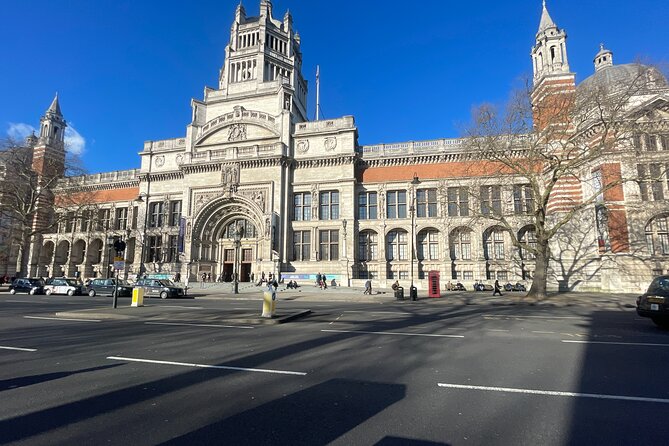
The V&A can feel big and noisy. This private tour gives you a calmer way in. You get skip-the-line entry and a licensed Blue Badge guide focused on what you should see first, without wasting time in crowds. You’ll spend about 2.5 hours inside the museum with a pace that feels realistic for humans.
I like the way the guide steers the visit. You’re not stuck following a one-size itinerary. I also love that you can ask questions and get answers on the spot, which makes the museum’s objects click faster. The tour is for small groups of up to 6, so the guide’s attention stays on you.
One thing to consider: this is a private, guided experience, so you’ll still need to tolerate being inside the museum with other visitors. If you hate crowds in general, plan to arrive a touch earlier on your own so the first minutes feel smoother.
In This Review
- Key things to know before you go
- Walking into the V&A with a plan that actually works
- Skip the lines, start with impact
- The heart of the tour: what you’ll see inside the V&A
- Raphael paintings that set the tone
- Fashion across centuries: ladies’ evening dresses
- A bed with room for up to 8
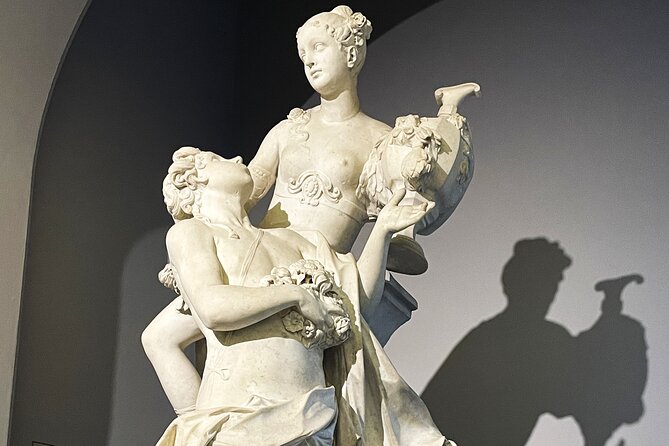
- Rodin sculptures: the force of form
- The stupendous cast court
- Your private guide: more than just facts
- How long is long enough? (And what to do after)
- Price and value: what you’re really paying for
- Who this tour suits best
- Quick practical tips to get the most out of it
- Should you book this Victoria and Albert Museum tour?
- FAQ
- How long is the Victoria and Albert Museum tour?
- Is admission to the V&A included?
- How many people are in a group?
- Will I be able to skip the lines?
- What language is the tour offered in?
- Where do we meet?
- Is there mobile ticketing?
- Can service animals join?
- What is the cancellation policy?
Key things to know before you go
- Skip-the-line entry so you walk in and start your tour fast
- Blue Badge guide who’s licensed and insured (Tony is one of the guides you might get)
- Tailored pace with time for questions, not a rushed script
- Admission ticket included for the V&A
- Small group size (up to 6) for more personal attention
- End inside the museum so you can continue at your own pace or grab lunch
Walking into the V&A with a plan that actually works
London museums can hit you with scale. Even if you know the V&A is special, you still face a simple problem: where do you start, and how do you choose what’s worth your time?
This tour solves that by getting you inside quickly and then steering you toward the highlights that matter most. Instead of drifting, you move with a guide who points, explains, and—this is key—helps you connect the dots between art, design, and sculpture. You’ll cover standouts like major Raphael paintings, plus fashion examples that stretch from the 17th century to today. That range alone makes the V&A feel less like a random collection and more like a story you can follow.
I also appreciate that it stays flexible. The tour is designed to go at your pace, with room to ask questions. That matters in a museum like the V&A, where some objects need a little context to land well.
You can also read our reviews of more tours and experiences in London.



Skip the lines, start with impact
The headline benefit is skip-the-lines. You don’t spend your limited time queuing. You walk in and meet your guide, then get going. It’s a small detail that makes a big difference, because museums are strongest when you arrive with momentum, not after 30 minutes of waiting.
Your guide will show you and explain the greatest Raphael paintings. They’ll also guide you to other “must-see” pieces, including Rodin sculptures and the famous cast court. And because this is private, the guide can adjust as you react. If something grabs you, you can spend a bit more time. If something doesn’t, you can keep moving.
From the reviews, one guide named Tony gets credit for navigating through crowds efficiently. That’s exactly the kind of practical skill you want in the V&A. It’s not just about knowing art—it’s about getting you to the right rooms before your feet revolt.
The heart of the tour: what you’ll see inside the V&A
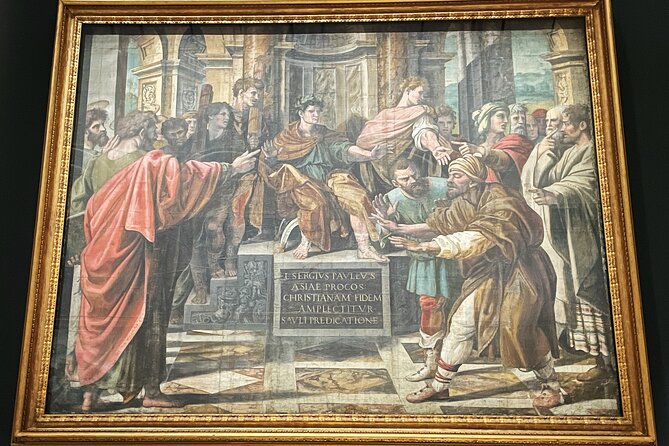
At the V&A, you’re stepping into a museum where art, objects, and fashion all share the same stage. This tour focuses on recognizable anchors—then adds enough context to make them feel alive.
Here’s what your guide will bring into focus.
Raphael paintings that set the tone
You’ll spend time with the greatest Raphael paintings. Raphael is one of those names that can feel familiar even if you don’t know the details. A guide helps you look past the general “this is famous” label and into what’s actually going on in the work—composition, expression, and why these pieces are remembered.
A smart way to use this part of the tour: slow down for a few minutes. When the guide points out what to notice, it’s your cue to look longer than you normally would. Even a short pause can transform a painting from a photo in your head into something you can actually see.
Fashion across centuries: ladies’ evening dresses
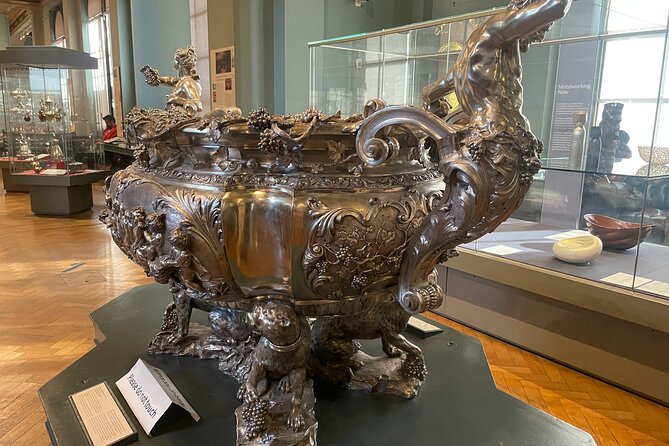
One of the more distinctive promises here is the chance to see ladies evening dresses spanning from the 17th century to today. That’s fun in a very practical way. Fashion at the V&A isn’t just about clothing—it’s about culture, status, materials, and how silhouettes and tastes change over time.
If you’re the type who likes to compare eras, this section gives you built-in contrasts. You’ll see how design choices evolve, and the guide’s commentary helps you connect the dots instead of guessing.






A bed with room for up to 8
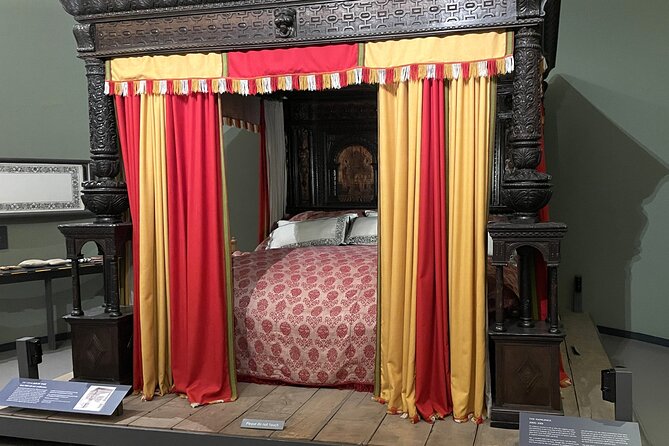
Yes, you read that correctly: you’ll be shown a bed that could hold up to 8. This kind of object is exactly why a museum tour is worth it. Without context, you might pass by something like that as odd or unusual. With explanation, it becomes a doorway into daily life, social habits, and how homes worked.
It’s the kind of detail that makes your V&A visit feel specific. You won’t leave with just general museum memories. You’ll leave with a story-shaped impression.
Rodin sculptures: the force of form
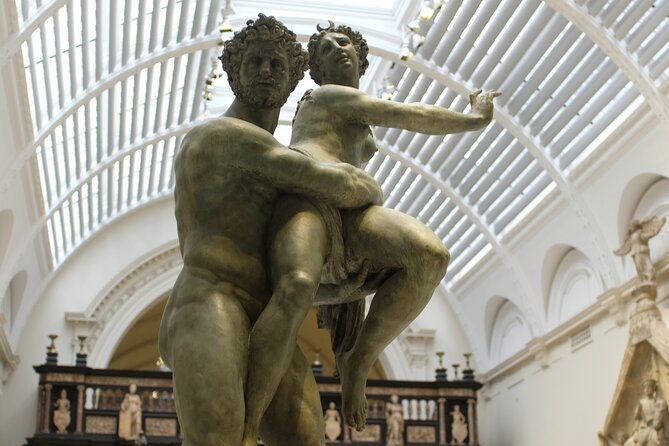
You’ll also see Rodin sculptures. Rodin’s work can feel dramatic even when you only catch a glance. A guide helps you look at how form and movement carry meaning, not just how the sculpture looks from one angle.
This part works well if you like sculpture that feels physical. It’s also a good change of pace after paintings and fashion, because the V&A layout can make you start to “visual-scroll” without realizing it. Rodin pulls you back into attention.
The stupendous cast court
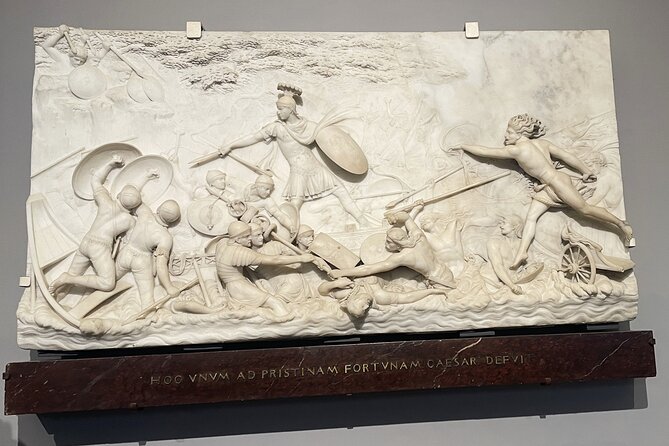
The cast court gets called stupendus for a reason. This is one of those V&A spaces that can feel visually overwhelming on your own. With a guide, you don’t just walk through. You learn what you’re looking at and why it matters—so the room becomes a reference point for the rest of your visit.
Even if you only spend part of the tour here, it helps you frame the museum. You start to understand that the V&A isn’t only about original masterpieces. It’s also about how artists, styles, and collections informed each other.
Your private guide: more than just facts
The guide isn’t there to recite labels. The real value is the back-and-forth: you can ask questions, and the guide can adjust your route based on what interests you. That’s the difference between reading a museum guide and having a living conversation with someone who knows the objects.
This also keeps the experience smooth. The best reviews emphasize Tony’s exceptional knowledge and his ability to get through crowds quickly to reach key exhibits. That’s a practical win. In a museum, timing matters. Crowds can slow you down or force you into the wrong rooms at the wrong moment.
With a small group—up to 6—your guide can handle questions without losing the rest of the schedule. You’re not competing for attention.
How long is long enough? (And what to do after)
The tour runs about 2 hours with admission included, and the overall experience is listed as roughly 2 hours 30 minutes. So think of it as a focused “greatest hits” version of the V&A rather than an all-day museum marathon.
That’s not a drawback. It’s a strategy. The V&A has enough sections and objects to occupy multiple visits. This tour gives you a strong foundation, then you can choose what to explore next once you’re inside.
Because the tour ends at the same museum location and explicitly suggests enjoying free time and/or lunch inside, you can treat the tour as your entry point. Afterward, you’ll be oriented—where the best highlights are, what themes you care about, and which galleries feel worth your extra time.
If you’re short on time in London, this approach is especially useful. You get expert context without turning the whole day into a sprint.
Price and value: what you’re really paying for
At $342.79 per group (up to 6), the price is best understood as “group value” rather than a per-person ticket.
For a museum like the V&A, paying for a private guide becomes cost-effective if you want:
- skip-the-line convenience,
- a small-group experience,
- and guided explanation for high-impact objects (Raphael, Rodin, fashion highlights, and the cast court).
You’re not just buying entry. You’re buying time saved, attention gained, and meaning added. And since admission is included, you’re not doing math later to figure out what you’ll still need to pay.
Is it the cheapest way to see the V&A? No. But if you’re the kind of visitor who hates wandering, or you prefer a guided route that makes the museum feel coherent, the value makes sense fast.
Who this tour suits best
This works well if you:
- want a guided first visit to the V&A,
- prefer small groups and a question-friendly guide,
- care about art plus design and fashion (not only one category),
- and want skip-the-line entry so you start strong.
It’s also a good fit for couples, friend groups, or small families (within the max group size) who want personalization rather than a crowded group tour.
If you’re the type who loves going completely off-script, you might still enjoy this—then use the remaining museum time on your own. The tour helps you choose your next steps instead of guessing.
Quick practical tips to get the most out of it
These are the small moves that make a guided museum visit better:
- Wear comfortable shoes. Even a 2-hour highlight tour turns into lots of walking.
- Bring one or two questions you’ve been wondering about. The guide can answer and connect them to what you’re seeing.
- In the Raphael and Rodin sections, don’t rush the first minute. Let the guide’s pointing become your viewing checklist.
- If you’re also planning lunch inside, decide in advance so you don’t end up spending your free time hunting for food.
Should you book this Victoria and Albert Museum tour?
I’d book it if you want a smart, efficient way to see the V&A’s biggest talking points with context. The skip-the-line entry helps. The small group keeps things personal. And the guide-focused approach turns famous names—Raphael and Rodin—into something you can actually interpret while you’re standing in front of the works.
Skip this only if you’re planning to spend the day wandering slowly and independently, or if guided structure stresses you out. In that case, you might prefer self-guided tickets.
If you want your first V&A visit to feel organized and rewarding, this is a strong choice.
FAQ
How long is the Victoria and Albert Museum tour?
The tour lasts about 2 hours 30 minutes on average, with a main session of 2 hours.
Is admission to the V&A included?
Yes. The admission ticket is included as part of the tour.
How many people are in a group?
This is a private tour/activity with only your group participating, up to 6 people.
Will I be able to skip the lines?
Yes. The tour is designed to skip the lines so you can walk straight in to meet your guide.
What language is the tour offered in?
The tour is offered in English.
Where do we meet?
You start at Victoria and Albert Museum, Cromwell Rd, London SW7 2RL, UK.
Is there mobile ticketing?
Yes. You’ll receive a mobile ticket.
Can service animals join?
Yes. Service animals are allowed.
What is the cancellation policy?
You can cancel for free up to 24 hours in advance for a full refund.