REVIEW · YORK
Welcome to York – The River Route
Book on Viator →Operated by York's Hidden History Walks · Bookable on Viator
A river walk that explains why York looks the way it does. This guided route connects the River Ouse to major medieval landmarks, so you don’t just see sights—you get the story behind the streets. I like the way the walk turns ruins and stone bridges into clear, understandable history, not a blur of dates.
Two things I really liked: first, the stop at St. Mary’s Abbey and the chance to picture Henry VIII’s dissolution of the monasteries in real, crumbling stone. Second, the overall pacing and guiding style—short stops, then quick context, which made the whole walk feel focused and easy to follow. In reviews, the guide Ian gets singled out for being sharp on facts, and you can feel that attention on the route.
One consideration: this is a weather-dependent outdoor walk. If the skies are grim, expect cancellations or a reschedule, and you’ll want comfortable shoes for the walking between viewpoints.
In This Review
- Key highlights you’ll feel as soon as you start
- Why York’s River Route makes sense (and how to use it)
- Price and what you actually get for $16.45
- Meeting point at Yorkshire Museum Gardens: your quick start check
- Stop 1: St. Mary’s Abbey ruins and Henry VIII’s break
- Stop 2: Hamlet of St Marygate and the street-to-river connection
- Stop 3: Ouse Bridge and why a crossing matters
- Stop 4: King’s Staith and the medieval water lanes
- Stop 5: Clifford’s Tower view and deciding to add admission
- The guide factor: Ian’s “say it clearly” style
- What to wear, bring, and plan for (so the walk feels good)
- Who this tour fits best
- Should you book York’s River Route?
- FAQ
- How long is York – The River Route?
- Where does the tour start and end?
- What is the price?
- Is the tour in English?
- What sites are included on the route?
- Are admissions included for all stops?
- What’s the group size limit?
- What kind of ticket do I get?
- What if the weather is poor?
- How does cancellation work?
Key highlights you’ll feel as soon as you start
- Small group size (max 25) keeps the tour from feeling crowded.
- Short, timed stops at the most important river-linked sites.
- Most admission is free, so you’re not forced into paid attractions mid-walk.
- The River Ouse is the main character, linking York’s streets, lanes, and power.
- Clifford’s Tower finishes the story with a dramatic view worth sticking around for.
- Bonus details from the guide, including the John Snow plaque and Dick Turpin’s grave on the route.
Why York’s River Route makes sense (and how to use it)
York can feel like a lot—streets, walls, towers, churches, and then suddenly you’re lost in the details. This walk helps you put order back into the city. The core idea is simple: the River Ouse shaped York’s growth, and these stops show how power and daily life traveled along the water.
What I like about this kind of route is that you get a fast mental map. You’ll start to see how streets line up with river access, why bridges mattered, and why certain spots were important for trade. Even if you’ve already visited York’s big sights, you’ll likely leave with better understanding of the bits in between.
Also, the format is practical. You’re not trapped with a long talk at one location. The guide threads explanations through a sequence of easy-to-reach viewpoints, so your attention stays on what you’re seeing right now.
You can also read our reviews of more tours and experiences in York.



Price and what you actually get for $16.45
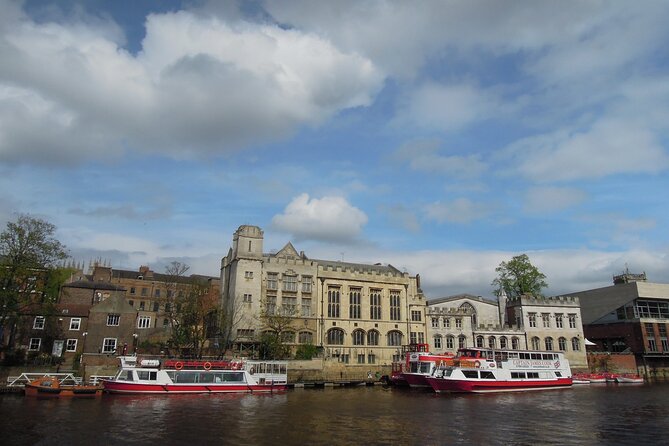
At $16.45 per person, this isn’t the kind of tour where you’re paying mainly for a name or a bus ride. You’re paying for a guided walk that does two helpful jobs at once: it moves you between key river locations and gives you meaning for what you see.
Here’s the value angle that matters: most stops include free admission, so you’re saving money on entry fees while still getting access to the ruins and vantage points that make York feel like York. The one exception is Clifford’s Tower, where admission is not included—you’ll finish the tour at the base of the tower, near the York Castle Museum, and then decide if you want to go up and pay separately.
Duration is also reasonable. Plan on about 1 hour 30 minutes to 2 hours. That’s long enough to learn something real, but short enough to still enjoy the rest of your day in York afterward.
If you’re budgeting, this is a strong pick because you’ll spend less on tickets during the walk than many sightseeing tours.
Meeting point at Yorkshire Museum Gardens: your quick start check
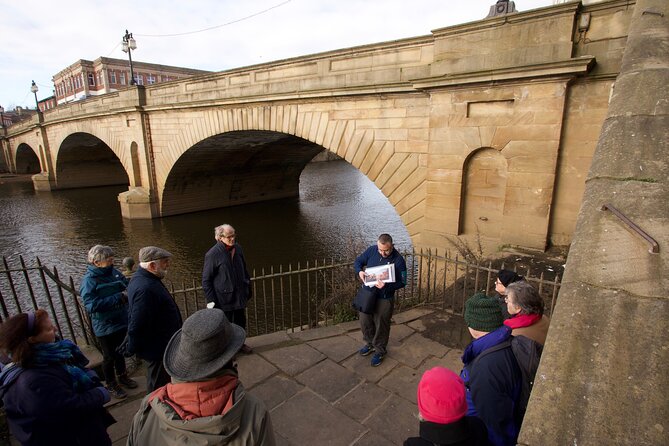
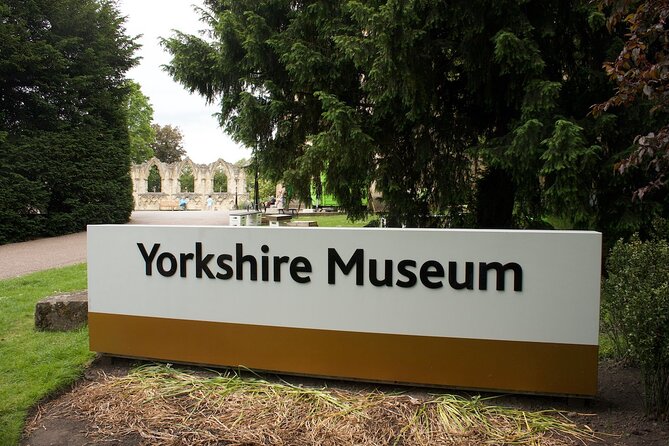
You meet at Yorkshire Museum, Museum Gardens, Museum Street, York YO1 7FR at 2:00 pm, then the walk ends near Clifford’s Tower (Tower St, York YO1 9SA).
This start location is handy. Museum Gardens is a straightforward place to orient yourself, especially if you’re arriving by foot or hopping off nearby public transport. Since the tour is capped at 25 people, it should stay orderly once everyone groups up.
My practical tip: arrive a few minutes early and take 60 seconds to look around. This tour works best when you can quickly orient yourself to the river direction and the street layout—your guide’s explanations will click faster.
Stop 1: St. Mary’s Abbey ruins and Henry VIII’s break
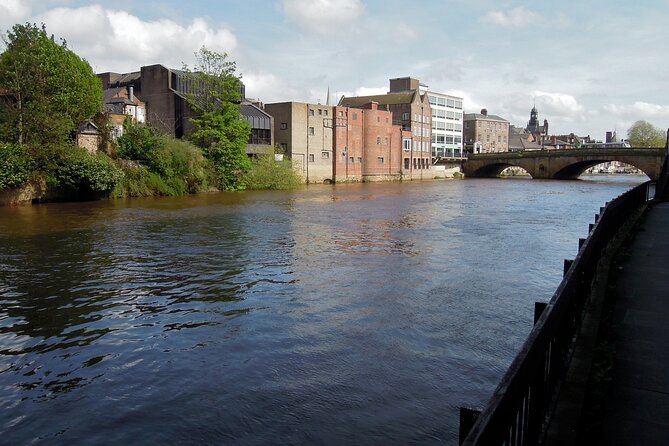
The first stop is St. Mary’s Abbey, where you’ll see the spectacular ruins and learn how Henry VIII’s dissolution of the monasteries changed the scene.
Even in a short visit, the ruins do something useful. They give you scale. You can stand in the area and understand that this was not a small religious site. The buildings were big, the influence was big, and the political shift was not subtle.
What you’ll likely come away with is a clearer sense of why monastic sites were so powerful before the dissolution—and why their transformation mattered for land, money, and control across Yorkshire. This isn’t just about religious history; it’s about how power got reorganized, which echoes in the way York developed next.
Good to know: this stop is timed at about 5 minutes, and admission is free. Keep moving with your guide so you don’t miss the next leg of the story.
Stop 2: Hamlet of St Marygate and the street-to-river connection
Next you walk toward the Hamlet of St Marygate. The key point here is the connection between the River Ouse and the main north-running road. In other words, you’re seeing how York linked water access to movement through the city.
You’ll also spot the old abbey walls and Marygate Tower, and you’ll hear how St. Mary’s Abbey controlled huge areas of medieval Yorkshire. That’s an important idea: the abbey wasn’t only a church community. It was a land-and-power organization.
This stop is timed at about 10 minutes, with free admission. It’s a good stretch of time for photos and for letting the guide explain the layout. If you enjoy street-level urban history—how places connect—you’ll like this part.
My small caution: since you’re walking from Museum Gardens down Marygate, wear shoes that handle uneven ground. York’s paths can be friendly but not always flat.






Stop 3: Ouse Bridge and why a crossing matters
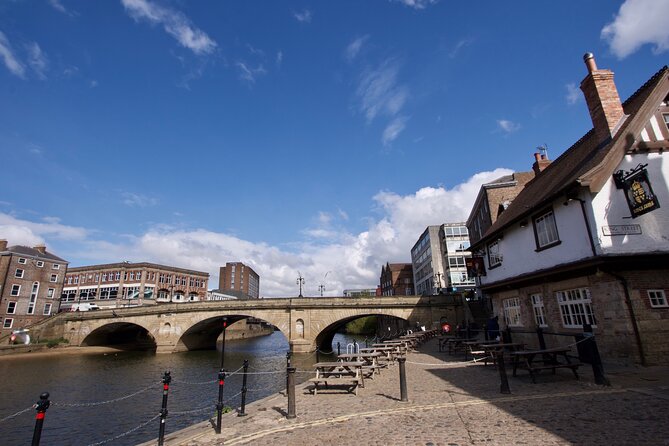
Then comes Ouse Bridge, where the tour focuses on one of the simplest but most powerful urban facts: a bridge has crossed the Ouse here for over a thousand years.
That detail changes how you see the spot. A bridge isn’t just stone and arches. It’s a tool for movement, trade, and control. If people have crossed this same route for centuries, it means the river access point mattered again and again.
This stop is short—around 5 minutes—but it’s worth paying attention to the guide’s explanation. Even a brief bridge stop can make the rest of the walk feel more connected, because you understand the logic of where people could move easily.
Stop 4: King’s Staith and the medieval water lanes
Now you shift to King’s Staith, described as York’s main quay for more than 500 years.
This is where the River Ouse story gets practical. You’ll see the river from King’s Staith and hear about York’s medieval water lanes—the ways goods and people likely moved through the city using the river. The guide also explains why very few kings ever landed here, which adds a fun wrinkle. Even when a place is important, it might not be where the highest-status visitors choose to arrive.
Stop length is about 10 minutes, and admission is free. If you’re the type who enjoys learning how ordinary urban systems worked—where trade moved, how access worked—this will be one of your favorites.
And if you like little surprises: one review called out a favorite moment involving the John Snow plaque, and another mentioned a bonus look at Dick Turpin’s grave. You may catch these details during the route, depending on how the guide threads explanations through the walk.
Stop 5: Clifford’s Tower view and deciding to add admission
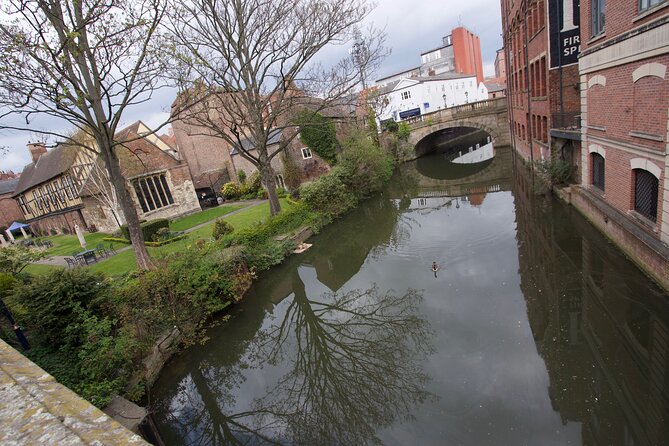
The walk ends with a finish at Clifford’s Tower, aiming to give you a dramatic look at the medieval keep of York Castle.
This part is less about a guided interior visit and more about the payoff. After tracing the river’s influence across several stops, you end at a site linked with control and defense—power at the top of the city’s story.
The tour includes about 10 minutes here, with Clifford’s Tower admission not included. That’s a good setup: you’ll get the view and context first, then you decide on the spot whether you want to pay for the tower visit.
My advice: if you still have energy after the walk, it’s a smart follow-up. If you’re tired or the weather turns, you haven’t wasted money—you already got the river story that ties the city together.
The guide factor: Ian’s “say it clearly” style
From reviews, the guide Ian stands out for being excellent and hitting the right level of detail. I like that kind of guiding for walking tours: enough specifics to feel real, but not so much you lose the thread.
You’ll notice the tour’s design supports that. Short stop times force clarity. You’re not stuck listening for too long before you get to look at the next location. It helps you remember what you saw—and it helps the facts land in context.
What to wear, bring, and plan for (so the walk feels good)
This is a compact outdoor experience, so small choices matter.
- Shoes: go for comfortable walking shoes.
- Weather: the experience requires good weather. If it’s wet or poor, you may be offered a different date or a full refund.
- Time: start time is 2:00 pm. Plan to be in the meeting area a few minutes early so you don’t stress.
- Mobile ticket: you’ll use a mobile ticket, so have your phone battery ready.
Group size is limited to 25, which usually means the tour stays friendly and easy to follow. It also helps if you like photos—there’s less jostling than on big group tours.
Who this tour fits best
This walk is ideal if you want York to make sense, fast.
You’ll likely enjoy it if:
- you like history explained through places you can stand in
- you want a manageable 1.5–2 hour plan in the afternoon
- you’re trying to connect York’s river and streets without doing heavy self-planning
It can also work well as a second-day activity, once you’ve seen a few key landmarks and you’re ready to understand the city’s logic. And because most admissions are free on the route, it’s a budget-friendly way to add guided depth.
If you’re only after a single big attraction visit, this might feel more like a helpful city primer than a destination on its own. But as a way to get your bearings and learn how York developed along the Ouse, it’s a strong match.
Should you book York’s River Route?
I’d book it if you want a smart, low-stress way to understand York beyond postcards. For $16.45, you get a guided explanation at multiple river-linked stops, with free admission for the main sequence, and a satisfying finish at Clifford’s Tower.
Skip it only if you hate walking in changing weather or you want a tour where every stop includes a paid entry. Here, you’re paying for the guidance and viewpoints, and Clifford’s Tower is the one place you’ll likely decide on your own.
If you’re in York around the afternoon slot, this is the kind of tour that can make the rest of your sightseeing click.
FAQ
How long is York – The River Route?
It runs for about 1 hour 30 minutes to 2 hours.
Where does the tour start and end?
The tour starts at Yorkshire Museum, Museum Gardens, Museum Street, York YO1 7FR, and ends at the foot of Clifford’s Tower near Tower St, York YO1 9SA.
What is the price?
The tour costs $16.45 per person.
Is the tour in English?
Yes, the experience is offered in English.
What sites are included on the route?
The walk includes St. Mary’s Abbey, Hamlet of St Marygate, Ouse Bridge, King’s Staith, and finishes at Clifford’s Tower.
Are admissions included for all stops?
St. Mary’s Abbey, Hamlet of St Marygate, Ouse Bridge, and King’s Staith are free. Clifford’s Tower has an admission ticket that is not included.
What’s the group size limit?
The tour has a maximum of 25 travelers.
What kind of ticket do I get?
You’ll receive a mobile ticket.
What if the weather is poor?
This experience requires good weather. If it’s canceled due to poor weather, you’ll be offered a different date or a full refund.
How does cancellation work?
Free cancellation is available. You can cancel up to 24 hours in advance for a full refund.