REVIEW · LONDON
Women of Whitechapel 2 hour Walking Tour
Book on Viator →Operated by London Herstory Guided Walks · Bookable on Viator
Fearless women shaped Whitechapel.
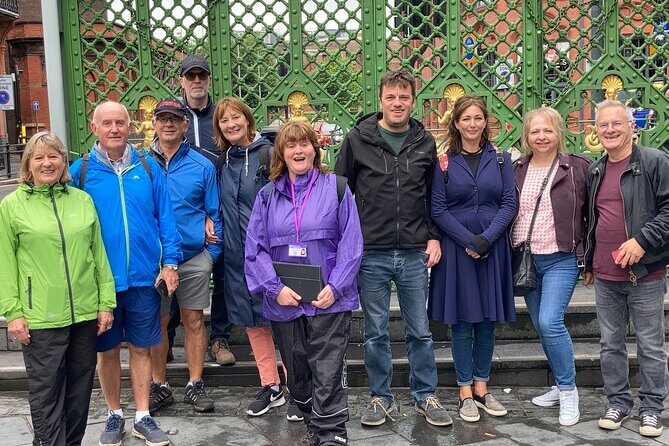
This Women of Whitechapel guided walk takes you through real East London streets where stories of WWI resistance, philanthropists, and anarchist movements lived side by side with everyday neighborhood life. I especially like how the tour keeps switching between big ideas and small street details—mosques, churches, terraces, and market corners—so history feels close, not dusty.
I also like the way the guide brings the cast of women into focus, with names and themes that connect stop to stop. In the reviews, guide Mandy is repeatedly praised as kind and engaging, and that matters because you’re covering a lot of ground in a short window.
One thing to consider: this is a walking tour, and you’ll want solid shoes and weather-appropriate layers. If London weather turns, the whole plan can be affected since the experience is described as requiring good weather.
In This Review
- Key things to know before you go
- A women-first stroll through Whitechapel’s real streets
- Price and what you actually get for it
- Meeting point to finish: how the route flows
- Stop 1: Whitechapel Road and the WWI resistance mindset
- Stop 2: Brick Lane and the women behind the immigrant waves
- Stop 3: Princelet Street’s small scale and big implications
- Stop 4: Spitalfields Market and the revolutionaries at street level
- Stop 5: Stepney Green, from widowhood to prostitution to TV-era recognition
- The guide factor: why Mandy-style storytelling works
- Comfortable walking tips for East London in real weather
- Who this tour suits best (and who may want a different plan)
- Should you book Women of Whitechapel?
- FAQ
- How long is the Women of Whitechapel walking tour?
- What does the tour cost?
- Where does the tour start and end?
- Is the tour offered in English?
- Is there anything included besides the guided tour?
- Are there any paid admission stops?
- Will I need to pay for coffee or tea?
- What should I wear?
- Is public transportation nearby?
- What if it’s canceled due to weather?
Key things to know before you go
- Women-first storytelling across Whitechapel Road, Brick Lane, Princelet Street, Spitalfields Market, and Stepney Green
- No paid add-on entrances at the listed stops, so you can focus on walking and listening
- A small group feel with a max of 30 people, which makes it easier to chat along the way
- Market and street variety, from Spitalfields Market to residential lanes with older-looking house fronts
- A clear route flow that starts on Whitechapel Road and finishes at Liverpool Street Station
A women-first stroll through Whitechapel’s real streets
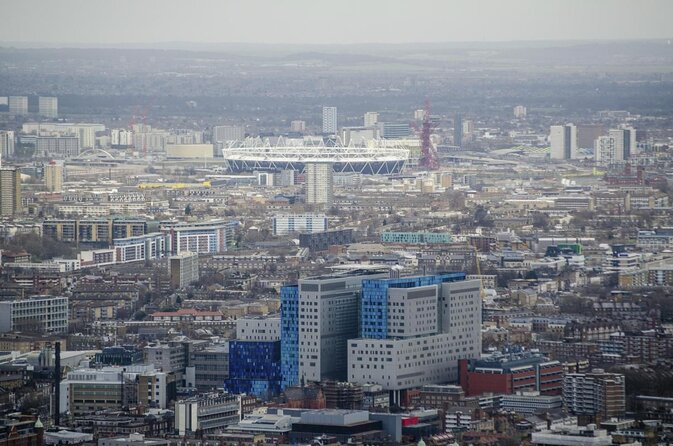
Whitechapel is one of those London areas where you can see layers stacked on layers. You’ve got major streets, tight residential pockets, and places where markets pulled communities together. This tour uses that layering on purpose: instead of making the neighborhood the main character, it makes the women of the story the focus.
You’ll move through several distinct parts of East London, but the through-line stays consistent. The theme is quiet change—women acting through resistance, work, philanthropy, and community organizing—at moments when London’s headlines and power structures were often written by other people.
And yes, you’ll notice things you’d normally skip. The route is packed with corners where the architecture, the street rhythm, and the neighborhood shifts tell a second story if you slow down and look.
You can also read our reviews of more tours and experiences in London.



Price and what you actually get for it
The price listed is about $27.53 per person for a guided walk running roughly 2 to 3 hours. That sounds straightforward, but the value comes from two practical things: it’s guided and it’s structured.
You’re paying for a person to connect the dots—Whitechapel Road to the anarchy of the 1890s, Brick Lane’s immigrant threads to the women who were quietly shaping local life, and Spitalfields and Stepney Green to revolutionaries across decades. You’re also not being nickel-and-dimed at stops; the provided stop notes indicate free admission tickets at the locations described.
Also worth noting: the tour includes a stop at a Huguenot tea/coffee shop option, but coffee and tea are at your cost. So it’s a good plan for people who want movement and conversation more than paid refreshment breaks.
Meeting point to finish: how the route flows
You start at 277 Whitechapel Rd, London E1 1BY, and you finish at Liverpool Street Station, London EC2M 7QA. That matters because it prevents the classic London problem where you end up stranded in the middle of nowhere with a big detour back to transit.
The start time window shown for Monday is 2:00 PM to 4:00 PM, and the experience lasts about 2 to 3 hours. A lot of people like afternoon walks because you can grab lunch nearby and still make the evening plans that don’t involve more crowds.
Group size stays limited to a maximum of 30 travelers. In plain terms, that makes it easier for the guide to steer the group and for you to actually hear the story without shouting into a phone.
Stop 1: Whitechapel Road and the WWI resistance mindset
Whitechapel Road is the launchpad, and it’s a smart place to begin. It’s a long-running main street feel, with religious buildings and older streetscape elements that help you picture how neighborhoods functioned day to day.
The tour’s opening focus is on women connected to WWI-era resistance and late-1800s female philanthropists. Then it takes you into the anarchistic movement of the 1890s, which gives the neighborhood a sharper edge than most generic sightseeing descriptions.
What you’ll likely enjoy here is the mix of places and themes. You’re not just hearing one story. You’re seeing how different kinds of activism and support can exist in the same area, sometimes side by side, sometimes in response to what the community had to endure.
A small practical note: this is the first hour. It’s when you’ll want to settle into the pace. If you’re prone to getting cold or sweaty quickly, dress with layers so you’re comfortable before the tour warms up.
Stop 2: Brick Lane and the women behind the immigrant waves
Brick Lane is famous, and for good reason. It’s a corridor where different immigrant groups have left marks over time. In this walk, you’re not just touring for the headline version of Brick Lane. You’re using it as a stepping stone into women’s stories.
The tour frames the area through waves such as Huguenot weavers, Jewish tailors, and later Bangladeshi restauranteurs. Then it brings you back to the main point: the women who were described as quiet revolutionaries in this part of East London.
Here’s why this stop is valuable. It shows how change isn’t only about protests in the street. It can be about trades, running businesses, building community networks, and keeping life running when borders and systems are shifting.
The stop length is shorter—about 20 minutes—so this is a listen-and-look moment rather than a deep linger. Go in ready to absorb a lot in a short window.






Stop 3: Princelet Street’s small scale and big implications
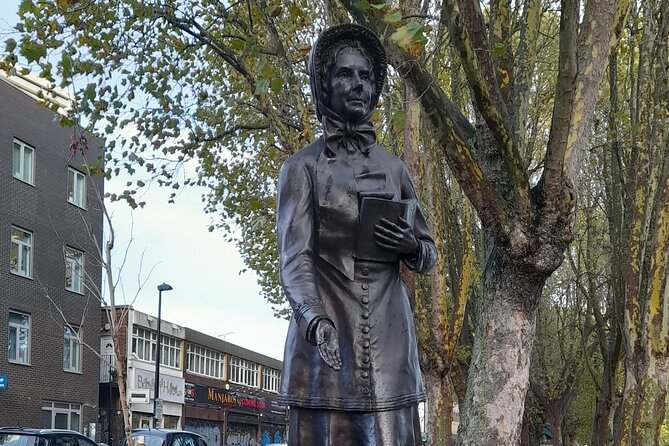
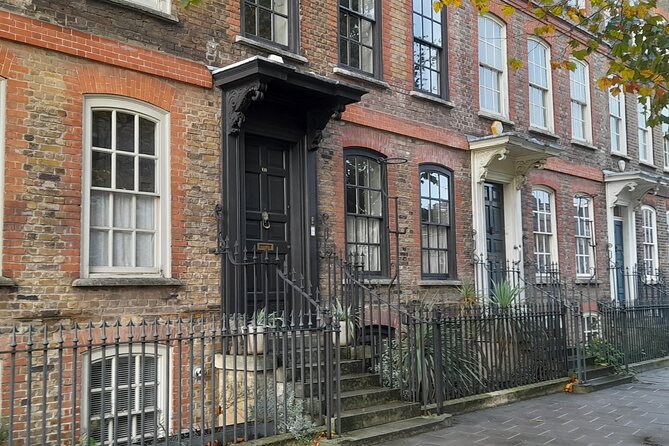
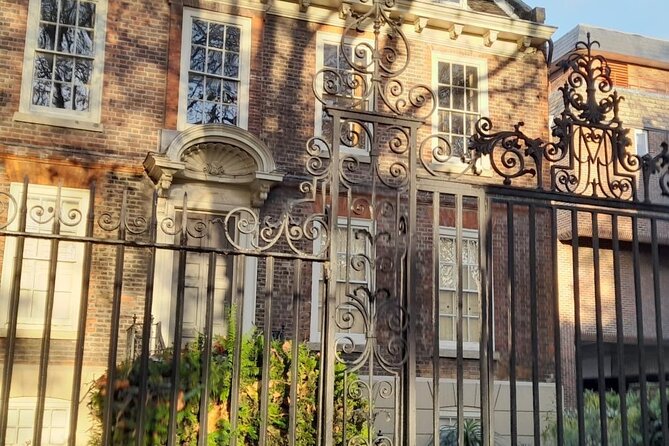
Princelet Street is the kind of place where the street width and house fronts change your sense of time. The tour highlights pretty houses with wooden shutters, linked back to the Huguenots who shaped parts of the area.
This stop’s specific theme is striking: it points out that several women lived alone here in the 1700s. That detail is the payoff of the quieter street setting. It forces you to rethink what independence looked like, and how “normal” life could still be radical in context.
Because the time at this stop is only about 10 minutes, you’ll want your attention switched on right away. This is not the stop for daydreaming or checking messages. It’s for quick, sharp observations—like noticing who might have lived where, and what kind of daily routines those houses supported.
A consideration: if you prefer hands-on exploration (photos, shop windows, longer pauses), this portion may feel brief. The trade-off is that the tour keeps momentum and saves time for later stops.
Stop 4: Spitalfields Market and the revolutionaries at street level
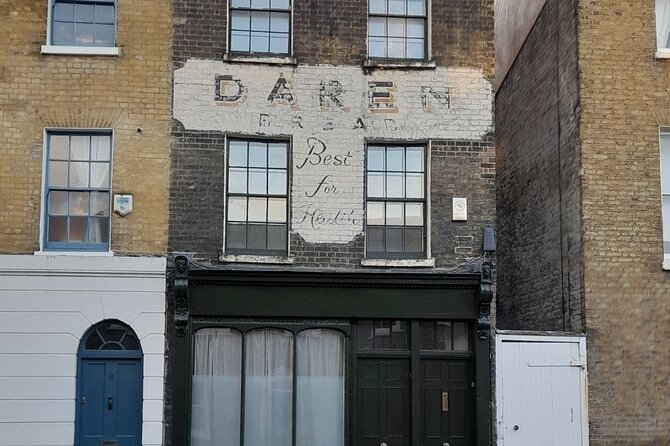
Spitalfields Market is one of those places where London’s economy and culture meet. The tour notes that the market was opened by Queen Victoria, which instantly gives it a dated anchor.
But the real focus is people—especially women. The walk ties the area to Sylvia Pankhurst, Mary Wollstonecraft, and Sara Wesker, framing them as revolutionaries spanning roughly three hundred years.
Even if you know these names already, it helps to hear them placed into the geography you’re standing in. Markets are where ideas meet customers and workers. They’re also places where daily life becomes a platform: who had access, who could sell, and who gained visibility through work.
The stop includes about 30 minutes here, which is one of the longer pauses. It’s also the point where you may find a tea/coffee option in the nearby Huguenot tea/coffee shop, though you’d pay for it yourself. If you want a quick break to reset, this is probably the most sensible place for it.
Stop 5: Stepney Green, from widowhood to prostitution to TV-era recognition
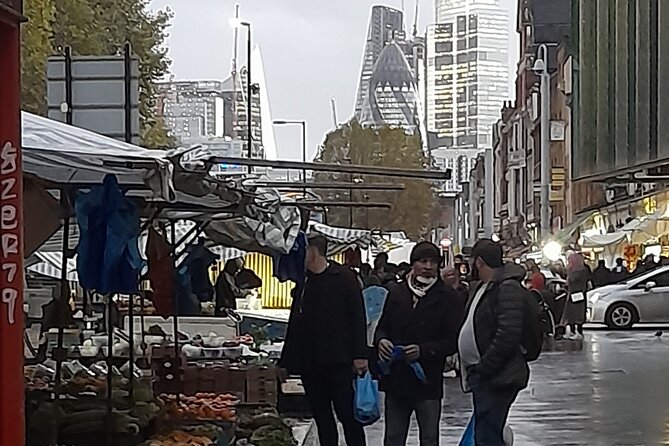
Stepney Green takes you into another layer of East London life. The tour frames it as rich with history through specific human stories rather than only generalized background.
You’ll hear about a house lived in by the widow of an East India employee, and then about a lowly prostitute who made a name for herself. The point is clear: women’s lives weren’t simplified to one category. Their histories included family ties, work, survival, stigma, reputation, and reinvention.
Then the tour adds another twist—this area is described as anarchistic headquarters and even referenced through Call the Midwife. Whether you know the show or not, the mention helps you connect the area’s older social themes to more modern storytelling habits.
This stop runs about 10 minutes. Short stop, big ideas. If you’re the kind of person who likes to ask questions, keep your curiosity ready because the guide will likely be packing meaning into a tight time window.
The guide factor: why Mandy-style storytelling works
In the reviews, Mandy comes up repeatedly, and it isn’t just for politeness. People describe her as kind and engaging, and they credit her with making the tour fun while also keeping it informative.
That blend matters more than it sounds. A history walk can easily turn into a lecture. A good guide turns it into something you can walk with. Mandy’s style, based on the feedback, seems to do three things well: keep the pace moving, explain clearly, and point out details you’d miss on your own.
One reviewer also mentioned learning about women, food, and London. Even though the walk’s stops are history-centered, the connection to everyday life is practical. Spitalfields Market isn’t just a place to pass through. It’s a place where people ate, worked, traded, and built community.
Comfortable walking tips for East London in real weather
This is a straightforward walking tour, so your comfort is part of the experience quality. The tour’s own highlight advice is simple: wear good walking shoes and appropriate clothes for the weather.
Here’s how to translate that into real planning. If rain is possible, bring a light rain layer and consider shoes with grip. If the day is mild, dress in layers anyway, since London streets can swing from sheltered sidewalks to windier stretches.
Also, because the group is capped at 30, it’s not a huge swarm. Still, you’ll be walking in a cluster and stopping often enough that you’ll want to avoid clothing that restricts movement.
If you have moderate mobility needs, the tour states a moderate physical fitness level is required. The best approach is to be honest with yourself about how you handle 2 to 3 hours of walking with short stops.
Who this tour suits best (and who may want a different plan)
This works well if you like history that connects to street life. You’ll enjoy it if you don’t want museums only. You want places you can reach with transit, then walk through while someone explains the people behind the headlines.
It’s also a strong pick if you’re traveling with a friend and want an activity that naturally encourages conversation. One of the listed highlights is the chance to make a few new friends as you walk, and a small group size helps.
If you’re only interested in one famous moment or one single era, you might feel the tour moves fast between themes. It jumps from WWI resistance to philanthropists to the 1890s anarchist movement, then to later stories and named figures. The payoff is the pattern, not one chapter.
Should you book Women of Whitechapel?
I’d book it if you want a guided walk that treats women in London history as the main subject, not a side note. The price is reasonable for a 2 to 3 hour guided route, and the stop mix—major street, immigrant-story Brick Lane, quieter Princelet Street, Spitalfields Market, then Stepney Green—gives you a range of street scenes without turning into a marathon.
I’d think twice if you hate cold-weather walking or you want frequent long pauses. This is built for movement and listening, with shorter stops at several key points.
If your ideal London day is outdoors, story-driven, and a bit different from the usual highlights circuit, this one fits the bill.
FAQ
How long is the Women of Whitechapel walking tour?
It runs about 2 to 3 hours.
What does the tour cost?
The price is listed as $27.53 per person.
Where does the tour start and end?
It starts at 277 Whitechapel Rd, London E1 1BY, UK, and ends at Liverpool Street Station, London EC2M 7QA, UK.
Is the tour offered in English?
Yes, it’s offered in English.
Is there anything included besides the guided tour?
The included part is the 2 to 3 hour guided walk focused on the history of women in Whitechapel.
Are there any paid admission stops?
The stop details list admission tickets as free for the locations described.
Will I need to pay for coffee or tea?
Coffee and/or tea are not included. You may stop at a Huguenot tea/coffee shop, but it’s at your cost.
What should I wear?
Wear good walking shoes and dress appropriately for the weather.
Is public transportation nearby?
Yes, the meeting spot is near public transportation.
What if it’s canceled due to weather?
The experience requires good weather. If it’s canceled due to poor weather, you’ll be offered a different date or a full refund. Cancellation is also described as free, with a full refund if you cancel at least 24 hours before the start time.