REVIEW · BATH
Bath – (4 hours) Extended Walking Tour – Blue Badge guide
Book on Viator →Operated by Avalon Heritage Tours · Bookable on Viator
Bath can feel like one big postcard. That is exactly why this Blue Badge walking tour works: it turns the top sights into a clear story, with smart stop-by-stop guidance over about four hours. I like that it gives you quick photo time at the big landmarks, plus real context for what you are seeing, so the city clicks instead of just passing by.
What I like most is the combination of skip-the-line Roman Baths ticketing and a true private format for your group (up to about 15 people). And I really appreciate how the tour is paced: short, focused stops like Bath Abbey, the Royal Crescent, and the Avon riverside help you cover a lot without feeling rushed.
One thing to keep in mind is cost. The tour price is per group, but the Roman Baths entry and some Abbey access cost extra, so you will want to budget for those add-ons when you plan your total.
In This Review
- Key things I’d highlight before you go
- A Four-Hour Bath Hit List With a Blue Badge Guide
- Start at Bath Abbey Churchyard: the perfect launch point
- Roman Baths tickets: how the express access fits in
- Assembly Rooms: where Bath’s social life takes center stage
- The Royal Crescent, The Circus, and the Avon riverside photo loop
- Sally Lunn’s Museum stop: late-medieval Bath, right on the route
- Great Pulteney Street and Royal Victoria Park: elegance plus everyday city life
- Kennet & Avon Canal: the engineering story behind the city’s growth
- Private guiding that actually changes the experience
- Price and what it really costs once you add entries
- Timing, pacing, and comfortable walking choices
- Who this tour is best for
- Should you book this Bath extended walking tour?
- FAQ
- How long is the Bath extended walking tour?
- Is this tour private?
- What group size can you book for?
- Where does the tour start and end?
- What language is the tour offered in?
- Are tickets for the Roman Baths included?
- Are Bath Abbey entrances included?
- Is there a mobile ticket?
- Does the tour run in any weather?
- Are service animals allowed?
Key things I’d highlight before you go
- Skip-the-line Roman Baths tickets: less waiting stress and more time for actually seeing Bath
- Private group format (up to 15): you get undivided attention from a Blue Badge guide
- Photo-ready stops: Bath Abbey, the Royal Crescent, The Circus, and the Avon riverside
- Classic Bath architecture by walking: sweeping views without needing to buy every museum ticket
- Canal and engineering window: Kennet & Avon Canal locks, tunnels, and bridges history
A Four-Hour Bath Hit List With a Blue Badge Guide
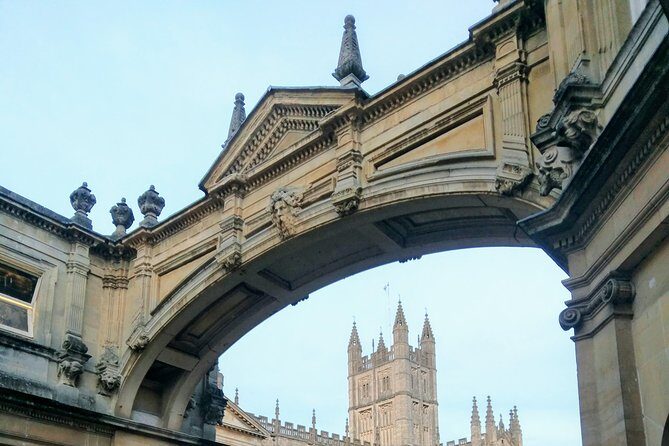
This is a half-day walk designed to do the heavy lifting for you. Bath is compact, but it is also layered: Roman site, Georgian elegance, and the work-they-did-to-survive canal era all sit close together. This tour’s goal is to connect those layers in a logical path, so you leave feeling oriented and not like you just collected snapshots.
You start and end at Abbey Churchyard, so the logistics are simple. And because it is private, your guide can keep the story aligned to your group’s pace—especially helpful if you have mobility needs, older family members, or you just want more time for photos near the Royal Crescent.
You can also read our reviews of more walking tours in Bath

Start at Bath Abbey Churchyard: the perfect launch point
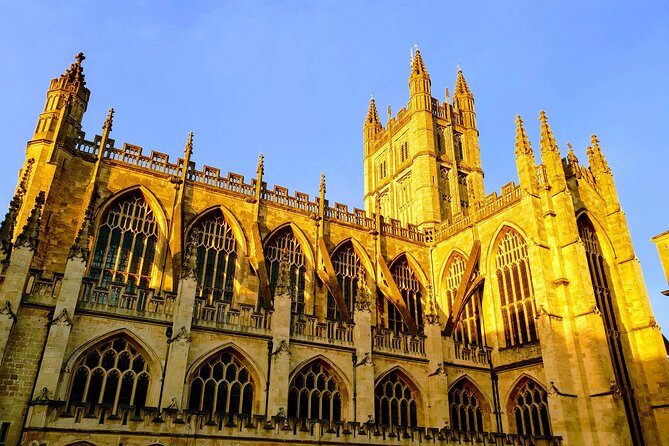
You begin at Abbey Churchyard and the walk is built around Bath Abbey as the anchor. The Abbey itself is described as a beautiful church with a suggested voluntary contribution, and it makes sense as a start: it is central, dramatic, and already rich with the kind of details a guide can point out quickly.
After the walking portion, you are brought back again to Bath Abbey. That second return is a practical move: it helps you keep your bearings for your own time after the tour. If you want to stay in the area, you can do it without needing to figure out where you are or how to get back.
Practical note: some Abbey entrances cost extra (the data lists £10 per person for Abbey church entrances). So plan on that if you want inside access beyond what the tour naturally covers at the start and finish.
Roman Baths tickets: how the express access fits in
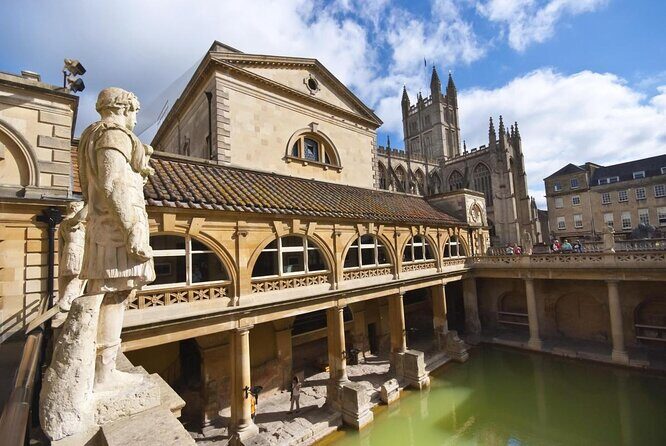
The tour includes a time slot to see the Roman Baths from outside, and then it gives you a way to handle the main entry ticket afterward. If you are trying to pack Bath into a short visit, this is one of the most valuable parts of the tour.
The Roman Baths entry is not included, and the stated entrance fee is £30 per person. Still, your guide can provide express entry tickets for after the walking tour, and the guide service notes these are normally available from them (with the data citing about £25 per person). Either way, your big win is reducing waiting time—sometimes that can mean saving an hour that you can use for more streets, more riverside photos, or a calmer meal.
How to think about it: if you are going to see the Roman Baths anyway, having a guide help you with the ticket timing is a big quality-of-life upgrade. If you are not interested in the Roman Baths interior, you could treat that portion as more of a viewpoint stop and plan your priorities around the Georgian highlights.
Assembly Rooms: where Bath’s social life takes center stage
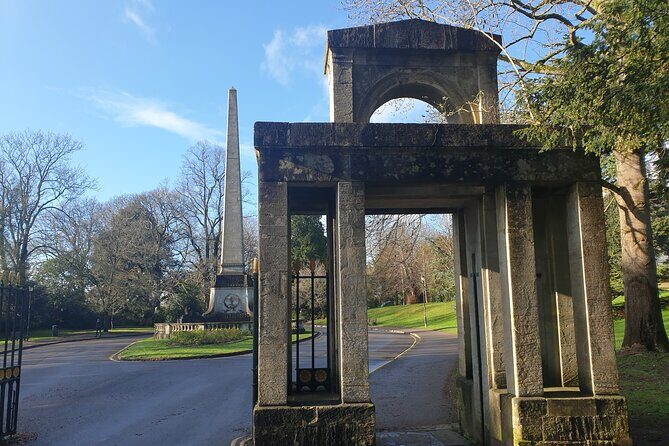
One stop that adds more than scenery is the Assembly Rooms. Here, you get a look at 18th-century Bath society—polite company, dancing, and the rituals of leisure that made Bath famous beyond its Roman past.
Entry here is not included in the base tour price, but the tour notes that entry is normally permitted with your guide, along with a small voluntary donation requested. That detail matters: it keeps the experience from feeling like you are only getting street-level viewing. It also keeps the focus on why these rooms mattered, not just what they look like.
The Royal Crescent, The Circus, and the Avon riverside photo loop
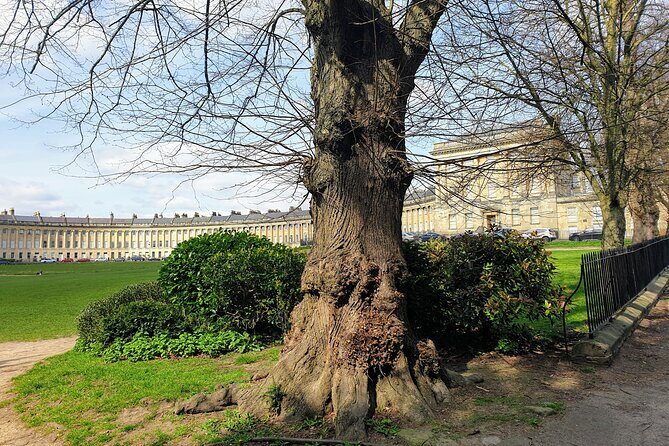
If you want classic Bath in under an hour, this section is it. You get outside viewing time for the Royal Crescent (neo-classical architecture), then The Circus (also neo-classical), then Pulteney Bridge for the river and architecture combination.
Even when you are not paying for interior access at every stop, these structures hit hard because of proportion and placement. A good guide helps you spot what makes them Bath-specific: the way the buildings face inward to create that elegant sense of space, and the way the river threads the city’s mood between stone and movement.
The Avon riverside is part of the photo opportunities, and that is worth planning for. Bath looks best when light hits the stone and the water reads as part of the scene. If the weather is good, this is the part you will likely enjoy most just standing still and looking.
You can also read our reviews of more guided tours in Bath





Sally Lunn’s Museum stop: late-medieval Bath, right on the route
This is another smart pacing choice. You get views of Sally Lunn’s Museum, described as late medieval architecture, plus stories tied to Bath’s revival in the early 1700s. That revival piece matters because Bath did not stay frozen in Roman time. It reinvented itself, and the social scene that grew around the spas brought new energy to the streets.
The museum entry itself is not included, and the stop is built more around story and architecture recognition than guaranteed inside access. But it is a nice shift of tone after the more monumental Georgian façades—like switching from a grand stage set to the older bones underneath.
Great Pulteney Street and Royal Victoria Park: elegance plus everyday city life
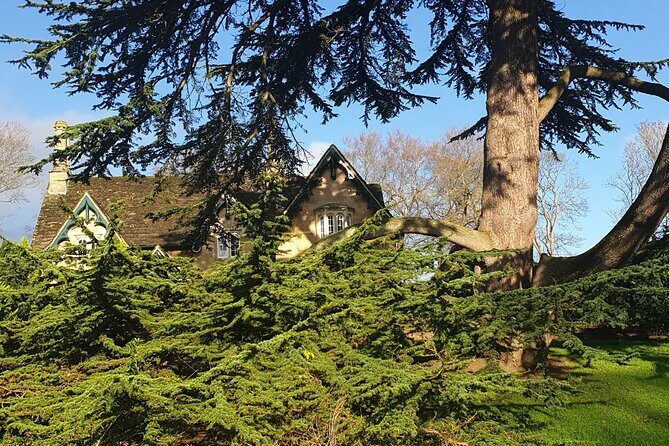
The route then moves through Great Pulteney Street, tied to the Pulteney Estate. You also get a walk-and-view moment connected to the area around the Holburne Museum / Sydney Gardens.
This is one of those segments that helps if you plan to roam after the tour. When you see how these areas connect on foot, it becomes easier to choose a direction later—toward gardens and museums, or toward shopping and cafés—without second-guessing.
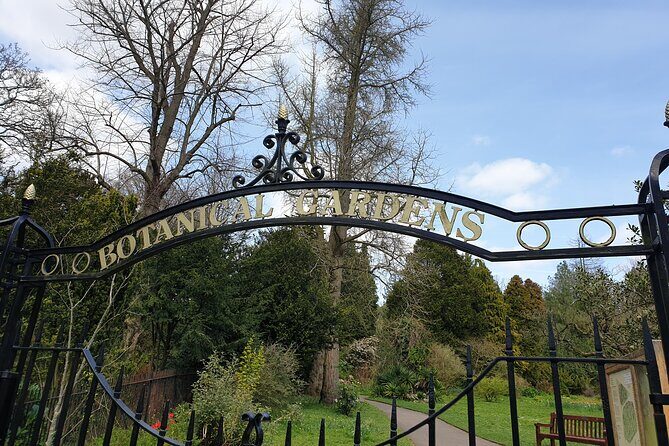
Then you reach Royal Victoria Park, a municipal park set out in 1830. The tour keeps it short, but it gives you a real sense of how Bath planned green space alongside grand buildings. Even a brief park stop can make the later canal section feel less like a switch to industrial-era themes and more like Bath’s whole system of life.
Kennet & Avon Canal: the engineering story behind the city’s growth
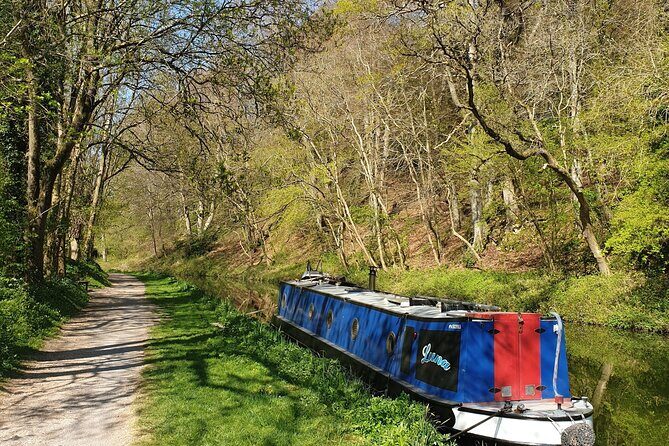
The final major viewpoint stop is the Kennet & Avon Canal. This is where the tour stretches your idea of Bath beyond spas and stonework. You get to marvel at the man-made work—tunnels, locks, bridges—and you get the bigger story of the canal builders back in the late 1700s and early 1800s.
The connection is explained clearly: the canal joined the River Avon in Bath with the rivers Kennet and Thames near London. That means Bath was not only famous as a destination; it was connected as a working route, moving goods and supporting people’s lives.
This is also a great place to slow down. Canal edges are good for standing still, taking photos, and listening because there is less pressure to sprint to the next photo stop.
Private guiding that actually changes the experience
The “private” part is more than marketing. You are not stuck watching someone else’s head block key sights. Instead, the guide can keep the story calibrated to your group’s interests and timing.
In feedback, the guides named Andy, Jim, and Sheila get praised for making the walk feel like an excellent conversation rather than a script. Andy is noted for adapting to the group’s agenda and helping the tour time fly while still feeling relaxed. Jim gets credit for detailed history with strong local storytelling and even solid dining suggestions that helped people continue enjoying Bath after the walk. Sheila is described as fun, packed with facts, and clearly good at turning Bath’s past into something you can picture.
That matters because Bath is easy to overestimate. If you come in with only a list of attractions, you can still end up confused about which era you are looking at. A guide’s job is to help you see the “why” behind each landmark.
Price and what it really costs once you add entries
The price is $579.61 per group, up to around 15 people, for about 4 hours. That is important because it changes the math fast:
- If you fill the group (15 people), it works out to roughly $38–$40 per person for the guiding portion.
- If you only have a couple people, it becomes more expensive per person because you still pay the group rate.
On top of that, you should plan for entry costs you can’t escape. The Roman Baths entrance fee is listed as £30 per person, and Abbey church entrances are listed at £10 per person. The Assembly Rooms has a small voluntary donation and is generally permitted with your guide, but it is still not a guaranteed “free for everyone” entry the way a city attraction pass might be.
So here is my practical take: this tour is great value when you have a group that can spread the fixed cost. For couples, it is still a strong option if you want skip-the-line help for the Roman Baths and you like having expert guidance. If you are mostly after wandering and photos on your own, you might spend less by building your own route and buying tickets directly.
Timing, pacing, and comfortable walking choices
The walk is built around short stops, many around 10 to 15 minutes, including the Abbey segments and the main Georgian viewpoints. That pacing is designed for people who want to see a lot without committing to a full-day plan.
It also helps if you have limited time in Bath. Four hours is long enough to feel like you really know the city layout, but short enough that you will still have energy left for a proper meal and follow-on exploration.
The tour notes that you should have moderate physical fitness. It is a walking tour, so comfortable shoes matter, especially if the weather turns and the ground gets slick.
Who this tour is best for
This works well if you:
- Want an overview of Bath’s biggest landmarks in a short window
- Like guided context for major sites like Bath Abbey and the Roman Baths area
- Have a group of friends or family and want everyone to get the same story at the same time
- Appreciate architecture and city planning, including the canal engineering connection
It may not be ideal if you prefer slow, deep museum time. The stops are timed to keep the flow, and several key entries are not included in the base tour price.
Should you book this Bath extended walking tour?
Book it if you want a smart, efficient way to understand Bath without turning your day into ticket-chasing and map-work. The best-case scenario is that you use the walk to get the story and the layout, then you spend your extra time wherever your curiosity lands—Roman Baths interior, Abbey access, parks, or Georgian streets.
Don’t book it if your priorities are mainly relaxed strolling with no extra cost planning, or if you already know exactly what you want and do not need skip-the-line help. Also think twice if your group is small and you are trying to keep total spend low; the base price is per group, so the per-person value depends on how many of you are sharing it.
In other words: if you want Bath to make sense fast and you like having a human guide point out what matters, this is a solid buy.
FAQ
How long is the Bath extended walking tour?
It runs for about 4 hours.
Is this tour private?
Yes. It is private, and only your group participates.
What group size can you book for?
The price is per group for up to about 15 people.
Where does the tour start and end?
It starts at Abbey Churchyard, Bath BA1, UK, and ends back at the meeting point.
What language is the tour offered in?
The tour is offered in English.
Are tickets for the Roman Baths included?
No. Roman Baths entrance fee is not included, and the listed fee is £30 per person. The guide can provide express entry tickets to use after the walking tour.
Are Bath Abbey entrances included?
No. Abbey church entrances are not included, and the listed fee is £10 per person.
Is there a mobile ticket?
Yes. The tour includes a mobile ticket.
Does the tour run in any weather?
The experience requires good weather. If it is canceled due to poor weather, you will be offered a different date or a full refund.
Are service animals allowed?
Yes. Service animals are allowed.