REVIEW · BATH
Bath Private Guided Walking Tour
Book on Viator →Operated by Global Guide Services · Bookable on Viator
Bath teaches fast if you know where to look. This private guided walk threads the city’s big ideas—Roman Bath, Georgian architecture, and royal-era Britain—into a route that’s easy to enjoy in about two hours. I especially like the way it brings small details together, like King Bladud’s origin story and the story behind Pulteney Bridge. One possible drawback: entrance fees aren’t included, so you’ll pay separately if you want to go inside the Roman Baths.
You’ll meet at Bath Abbey (Bath BA1 1LT) and finish back there, which makes planning feel painless. The tour is offered in English, and it’s set up as a true private experience for your group only—up to 15 people. And yes, you really do get that local-person energy: guides such as Alison, Tony, Andrew, Jamie, Paul, and Ingrid are singled out for being friendly, engaging, and good at turning Bath from a postcard into a place with real characters.
Another nice touch is flexibility. The guide can adjust things on the spot, so if you’re more interested in Jane Austen, architecture, or a quick detour for atmosphere, you can steer the walk a bit. Just keep in mind that the stops are timed and the walk is compact, so you’re not meant to linger for hours at each monument.
In This Review
- Key points that make this Bath private walk worth your time
- Bath in 2 Hours: What This Private Walk Gets Right
- Stop-by-Stop: King Bladud, Pulteney Bridge, Royal Crescent, and Bath Abbey
- 1) Bath to start: King Bladud and the city’s foundation
- 2) Pulteney Bridge: medieval Bath tied to religion and wool
- 3) No. 1 Royal Crescent: Georgian architecture that rewards your attention
- 4) Bath Abbey: coronation-era Britain
- Roman Baths and Aqua Solis: What to Expect When Entry Fees Are Separate
- Parade Gardens, Jane Austen, and the Gardens You’ll Actually Remember
- Royal Victoria Park: English garden style, explained on foot
- Why the Guides Matter: Alison, Tony, Andrew, Jamie, Paul, and Ingrid
- Price and Value for Groups: When $290.90 Feels Like a Deal
- Who This Tour Fits Best (and Who Might Need More Time)
- Should You Book This Bath Private Guided Walking Tour?
- FAQ
- How long is the Bath Private Guided Walking Tour?
- What does the tour cost?
- Is this tour private?
- Where does the tour start and end?
- What language is the tour offered in?
- Are entrance fees included?
- Does the tour include the Roman Baths?
- Is it easy to reach the meeting point by public transport?
- Can the guide customize the tour on the spot?
- What is the cancellation policy?
Key points that make this Bath private walk worth your time

- A true private group (up to 15), with your guide staying with you the whole time
- A fast 2-hour route that hits Bath Abbey, Royal Crescent, and major viewpoints without feeling rushed
- Guides bring personality, with names like Alison, Tony, Jamie, Paul, and Ingrid getting repeat praise
- Roman Baths are a “stop,” not an included ticket, so plan for separate entry if you want inside time
- A mix of classics and pop culture, including Jane Austen and Bridgerton-style context where it fits
- You get the origin story early, including King Bladud and the foundation of the city
Bath in 2 Hours: What This Private Walk Gets Right
Bath can feel like two cities stacked on top of each other. You’ve got Roman-era Aqua Solis bones under the streets, and then—boom—Georgian Bath stone and curving crescents that look like they were built for sunlight and promenading. This tour is built to help you hold both ideas at once.
I like that it doesn’t try to squeeze in everything. Instead, it picks the city’s key shapes and symbols and explains what they meant. That’s why the time works. You’re out walking for about two hours, and you’re given enough context to understand why each place matters, not just what it looks like.
You also get a private guide, not a crowded group “lecture walk.” That matters in Bath, where small streets can turn slow fast. With your guide staying with your group only, you can ask questions, adjust your pace, and get answers right away instead of waiting for the next stop.
The “good for first-timers” angle is real, but it’s not only for first-timers. One review mentioned that even locals loved it, which tells me the guide storytelling goes beyond facts-by-spreadsheet. You’re likely to learn things you wouldn’t guess just by reading a sign.
You can also read our reviews of more walking tours in Bath


Stop-by-Stop: King Bladud, Pulteney Bridge, Royal Crescent, and Bath Abbey

Here’s how the walk typically unfolds, and what each stop adds to the bigger picture.
1) Bath to start: King Bladud and the city’s foundation
The tour kicks off in Bath with the origin story—King Bladud and how the city’s foundation connects to what Bath became centuries later. Starting here is smart. Once you understand the origin thread, the rest of the tour reads like a chain: Roman meaning, then medieval power, then Georgian grandeur.
Even if you’re not a deep-history person, this kind of opening helps you “get your bearings fast.” You start walking with mental labels, and suddenly every building and bridge feels more purposeful.
2) Pulteney Bridge: medieval Bath tied to religion and wool
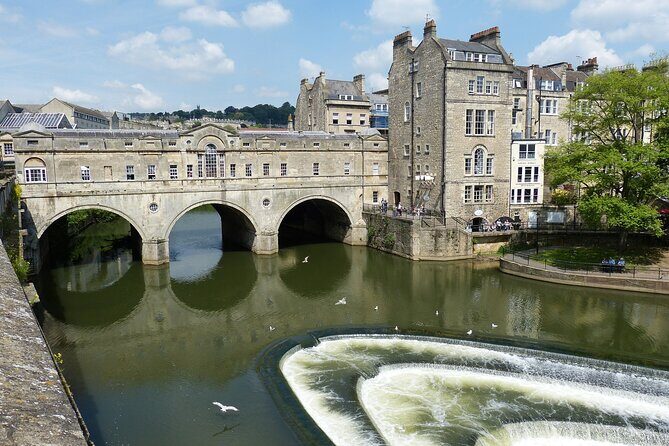
Next is Pulteney Bridge. It’s beautiful, yes, but the payoff is why Bath mattered. You get the medieval angle: Bath as a religious center and also linked to the wool trade. That combination explains a lot about why Bath grew the way it did.
This is a good viewpoint stop. You can pause, look across the water, and connect what you’re seeing to how the city functioned economically and socially. The guide also helps you notice details you might otherwise miss when you’re just snapping photos.
3) No. 1 Royal Crescent: Georgian architecture that rewards your attention
Then comes Royal Crescent, specifically No. 1. This is where Bath’s “you can’t fake this look” factor becomes obvious. The guide talks through the architecture and why the crescent shape is such a signature piece of Georgian design.
I like that the tour treats architecture as more than decoration. You learn what the form is doing and why it’s iconic. If you’ve ever stared at Royal Crescent wondering why everyone goes on about it, this is the part that clears it up.
You can also read our reviews of more guided tours in Bath






4) Bath Abbey: coronation-era Britain
Bath Abbey is next. You’ll hear about King Edgar and the coronation connection—one of those moments that gives Bath a bigger national role than you might expect from a city of this size.
Abbey stops can go two ways: either you get general “this is old” talk, or you get a clear story about why it sits where it does in British history. This tour’s value is that it aims for the story you can repeat later.
Roman Baths and Aqua Solis: What to Expect When Entry Fees Are Separate
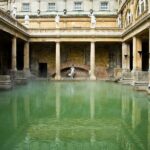
A big Bath highlight is the Roman Baths and the Roman city idea—Aqua Solis. On this walk, you’ll cover this part as a key chapter of Bath’s identity, which is exactly where you want the story to go after medieval and Georgian stops.
One important consideration: entrance fees aren’t included. That means you can expect the tour to set you up for the Roman context, but if you want to go inside for the full Roman Baths experience, you should plan to purchase your own entry.
This matters because “seeing from the outside” and “being inside with access to the baths themselves” are totally different experiences. The outside context can still be valuable—Roman Bath makes sense once you understand the water and the city’s Roman role—but you’ll need separate tickets to go deeper.
If you’re the type who likes to spend time with artifacts and spaces, I’d treat this as a pick-your-own-adventure moment. If you want the full Roman Baths visit, budget the extra time and money. If you want the story and the atmosphere, you’ll still get value from the stop.
Parade Gardens, Jane Austen, and the Gardens You’ll Actually Remember
After the Abbey and Roman context, the tour moves into softer, scenic territory: Parade Gardens and Jane Austen’s connection to Bath.
This is a smart pacing shift. Abbey and stone architecture can be intense in the best way, but after a while, you want open space and a place to reset your eyes. Parade Gardens gives you that breathing room while also anchoring Bath in literature and daily life.
A guide may also weave in Jane Austen context, and you might even hear playful pop-culture touches tied to Bridgerton-style references if that fits the moment. It sounds light, but it helps the city feel current. You end up remembering the places not as museum pieces, but as locations that shaped (and were shaped by) stories.
Royal Victoria Park: English garden style, explained on foot
Then you head to Royal Victoria Park. This is where the tour turns from buildings to landscapes you can read with your eyes. The guide explains the English style of garden in a way that’s made for walking—so you’re not just looking at greenery, you’re understanding design choices.
If you like parks that feel intentional rather than random, you’ll enjoy this stop. Even if you’re tired, it’s one of the easier parts of the walk to absorb slowly.
Why the Guides Matter: Alison, Tony, Andrew, Jamie, Paul, and Ingrid
This is the kind of tour where the guide is the product. You’re not just buying a route; you’re buying someone’s personal map of Bath.
The names that come up with consistently strong praise include Alison and Tony for being warm, clear, and able to make Bath feel alive. Andrew is called out as friendly and sharp on details, while Jamie is mentioned for being entertaining and fun to be with. Paul is highlighted for teaching visitors things they might not find on their own, especially as a born-and-raised Bath guide. Ingrid stands out for architectural explanations that make Bath stone and the John Woods influence feel understandable, not overwhelming.
What I’d take from that as a practical traveler: you should expect humor and personality mixed into the facts. One guide is even described in terms of hospitable, engaging storytelling with gossip-like details—just the kind of human flavor that makes a walking tour feel like a conversation, not a slideshow.
Also, private guiding often means you may get quieter routes or easier approaches to major spots. Even when the stop itself is public, the timing and how you move can make the difference between “crowd shuffle” and a smoother experience.
And yes—customizing can happen on the spot. If your group wants more on one theme, a good guide can usually shift the emphasis without derailing the route.
Price and Value for Groups: When $290.90 Feels Like a Deal

The price is $290.90 per group, up to 15 people, and the tour runs about 2 hours. That’s a wide range in value depending on group size, so do the quick math.
- If you book as a small group of 2–4, it can feel like a premium experience.
- If you book with a group closer to 10–15, the per-person cost drops fast, and it starts to feel like a smart way to see the city together.
Here’s the key point: you’re paying for a private guide and the ability to ask questions and move at your group’s pace. If you’re the “plan less, enjoy more” traveler type, the guide time often feels worth it. If you’re traveling solo or as a couple and you’re happy wandering on your own, a free self-guided route might be cheaper—though you’d miss the explanation that makes the places click.
One more value factor: a common booking pattern is doing it about 46 days in advance on average. Bath is popular, and private-guided slots can fill. If your dates are firm, earlier booking is a safer move.
Who This Tour Fits Best (and Who Might Need More Time)
This tour fits best if you want structure without rigidity. It’s ideal for:
- First-time Bath visitors who want the big landmarks plus the meaning behind them
- Couples or small groups who want a guide to answer questions on the go
- Families where someone else handling context helps keep everyone engaged
- History-and-architecture fans who appreciate explanations tied to what you see
It might not fit perfectly if you’re the type who wants long, slow museum-style visits. The Roman Baths, for example, aren’t included as paid entry. And the stops are timed, so you won’t get a half-day “deep visit” experience here.
Think of it as a great orientation plus a curated hit list. After the tour, you’ll know exactly what you want to return to.
Should You Book This Bath Private Guided Walking Tour?

Book it if you want Bath to make sense quickly. The private setup, the mix of King Bladud origin story, Abbey significance, Royal Crescent architecture, and Roman context gives you a coherent narrative in a short time.
I’d especially recommend it when your group includes at least one person who likes guided explanation, because that’s where the value shows up. If you’re traveling with mixed interests—some architecture lovers, some Austen fans, some “just show me the pretty views”—this route has enough variety to keep people interested.
Don’t book it expecting included Roman Baths entry. If Roman Baths inside-time is a must, budget the extra entrance fee so you don’t feel squeezed.
FAQ
How long is the Bath Private Guided Walking Tour?
It lasts about 2 hours.
What does the tour cost?
It costs $290.90 per group, up to 15 people.
Is this tour private?
Yes. It’s a private tour, and only your group participates.
Where does the tour start and end?
It starts at Bath Abbey, Bath BA1 1LT, UK, and ends back at the meeting point.
What language is the tour offered in?
The tour is offered in English.
Are entrance fees included?
No. Entrance fees are not included.
Does the tour include the Roman Baths?
The tour covers the Roman baths and Aqua Solis, but entrance fees aren’t included.
Is it easy to reach the meeting point by public transport?
Yes. The meeting point is near public transportation.
Can the guide customize the tour on the spot?
Yes. There may be possible customizing on the spot with your local guide.
What is the cancellation policy?
You can cancel for a full refund if you cancel up to 24 hours in advance of the experience.
—
If you tell me your travel dates and group size, I can help you judge whether the per-group price looks like a great deal for your situation.