REVIEW · BIRMINGHAM
Digbeth, Public Art & Peaky Film
Book on Viator →Operated by Positively Birmingham Walking Tours · Bookable on Viator
Street art has a Birmingham address. This guided walk led by Jonathan Berg pairs local storytelling with Digbeth public art you’d never find on your own, with the added fun of Peaky Blinders filming backdrops.
I like the way it connects old Birmingham to what’s happening now, so the murals feel more than just decoration. One possible drawback: you’ll be on your feet for the full 2 hours plus, and you’ll want to bring 3.5 mm earphones (or pay a small add-on) so the audio receiver works as intended.
In This Review
- Key Things I’d Bet You’ll Notice on This Walk
- Starting at the Bull: a fast way to orient yourself in Birmingham
- St Martin in the Bull Ring: history in a five-minute frame
- Digbeth public art and Peaky Blinders filming backdrops
- What makes Digbeth different from a normal street-art stroll
- Peaky Blinders is part of the point
- You may spot famous-music style references
- Expect more than murals: Centenary Square and Grand Central are part of the thread
- Custard Factory: Birds Custard roots and unexpected wall art
- Why Jonathan Berg’s stories make the art click
- If you want to go deeper after the walk
- Live audio receiver: your comfort and freedom on busy streets
- Price and value: a focused 2 hours 15 minutes
- Who this Digbeth, Public Art, and Peaky Blinders walk is for
- Should You Book This Tour?
- FAQ
- How long is the Digbeth, Public Art & Peaky Film tour?
- What’s the starting point for the tour?
- Where does the tour end?
- What does the price include?
- Do I need to bring earphones?
- What areas are covered during the walk?
- What language is the tour offered in?
- How big is the group?
- Is free cancellation available?
Key Things I’d Bet You’ll Notice on This Walk
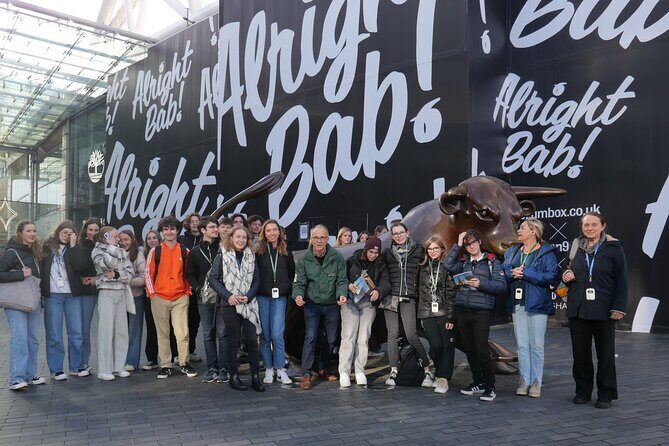
- Jonathan Berg’s local angle: a Birmingham author who ties street art to place, not just names on walls
- Peaky Blinders context in Digbeth: you’ll see why this area fits the show’s look and feel
- Live audio on busy streets: you can hear instructions clearly and keep your own pace
- Digbeth murals at eye level: street art that changes how you read the neighborhood
- Custard Factory stop: Birds Custard roots meet graffiti and wall art in a more bohemian pocket
Starting at the Bull: a fast way to orient yourself in Birmingham
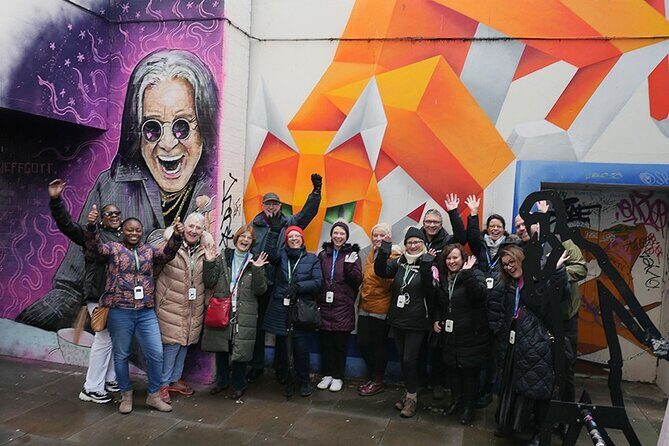
Your tour begins at BullBirmingham, right by the Bull statue in the Bullring area. It’s a practical start. You’re already in the city center, so it’s easy to combine this walk with shopping, coffee, or a later wander.
That first stop matters more than it sounds. The Bull statue and the walkway setting give you a quick baseline for direction. Birmingham can feel a bit “blocks and junctions” at first. This tour helps you understand how the parts connect—commercial core to inner-city streets.
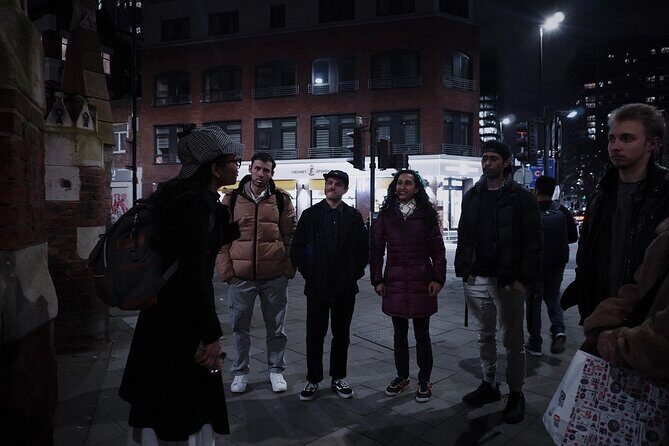
You’ll also get an early sense of the guide’s style. This isn’t a slow, museum-style lecture. It’s talk + walking + quick stops so you can actually look at what’s around you.
Good to know: the whole experience is about a 2 hours 15 minutes loop, so don’t plan a long detour before you meet up.
You can also read our reviews of more tours and experiences in Birmingham.



St Martin in the Bull Ring: history in a five-minute frame
A short walk brings you past St. Martin in the Bull Ring. This is the kind of stop I appreciate on street-level tours: quick, free, and useful.
Why it works: it gives you one anchor point before you head into Digbeth’s more chaotic, art-forward atmosphere. You get a sense that Birmingham’s story isn’t only in the big set pieces—it’s also in churches and everyday streets that have survived the waves of change.
It’s only a few minutes, so don’t expect this to slow the pace. You’ll be back moving again fast, and that’s part of the design.
Digbeth public art and Peaky Blinders filming backdrops
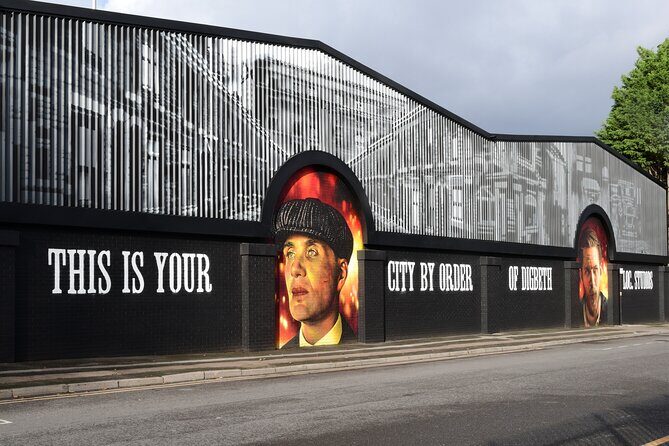
The main draw starts when you step into Digbeth. This is where the city’s origin story and its modern shape come into focus. You’ll hear about Birmingham across time, including how the art scene evolved from Victorian-era roots to today’s street art culture.
Here’s what you should plan for at this stage: the walking portion turns from “where are we?” into “why does this place look like this?” The streets you pass aren’t just pretty backdrops. They form a visual language—paint, texture, scale, and location all matter.
What makes Digbeth different from a normal street-art stroll
This tour focuses on more than snapping photos. You’ll learn how Birmingham’s identity shows up on walls, and you’ll get help noticing details. One of the most useful things you can do in Digbeth is start separating graffiti from street art in your own head. The guide’s commentary nudges you to look at style and intention, not just color.
Peaky Blinders is part of the point
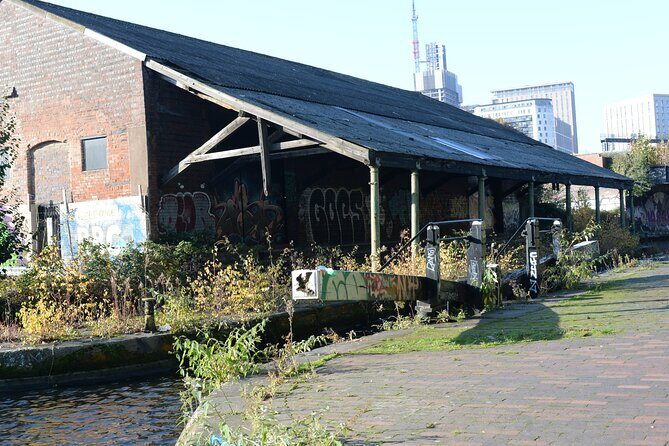
Digbeth is described as an atmospheric backdrop for the filming of the Peaky Blinders feature film. That means you’re not only looking at murals—you’re also seeing the kind of streets and textures that production teams love: industrial edges, layered surfaces, and neighborhoods with real atmosphere.
If you’re a fan, this is a fun way to connect the show’s look with real geography. If you’re not, you’ll still enjoy the route because the “why here” framing makes the art feel grounded.


You may spot famous-music style references
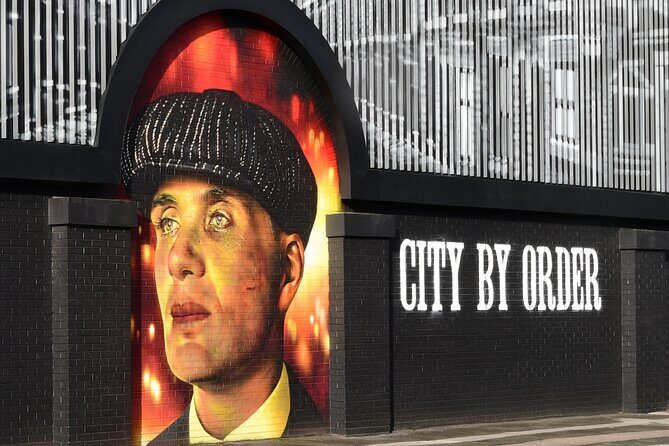
One specific mural reference that came up in feedback involves R Jeffcott and a Birmingham famous son theme that was tied to Ozzy Osbourne around the time of a tour. You might see related references depending on timing and what’s on view, but it’s a good example of how the art can act like a public bulletin board for local culture.
Expect more than murals: Centenary Square and Grand Central are part of the thread
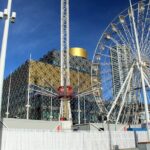
The experience also includes exploration near Centenary Square and Grand Central. Those stops matter because they show the contrast. You get inner-city street art energy first, then you see major civic and transport landmarks as the city keeps shifting.
That contrast is the whole point. Birmingham’s not stuck in one era. The city’s look changes as you move, and the guide helps you connect that change to art and identity.
Custard Factory: Birds Custard roots and unexpected wall art
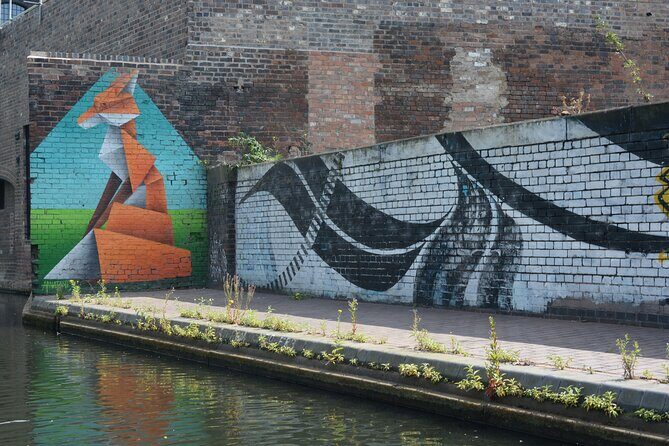
After Digbeth, you head to the Custard Factory, a place built around Birds Custard. You’ll spend about 15 minutes here, which is enough time to absorb the vibe without turning it into a long detour.
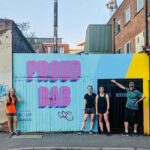
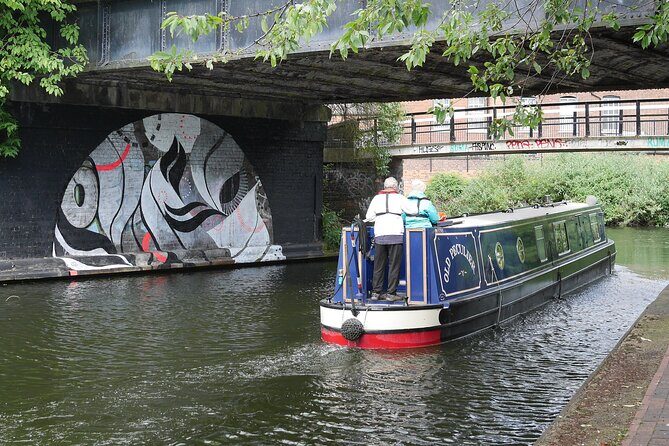
This stop brings the tone of the walk slightly more “creative space.” The walls and corners you pass can feel more bohemian, with graffiti art appearing in places you might not expect. It’s the kind of stop where you realize the city’s art scene isn’t confined to sanctioned murals. It lives on edges, in side streets, and in spaces where people already gather.
Practical tip: treat Custard Factory like your photo-and-browse window. If you’re the kind of person who wants to remember what you saw, this is where you slow down and actually look.
Why Jonathan Berg’s stories make the art click
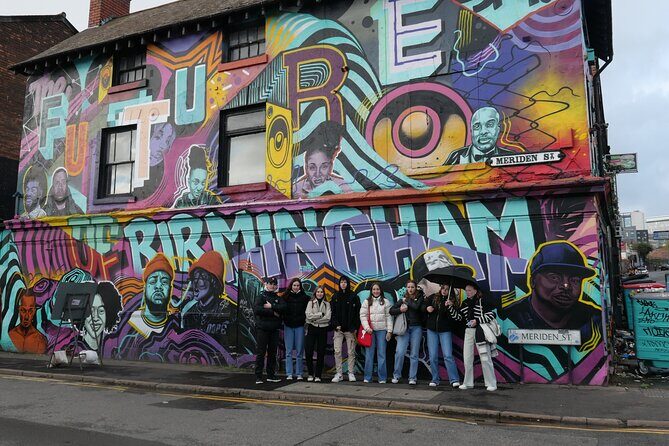
A strong street art tour doesn’t just point and name. It teaches you how to look. In this experience, that job sits with Jonathan Berg, a local author who talks about Birmingham’s art scene with energy and real specificity.
I like guides who can explain why something matters without making it feel like homework. Jonathan’s approach, based on the feedback you’ll feel during the walk, is more conversational: ask questions, pause to look, then keep moving.
Two small details that add a lot:
- You get context for what you’re seeing, rather than a random list of artists.
- You’re encouraged to notice differences in style, so the art becomes legible instead of overwhelming.
If you want to go deeper after the walk
Jonathan has published books connected to the topic. If you catch yourself wanting more after the walk, it’s worth looking up Birmingham’s Public Art. There’s also mention of Birmingham: A Drone’s Eye View with a publication date of 22 November 2025.
That matters for value. The tour can act like a starter guide, then you can keep the learning going later.
Live audio receiver: your comfort and freedom on busy streets
One of the best practical features here is the included live audio receiver. You use it so you can hear the guide even in noisy areas.
What to plan for:
- You should bring earphones with a 3.5 mm jack.
- If you don’t have them, earphones can be supplied at cost (noted as £1).
Why this improves your experience: you don’t have to keep perfect step distance. You can look at a mural longer, step aside to read something, then catch up without losing the story. In a city center setting—where foot traffic and noise are real—that’s a big quality-of-life upgrade.
Also, using an audio system means the guide can talk without everyone crowding shoulder-to-shoulder. It helps you actually enjoy the art instead of standing in a line.
Price and value: a focused 2 hours 15 minutes
This tour costs $19.43 per person. For that, you get:
- A live guide (Jonathan Berg) with local storytelling
- A guided walking route in key Birmingham areas
- A live audio receiver
- Free entry where admissions apply (all listed stops are free)
The value here isn’t just the low price. It’s what you’re buying: guidance through a neighborhood where you might otherwise miss the connections. Digbeth can look like a lot of visual noise until someone gives you a framework. Once you have that, the murals and street art start to feel purposeful.
If you’re time-limited and want a single hit of Birmingham street art culture, this fits well. It’s long enough to feel like a real neighborhood walk, but short enough that you can still do other things the same day.
Who this Digbeth, Public Art, and Peaky Blinders walk is for
This tour is a strong match if you:
- Love street art and want help spotting differences in style and approach
- Like city history told through neighborhoods, not only buildings with plaques
- Are a Peaky Blinders fan who wants real-world geography behind the show’s look
- Want a Birmingham guide who’s local and focused on art culture
It’s also a nice option for locals, especially if you think Birmingham is just what you pass on the way to somewhere else. This route is designed to make the familiar feel new.
One practical note: it’s listed for travelers with moderate physical fitness. You’ll be walking and it’s not framed as a sit-and-watch experience.
Should You Book This Tour?
I’d book it if you want Birmingham street art with context, not just photos. The mix of Digbeth public art, Birds Custard area creativity, and Peaky Blinders filming references gives the walk a clear theme. Add the live audio receiver, and you can pace yourself while still staying connected to the guide.
Skip it only if you dislike walking in busy city areas or you’d rather do things entirely at your own speed with no structured route. If you’re open to a guided, story-led neighborhood walk, this is an easy yes.
FAQ
How long is the Digbeth, Public Art & Peaky Film tour?
It runs about 2 hours 15 minutes.
What’s the starting point for the tour?
Meet at BullBirmingham, B5 4BU, UK.
Where does the tour end?
It usually finishes back at the Bullring Shopping Centre, in Birmingham B5 4BU, UK.
What does the price include?
You get the guided experience and a live audio receiver for hearing the guide.
Do I need to bring earphones?
Yes. You need earphones with a 3.5 mm jack for the audio system. If you don’t have them, earphones can be provided at cost (noted as £1).
What areas are covered during the walk?
You’ll explore the Bullring area, St. Martin in the Bull Ring, Digbeth, and the Custard Factory area, with the tour also visiting the general route that includes Centenary Square and Grand Central.
What language is the tour offered in?
The tour is offered in English.
How big is the group?
The tour has a maximum of 35 travelers.
Is free cancellation available?
Yes. You can cancel up to 24 hours in advance for a full refund.