REVIEW · BIRMINGHAM
Discovering Birmingham 2 hour Walking Tour to the Jewellery Quarter
Book on Viator →Operated by Positively Birmingham Walking Tours · Bookable on Viator
Two hours can rewire how you see Birmingham. This walking tour links major squares with the city’s craft-minded core, using an audio receiver and a guide’s stories to take you off the main roads and toward places most visitors miss. You’ll also follow a canal route into the Jewellery Quarter that even locals apparently skip.
I particularly liked the mix of big landmarks and tight backstreets. The Jewellery Quarter section is all about how the area grew from older times into the modern Birmingham you see today, and it feels like you’re walking inside the city’s “how it got here” story. I also love that the tour is set up for clarity: with the receiver you can still hear what’s being said even when the group spreads out.
One thing to consider: this is still a 2-hour walk in central Birmingham. If the weather turns, you’ll want a coat or umbrella, and on icy days the route may change.
In This Review
- Key things to know before you go
- Meeting at the Library of Birmingham and Getting Oriented in Centenary Square
- A Secret Canal Route Into the Jewellery Quarter
- The Jewellery Quarter Church: Georgian Architecture From the Outside
- Birmingham Cathedral and the Stained Glass If Timing Works
- St Chads and the Car-Shaped City Question
- Victoria Square and Chamberlain Square: Modern Birmingham in Motion
- Price, Time, and Value: Is $20.80 Worth It?
- Who This Tour Suits (and Who Might Want Something Else)
- What to Expect From the Group Experience
- Should You Book This Birmingham Jewellery Quarter Walk?
- FAQ
- How long is the Discovering Birmingham 2 hour Walking Tour?
- What is the meeting point for the tour?
- Where does the tour end?
- Is the tour offered in English?
- Do I need to buy admission tickets for stops?
- Is there a limit on group size?
- What’s included with the ticket price?
- What should I do if it rains or conditions get icy?
- What are the cancellation terms?
Key things to know before you go
- Secret canal entrance into the Jewellery Quarter: a quieter approach that changes the feel of the neighborhood right away.
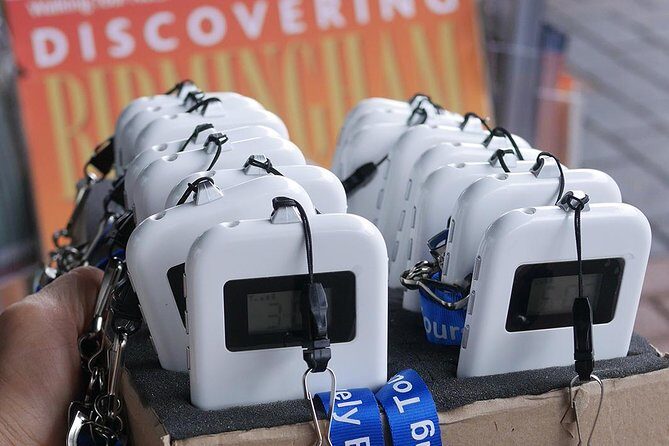
- Audio receivers: you can catch the guide even across distance, not just when you’re close.
- Georgian-era focus: you’ll connect Jewellery Quarter businesses to older growth patterns, then see what’s new now.
- Cathedral stop with an optional interior moment: you’ll view the cathedral and, if timing allows, may step inside for stained glass.
- City planning talk at St Chads: you’ll look at the church from the inner ring road and think about post-war redevelopment choices.
- Small-ish group: maximum 40 travelers means it still feels like a walk with a guide, not a lecture hall.
Meeting at the Library of Birmingham and Getting Oriented in Centenary Square
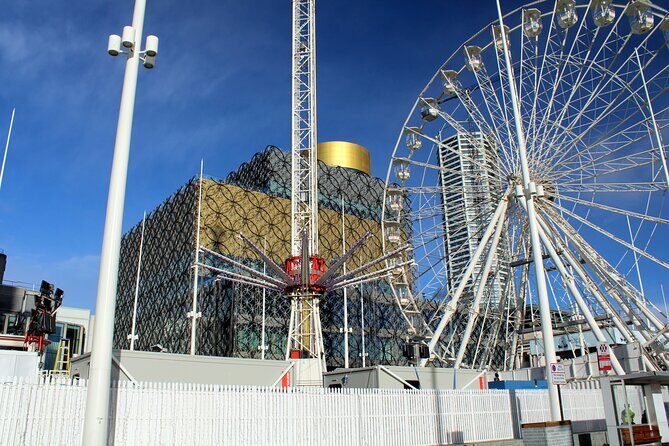
Your tour starts at 1:30 pm at the Library of Birmingham by Centenary Square (B1 2ND). This is a smart launch pad. The area around Centenary Square lets your guide set the stage fast—what Birmingham is, how it grew, and what to look for as you move through it.
Centenary Square itself is more than a stopping point. You get an early snapshot of the city’s identity from things in and around the square—so when you later hit the Jewellery Quarter and start spotting architectural details, you’re not just seeing them. You’re understanding why they’re there.
If you like tours that help you read the city, this opening works well. You’ll leave it with a few mental bookmarks, which matters when you’re walking for a solid chunk of time.
You can also read our reviews of more walking tours in Birmingham


A Secret Canal Route Into the Jewellery Quarter
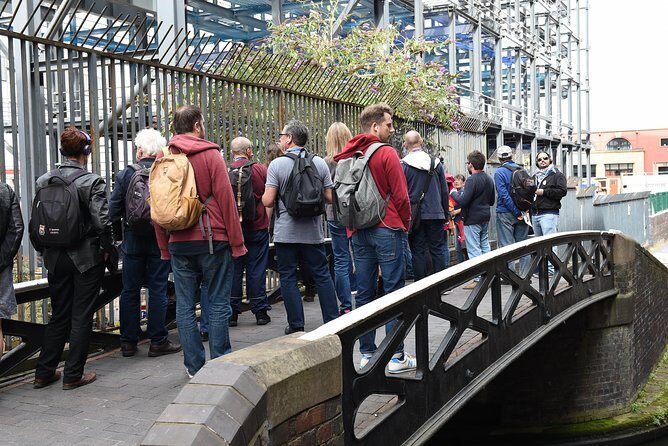
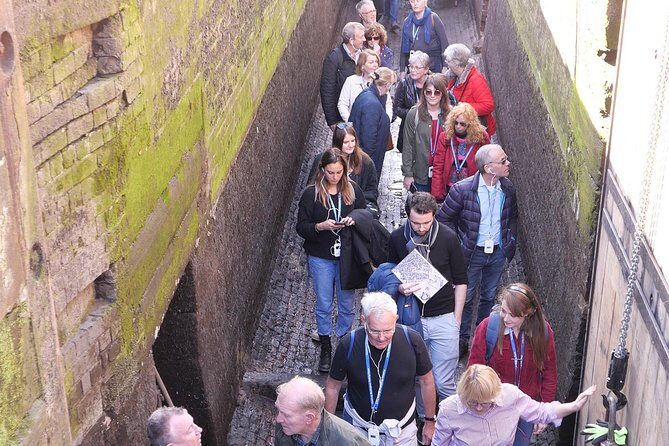
Then comes the moment that makes this tour feel different: the walk into the Jewellery Quarter by a canal route. The idea is simple but powerful. You’re moving through a less obvious path, and it immediately changes the mood—from grand squares to industrial-side water and working-city edges.
Your guide explains how the Jewellery Quarter developed, including how different kinds of business emerged over time from earlier periods (including Georgian times). This isn’t just trivia. It helps you see the neighborhood as a working system—where workshops, trades, and buildings all relate to each other.
And because the canal route reaches parts you usually can’t reach easily by bus or car, the walk feels more personal. You get the sense of discovering, not just ticking boxes.
A couple of reviews highlight the guide factor here—people talked about guides keeping the energy up even when rain kept falling. Names that come up in the guide lineup include Jonathan Berg and Bernard, and the theme is consistent: stories with a good sense of humor make the history easier to hold onto.
The Jewellery Quarter Church: Georgian Architecture From the Outside
After the development story, you get a quieter, more visual moment: you’ll view the Jewellery Quarter church known for a 1779 example of Georgian architecture. This stop is exterior-focused, which I like. You can appreciate the building’s style without being rushed through an interior you might not get to see.
Even from the outside, this kind of stop helps you slow down and notice details. It’s the difference between walking past a facade and understanding that the neighborhood has real layers—and not all of them are modern.
Birmingham Cathedral and the Stained Glass If Timing Works
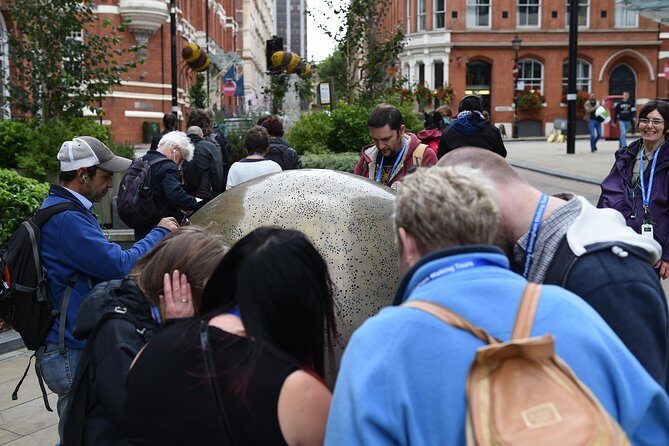
Next up is Birmingham Cathedral, described as an English Baroque cathedral. The emphasis here is on looking—taking in the architecture and using your guide’s commentary to connect the building to the city around it.
There’s also an optional moment. On occasions, if there’s time and no conflicting events, you may go inside to see the Edward Burne-Jones stained glass. That’s a nice “if it works out” bonus. Even if you don’t get in, you still get a proper stop rather than a quick glance from the pavement.
A practical note: this is where the tour’s pacing matters. Because there can be events, don’t plan to treat it like a guaranteed interior visit. But if it lines up, you’ll likely feel it as a highlight—stained glass tends to do that.
St Chads and the Car-Shaped City Question
After cathedral time, you shift gears to St Chads. You’ll view it from the inner ring road, and the guide specifically points out the issues that came with post-war redevelopment—when the car became king.
This is one of those stops that turns a simple photo opportunity into a conversation with yourself. You’re encouraged to decide whether Birmingham’s redevelopment has been planned well or caused more problems than it solved. It’s a thoughtful pivot in tone, especially after the crafted, business-driven story of the Jewellery Quarter.
I like this kind of stop because it makes the city feel real. It’s not only about what looks beautiful. It’s also about what decisions shaped the streets you’re walking.





Victoria Square and Chamberlain Square: Modern Birmingham in Motion
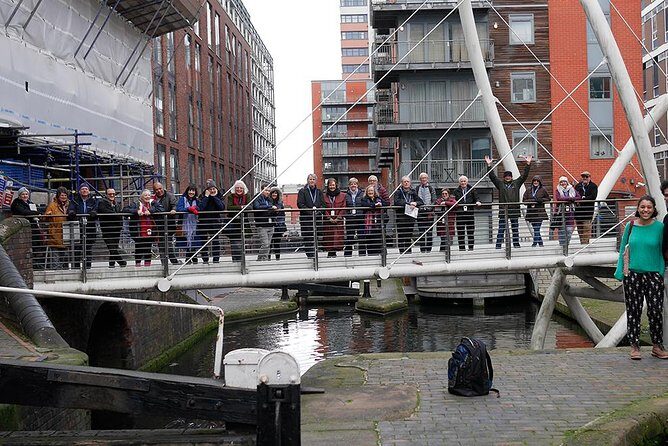
You then loop back through key central squares, returning toward the Library of Birmingham. Victoria Square is where you see more of the city’s square-and-street rhythm before you transition to the final segment.
From there, you’ll reach Chamberlain Square, a renovated area where the guide explains how Birmingham is reconfiguring the city for the future. The tone here is reflective: you’re looking at what changed, what’s being changed, and why cities keep reinventing themselves.
This ending arc matters because it connects back to your first stop. If Centenary Square gave you orientation, these squares show you the update—how the city keeps reshaping its public spaces as needs shift.
By the time you end back at the meeting point, you’ll likely feel like you walked a loop that included both the city’s “engine room” (the Jewellery Quarter) and its “show rooms” (cathedral and squares).
Price, Time, and Value: Is $20.80 Worth It?
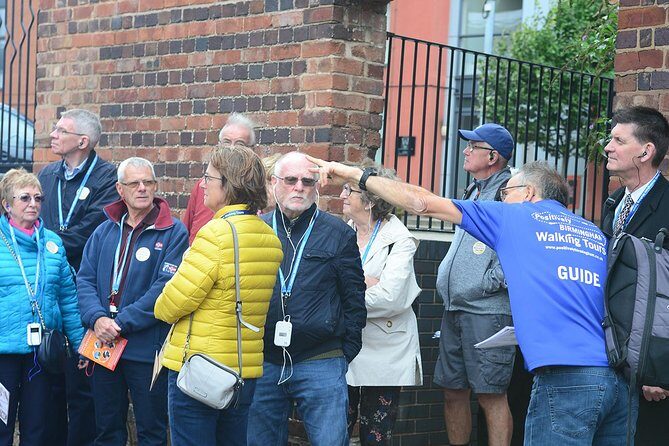
At $20.80 per person for about 2 hours, this tour isn’t trying to feel like a bargain bargain. It’s more like paying for a guided lens.
Here’s what you’re paying for, and why it’s good value:
- A local guide who connects buildings and streets to the way the city grew.
- Audio receivers so you can hear clearly even when you’re not shoulder-to-shoulder.
- A tight route design that includes areas hard to reach by coach or car, including the canal route.
- No entry tickets are required for the core experience.
The group size cap of 40 also helps. Smaller groups usually make the stories stick, and you’re less likely to miss key points while you’re walking.
For most people, the best value shows up when you’re on a short trip and want a fast, high-impact overview with actual texture—backstreets, canalside paths, and squares—rather than a quick drive-by tour.
Who This Tour Suits (and Who Might Want Something Else)
This one fits best if you:
- like walking tours that include both planning and people (how the city grew plus what it looks like now)
- enjoy neighborhood context, not just landmarks
- want a guide who keeps the mood up—especially if rain shows up
You’ll also want a moderate fitness level. Two hours isn’t huge, but it’s still steady walking across central Birmingham.
If you’re extremely sensitive to weather or you hate walking for any reason, you might prefer a less weather-dependent option. But if you can handle a coat and good shoes, this tour is a strong way to get oriented fast.
What to Expect From the Group Experience
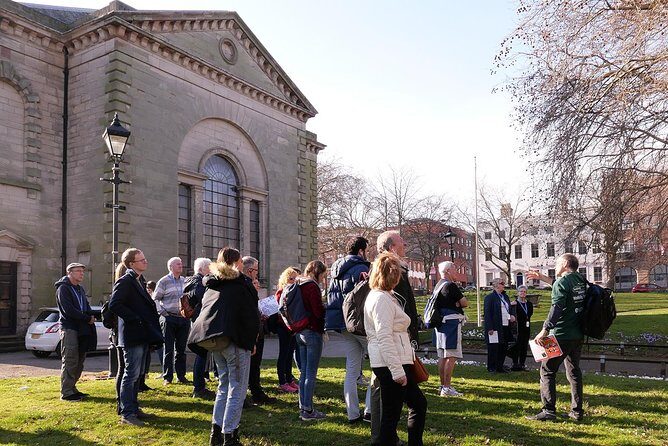
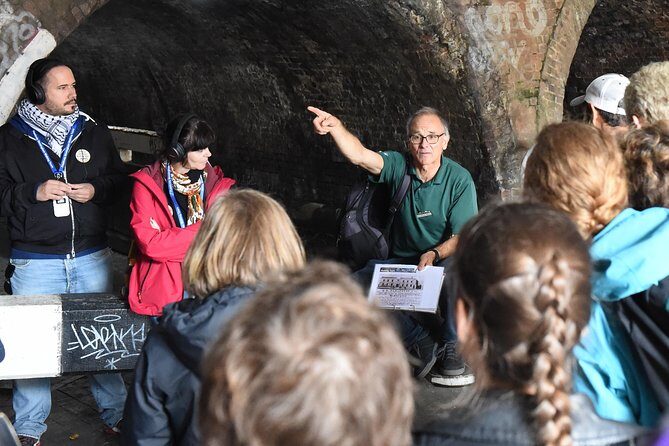
The format stays simple: a local guide leads, you follow on foot, and you get the audio receiver so you’re not constantly straining. The tour is offered in English, and you’ll receive a mobile ticket.
Because the max group size is 40, you should expect a lively but manageable pace. It’s not silent museum mode, and that’s part of the fun. You’ll see streets, crossings, and canal-side edges in a way that feels like moving through the city alongside someone who knows where to look.
Should You Book This Birmingham Jewellery Quarter Walk?
If you want a short, practical way to understand Birmingham, I’d book it. The main draw is the combination of off-the-map routing (the canal route), a clear guided story about how the Jewellery Quarter grew, and stops that make you think about the city’s evolution—from Georgian architecture to cathedral art to post-war redevelopment questions.
Book it especially if:
- you’re curious about the Jewellery Quarter beyond the obvious storefronts
- you want a guide-led walk that works even in less-than-perfect weather
- you’d rather learn how Birmingham formed than just photograph it
Skip it if you’re looking for long time inside museums or you want a fully guaranteed indoor cathedral visit. This tour is built for moving, looking, and listening—so treat it like a city walk with story, not a “sit and see everything” program.
FAQ
How long is the Discovering Birmingham 2 hour Walking Tour?
The tour runs for about 2 hours.
What is the meeting point for the tour?
Meet at the Library of Birmingham by Centenary Square (B1 2ND).
Where does the tour end?
The tour ends back at the meeting point at the Library of Birmingham.
Is the tour offered in English?
Yes, it’s offered in English.
Do I need to buy admission tickets for stops?
No. There are no entry tickets required for this tour.
Is there a limit on group size?
Yes. The tour has a maximum of 40 travelers.
What’s included with the ticket price?
You get a local guide and an audio receiver so you can hear the guide clearly.
What should I do if it rains or conditions get icy?
In rain, bring a suitable coat or umbrella. In icy conditions, the route may be adapted.
What are the cancellation terms?
You can cancel for a full refund if you cancel at least 24 hours before the experience starts.
If you tell me your travel dates and whether you’ll be there on a weekday or weekend, I can help you plan the order of sights around this 1:30 pm start.