REVIEW · BIRMINGHAM
Best of Birmingham 12km Running Tour
Book on Viator →Operated by Run of a Kind Birmingham · Bookable on Viator
Birmingham moves fast on a running tour. This 12km Best of Birmingham route uses short stops to turn major sights into a practical, story-filled jog. You’ll see canals, squares, markets, and famous neighborhoods with a licensed England Athletics Run Leader keeping the pace friendly and the vibe fun.
I like how this tour speeds up sightseeing without feeling like a blur. Each pause is timed so you get context on what you’re looking at, from the heritage Roundhouse to the big city squares near Victoria. I also appreciate the fact that snacks are provided, so you can focus on running (and not hunting for food).
One thing to consider: this is built for a moderate fitness level. If you’re hoping for a slow walk-and-chat day, you’ll likely feel rushed, and the experience runs best with good weather.
In This Review
- Key things that make this 12km Birmingham run worth your time
- The 12km idea: why running works so well in Birmingham
- Roundhouse Birmingham start: warm-up, ice-breaker, and canal-side context
- Centenary Square: the quick breather and the 1620-year backstory
- Jewellery Quarter: 40% of UK jewellery and the stories behind the streets
- Digbeth: secret canal paths, Industrial Revolution power, and street-art energy
- The Gay Village run-through: colorful streets and a quick explanation of how it grew
- Bullring and the bronze Bull: photo stop and a very local good-luck ritual
- Curved Selfridges and the 12th-century market: big city icons, then markets that still matter
- Victoria Square to The Mailbox: fountains, Roman-feeling architecture, and the Brummie Jacuzzi story
- Pacing, snacks, and what to bring (so the run feels good)
- Price and value: what $548.51 buys you in real terms
- Who this 12km tour suits best (and who should skip)
- Should you book the Best of Birmingham 12km Running Tour?
- FAQ
- How long is the Best of Birmingham 12km Running Tour?
- What does the tour include?
- Is water provided?
- Where does the tour start and end?
- What’s the meeting point address?
- What fitness level do you need?
- What happens if the weather is bad or the minimum group size isn’t met?
Key things that make this 12km Birmingham run worth your time
- Canals as the backbone: you’ll spend real time along Birmingham’s canal network before heading into the city core
- Landmarks with bite-sized history: stops are short, but packed with details you can actually use later
- Neighbourhood variety: Jewellery Quarter, Digbeth, the Gay Village, and major shopping/squares are all on one route
- Snacks included, water not: you get fuel during the run, but you should bring your own water
- Photo-friendly classics: the bronze Bull, Selfridges at Bullring, and Victoria Square are made for a quick stop and snapshot
The 12km idea: why running works so well in Birmingham
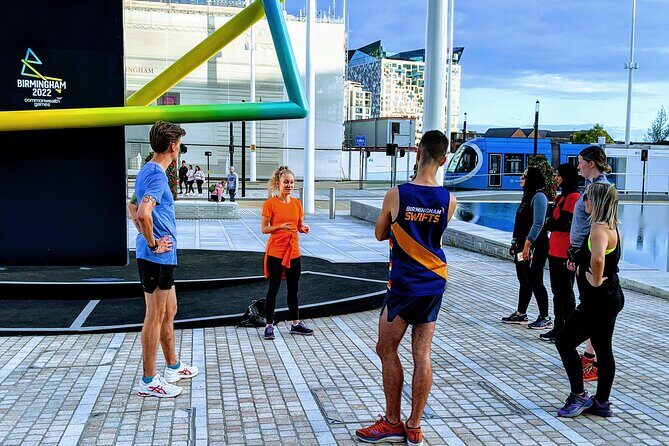
This tour is basically a plan for seeing Birmingham efficiently. Instead of spending the day hopping between neighborhoods, you move through them in a steady line, with short breaks timed around key landmarks. It’s a great fit for visitors who like cities that have layers: industry, street art, markets, and major architecture all in the same day.
The other smart part is how the tour balances motion and meaning. The run leader doesn’t just point at buildings. You get quick orientation—what you’re looking at, why it matters, and the story behind local details. That makes the city feel less like a list and more like a place you understand.
And yes, there’s a practical rhythm to it: warm-up, a group ice-breaker, then a route with multiple stops. If you’re newer to running tours, this structure helps you feel caught up fast.
You can also read our reviews of more tours and experiences in Birmingham.

Roundhouse Birmingham start: warm-up, ice-breaker, and canal-side context
You’ll meet at Roundhouse Birmingham, 1 Sheepcote St, Birmingham B16 8AE. The start is set up like a proper running session, not a casual meetup: you get an introduction, a warm-up, and a group ice-breaker before you head out. It’s a small detail, but it matters. It helps everyone settle in, especially on a tour that totals 12km.
Your guide then shares the history of the Roundhouse building. The tour also leans into Birmingham’s canal identity early. You’ll hear the canal story right away, including Birmingham’s cheeky comparison that it has more canals than Venice. Whether you’ve heard that before or not, seeing canals right from the first moment makes the rest of the route feel connected.
Stop-wise, the first segment includes a quick check-in and learning moment, then you start running. It’s designed to get you moving without dragging out the early “lecture” stage.
Centenary Square: the quick breather and the 1620-year backstory
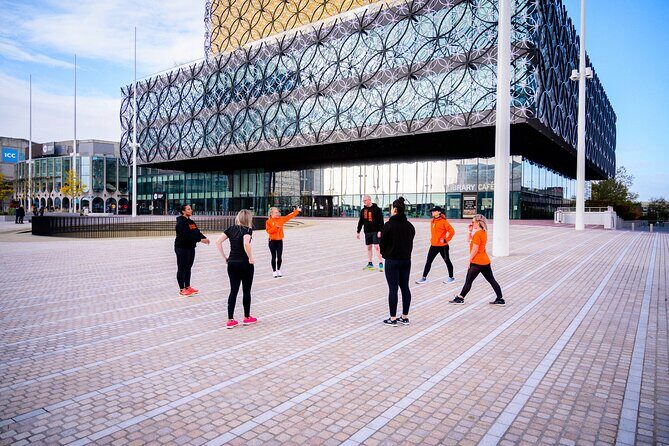
After running about 0.5 miles along the canal, you stop at Centenary Square for a breather. This pause is where you get a cluster of landmarks in one view: Birmingham Library, the Hall of Memory, Baskerville House, and that water feature the guide calls the overly designed puddle. It’s funny, but it’s also a clue to the tour’s style—serious city facts delivered with local personality.
This is also where the tour places Birmingham on a longer timeline. You’ll be introduced to how Birmingham began as a city around 1620 years ago. The timing is good: you’ve already warmed up and started moving, so the story lands while the day still feels energetic.
A small drawback here: the stop is only around 10 minutes. If you’re the type who wants to linger for photos, you’ll have to keep moving and trust that later stops will give you more time for pictures.
Jewellery Quarter: 40% of UK jewellery and the stories behind the streets
Next comes a straight run—about 1 mile—into the Jewellery Quarter. This area is a big reason Birmingham feels different from other UK cities. Here, the tour frames the neighborhood as a working identity, not just a pretty district.
You’ll learn that 40% of the UK’s jewellery is made in the Jewellery Quarter, which explains why the area is so closely linked to Birmingham’s reputation. The route also brings in pop-culture touchpoints: English Heritage has praised the area as a national treasure, and you’ll hear about Banksy choosing to make his mark there.
What I like is that the tour doesn’t treat this stop as only “industry facts.” You’ll also pick up atmosphere details: Victorian cemeteries and quirky residential apartments sit alongside a growing independent food and drink scene, boutique hotels, industry museums, and creative workshops you might want to revisit after your run.
This is one of the stops where you’ll probably feel a change in mood—from civic landmarks into a neighbourhood with its own personality.
Digbeth: secret canal paths, Industrial Revolution power, and street-art energy
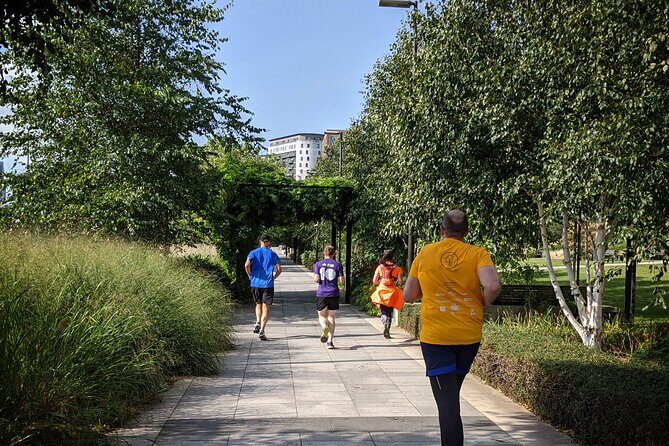
After that, the route heads toward Digbeth. The guide takes you along a secret canal path and explains how canals helped power Birmingham’s Industrial Revolution. Then you get a look at the “great and evil” industrial inventors story—presented as history, but with edge.
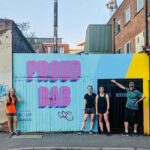
Digbeth is also described as a cool, adult-focused playground: independent spots, street art, and galleries that feel more experimental than traditional. This is the part of the tour that often surprises people. You start in grand squares and heritage buildings, then you’re suddenly in a neighborhood where creativity is part of the street-level experience.
Stop time is about 10 minutes, and it’s intense in the best way. You don’t just hear facts—you’re walking through the exact places those stories belong to. If you love street art and you want a guided way to notice it, this section is a strong payoff.

The Gay Village run-through: colorful streets and a quick explanation of how it grew
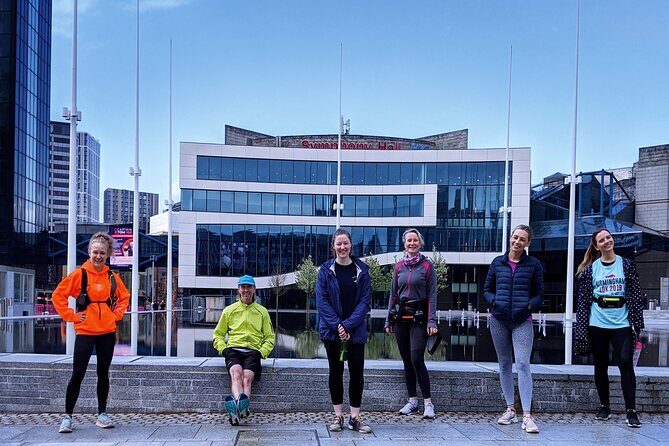
Next you’ll run through the Gay Village area, where the tour blends it with China Town and Theatreland in one colorful stretch. The guide explains the development of the scene here, tying it to why the area has become what it is today.
This stop comes at a useful moment: after Digbeth’s industrial energy, you’re ready for something lighter and more social. The tour warns you to be prepared for smells, smiles, and sights as you run back toward the city centre after this stop. That’s not just hype—it’s telling you the vibe changes and the streets are lively.
Practically, this section can be a little harder to “control” because the area tends to be active. Keep your focus on your running and safety first, and use the guide’s cues for the learning moments and photos.
Bullring and the bronze Bull: photo stop and a very local good-luck ritual
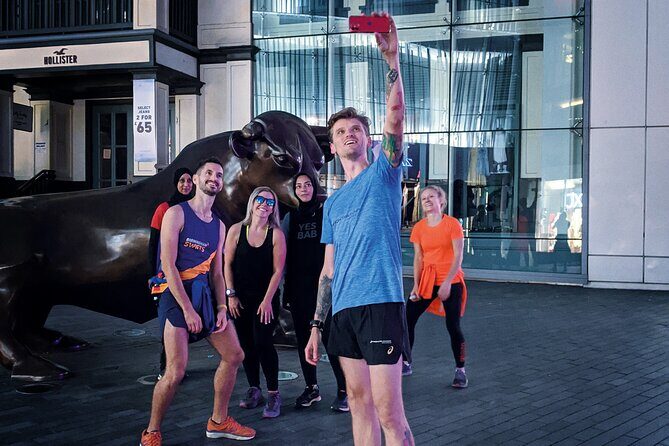
After some uphill running, the route leads to one of Birmingham’s most recognizable landmarks: the bronze bull. You’ll learn why bulls became iconic in Birmingham, then the guide takes a photo of you next to it. It’s the kind of stop that’s short but satisfying because it gives you a classic city shot without dragging.
There’s also a local tradition: rub the bull’s nose for luck. If you like small, quirky rituals, this one is quick and memorable.
This stop is around 10 minutes, including the explanation and the photo. It’s timed well because the route is moving from shopping-area sightlines back into the broader city landmark run.
One consideration: if you’re someone who wants long photo time, be ready to keep it moving. The tour stays efficient, and that’s the whole point.
Curved Selfridges and the 12th-century market: big city icons, then markets that still matter
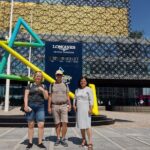
As you continue, you’ll run past the curved Selfridges building at Bullring. The tour notes it’s made from 15,000 aluminium discs, and it’s a defining piece of Birmingham’s skyline. This is one of those landmarks that reads better when you’re moving and can take in the angles from different spots.
You’ll also run past a 12th-century market that’s still active today. The tour stop here connects the history to the place itself, then you’ll hear what makes the market matter in the present day. It’s a neat contrast: you’re seeing modern retail architecture while also getting reminders that the city’s commercial life has roots that go way back.
And while this part of the route is fast, it gives you a useful mission afterward: you’ll know where to look next when you return for shopping or a slower wander.
Victoria Square to The Mailbox: fountains, Roman-feeling architecture, and the Brummie Jacuzzi story
Victoria Square is a main event. You stop to see Our Town Hall, Council House, Birmingham Museum and Art Gallery, Chamberlain Fountain, the River water feature, and the Queen Victoria statue. The guide also shares the local nickname for the water feature: the Floozie in the Jacuzzi. It’s one of those details that makes the city feel like it has a sense of humor.
The tour also includes a story about why Queen Vic hated Birmingham so much. That sounds dramatic, but the fun is in learning the twist behind a famous figure’s relationship to the city.
After that, you’ll run past additional key sights and stop at The Mailbox after a short 0.2 mile downhill run. Here, you’ll visit the Big Red Mailbox, another iconic shopping area. The guide points out history and even mentions underground secrets before you start heading back uphill.
This section ties together a major arc of the day: civic centre → retail landmarks → canal return. You finish back where you started, so the route feels complete instead of scattered.
Pacing, snacks, and what to bring (so the run feels good)
This is a private tour/activity, so it’s only your group, which helps if you’re traveling with friends or want a more personal pace. It’s also described as requiring moderate physical fitness, so you should be comfortable covering 12km while keeping a steady effort.
The day includes warm-up and group ice-breaker at the start, then timed stops throughout. In other words, you don’t just run and run. You get structured moments to reset—breathing, listening, and looking.
Snacks are included to help keep your energy up. Water is not included, so plan to bring your own bottle. Also consider comfortable running shoes and weather-appropriate layers. The tour notes that it needs good weather, which matters because a canal route plus open streets is less fun when it’s wet.
Price and value: what $548.51 buys you in real terms
At $548.51 per person for about 2 hours 30 minutes, this isn’t a budget “walk around town” tour. You’re paying for three things: a licensed run leader, a structured route across multiple neighborhoods, and the convenience of having landmark context delivered while you’re actively moving.
So the value question comes down to your style.
- If you like running, want a guided structure, and would otherwise spend time planning routes, transportation, and stops, this can feel efficient.
- If you don’t run—or you want a slow cultural tour with long stops—this price might feel steep because the format depends on motion.
The inclusion of snacks and free admission ticket mentions for stops adds practical value too. You’re not paying extra for each attraction while trying to keep a running schedule.
Who this 12km tour suits best (and who should skip)
This tour fits best if you’re:
- A visitor who likes cities with clear landmarks and story connections
- A runner or brisk walker who’s comfortable with hills and a steady pace
- Someone who appreciates short, focused explanations rather than hour-long museum time
It may not fit you if you:
- Want mostly seated sightseeing
- Get uncomfortable with hills or sustained running
- Prefer tours that can stretch stops into long photo sessions
Also, because the experience depends on good weather, plan to be flexible. If rain rolls in hard, you might have to shift your plans.
Should you book the Best of Birmingham 12km Running Tour?
I’d book it if you want to see Birmingham in a way that feels alive—canals, neighbourhood character, and major landmarks all stitched together by movement. The route is designed to keep you energized with snacks, and it gives enough story at each stop that you’ll leave with real context, not just photos.
I wouldn’t book it if your goal is slow wandering, deep museum time, or if you’re unsure about moderate running fitness. This is about covering ground while learning just enough to make the next street you turn onto feel meaningful.
If that sounds like your kind of day, this is an excellent way to get your bearings fast—then return later for the parts that pull you back for longer.
FAQ
How long is the Best of Birmingham 12km Running Tour?
It runs for about 2 hours 30 minutes.
What does the tour include?
You’ll get a licensed England Athletics Run Leader, recommendations for your stay in Birmingham, and snacks during the run. The tour also uses a mobile ticket.
Is water provided?
Bottled water is not included, so you should bring your own water to stay hydrated.
Where does the tour start and end?
It starts at Roundhouse Birmingham, 1 Sheepcote St, Birmingham B16 8AE, UK, and ends back at the meeting point.
What’s the meeting point address?
The meeting point is Roundhouse Birmingham, 1 Sheepcote St, Birmingham B16 8AE, UK.
What fitness level do you need?
The tour is designed for travelers with a moderate physical fitness level.
What happens if the weather is bad or the minimum group size isn’t met?
The experience requires good weather. If it’s canceled due to poor weather, you’ll be offered a different date or a full refund. If it’s canceled because the minimum number of travelers isn’t met, you’ll be offered a different experience or a full refund.