REVIEW · BIRMINGHAM
Birmingham Bricks and Canals Self Guided Tour with App
Book on Viator →Operated by Tourific · Bookable on Viator
Birmingham tells its story in short blocks. I love the offline audio you can replay, and I like that this route hits free-to-enter sights while you walk between big landmarks. It’s a smart, relaxed way to learn the city without committing to a long guided group tour.
One catch: the in-app map pins are not perfect, so you’ll want to keep Google Maps handy for quick corrections. Since there’s no human guide on-site, you’ll be steering the pace yourself through the app.
In This Review
- Key highlights before you go
- Why this Birmingham self-guided walk feels worth the small price
- Where the route starts and finishes (and why that matters)
- Getting the tour working: the Tourific app and your phone
- How the stops are paced: a 90-minute route that doesn’t rush you
- Stop 1: Birmingham Cathedral, where the route starts with stained glass
- Stops 2 and 3: Victoria Square and Chamberlain Square (Victorian Birmingham 101)
- Stop 4: The Library of Birmingham and the idea of a modern civic center
- A quick pass by Symphony Hall: regeneration you can see
- Stop 5: Gas Street Basin and the canals—where the city slows down
- Catching the contrast: old church vs modern shopping
- Stop 6: Bullring & Grand Central Birmingham—finish where you can hop onward
- Using the tour in real life: how to time your day
- Map pin reality check: why you should keep Google Maps open
- About the content details: when things change, you’ll want flexibility
- Price and value: why this is a good deal for first-time Birmingham
- Who this self-guided tour fits best
- Should you book this Birmingham Bricks and Canals tour?
- FAQ
- FAQ
- Where does the tour start?
- Where does the tour end?
- How long does the Birmingham Bricks and Canals tour take?
- Is there a human tour guide?
- Do I need an internet connection during the tour?
- Do I need to bring headphones or a device?
- What language is the audio guide in?
- Is this tour private?
- Are admissions included for the stops?
- What’s the cancellation policy?
Key highlights before you go
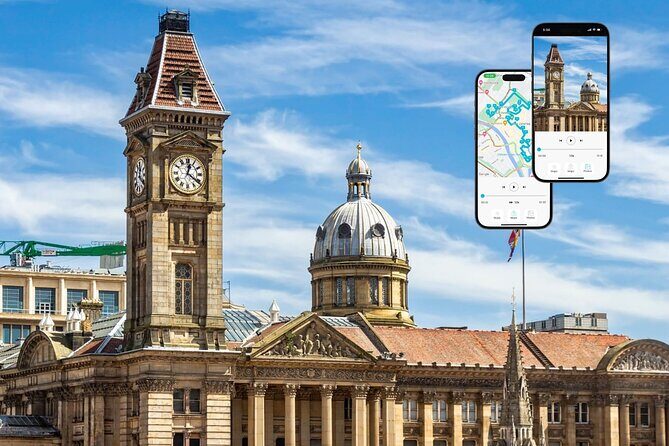
- Offline-first audio you can download once and use without internet
- Mostly free stop entries so you can extend the day at your pace
- Simple 90-minute route designed for an easy city orientation walk
- Audio + written guidance in the app to match what you’re seeing
- Map pin accuracy isn’t flawless, so plan to double-check your location
- Ends at a transport-and-shopping hub, so you’re not stuck far from transit
Why this Birmingham self-guided walk feels worth the small price
For $7.35, you’re getting more than a basic audio track. You get a full route you can repeat over the next year, with both an audio guide and written guide inside the app, plus images to help you spot each stop. The big value isn’t just the cost. It’s that the tour is built around places you can actually enjoy on foot: cathedral views, civic squares, a modern library, and then the canal-basin atmosphere.
This also works well when you like to control your time. The tour is listed at about 1 hour 30 minutes including walking and stop time, but you’re not locked into a strict “listen and move” rhythm. If you want to linger at one square or read a little longer at another, you can.
My only practical caution is that it’s self-guided. If you want spontaneous answers to questions on the spot, you won’t get them here. Still, for an intro to Birmingham’s mix of old and new, it’s a great bargain.
You can also read our reviews of more guided tours in Birmingham



Where the route starts and finishes (and why that matters)
The tour begins at Birmingham Cathedral on Cathedral Square, Colmore Row (B3 2QB). It ends at Bullring at Moor St (B5 4BU). That start-to-finish choice is convenient: you’re moving from the civic-and-cathedral side into the city’s shopping and transport core.
You’re also given listed opening hours for the timeframe shown: 9:00 AM to 6:00 PM, Monday to Sunday. That can help you plan if you’re arriving later in the day.
Because it ends at Bullring & Grand Central, finishing feels less “isolated.” You’ll likely be close to the systems you’ll use to get home, grab a meal, or hop onto another plan.
Getting the tour working: the Tourific app and your phone
After booking, you check your inbox for an email from Tourific with the access instructions. Then you use the app on your iOS or Android phone. You get 1-year access, and you can listen as many times as you like.
The tour supports offline access after download. That’s a big deal in city centers where signal can be spotty. I’d treat your prep like this: download the tour before you leave your hotel or right when you get to Birmingham, then test playback once before you start walking.
One more practical note: the tour does not include physical devices or headphones. You’ll need your own phone, and you’ll likely want your own earbuds if you prefer audio in your ears. If you normally travel with headphones, this is business as usual.
How the stops are paced: a 90-minute route that doesn’t rush you
The route is designed for short visits—mostly around 10 minutes per stop, with a longer 15 minutes at the Library of Birmingham and the Gas Street Basin area. That pacing is ideal for getting context fast, without dragging you through one museum room after another.
It’s also private. Only your group participates, which matters if you don’t want to listen over other voices or feel pressure to “keep up.”
You should also know the tour duration includes both the time at stops and the time walking between them. So if you’re the kind of person who stops for photos every ten steps (very normal), build in a bit of slack.
Stop 1: Birmingham Cathedral, where the route starts with stained glass
You’ll begin at Birmingham Cathedral, and the tour frames it as a compact Baroque landmark with impressive stained glass. Even if you’re not a church specialist, cathedral buildings tend to do something useful for your brain: they give you a visual anchor. From there, you can start noticing how Birmingham’s civic center is laid out.
This stop is listed for about 10 minutes, and the admission ticket is marked as free. That’s a great setup because it lets you walk in, look around, and still keep the route flowing.
If you’re traveling in bad weather, this is a smart first stop too. A cathedral gives you an indoor option right at the start, and you’re not burning time later.
A few more Birmingham tours and experiences worth a look




Stops 2 and 3: Victoria Square and Chamberlain Square (Victorian Birmingham 101)
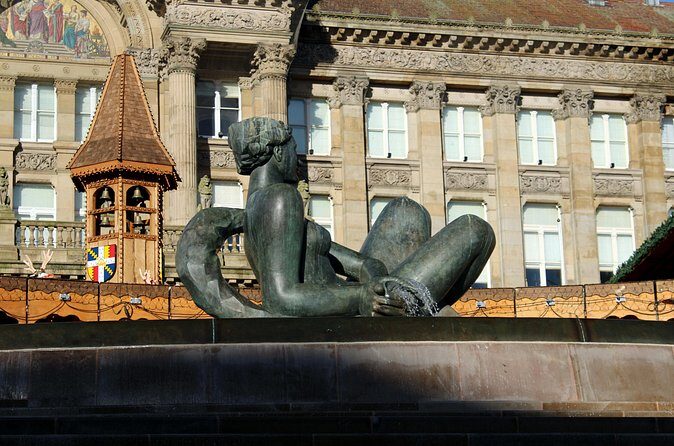
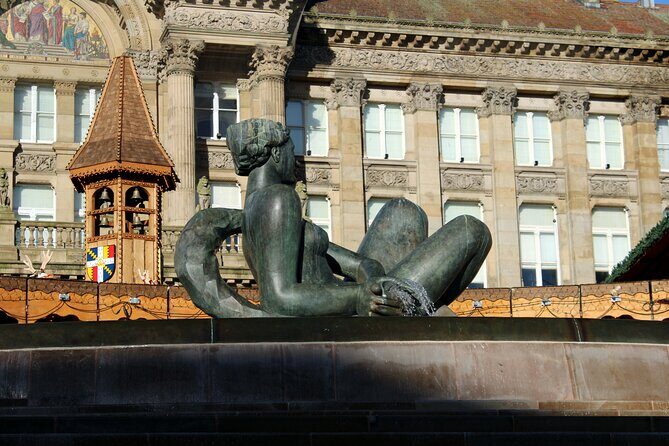
Next up is Victoria Square, where the tour highlights Birmingham’s Victorian architecture and the quirky Floozie in the Jacuzzi detail. That kind of specific reference is exactly what makes an audio tour useful. Instead of saying “look at the square,” it points your attention at something memorable.
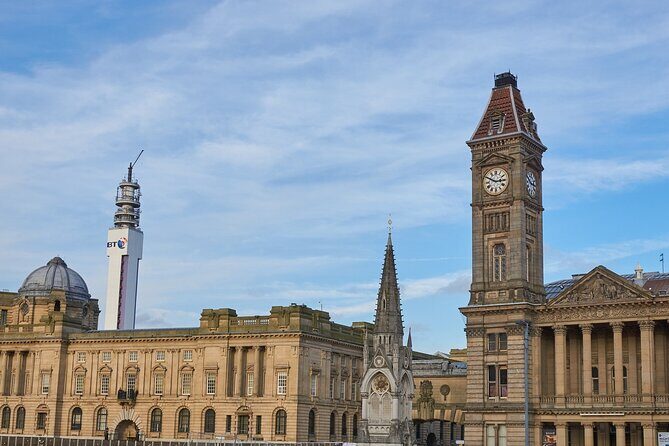
Then you move to Chamberlain Square for more grand Victorian architecture, plus the Chamberlain Memorial and the Big Brum clock tower. These elements help you understand that Birmingham didn’t just grow—its builders left behind a very confident, public-style city.
Both of these are listed at about 10 minutes, with free admission noted. The best way to use them is to listen first, then do a slow visual scan after playback. It turns a short stop into a real “I get it now” moment.
Stop 4: The Library of Birmingham and the idea of a modern civic center
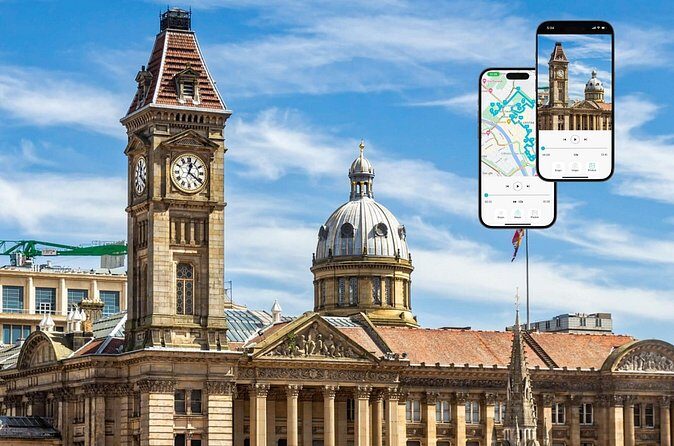
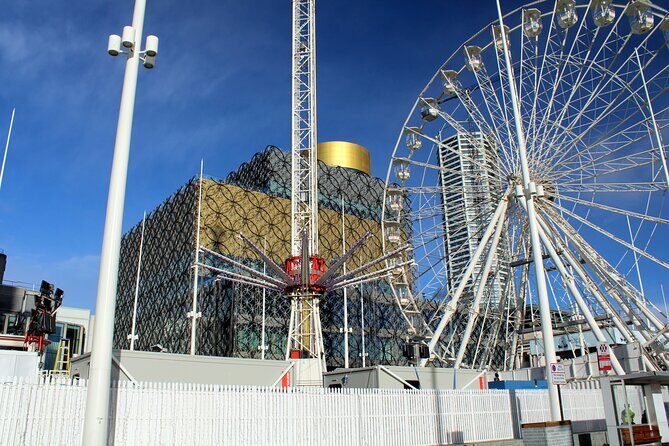
The Library of Birmingham is your next longer stop at about 15 minutes. The tour calls it controversial and pairs it with the surrounding civic space. That’s useful context if you’re wondering why a modern building appears in a historic city center.
The Library stop is also marked with free admission. That’s a big part of the tour value: you’re not paying extra to step into the places the audio is guiding you toward.
Even if you don’t love the building’s look, it’s still worth the time for the contrast. The route intentionally shifts your eyes from Victorian grandeur into modern civic architecture, and the audio nudges you to notice what changed and why it might matter.
A quick pass by Symphony Hall: regeneration you can see
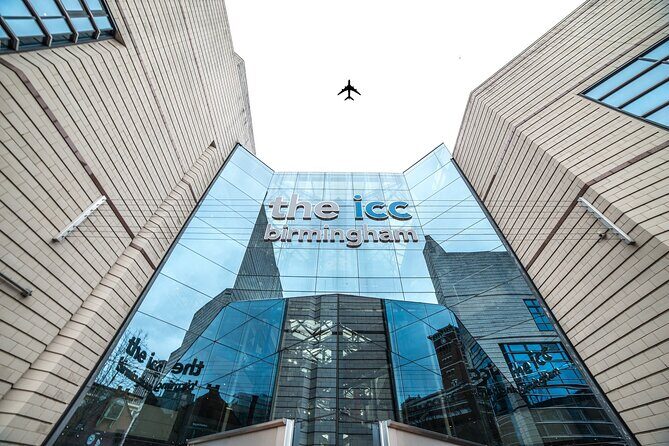
Between the Library and the canals, the tour takes you past a modern landmark tied to Symphony Hall, presented as a symbol of regeneration. You don’t linger long here, but it fits the tour’s theme: Birmingham is constantly mixing eras.
This is one of those “listen for the framing” moments. Even a short pass becomes more meaningful when the audio gives you a lens—like what the building represents and why the area feels different now than it did in older streets.
Stop 5: Gas Street Basin and the canals—where the city slows down
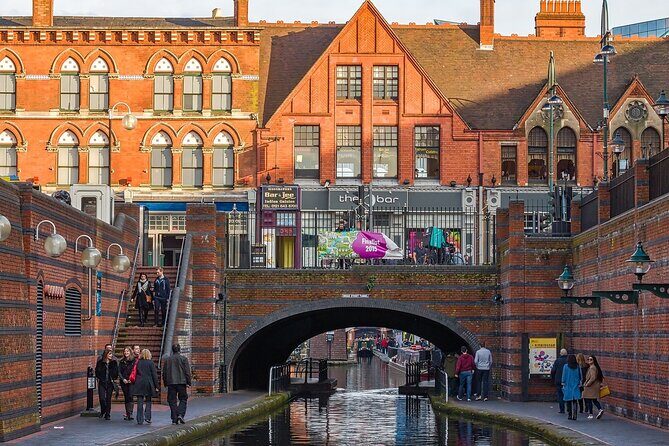
Now the route opens out into the atmosphere of Gas Street Basin, with canals and historic narrowboats. The tour allots about 15 minutes here and marks admission as free.
This is the part of the walk that often feels like a mood change. The canal basin adds water, reflections, and a calmer visual rhythm compared to the squares and civic buildings. It’s a good spot to pause, look up and down the water, and let the city’s story feel more human.
The audio also includes themes like 19th-century working-class houses in this leg. In the same area, people sometimes add a visit tied to back-to-back housing. If that’s on your list, plan ahead because those sites commonly require advance booking through the National Trust.
Catching the contrast: old church vs modern shopping
After the canal-basin portion, the route includes two more visual ideas: hearing about working-class housing history and then noticing a historic church set next to the Bullring shopping center.
That juxtaposition is the whole point of the walk. Birmingham doesn’t preserve everything in a museum box. It keeps building, reusing, and changing how the city is experienced block by block.
If you like street-level contrasts, this is where you’ll feel the tour earning its keep. You stop seeing Birmingham as just “a city I’m passing through,” and start seeing it as a place with a real timeline.
Stop 6: Bullring & Grand Central Birmingham—finish where you can hop onward
You end at Bullring & Grand Central Birmingham, a busy hub where shops and transport meet. The tour gives this final stop about 10 minutes, with free admission noted.
It’s a strong finish because your day doesn’t end with you far away from options. You can grab food, catch transit, or keep exploring. For a self-guided tour, a practical ending matters more than people think.
Using the tour in real life: how to time your day
Even though the tour is about 1 hour 30 minutes, it’s easy to stretch it if you want. The route includes free-access stops, so you can add extra time where you enjoy it most.
A smart approach is to treat the audio like an outline:
- Listen during the first pass through a stop.
- Then decide on the spot if you want a deeper look.
- If you’re hungry, you can take a break and restart when you’re ready.
I also like this plan for rainy days. The tour is outdoors in key segments, but it’s not a total washout because it starts with a major indoor-friendly landmark and moves through dense areas where you can duck into covered spaces if needed.
Map pin reality check: why you should keep Google Maps open
This is the biggest “heads up” for the tour experience. The in-app map pins are not always perfectly accurate. One specific example given is that Victoria Square can appear marked near the Roxy Ballroom instead of matching the square location you’re expecting.
That doesn’t mean you can’t do the tour. It just means you should be prepared to correct your location quickly. My advice is simple: keep your phone’s normal map app open in the background and use it to verify where you are before you move to the next stop.
It’s a small extra step that saves confusion and keeps the tour feeling smooth.
About the content details: when things change, you’ll want flexibility
One of the tour’s practical strengths is how quickly it builds city context. Still, some operational details can shift over time. For example, information about the Mailbox area being run as part of tours can be out of date.
This matters mainly if you’re expecting one specific organizer or a particular schedule at that moment. If your goal is the walking route and the architecture themes, you’ll be fine. If you want exact tour operators to match what the audio says, you’ll want to stay flexible and double-check on the day.
Price and value: why this is a good deal for first-time Birmingham
At $7.35 per person, you’re paying for:
- a mobile ticket
- a written and audio guide inside the app
- images to identify stops
- an interactive map for navigation
- offline access once downloaded
- 1-year access so you can replay later
When you compare that kind of bundle to paying for a traditional guided tour, the math is hard to argue with. And because the stops are marked with free admission, you’re not likely to hit a surprise ticket cost along the way.
For me, the value angle is the mix. You get cathedral and Victorian squares, then a modern library debate, then canals and working-class themes, and you finish at a major transport node. That’s a lot of variety for one low price.
Who this self-guided tour fits best
This works especially well if you:
- want a low-cost city orientation without a group schedule
- prefer walking at your own pace
- like learning in short chunks rather than one long lecture
- travel with a phone and don’t mind using an app for navigation
It’s also a reasonable choice if you’re visiting with friends or family, since it’s described as private for your group.
You’ll also like the practical travel setup: service animals are allowed, and the starting area is near public transportation. If you’re a person who gets cold feet about “scheduled tours,” this is the calmer alternative.
Should you book this Birmingham Bricks and Canals tour?
Yes—if your goal is a straightforward introduction to Birmingham’s key areas with offline audio and mostly free stop entries. It’s great for a first visit day, and the price makes it easy to justify even if you only use part of the route.
Skip it (or at least go in with your eyes open) if you hate app navigation or you expect the map to be perfectly accurate down to the exact pin. Also remember: it’s self-guided with no human guide, so it’s not the right choice if you want live answers or tailored advice on the spot.
FAQ
FAQ
Where does the tour start?
It starts at Birmingham Cathedral, Cathedral Square, Colmore Row, Birmingham B3 2QB, UK.
Where does the tour end?
It ends at Bullring, Moor St, Birmingham B5 4BU, UK (Open in Google Maps).
How long does the Birmingham Bricks and Canals tour take?
The duration is about 1 hour 30 minutes, including time spent at stops and walking between them.
Is there a human tour guide?
No. This is a self-guided experience with the audio and written guide in the app.
Do I need an internet connection during the tour?
No. Once you download the tour, you get offline access so you can use it without internet.
Do I need to bring headphones or a device?
Yes. The tour does not include physical devices or headphones.
What language is the audio guide in?
The tour is offered in English.
Is this tour private?
Yes. Only your group will participate.
Are admissions included for the stops?
The stops listed in the route include admission ticket free for each of those locations.
What’s the cancellation policy?
You can cancel for a full refund if you cancel at least 24 hours before the experience’s start time. If you cancel less than 24 hours before, you won’t receive a refund.