REVIEW · BIRMINGHAM
Private Birmingham City Walking Tour
Book on Viator →Operated by Walking Tours in England · Bookable on Viator
Birmingham can feel big and loud, but this walk keeps it human. In 90 minutes, you get a guided thread through the city’s eras, from the shadow of Birmingham Cathedral to the modern art at Ikon Gallery. I especially like the way your guide makes connections across the stops, and how the tour is paced so it feels like a proper first look rather than a marathon. One thing to consider: several key sights along the route are not included with admission, so you may want to plan for extra entry fees if you go inside.
When the guide is on form, the whole city clicks. The strongest praise in the reviews centers on guides like Dee and Peter for their warmth, humor, and fast-moving local storytelling, plus one guide even suggested a drink stop afterwards at The Old Joint Stock Pub. The only possible drawback is that rain can shorten explanations near the end, so bring a jacket if the forecast looks shaky.
If you want Birmingham’s story in plain English, with stops that are worth your time, this private route hits a sweet spot.
In This Review
- Key Highlights You’ll Notice Right Away
- Cathedral Square: The Easy Start That Puts You in Birmingham’s Orbit
- Birmingham Cathedral and Victoria Square: Industry’s Footprint, Then the Victorian Step Back
- Birmingham Town Hall: Where Civic Power Meets Pop-Culture Memory
- Birmingham Museum & Art Gallery and Chamberlain Square: Art, Identity, and Wartime Sacrifice
- Centenary Square and Hall of Memory: From Old to New, Then Back to What Matters
- Baskerville House and Broad Street: John Baskerville, Plus a Street That Feels Like a Stage
- Symphony Hall and the Canal Walk: The Part You’ll Appreciate on a Tired Day
- Ikon Gallery: Finishing Where Old and New Meet
- Price and Value for a Private Group Up to Six
- Who This Tour Suits Best (and Who Might Want Something Else)
- Should You Book This Birmingham City Walking Tour?
- FAQ
- Where does the Birmingham City Walking Tour start and end?
- How long is the tour?
- Is this a private tour?
- What language is the tour offered in?
- Do I need admission tickets during the tour?
- How do I get my ticket?
- Is the tour near public transportation?
- What’s the cancellation window?
Key Highlights You’ll Notice Right Away
- A true private format (up to 6) so the pace stays comfortable for your group
- Two guided vibes you’ll hear about often: enthusiastic, funny storytelling from Dee and Peter
- A tight timeline that still covers centuries: Victorian to World War memories to today’s design and art
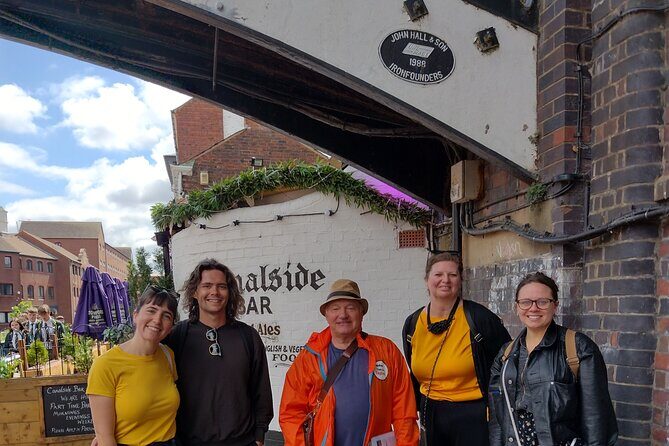
- Iconic stops with smart variety, from St Philip’s Cathedral area to canal-side views and Ikon Gallery’s exterior
- Plenty of free-to-view stops, with some major interiors that may require separate tickets
Cathedral Square: The Easy Start That Puts You in Birmingham’s Orbit
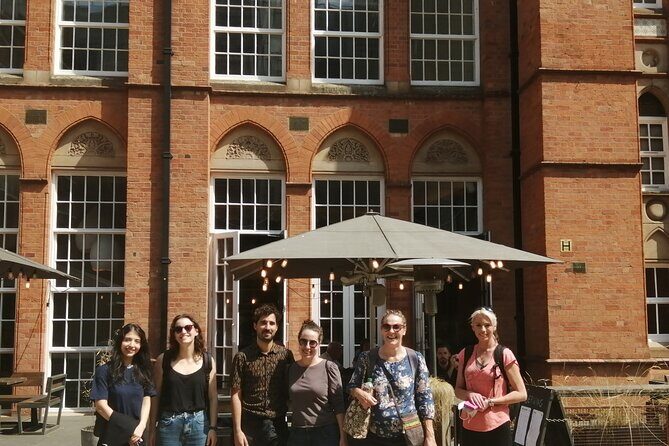
I like tours that start with a “why here?” moment, and Cathedral Square does that job fast. You begin in Cathedral Square with an introduction to Birmingham’s history right in the visual center of things, with the cathedral nearby. It’s the kind of opening that helps you stop staring at buildings and start reading the city.
This first stop is also useful for practical reasons. If your group arrives a little scattered, Cathedral Square gives you a tidy meeting point and a natural place to regroup. The guide can also set expectations for the walk—what you’ll see, what to notice, and how the story will change as you move.
One small but important detail: this is listed as a short stop and comes with a free admission ticket note, meaning you’re not waiting on entry procedures just to get moving. You’re there to look, listen, and get your bearings.
You can also read our reviews of more walking tours in Birmingham


Birmingham Cathedral and Victoria Square: Industry’s Footprint, Then the Victorian Step Back
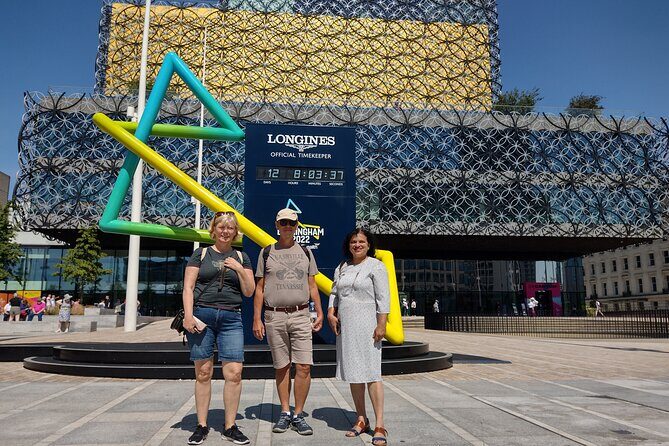
After the opener, you move into the area of Birmingham Cathedral (St Philip’s Cathedral). This part stands out because the guide focuses on the cathedral’s place in the industrial revolution story. You’re also told a key fact up front: it’s one of the smallest cathedrals in Britain. That detail matters because it reframes how you’ll see it—small doesn’t mean minor. It means Birmingham’s identity shaped the form, not the other way around.
The one caution here is practical: admission isn’t included for this stop. So you can treat it as a look-and-learn moment from outside or nearby, and if you want to go in, you should expect to handle entry separately.
Next comes Victoria Square, and I like the way it works as a “time jump.” This is your Victorian Birmingham moment, which helps you understand the growth and civic ambition that came with the 1800s. Even if you’re not a facts-first history nerd, Victoria Square gives you physical cues—street layout, monumental civic spaces, and the idea that Birmingham kept rebuilding itself to match its industrial momentum.
Again, the listing notes free admission for Victoria Square, which keeps the tour smooth. In other words, you get the change of era without a ticket bottleneck.
Birmingham Town Hall: Where Civic Power Meets Pop-Culture Memory
Now you hit a stop that’s fun even if you’ve never read a line of Birmingham history. Birmingham Town Hall is framed as a symbol of how the city’s status grew—big picture energy in brick and stone.
Here’s the part that makes this stop memorable: the guide connects the building to famous names and cultural touchpoints. You’ll hear about historical figures like Charles Dickens and Emmeline Pankhurst, and then the tour stretches into modern pop-culture references—people like Bob Dylan, The Rolling Stones, and The Beatles. Whether you’re a literature person or a music person, it’s a clever way to show that Town Hall isn’t just local government space. It’s a stage the world has used.
The only consideration: admission is not included for Town Hall. So if your group wants interior time, plan on that being an add-on. If you’re happy with exterior context and guided interpretation, this stop still works well within a 90-minute structure.
This is also where the guide’s style really matters. The reviews specifically praise guides—especially Dee—for turning the story into something lively, not a lecture. When it’s done well, you start seeing the city’s institutions as living characters.
Birmingham Museum & Art Gallery and Chamberlain Square: Art, Identity, and Wartime Sacrifice
From civic power you shift into culture at Birmingham Museum & Art Gallery. This stop is less about a single must-see object and more about the building and what Birmingham produces—artists, makers, and a steady creative output. It’s a smart choice for a short walking tour because it reminds you that the city isn’t only factories and politics. It’s also visual culture.
As with several later stops, admission isn’t included here. So take advantage of the time for architecture and context from outside or at the entrance, and if you want to go deeper inside, you can plan a separate visit.
Then you head to Chamberlain Square, and the tone changes. You’re guided through Birmingham’s crucial role in both World Wars, plus the sacrifices made by its people. This is one of the most emotionally grounded parts of the route because it anchors the city’s growth in real consequence. Industrial strength and civic organization weren’t just abstract. They were tied to lives, decisions, and loss.
This stop is marked as free admission, which makes it a relief in a tour where some interiors cost extra. You get the meaning without extra planning pressure.
If you’re choosing this tour as your first day in town, this section is a strong reason to do it early. It gives you context before you wander on your own later.
Centenary Square and Hall of Memory: From Old to New, Then Back to What Matters
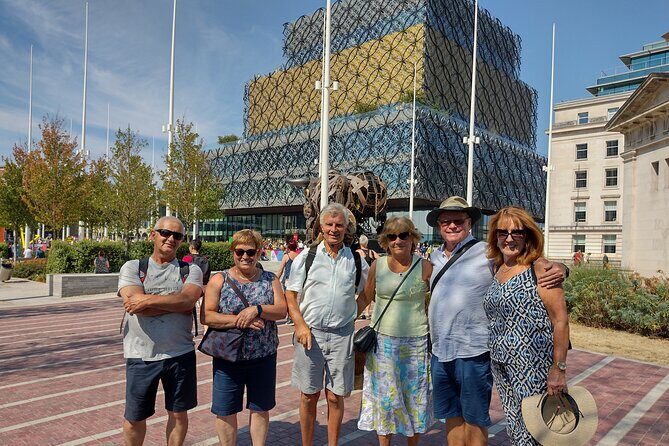
After wartime context, Centenary Square brings you into modern Birmingham. The guide points out the city’s architecture and contemporary life, with a clear “then and now” contrast. I like this stop because it stops the tour from feeling like a museum. You’re walking through the idea that Birmingham keeps evolving, not just remembering.
This part is listed as free admission, so it’s a good location to pause, take photos, and reset your energy.
From there you go to Hall of Memory, a memorial space dedicated to those who gave their lives for Birmingham and Britain. This stop is short, but it carries weight. The idea here is not to make you linger for hours. It’s to give you a guided emotional reference point so you understand what Birmingham values—especially when you’re seeing the city’s modern confidence right afterward.
Admission isn’t included for Hall of Memory, so approach it as a guided stop where you take in the memorial and context. If you want extended time, you’ll likely need a separate visit later.
You can also read our reviews of more city tours in Birmingham

Baskerville House and Broad Street: John Baskerville, Plus a Street That Feels Like a Stage
Next up is Baskerville House, where the tour focuses on John Baskerville. Even if you don’t know the name at the start, it’s the kind of stop that turns a city street into a story. It adds a human scale to Birmingham’s industrial identity—people who shaped communications, design, or ideas.
Like the other interior-heavy stops, admission isn’t included here. Still, this short segment can be satisfying because it’s designed to connect a person to a place. That’s a big part of what makes a short guided walk better than solo wandering: you’re not just looking at walls; you’re learning why those walls matter.
Then comes Broad Street, which the tour frames as Birmingham’s own walk of fame. This is one of the more “feel the city” segments, because it shifts from history lessons into a recognizable urban vibe—street energy, public space, and the idea of fame attached to place.
Broad Street is listed as free admission, which helps keep the walk moving. If your group likes photos and quick story beats, this is usually where the mood lightens.
Symphony Hall and the Canal Walk: The Part You’ll Appreciate on a Tired Day
Now the route turns a bit more relaxing with Symphony Hall and a walk alongside Birmingham’s industrial canals. This stop is designed as a breather. The canal-side setting gives your brain a moment to process the history you just heard, without constantly thinking about “what am I supposed to be looking at?”
The listing doesn’t flag included admission for Symphony Hall, so treat it mainly as a visual and walking segment. Still, the canal walk can be a highlight because it’s one of the easiest ways to understand industrial Birmingham: infrastructure that still shapes the city today.
In a 90-minute tour, this kind of pause is key. It keeps the experience from turning into back-to-back information dumps.
Ikon Gallery: Finishing Where Old and New Meet
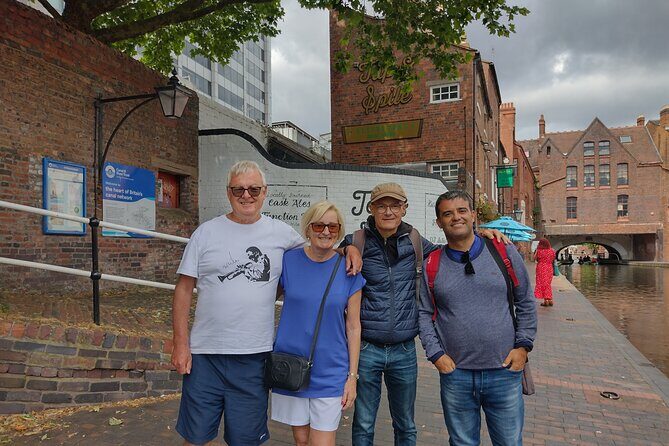
The tour ends at Ikon Gallery, finishing outside the gallery. This stop ties the whole experience together. You’re looking at a Neo Gothic exterior paired with a contemporary art setting, which visually supports the older-to-newer story the walk has been building.
The stop is short, but it’s a strong finish because it’s forward-looking. If you’ve been learning about Birmingham’s industrial roots, wartime sacrifices, and civic growth, Ikon Gallery offers a quick reminder that today’s Birmingham also has a creative agenda.
Admission isn’t included at this final stop. So if you want to go in, you’ll need to handle that separately. But even from outside, you get the architectural contrast, plus a natural end point that’s easy to continue from on your own.
Price and Value for a Private Group Up to Six
At $183.43 per group (up to 6) for about 1 hour 30 minutes, the value depends on how you travel.
If you’re coming as two or three people, a private guide can cost more than you’d pay for a group bus tour. But private walking tours often win on something group tours can’t replicate: you can ask questions, set a pace that feels good, and get a guide who tailors attention to what your group cares about.
This one also has a smart mix of free viewing stops plus some optional ticketed interiors. That means you can keep spending down by staying outside where you want guided context, or you can add entries at the sights you care about most.
One more practical value point: the tour is offered in English, uses a mobile ticket, and is set up as private, meaning your group only shares the walk with each other. That matters if you want a calmer experience after a long day of travel.
Who This Tour Suits Best (and Who Might Want Something Else)
This walking tour is a great fit if you want:
- A first-time Birmingham orientation that links buildings to a clear story
- Short, guided pacing without overextending your day
- A guide who brings personality, not just facts, like Dee and Peter (based on the high marks in the reviews)
- A blend of civic history, wartime meaning, and a modern art finish
You might consider a different approach if:
- You’re mainly interested in one attraction and want a deep, ticket-based museum plan
- You dislike walking when it’s wet—rain has the potential to shorten explanations near the end, even if the guide can’t control the weather
Should You Book This Birmingham City Walking Tour?
If your goal is to get Birmingham’s story in a compact, human way, I think this is a smart booking. The biggest draw is the guide impact: reviews repeatedly highlight Dee’s enthusiasm and humor, plus Peter’s friendly engagement, and that kind of delivery makes a short tour feel much longer in the best way. The route itself also makes sense: cathedral surroundings, Victorian civic spaces, wartime memory, then canals and a modern art finish.
Book it if you:
- Want a private setup for a small group
- Prefer a guided walk over reading a guidebook alone
- Like history that connects to real places you can still stand in today
Skip it or pair it with extra plans if you:
- Only want interior museum time
- Need fully ticket-included attractions (since several major stops list admission as not included)
FAQ
Where does the Birmingham City Walking Tour start and end?
It starts at Cathedral Square, Birmingham B3, UK, and ends outside Ikon Gallery at 1 Brindley Pl, Oozells Sq, Birmingham B1 2HS, UK.
How long is the tour?
The tour lasts about 1 hour 30 minutes.
Is this a private tour?
Yes. It’s private, so only your group participates.
What language is the tour offered in?
The tour is offered in English.
Do I need admission tickets during the tour?
Some stops are marked as free to view with a free admission ticket note, while others are marked as not included for admission, such as Birmingham Cathedral, Birmingham Town Hall, Birmingham Museum & Art Gallery, Hall of Memory, Baskerville House, Symphony Hall, and Ikon Gallery.
How do I get my ticket?
You receive a mobile ticket.
Is the tour near public transportation?
Yes, it’s near public transportation.
What’s the cancellation window?
You can cancel for a full refund if you cancel at least 24 hours before the experience starts.