REVIEW · BIRMINGHAM
Birmingham Walking Tour: Canals, Victorians & Today (1:30pm)
Book on Viator →Operated by Positively Birmingham Walking Tours · Bookable on Viator
Birmingham has a way of feeling hidden until someone points. This 2-hour walk gives you a tight route through canals, Victorian squares, and modern landmarks. The whole thing is built around an easy pace and a guide who keeps the story moving while you’re on your feet.
I especially like the live audio system with a receiver, because it lets you hear clearly without craning your neck or keeping up too tightly. I also like the mix of stops: you’re not stuck in one era, you’re seeing how the city’s public spaces connect—from the Library to Gas Street Basin and all the way to the ICC area. One drawback to consider: the canal focus is real, but it’s still a short stop—if you came only for canals, you may want extra time on your own afterward.
In This Review
- Key things worth knowing before you go
- A 2-hour Birmingham orientation starting at the Library
- Stop by stop: what you’ll actually see and why it clicks
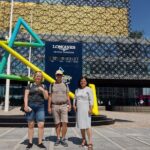
- Library of Birmingham: your modern anchor point
- International Convention Centre and Symphony Hall: how events shape the city
- Brindleyplace: history meeting present-day city life
- Gas Street Basin: canal atmosphere without the long slog
- Victoria Square: public art and the Victorian-to-today shift
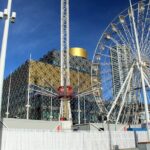
- Chamberlain Square: where the city is headed
- Birmingham Museum & Art Gallery: the 1880s double portico moment
- The Mailbox: a post office sorting office turned mixed-use hub
- The Cube: quick views that pay off
- Ikon Gallery: a former school by Martin & Chamberlain
- Art deco memory at the Hall of Memory
- Walking the ICC Mall route and finishing at Town Hall
- What makes the guide style work (and why it affects your value)
- Price and value: why $20.80 can feel fair
- Who should book this (and who might look elsewhere)
- Should you book Birmingham: Canals, Victorians & Today?
- FAQ
- How long is the Birmingham walking tour, and where does it end?
- Where do I meet the guide?
- Does the tour include earphones or an audio system?
- Are there any admission tickets included during the walk?
- How big is the group, and what fitness level do I need?
- Can I get a full refund if plans change or weather turns bad?
Key things worth knowing before you go
- Earphone audio that helps you spread out so you can actually enjoy the streetscape
- A tight loop that starts and ends at the Library of Birmingham, so you always know where you are
- Historic-to-modern pacing with Victorian squares, canal atmosphere, and current development
- Included entry moments at a few key places rather than paying at every turn
- Art and memory stops that go beyond buildings (public art and the Hall of Memory)
- High repeatability since multiple guides (like Jonathon and Michael) are praised for keeping it lively
A 2-hour Birmingham orientation starting at the Library
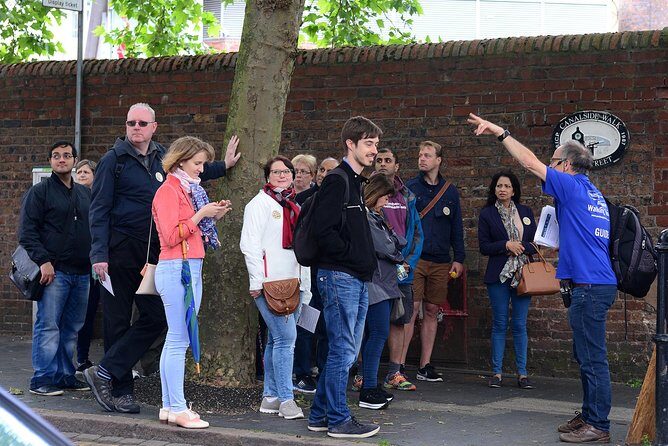
You’ll meet at the Library of Birmingham on Centenary Square. This matters more than it sounds. Starting at a major landmark helps you mentally map the city fast, and it keeps the whole walk feeling organized instead of random.
The tour is about 2 hours on foot, and it caps at 35 people. That size is big enough to feel like a group, but small enough that you should still be able to hear and look at buildings comfortably—especially with the receiver setup.
Most of the walk is outside, so plan for normal walking-weather. The route is meant for people with moderate physical fitness, so comfortable shoes are the real ticket.
You can also read our reviews of more walking tours in Birmingham

Stop by stop: what you’ll actually see and why it clicks
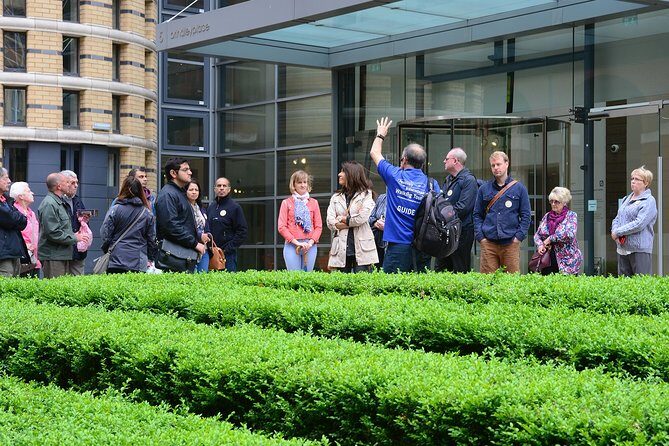
Library of Birmingham: your modern anchor point
The walk opens at the Library of Birmingham, and the entry is free. Even if you only pass through briefly, it sets the tone: you’re starting with something new and highly visible, then heading toward older city layers.
Practical tip: take a minute at the start to glance around the square and street layouts. When the guide starts pointing out connections later, that quick orientation helps everything click.
International Convention Centre and Symphony Hall: how events shape the city
Next you’ll look at the International Convention Centre Birmingham (ICC) and Symphony Hall, plus how they function in the city. This stop isn’t about architecture trivia for its own sake. It’s about place-making—how big cultural and event venues pull people through districts and keep foot traffic flowing.
You’ll also get a sense of scale. The ICC area shows Birmingham as a working city, not a museum.
Brindleyplace: history meeting present-day city life
At Brindleyplace, you’ll hear both the history and what it looks like today. The value here is the contrast. You’re comparing what an area used to be known for with how it serves people now.
If you like “then and now” storytelling, this stop lands well. If you hate mixed-use areas, it’ll still be useful because it shows how Birmingham keeps re-purposing its built environment.





Gas Street Basin: canal atmosphere without the long slog
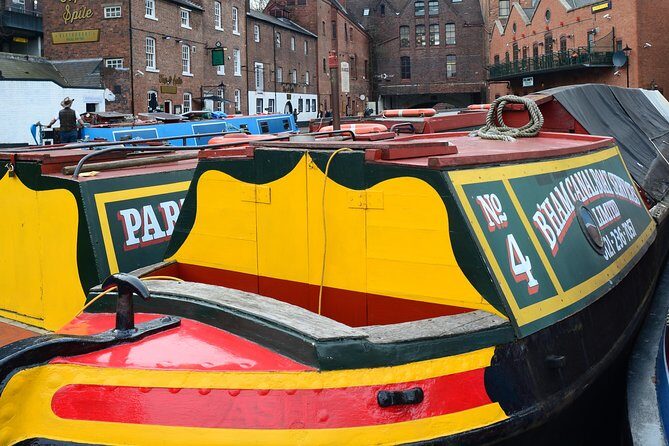
Then comes Gas Street Basin, one of the more atmospheric parts of Birmingham’s canal network. The guide frames it around the arrival of the canals and how they shaped the city’s development. This is the moment where you’ll likely slow down a bit, because the canal setting visually carries the story.
One caution: the canal time here is limited. If you’re hoping for an extended canal-focused walk, you’ll likely want to add extra canal wandering on your own after the tour.
Victoria Square: public art and the Victorian-to-today shift
At Victoria Square, you’ll look at public art and talk through Birmingham’s Victorian period development, then connect it to what you see now. This is a smart stop because it’s not only about dates; it’s about what public spaces communicate—who they’re for, and how the city chose to represent itself.
Look for the art the guide points out, but also watch the flow of people through the square. It helps you understand why “civic space” matters in a city like Birmingham.
Chamberlain Square: where the city is headed
At Chamberlain Square, the focus turns toward the future—how Birmingham is moving forward. This stop works best if you’re the type who likes to compare planning styles: what gets preserved, what gets replaced, and how design choices signal priorities.
Even if you’re not a design nerd, you’ll come away with a clearer sense of what kinds of spaces Birmingham is investing in.
Birmingham Museum & Art Gallery: the 1880s double portico moment
The tour passes the entrance of Birmingham Museum & Art Gallery and highlights the 1880s double portico design. Admission here is noted as included. Even with a short window, the architecture is the kind of detail that sticks with you because it’s instantly recognizable from close range.
If you’re traveling with someone who likes photos, this is one of the best “quick but meaningful” stops. It’s short, but it’s visually strong.
The Mailbox: a post office sorting office turned mixed-use hub
At The Mailbox, you’ll see what happens when industrial or utilitarian space gets re-used for modern city needs. The guide explains the conversion of the former post office sorting office into a mixed-use development, including the Birmingham headquarters of the BBC.
This stop is valuable because it’s tangible. You’re not just hearing about change—you’re looking at it. If you’ve ever wondered why UK cities often feel layered instead of purely renovated, this is a clear example.
The Cube: quick views that pay off
Then you’ll head to The Cube, described as part of the Mailbox development, with views from upper floors among the best in the city. Admission is listed as included for this segment.
Even with a short time here, you get a big payoff: a higher vantage point makes the walking route feel connected. You’ll be able to “see” the city you just walked through.
Ikon Gallery: a former school by Martin & Chamberlain
The next stop is the Ikon Gallery. It was originally built as a school, and it’s one of over forty buildings created by the architects Martin & Chamberlain.
This is the kind of stop I love on walking tours. It shows how buildings get “reassigned” over time. Instead of treating history as locked in time, the guide highlights how it stays useful.
Art deco memory at the Hall of Memory
At the Hall of Memory, you’ll see an art deco memorial first built in 1925 to remember those who fell in the First World War. It later includes remembrance for World War II and more recent conflicts, and it houses notable art deco features including the William Bloye tablets.
This stop gives the walk emotional weight without becoming heavy-handed. It’s also a reminder that cities don’t just build for the future—they build to remember what shaped the present.
If you like art + civic spaces, give yourself a moment here. Rushing through the details makes the symbolism harder to catch.
Walking the ICC Mall route and finishing at Town Hall
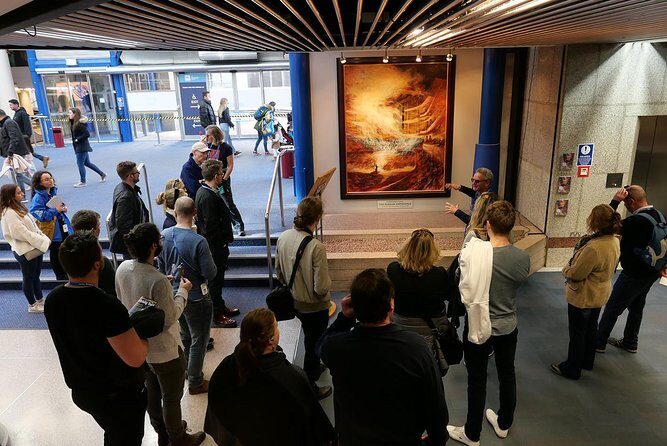
You’ll then move along ICC Mall, described as the main route from Centenary Square to the canalside. It’s a helpful “connector” stop because it ties together the start of the area with the canal direction—basically, it’s the visual bridge between districts.
After that, you’ll finish by passing Birmingham Town Hall, noted as the oldest building in Victoria Square dating from 1834. It’s a clean ending: the walk closes with a clear historical marker right where the civic story started to show itself.
What makes the guide style work (and why it affects your value)
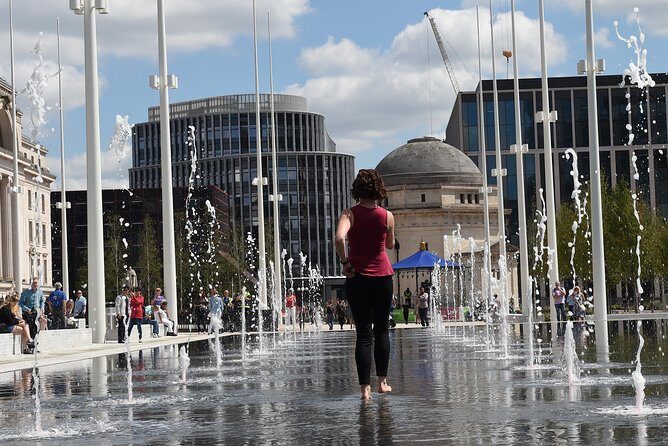
A lot of walking tours promise stories. This one is more practical: you get a guide who keeps the pace efficient and uses the live audio system to make the experience workable for real people.
With the receiver, you hear the guide through a transmitter. Each guest borrows a receiver, and you either bring your own 3.5mm earphones or get a new pair. That small detail changes everything if you’re traveling with kids, if you hate crowded clumps, or if the group ends up a little spread out.
Guides like Jonathon and Michael get repeatedly praised for being funny and energetic, with a quick style that keeps the afternoon from dragging. If you’ve ever felt bored on history walks, this format helps because the route is short, the stops are planned, and the guide is meant to keep your attention.
One more practical note: the tour description says the audio system may not always be used. If it’s not running on the day you go, still expect the guide to speak clearly, but you’ll want to stay closer than you would with a receiver.
Price and value: why $20.80 can feel fair
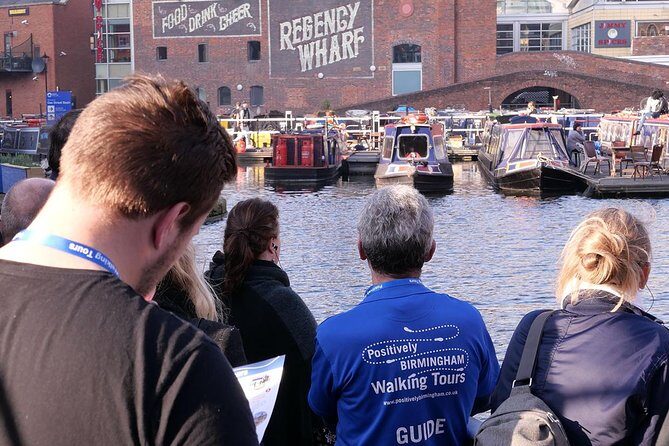
At $20.80 per person for about 2 hours, the price can feel like a bargain if you treat it as city orientation, not just sightseeing. Here’s why:
- Many stops are free to view, so you’re paying mainly for guided interpretation and pacing.
- A few key experiences include admission (like the Museum & Art Gallery, The Mailbox, and The Cube), so you’re not stuck doing only exterior photos.
- You get a small-group setting with a structure that helps you see a lot without spending your entire day planning.
Also, this tour is something you can use on arrival day. Multiple stops are in central Birmingham, and the loop gives you a sensible map for your next wander.
Who should book this (and who might look elsewhere)
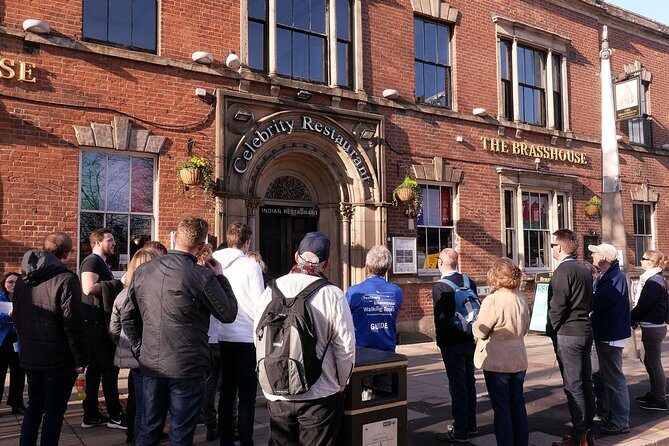
This walk is a great fit if you want:
- Quick orientation to central Birmingham without building your own route
- A mix of Victorian-era development, canal atmosphere, public art, and modern development
- A guide who keeps the afternoon moving and makes it easier to hear without crowding
You might consider a different option if:
- You only care about canals and want a long, canal-heavy experience. The Gas Street Basin stop is atmospheric, but it’s not the whole day.
Overall, it’s a smart choice for couples, solo travelers, and first-timers who want context fast. It’s also friendly for people who like architecture and city planning, even if you’re not a specialist.
Should you book Birmingham: Canals, Victorians & Today?
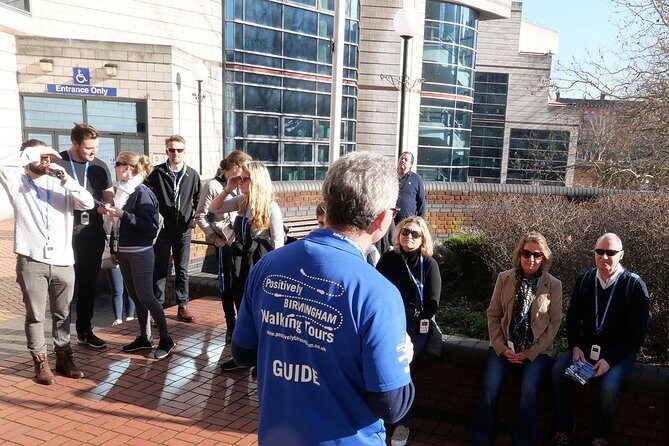
If you’re trying to understand Birmingham in one afternoon, I’d book it. The route covers the city’s big themes—canals, Victorian public spaces, art, and modern reinvention—without turning into a marathon. With the receiver setup, it’s also one of the more comfortable ways to do a walking tour in a busy city center.
Book it if you want a guided story that helps you look at buildings and squares as clues. Pass if you’re hunting for a long canal excursion only.
FAQ
How long is the Birmingham walking tour, and where does it end?
It runs for about 2 hours and ends back at the meeting point.
Where do I meet the guide?
The tour starts at the Library of Birmingham, Centenary Sq, Birmingham B1 2ND, UK.
Does the tour include earphones or an audio system?
The tour uses a live audio system with a receiver. You can bring your own 3.5mm earphones, or the tour provides a new pair. The tour may not always use an audio system.
Are there any admission tickets included during the walk?
Most stops are listed as free to enter/view, and a few have admission tickets included such as Birmingham Museum & Art Gallery, The Mailbox, and The Cube.
How big is the group, and what fitness level do I need?
The maximum group size is 35 travelers. The tour requires a moderate physical fitness level.
Can I get a full refund if plans change or weather turns bad?
Free cancellation is available up to 24 hours before the start time for a full refund. The experience requires good weather; if it’s canceled due to poor weather, you’ll be offered a different date or a full refund.