REVIEW · BIRMINGHAM
Birmingham Private Self-Guided Walking Tour
Book on Viator →Operated by Pandemic Tours · Bookable on Viator
Birmingham rewards slow wandering, and this self-guided route makes it easy to do. I like that the audio is narrated by Helen (not a robotic voice), and you get a structured loop through canals, squares, churches, and modern hubs. One note: the biggest potential snag is app access and reading the directions carefully, because a few people have hit frustrating tech or instruction mix-ups on the day.
My second favorite part is the mix of very visual stops packed into about 2 to 3 hours, from Gas Street Basin to Grand Central, plus a cultural finish in Chinatown and the Gay Village. The drawback to keep in mind is that you’re walking on your own with moderate fitness required, so you’ll want comfy shoes and a phone that behaves with GPS.
In This Review
- Key Things You’ll Notice on This Birmingham Walk
- Why This Tour Works: Canal Town to City Squares
- Price and Time: What $12.26 Buys You in Real Terms
- Start at 197 Wharfside St and Finish Where You Want to Wander
- First Stops: Birmingham Mailbox, Then Gas Street Basin’s Canal Story
- Brindley Place: Naming That Leads to Real Industrial Innovation
- National Sea Life Centre Context (Without Needing the Ticket)
- Roundhouse Birmingham: The Offbeat 1874 Building You’ll Be Glad You Found
- Arena Birmingham and ICC: Modern Birmingham’s Event Engine
- Centenary Square: Urban Planning, Then Naming by a Military Innovator
- Library of Birmingham: From the 1861 Predecessor to Today
- Chamberlain Square and Victoria Square: Names That Mark Shifts in Power
- St Philip’s Cathedral Garden: Birmingham Cathedral at a Human Scale
- Bullring and Grand Central: Railway-Era Birmingham Meets Modern Shopping
- St Martin in the Bull Ring: An 800-Year Anchor in the Middle of Everything
- Chinatown and Gay Village Finish: Two Neighborhoods With Personality
- The One Thing to Get Right: App Access and Route Directions
- Should You Book This Birmingham Self-Guided Walking Tour?
Key Things You’ll Notice on This Birmingham Walk
- Helen’s human audio guidance keeps the pace feeling natural, especially if it’s your first audio tour.
- A tight 2–3 hour loop that strings together canals, Victorian architecture, and modern event spaces.
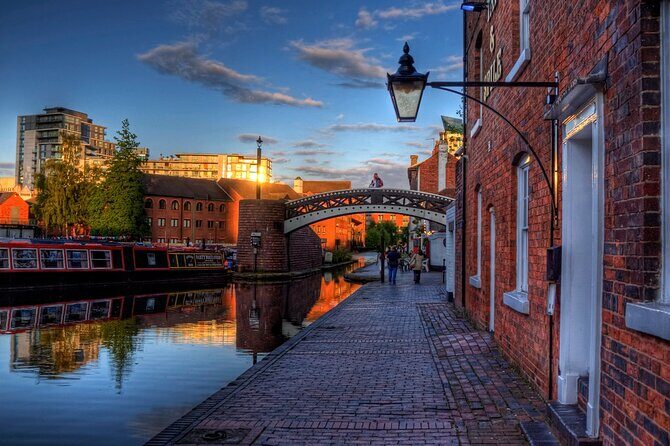
- You learn Birmingham’s canal logic with a smart stop at Gas Street Basin and Brindley Place.
- Off-the-main-track architecture at Roundhouse Birmingham (built in 1874, designed by W.H. Ward).
- A classic city-center landing zone near New Street Station, then an easy wander into Bullring, Chinatown, and the Gay Village.
Why This Tour Works: Canal Town to City Squares
This is the kind of Birmingham walk that helps you see patterns. You start with the canal story—how coal and iron moved around the city—then slide into the civic squares and church history that grew around that industrial engine. It ends in neighborhoods where people actually live, shop, and celebrate.
The structure matters. You’re not just wandering until inspiration hits. You’ll follow a GPS route with a map and stop-by-stop directions, and each location comes with audio plus videos and pictures to help you “read” what you’re looking at.
And because you have 3 weeks of unlimited app access, you can redo any tricky stretch or replay the audio when you stop for a snack.
You can also read our reviews of more walking tours in Birmingham

Price and Time: What $12.26 Buys You in Real Terms
At about $12.26 per person for roughly 2 to 3 hours, the value is in the package: audio guidance, GPS routing, maps, and the fact that it’s truly self-paced. You aren’t paying for an in-person guide’s time, so you’re buying convenience and interpretation.
Also, several stops are free to enjoy, and the tour is built around what you can see without tickets. That means you’re not relying on paid admissions to get something out of the walk. One exception to note: the National Sealife Centre is referenced, but entrance isn’t included—so plan on enjoying the exterior context unless you choose to pay separately.
If you like flexible planning—start when you’re ready, pause for coffee, take a detour around a store window—this price makes more sense. If you prefer someone standing next to you, directing every turn, this isn’t that kind of experience.
Start at 197 Wharfside St and Finish Where You Want to Wander
The tour begins at 197 Wharfside St, Birmingham B1 1QH. That’s a practical start point because it gives you a clear first anchor before you start chasing smaller streets and side views.
You finish in the Gay Village. That’s a clever ending choice: you’re not left in an empty pocket. From there, you can wander freely in the city center at your own speed, whether you’re in the mood for late coffee, people-watching, or just taking photos after the guided portion ends.
This is a private experience, meaning only your group participates. That can be a nice perk if you’re traveling with friends or family and don’t want to feel like you’re moving at someone else’s pace.
First Stops: Birmingham Mailbox, Then Gas Street Basin’s Canal Story
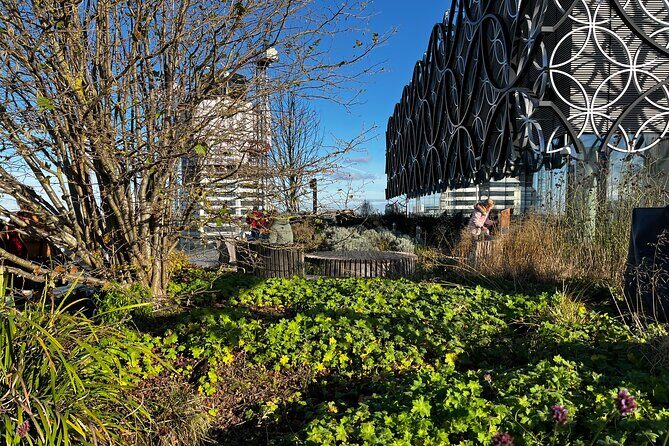
Your first big visual hit is the Birmingham Mailbox, positioned as a marker of how the city has shifted from industrial muscle to modern life. Even before you reach the canals, it sets the tone: Birmingham is not stuck in the past.
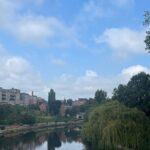
Then you move to Gas Street Basin, where the tour turns the city’s canal system into something you can actually picture. It points out the commonly used claim that Birmingham has more canals than Venice—and corrects it in a useful way. The fact to remember here is 35 miles of waterways, and that Birmingham has more canal mileage than Venice.
What I like about this stop for you: it gives you a reason behind the setting. You’re not looking at water just to look. You’re seeing the corridor Birmingham built for moving coal and iron.
A practical tip: spend those 15 minutes letting the canal view sink in before you move on. This is the kind of place where a slow scan of the surroundings makes the later stops click.
Brindley Place: Naming That Leads to Real Industrial Innovation
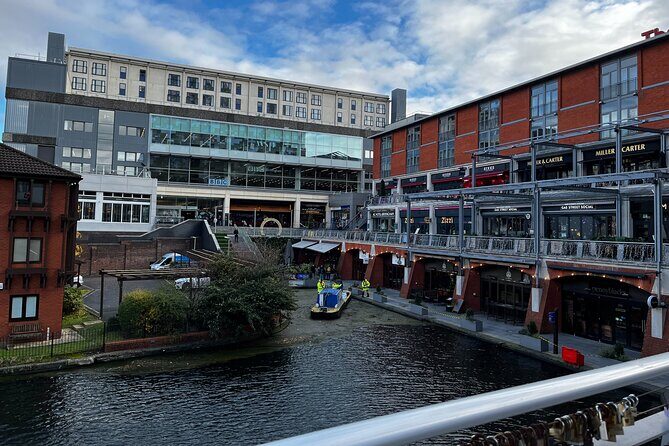
Right after, you’re at Brindley Place, named after engineer James Brindley. The tour frames him as an influential figure in the development of Britain’s canal system in the 18th century, and it even gives his birth detail—born in 1716 in Buxton, Derbyshire.
Why this matters: it turns a street name into a quick mini lesson. You’re learning that Birmingham’s canals weren’t just dug by chance; they were tied to specific people with engineering brains.
Also, this area is an easy bridge into the next part of your walk because it’s made for strolling—short distances, clear sightlines, and plenty of spots where you can pause and reset your bearings.
You can also read our reviews of more guided tours in Birmingham


National Sea Life Centre Context (Without Needing the Ticket)
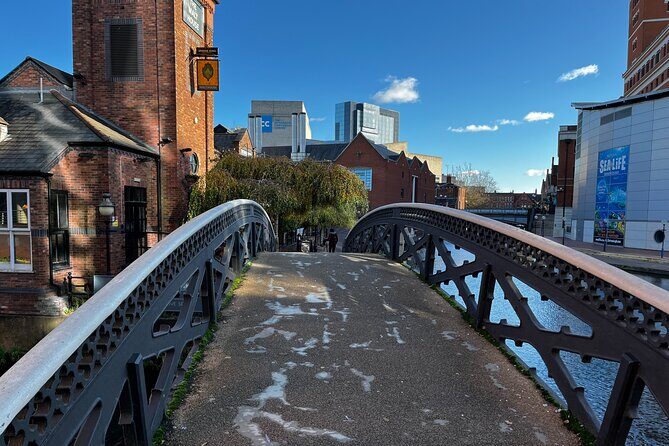
Near Brindley Place, the tour calls out the National Sea Life Centre. Entrance isn’t included, and that’s important for expectations.
You can still get value here even if you don’t go inside. The tour’s goal is orientation: you learn what you’re seeing and why it fits the modern district around the canal. If you do want to add the aquarium, you’ll have to pay separately—just don’t expect the app to handle entry.
My advice: if you’re on a tight timeline, treat this as a visual landmark and move on. If you’re traveling with someone who loves aquariums, you can always swap in that ticket time later.
Roundhouse Birmingham: The Offbeat 1874 Building You’ll Be Glad You Found
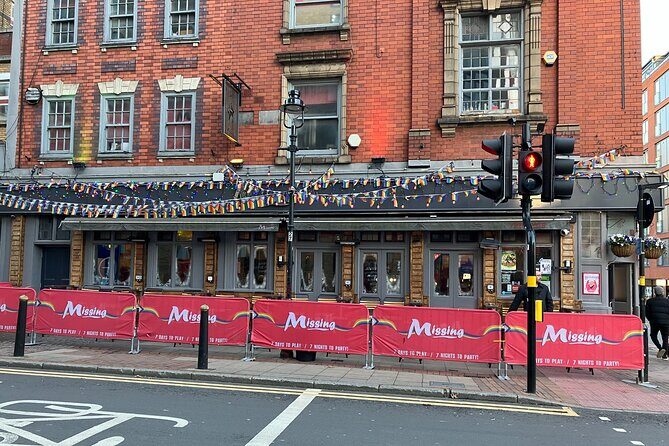
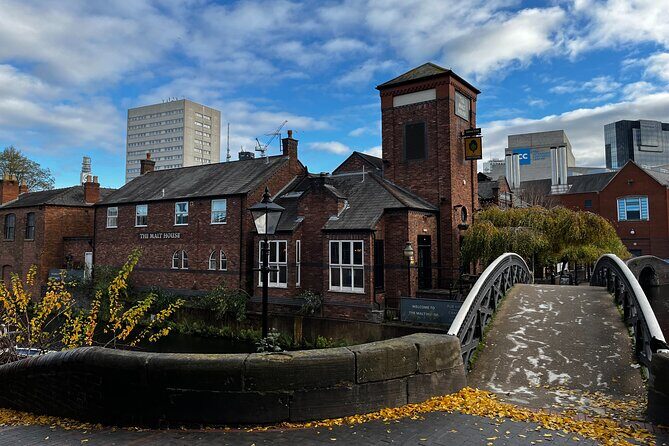
Next up is Roundhouse Birmingham, described as a little off the beaten track—and that’s exactly why it works. The tour highlights it as a distinctive building and gives key facts: designed by W.H. Ward and constructed in 1874.
This is the stop that most helps the walk feel like more than a standard city loop. It’s the kind of building you might miss if you were just following the biggest streets.
What you’ll likely appreciate: the quick shift from canal-world to industrial-era architecture. The audio helps you connect the dots so you’re not just photographing a cool facade—you understand the period behind it.
Arena Birmingham and ICC: Modern Birmingham’s Event Engine
Then you head toward Arena Birmingham, a cutting-edge entertainment venue that’s described as a cornerstone of the city’s cultural landscape. After that, you reach the International Convention Centre (ICC), a modern building tied to Birmingham’s status as a global events destination.
These stops are less about quiet historic detail and more about how Birmingham positions itself today. If you like cities that balance old infrastructure with new-purpose buildings, you’ll enjoy this contrast.
Practical note: these areas are easy to walk through, but they’re also the type of space where traffic and crowds can vary. Keep your eyes up and your phone steady when you’re following GPS.
Centenary Square: Urban Planning, Then Naming by a Military Innovator
Moving into the civic core, you’ll arrive at Centenary Square. The tour gives you the timeline: it dates back to the late 19th century, originally part of Birmingham’s urban planning initiatives. It was first named Congreve Square, after Sir William Congreve, described as a British Army officer, politician, and innovator.
This stop is good for you if you like learning how cities decide what to name, and why. Squares aren’t random patches of pavement—they’re designed anchors for public life, and the names often signal who mattered at the time.
Library of Birmingham: From the 1861 Predecessor to Today
At the Library of Birmingham, the key story is continuity. The tour traces its roots back to the predecessor library established in 1861.
Even without going inside, this stop gives you context for why the library feels like more than a building. It connects Birmingham’s civic ambition to the everyday act of learning and reading.
If you’re tempted to pop in, check your schedule. The tour is timed to keep you moving, so don’t lose too much time if you’re trying to finish by a certain hour.
Chamberlain Square and Victoria Square: Names That Mark Shifts in Power
You then hit two more squares that help you read Birmingham like a text.
Chamberlain Square is named after Joseph Chamberlain, a prominent political figure. The tour notes the origins in the late 19th century, when it was initially Corporation Street Square.
Then comes Victoria Square, originally Council House Square, renamed in 1901 to honor Queen Victoria’s Diamond Jubilee.
These stops are short—about 10 minutes each—but they work because the audio turns the geography into meaning. You’ll understand why different corners of the city carry different political messages, and how that shows up in what you see.
St Philip’s Cathedral Garden: Birmingham Cathedral at a Human Scale
Next is St Philip’s Cathedral Garden, tied to St Philip’s Cathedral, often called Birmingham Cathedral. The tour gives two useful facts: it’s described as the third smallest cathedral in the UK, and it’s Anglican with roots traced back to the early 18th century.
This is one of those spots where a pause helps. Even if you’re not going inside, the garden setting gives you a calmer break from the open squares and shopping zones.
Bullring and Grand Central: Railway-Era Birmingham Meets Modern Shopping
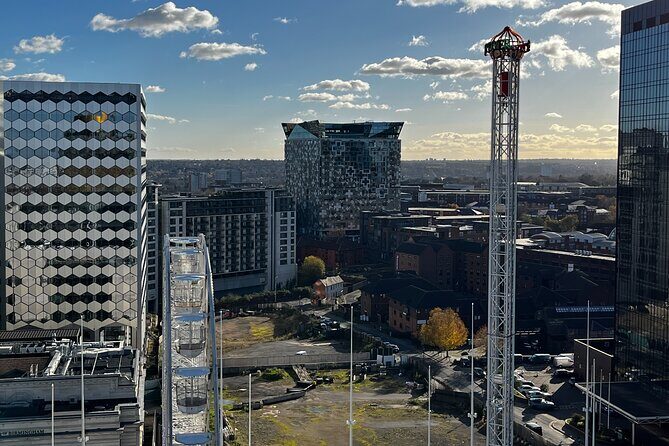
Then you move toward Bullring & Grand Central Birmingham. The tour calls out the adjacency to Birmingham New Street Station, described as a railway hub from the Victorian era. From there, you get to Grand Central, with an atrium featuring over 60 shops and restaurants.
This stop is practical value. It’s where you can grab a drink, browse, and recharge your feet without needing tickets or long detours. It’s also a good spot if you’ve been thinking about the industrial roots—rail infrastructure helped shape Birmingham’s growth.
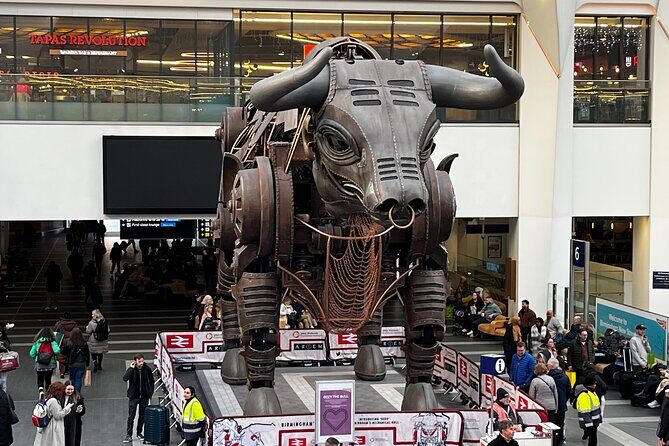
The tour also notes the Bull Statue, presented as a symbol of strength, resilience, and the industrious spirit that defines Birmingham. Expect photos here. It’s visually memorable, and it fits the tour’s overall theme.
St Martin in the Bull Ring: An 800-Year Anchor in the Middle of Everything
Near the Bullring zone, you’ll find St Martin’s Church Centre, tied to St Martin in the Bull Ring, and described as Birmingham’s oldest parish church with roots over 800 years old.
This is a nice emotional reset. You go from modern interiors and high energy retail to something old enough that it changes your sense of time. Even if you only take in the exterior and the immediate surroundings, the audio helps you frame it correctly: this isn’t a random antique stop; it’s a living anchor inside the modern city.
Chinatown and Gay Village Finish: Two Neighborhoods With Personality
Your last stretch includes Birmingham Chinatown and then the Gay Village.
Chinatown is described as a vibrant Chinese Quarter with traditions, flavors, and history in the heart of the city. Gay Village is framed as inclusive and a celebration of the LGBTQ+ community, described as a living chronicle of resilience and triumphs.
Here’s how I’d use this ending if you want maximum value: don’t treat it like a checklist. After the tour audio ends, linger. If you want food, Chinatown is the obvious mood shift. If you want energy and color, the Gay Village is your last walk payoff.
The tour ends there on purpose, so you can turn your final stops into actual experience—snack, photo, slow stroll, or just sitting somewhere for a few minutes while you decompress.
The One Thing to Get Right: App Access and Route Directions
Because this is self-guided, your success depends on setup.
The good news: the experience is meant to run inside the app, with Helen’s audio plus map and GPS routing. The instructions are also supported by an email-style Before you go section.
The caution: some users have reported being forced into an external link flow via a browser, which created errors and made it impossible to start on time. Others found the directions harder than they expected, since the route notes can be easy to miss if you only skim the first part of the text.
So do this before you head out:
- Open the Exploro app and locate the tour inside it.
- Read the Before you go section once.
- When you start, check the directions display so you’re not guessing turns.
If you do that, the tour becomes an easy, confident walk. If you skip it, you risk losing momentum early.
Should You Book This Birmingham Self-Guided Walking Tour?
Book it if you want an audio-led way to see Birmingham’s canals, civic squares, and church landmarks without paying for a live guide. At $12.26 with GPS routing and human narration by Helen, it’s a strong value for a 2–3 hour city walk, especially if you like finishing near places you can keep exploring on your own.
Skip it (or be extra careful) if you know you hate app setup on travel days. Because the experience is self-guided and time matters, you’ll benefit most from a quick phone test before you leave your hotel.
If you like the idea of learning Birmingham’s industrial logic, then switching gears to cathedrals, rail-era architecture, and two distinct city neighborhoods to close, this is a smart way to spend a morning or afternoon.