REVIEW · LONDON
Harry Potter London Tour with Audioguide on Smartphone
Book on Viator →Operated by TouringBee · Bookable on Viator
A wizard walk with GPS on your phone. This self-guided Harry Potter London tour strings together iconic sights with an audio app that works with offline GPS and landmark illustrations, so you can keep moving without getting lost. I like that it mixes famous Harry Potter filming nods with real London landmarks, so the story feels glued to the streets.
One thing to plan for: it is not a human-led tour, so you will need your own smartphone setup and headphones. Also, it covers a lot of ground in about 3 hours, so comfortable shoes matter, especially with stair-heavy stops like The Monument.
In This Review
- Key things I’d notice first
- A 3-hour Harry Potter London walk that runs on your phone
- Starting at Leadenhall Market: where Harry Potter fandom starts
- The Great Fire, St. Dunstan’s gardens, and London Wall
- Tower of London: power, symbols, and a hard-edged setting
- Tower Bridge and HMS Belfast: engineering meets the naval past
- Leadenhall’s cinematic nod, plus the Leaky Cauldron
- Dark London with Clink Prison Museum, plus cathedral calm
- Shakespeare’s Globe, Tate Modern, and the Millennium Bridge wobble
- St. Paul’s Cathedral dome views and the Whispering Gallery
- The Shard: the skyline jump button
- Temple Bar and St. Pancras: gates, trains, and old-modern London
- Platform 9¾: the Harry Potter finish line
- Price, value, and how to make this tour feel worth $7.18
- Who this is best for (and who should skip it)
- Should you book the Harry Potter London Tour with Audioguide?
- FAQ
- How long is the Harry Potter London tour with smartphone audioguide?
- Is there a human guide on this tour?
- Do I need my own headphones and smartphone?
- Does the audio guide work offline?
- Where does the tour start and where does it end?
- Is admission to the stops included?
- Can I cancel for free?
Key things I’d notice first
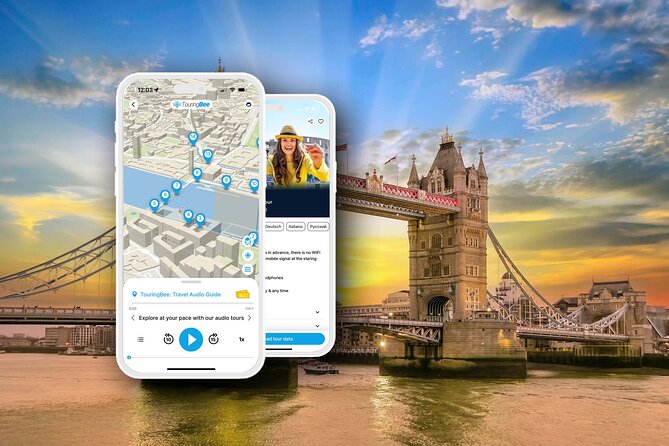
- Offline route + GPS in the app, so you can follow along without constant data use
- 25 audio recordings that pair history with the sights you can actually see
- Illustrations to recognize landmarks, helpful when streets look similar
- Harry Potter moments like Leadenhall Market’s cinematic spot and Platform 9¾ at King’s Cross
- Free-to-visit stop areas listed, while paid attractions are optional since entrance fees are not included
A 3-hour Harry Potter London walk that runs on your phone
This experience is designed for independent pacing. You download the audioguide app for iPhone or Android, activate your purchase, then follow the route on the map. There is no group huddle, no scheduled lecture, and no pressure to keep up with a guide. If you like to stop for a photo, read a sign, or just watch people for a minute, this style fits well.
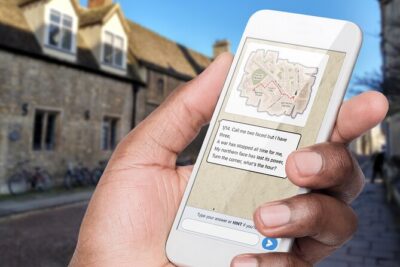
The core tech detail is the offline side. The tour includes an offline map with a route and offline GPS support, plus illustrations to help you spot each place. That matters in London, where a turn can be as simple as one street name that looks like five others.
You should also know what you are signing up for physically. It’s about 3 hours on foot, and you’re moving between major areas (City of London, Thames South Bank, and then toward King’s Cross). The tour notes a moderate fitness level, and you will feel that. Stairs show up (like the 311 steps up The Monument), and even when you are not climbing, you’ll still be walking.
You can also read our reviews of more tours and experiences in London.



Starting at Leadenhall Market: where Harry Potter fandom starts

I love starting at Leadenhall Market because it sets the tone immediately. The place is a Victorian structure in the heart of the financial district, with ornate architecture, shops, and market stalls. It’s easy to understand why this area shows up in film and photo shoots: it feels old-school and cinematic without needing any imagination.
In the audio app, you get guidance for recognizing what you’re looking at, not just a spoken story. That combination is practical. You’re not trying to translate directions while juggling street noise. You’re also less likely to miss the exact storefront or corner the audio is referring to.
Time-wise, the stop is short—about 10 minutes. That works best if you treat each stop like a landing pad. You read the audio prompt, check the view or details, and then move on before you lose momentum.
The Great Fire, St. Dunstan’s gardens, and London Wall
After the market, the route heads toward London’s layers of survival—first with The Monument to the Great Fire of London. This Doric column (linked to Christopher Wren and Robert Hooke) commemorates the 1666 fire and invites you to climb. The climb is the famous part: 311 steps for panoramic city views. Even if you skip the climb, you’ll get context for why the memorial matters and what you’re seeing when you look across the skyline.
Next, you get a calmer reset at the Garden of England by St. Dunstan’s Church. This is a quiet patch in central London, and I like having a spot like this inside a Harry Potter-themed walk. It gives your brain a break from streets and crowds. You can take a slow stroll, check the garden details, and then get back into the story with less fatigue.
Then comes London Wall, a surviving remnant of Roman and medieval fortifications. This is one of those “you’re standing on old edges” places. The audio helps you connect what remains on the ground to how the city used to be arranged. It’s a good stop if you like tracing long timelines—Roman street logic to medieval defenses, then modern London growing around it.
Tower of London: power, symbols, and a hard-edged setting
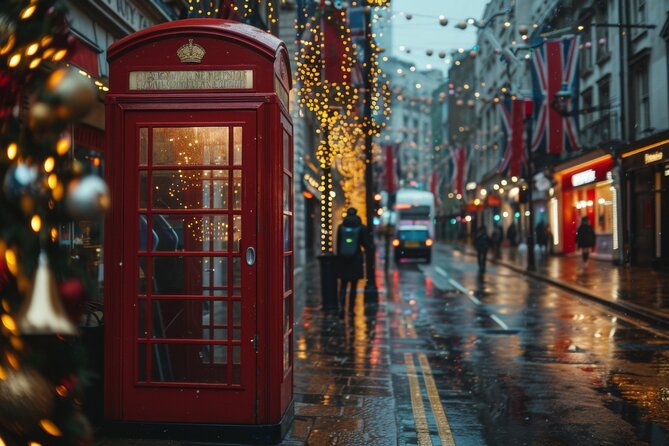
When the route reaches the Tower of London, it moves from history-as-a-view to history-as-a-wall. This fortress on the Thames is the kind of place that makes the past feel physical. You’ll hear about medieval architecture and the White Tower, plus the sense of authority and control tied to royal space.
If you want the Crown Jewels focus, you may need to plan for optional paid entry depending on what you choose to do on-site, since entrance fees are not included. Still, even a quick look around the exterior areas can make the audio story feel more grounded.
One practical benefit of doing this with an audio app: you can slow down exactly where you care. If you’re into dramatic stories—prison, intrigue, rule—you’ll spend extra time listening around the spots that match that theme. If you’re more of a “look, then learn” person, you can speed up when a segment is more narrative than visual.
Tower Bridge and HMS Belfast: engineering meets the naval past

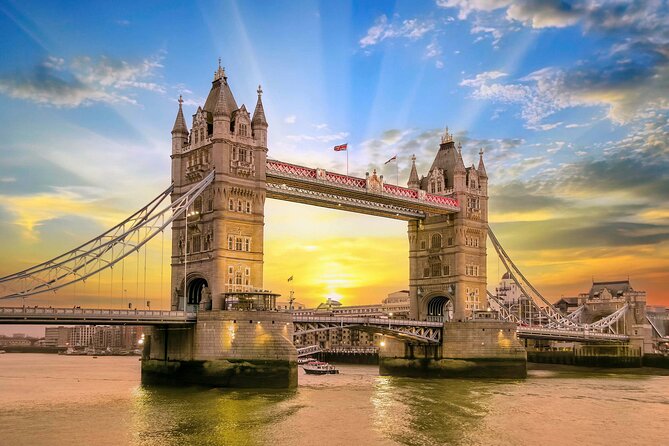
Next you’ll hit Tower Bridge, another “stand here and feel small next to the structure” moment. The audio frames it not only as an icon, but as Victorian engineering with a working system: the bascules open for ships. There’s also the Tower Bridge Exhibition, which is worth considering if you want the technical and historical background, though entrance details are not included.
After that, you step into maritime memory with HMS Belfast, a floating museum on the Thames. The tour’s audio points you to the idea of exploring multiple decks—engine rooms and the captain’s cabin are specifically named. It also connects the ship’s role to major 20th-century conflicts, including WWII and the Korean War.
This stop is a great contrast to the Harry Potter mood. It reminds you that London is not only fantasy-adjacent landmarks—it’s a global city with defense, trade, and shipbuilding roots. If you like museums you can walk through at your own pace, this fits the self-guided style very well.






Leadenhall’s cinematic nod, plus the Leaky Cauldron
If your priority is Harry Potter, you’ll likely perk up around Leadenhall Market again at the Leaky Cauldron stop. This is where the wizarding story meets the real shopping and street scene. You won’t find actual wizards, but you will get that “this could be a set” feeling—especially because the area already looks like the right era.
The audio approach helps here because it’s easy to treat these places like quick photo ops. Instead, you’ll learn what makes the film connection feel believable in the actual streetscape. The stop is short (around 10 minutes), so use it for a photo plus a few minutes of audio, then keep going while your energy is still high.
Dark London with Clink Prison Museum, plus cathedral calm

After the lighter cinematic note, the route turns darker at Clink Prison Museum on Clink Street. This museum setting leans into the grim side of London’s past. The audio highlights medieval prisoners and the notorious Clink prison, with artifacts and interactive exhibits, plus a recreated dungeon setting.
Then you shift back to quieter architecture at Southwark Anglican Cathedral. The tour description points you to Gothic design, serene interiors, and connections to Shakespeare. There’s also mention of the Harvard Chapel and the churchyard, which are exactly the kind of places you’ll appreciate when you want a pause from urban movement.
These two stops work well back-to-back. Prison history gives weight; cathedral calm gives breathing room. And because you control playback, you can decide whether you want the mood to stay heavy or lift.
Shakespeare’s Globe, Tate Modern, and the Millennium Bridge wobble
The next stretch keeps the route moving along the Thames-side energy, but in a way that balances art with views. Shakespeare’s Globe Theatre is described as a faithful reconstruction with a thatched roof and open-air setup. If you’re a play person, you might consider timing your visit alongside any shows or guided tours—though, again, entrance details are not included in the audioguide purchase.
From there, you reach Tate Modern, housed in a former power station. The audio helps you understand both the building and the modern art approach inside. You also get a bonus feature that can be worth more than the art itself: Thames-facing views from the South Bank area.
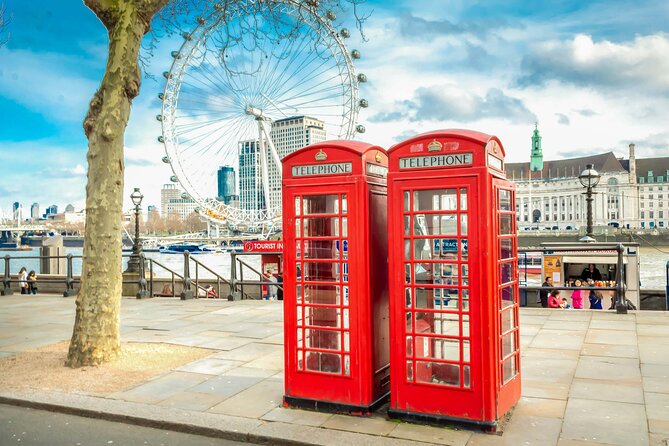
Then the Millennium Bridge comes next. It’s known for its sleek suspension design and for the famous nickname The Wobbly Bridge. The practical value is that it’s an easy way to walk across the river and line up skyline photos between St. Paul’s Cathedral and Tate Modern.
St. Paul’s Cathedral dome views and the Whispering Gallery
St. Paul’s Cathedral is one of those stops where timing and energy matter. The route gives you a short window, but the audio calls out the big signature experiences: the dome views and the Whispering Gallery. If you want those specific viewpoints, you may need to plan for whatever paid entry is required on-site.
Even if you don’t go inside for every feature, St. Paul’s from key angles is still powerful. The dome shape and the scale of the interior space can hit you even in a brief visit. And since the audioguide keeps you anchored to what you’re seeing, you’ll spend your time looking at the details that actually connect to the story being told.
The Shard: the skyline jump button
The route includes The Shard, London’s glass-and-steel skyline needle. The audio emphasizes the high-speed elevator to panoramic decks and the idea that the skyline can look different depending on time of day.
Because entrance fees are not included, I treat this stop as optional in a smart way. You can do a quick exterior moment with the audio, or you can use your time and money to go up if views are your priority. For value, I suggest deciding early: if you already know you want city views from above, The Shard can be the “pay once, remember forever” highlight.
Temple Bar and St. Pancras: gates, trains, and old-modern London
Next you pass Temple Bar London, a historic gateway that marks a boundary between the City of London and Westminster. The tour description notes it was restored and relocated to Paternoster Square. I like this stop because it’s a reminder that London’s borders are part of the story, not just tourist trivia.
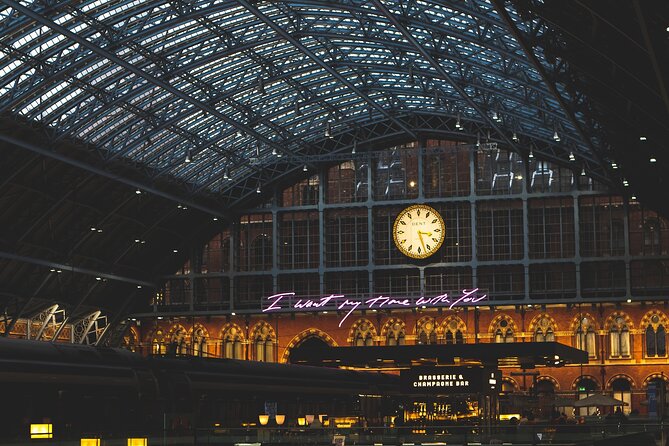
Then you land at St. Pancras International Station, another strong visual contrast. This is a Victorian masterpiece with a soaring Gothic facade and an iron-and-glass train shed. It’s also an active transport hub with Eurostar service.
The audio also ties in modern life around the station through shops and the nearby St. Pancras Renaissance Hotel area. That’s useful because it helps you read the scene as “working city,” not “museum backdrop.” If your legs are getting heavy, this station stop can also work as a built-in resting option because you’ll find plenty of places to linger nearby.
Platform 9¾: the Harry Potter finish line
Finally, the walk lands at Platform 9¾ at King’s Cross Station. This is the moment many Harry Potter fans wait for. The audio guides you to the trolley photo setup that disappears into the magical realm, plus time for the adjacent Harry Potter shop.
This last stop is intentionally short and photo-friendly, which is smart at the end of a 3-hour route. By this point, you’ll have built momentum, and your brain will want something fun, quick, and clearly Harry Potter. Even if you’re not obsessed, it’s a satisfying way to close a day that’s otherwise a history walk with cinematic threads.
Price, value, and how to make this tour feel worth $7.18
At $7.18 per person, the value is mostly in the self-guided structure plus the content bundle. You are not paying for transportation, and you’re not paying for a human guide. Instead, you’re paying for:
- a smartphone app experience (iOS and Android)
- offline GPS support and a route map
- 25 audio recordings
- landmark illustrations
- 1 year access in the language you choose
That can be a great deal if you are the type who uses audio well and likes walking at your own pace. It’s also a strong option for small groups or families who don’t want to be held to one speed.
The only time this might not feel like a bargain is if you prefer guided interpretation from a live person, or if you expect all stops to be fully paid experiences with included tickets. Here, entrance fees are not included, so you’ll have to decide which moments are worth any extra spending.
Also note the “about 3 hours” pacing. If you spend long at one major paid attraction, you’ll compress the rest. My tip: pick one or two “money or time” upgrades (like The Shard or a museum stop) and treat the other sites as listen-then-look moments.
Who this is best for (and who should skip it)
This experience fits best if you:
- love Harry Potter enough to enjoy real-world locations and context
- like independence and hate waiting for a group
- will bring headphones and use your phone’s GPS responsibly
- want an easy way to cover a lot of London highlights in one morning or afternoon
It may be less ideal if:
- you dislike phone-based navigation
- you are traveling with limited time for app setup or want zero tech steps
- you struggle with walking for about 3 hours, especially with stair-heavy stops
Should you book the Harry Potter London Tour with Audioguide?
I’d book it if you want a fun Harry Potter-themed route that still teaches you how London got built—fires, fortifications, cathedrals, prisons, and major bridges—without forcing you into a rigid schedule. The offline GPS and 25 audio recordings are the heart of the value, and the finish at Platform 9¾ is a satisfying payoff.
Skip it if you want a guide who answers questions live, or if you know you won’t use your phone for audio and navigation. With this kind of tour, the experience quality depends on you pressing play at the right places.
FAQ
How long is the Harry Potter London tour with smartphone audioguide?
It takes about 3 hours on foot, based on the route pacing and stop times.
Is there a human guide on this tour?
No. It is a self-guided tour using a mobile app. There is no human guide included.
Do I need my own headphones and smartphone?
Yes. The tour notes that smartphone and headphones are not included, so you’ll need both to listen to the audio.
Does the audio guide work offline?
Yes. The tour includes an offline map with the route and offline GPS support inside the app.
Where does the tour start and where does it end?
The meeting point is Leadenhall Market on Gracechurch St, London EC3V 1LT, UK, and the activity ends back at the meeting point.
Is admission to the stops included?
Entrance fees and tickets are not included. The tour does include free admission listings for stops, but if you choose optional paid features at certain locations, you’ll need to handle those costs separately.
Can I cancel for free?
Yes. You can cancel up to 24 hours in advance for a full refund. If you cancel less than 24 hours before the start time, the amount paid is not refunded.