REVIEW · LONDON
London Photography Tour – Private Tour
Book on Viator →Operated by London Photo Tours and Workshops · Bookable on Viator
London begs to be photographed with help. This private Fine Art guide turns a normal walk into a hands-on photo lesson, and you hit iconic central London sights in one smooth circuit. You get practical teaching on camera settings, plus lots of guided moments to actually shoot, not just look.
I especially love how Lou keeps the focus tight: composition, depth of field, and light, explained in plain terms you can use right away. I also like that it works for both beginners and more experienced shooters, and it even fits smart phones as well as digital cameras. One possible drawback: it’s an all-weather, mostly-walking tour, and refreshments are not included, so you’ll want to plan your stamina.
In This Review
- Key highlights worth centering your day
- Starting at Charing Cross: how the 4-hour photo walk really flows
- What you pay ($336.40) and what makes it feel like value
- Trafalgar Square: Landseer Lions, chalk artists, and aperture lessons
- National Gallery in 15 minutes: angles of view and focusing that sharpens
- Leicester Square to Shakespeare: portraits, light, and depth of field
- Piccadilly Circus: red telephone boxes, Eros, and white balance
- Horse Guards Parade at Whitehall: shutter speed and flash fill for portraits
- Big Ben and the Houses of Parliament: quick setup for iconic framing
- Parliament Square statues (Churchill, Gandhi, Mandela): scale and creative aperture
- Westminster Abbey from outside: scale, lens choice, and zoom selection
- London Eye across the river: depth of field, shutter speed, and river life
- The real skill you take home: how Lou turns settings into usable habits
- What to bring so you get the most out of every stop
- Who this London photography tour fits best
- Should you book this private London photography tour?
- FAQ
- How long is the London Photography Tour?
- Where do I meet and where does the tour end?
- Is this tour private?
- What language is the tour conducted in?
- Do I need to bring a camera?
- Are tickets or entry fees included?
- Is refreshments or lunch included?
- How does the weather factor in?
- What is the cancellation policy?
Key highlights worth centering your day
- Lou’s hands-on coaching while you shoot, with attention to real camera settings you can copy fast
- Composition and framing tips at heavyweight spots like Trafalgar Square and Parliament Square
- Light, white balance, and depth-of-field lessons timed to what you can photograph right then
- A private, exclusive tour with your own pace and a guide watching your shots
- Landmark-to-river variety in just about four hours, from Big Ben to the London Eye
Starting at Charing Cross: how the 4-hour photo walk really flows
You start at Charing Cross (London WC2N 5DP) and end at Victoria Embankment. The tour runs about 4 hours, and the stops are spaced so you can learn something, try it, then apply it again a few minutes later.
Because it operates in all weather, you’ll want to dress for wind, rain, and sudden cloud cover. Also bring a fully charged battery and extra memory cards—you’ll take more photos than you think, especially once you start using the settings your guide is teaching.
If your goal is to learn to see London through a camera instead of just snapping from the hip, this pacing works well. You won’t get stuck in one place too long, but you’ll still get enough time at each stop to try a couple of angles and settings.
You can also read our reviews of more private tours in London
What you pay ($336.40) and what makes it feel like value
At $336.40 per person, this isn’t a cheap casual stroll. What you’re paying for is time with a professional Fine Art photographer with extensive teaching experience, plus an instruction style that focuses on how to get better photos immediately.
You also get a photo review component—not just feedback in theory, but guidance on how to develop your results. Add in the fact that the tour is private (exclusive to you or your personal group), and the instruction quality tends to feel less like a group lecture and more like a lesson tailored to your camera and your questions.
One more value point: most stops here are Admission Ticket Free. So you’re not paying extra just to stand near the view you want. You’re buying coaching and time in the best photo zones.
Trafalgar Square: Landseer Lions, chalk artists, and aperture lessons
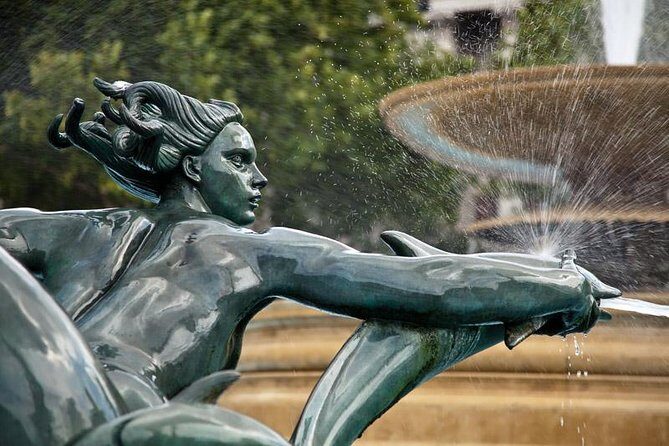
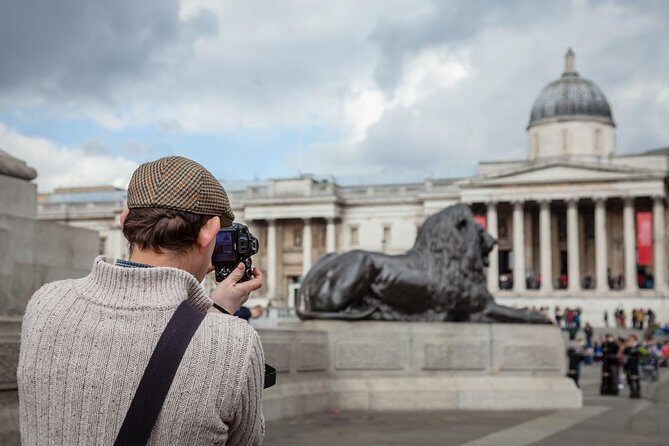
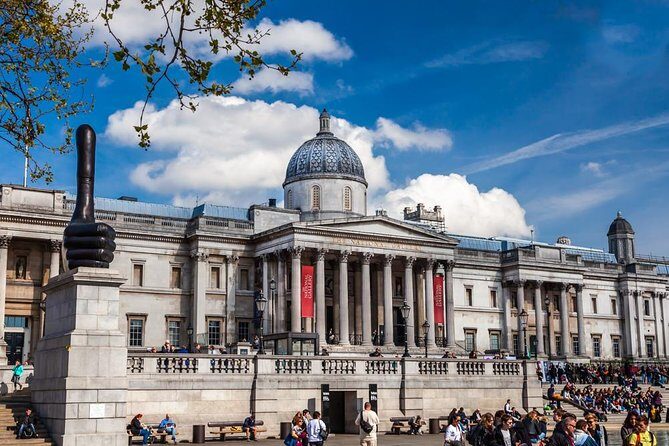
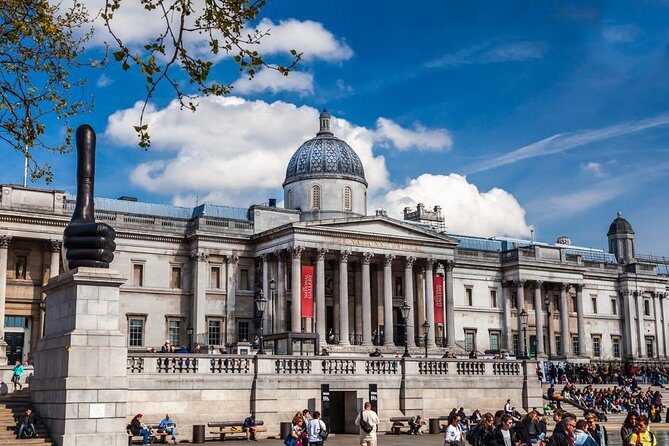
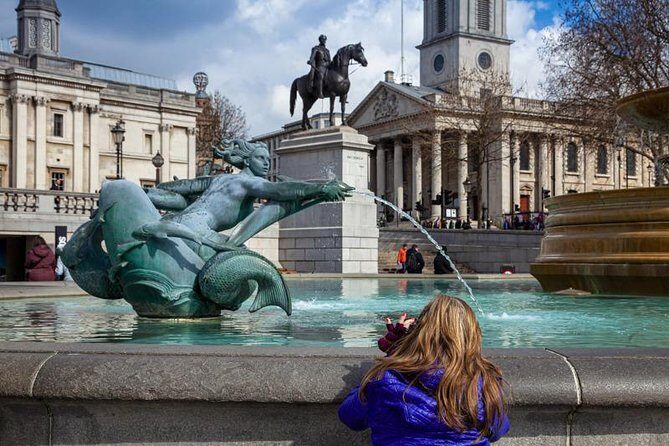
This is where the tour sets its style: classic London symbols plus street life. You’ll photograph the National Gallery area, the Landseer Lions, fountains, statues, and those famous sculptural touches that give the square its character. You can also look for chalk drawings and street entertainers, which are great for learning timing and framing.
Here you’re taught fundamentals that actually change your photos: aperture, depth of field, and light. You’ll practice lens choices, framing, and composition, and you’ll learn how to capture the true feel of the square instead of shooting only one obvious angle.
A smart moment at this stop is the idea of reaching for distance—working views from Trafalgar Square toward Whitehall. That’s where your guide’s “think like a photographer” prompts help: you’re not just aiming at a landmark, you’re building depth with foreground, midground, and light.
National Gallery in 15 minutes: angles of view and focusing that sharpens
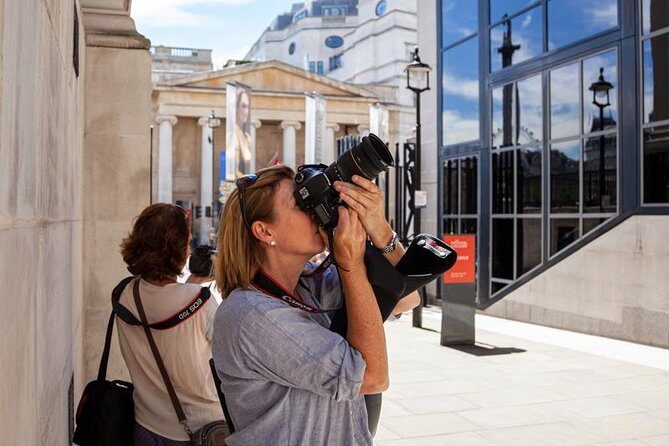
The National Gallery stop is short, so you’ll want to go in with a plan: one or two shots you really care about. This is where you explore architectural angles, textures, and contrasts, and you practice choosing the view that makes the building feel dynamic instead of flat.
You get focused teaching on angles of view, depth of field, and focusing techniques. In practice, that means you’ll learn what to prioritize when the scene has both fine detail and big forms—like steps, columns, and edges that can look crisp or smeared depending on how you focus and set exposure.
Because the time is tight, don’t try to photograph everything. Use the coaching to pick your strongest composition and work it from a couple of heights or perspectives.
Leicester Square to Shakespeare: portraits, light, and depth of field
Leicester Square is famous for movie-industry energy and premieres, and in the middle of that you’ll photograph the square’s gardens, fountains, and the William Shakespeare statue. Your guide also points you toward a Charlie Chaplin statue portrait approach—useful if you want tighter character shots instead of wide views.
This portion is all about controlling the look through light and camera handling. You’ll experiment with composition and framing, and you’ll practice aperture and depth of field so your subject pops and the background doesn’t steal the show.
Here’s the key practical takeaway: if the square is busy, use your guide’s direction to work with it. Move your angle slightly. Wait for a cleaner moment. Shoot through layers—fences, railings, or garden edges—to get portraits that feel intentional.
You can also read our reviews of more photography tours in London


Piccadilly Circus: red telephone boxes, Eros, and white balance
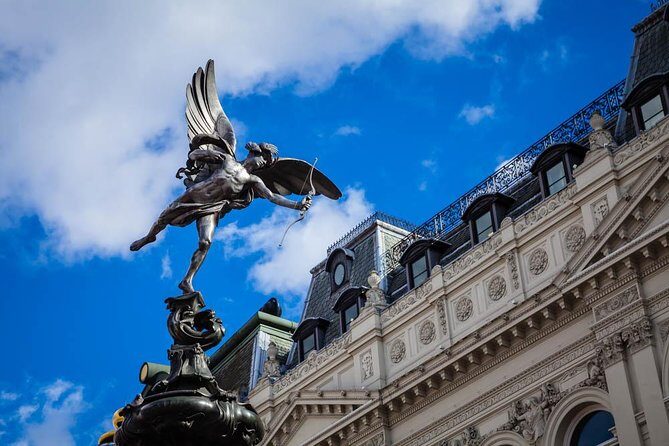
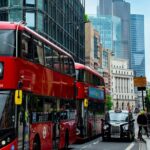
Piccadilly Circus is where London turns playful. You’ll photograph the red telephone boxes, red London buses, and the Statue of Eros, plus you’ll notice banners over Regent Street that make the scene feel alive. Along the walk there are side streets and small shops with an old-world feel, which is perfect for practicing fresh viewpoints.
This stop is longer—about 45 minutes—and you’ll get a chance to review progress with a short working break. That matters because it gives you feedback while you still have time to fix what’s not working.
You’ll learn camera handling, composition, light, and white balance—which is huge at night or under mixed lighting. White balance is one of those settings people ignore until their photos look oddly colored. This is where you’ll get real practice.
Horse Guards Parade at Whitehall: shutter speed and flash fill for portraits
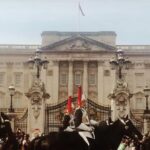
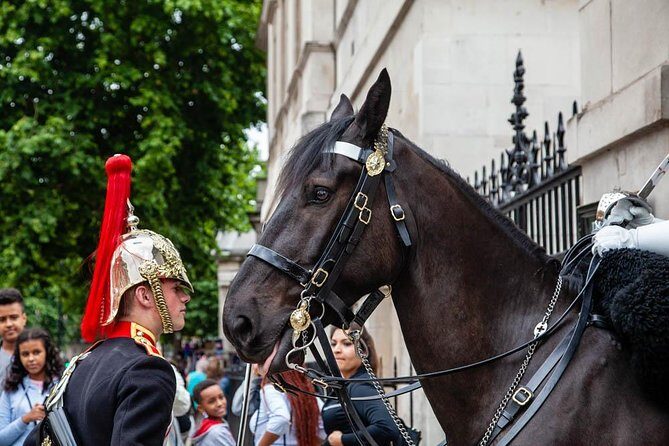
Now you shift from fun neon energy to uniforms, movement, and dramatic form. You’ll photograph Horse Guards Parade and sentries at Whitehall, including their colourful outfits and the mounted look that’s great for imposing portraits.
This is a strong teaching stop for action and portrait technique. You’ll work on aperture values for portraits, shutter speed to freeze action, focusing techniques, and fill in flash. If you’ve ever wondered how to keep a person sharp while lighting is uneven, this is the kind of place to learn it.
You’ll also pass notable landmarks like Admiralty Arch and the Cabinet War Rooms area, plus statues connected to the Women of the Second World War. And there’s even the chance to photograph Tube signage at Westminster, which gives you a street-level detail shot between bigger monuments.
Big Ben and the Houses of Parliament: quick setup for iconic framing
When you arrive at Westminster, the tour moves into landmark mode. You’ll photograph Big Ben and the Houses of Parliament, with the added classic touch of a red telephone box nearby.
This is a shorter stop, around 15 minutes, so you’ll want to set up fast. Think of it like this: your guide has already taught you the basics, so now you’re applying them under pressure. Don’t overthink. Pick one or two compositions, shoot a couple of variations, then move on.
The best use of this time is to focus on angle and light rather than trying to take everything in. Use the guide’s prompts to frame the view so Big Ben isn’t just sitting in the middle, but part of a stronger scene.
Parliament Square statues (Churchill, Gandhi, Mandela): scale and creative aperture
Parliament Square gets more personal with statues. Your photographer guides you toward the most impressive angles and shows you how to photograph the backdrop with historic statues against the Houses of Parliament.
You’ll photograph major figures including Winston Churchill, Gandhi, and Nelson Mandela. This stop is about scale and storytelling: big building behind you, powerful human forms in front, and light that can change fast.
You’ll learn scale and creative aperture values, so you can decide when to blur distractions and when to keep the scene sharp. If you like portraits that feel grounded in place, this is where your photos start looking like real keepsakes, not just sightseeing.
Westminster Abbey from outside: scale, lens choice, and zoom selection
You’ll photograph Westminster Abbey from the outside, focusing on the architecture and the big sense of significance it carries. It’s also linked to well-known royal weddings, and the building’s scale helps your composition skills in a practical way.
Your guide teaches composition and framing, scale, and specifically lens choice and zoom selection. That’s important because wide-angle and zoom shots can completely change how tall, heavy, and dramatic the Abbey looks.
This is a good stop to experiment: try one wider view for context, then try a tighter composition that emphasizes symmetry or details. Even with only 15 minutes, you can leave with multiple distinct styles if you use the lens coaching.
London Eye across the river: depth of field, shutter speed, and river life
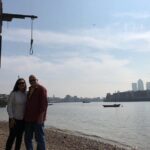
Finally, you switch to river views. You’ll photograph the London Eye from across the water, with guidance on how to frame the relationship between the structure and the surrounding scene.
The London Eye is 443 feet (135 metres) tall, so scale is the whole game. Your guide talks about framing, lighting, and lens choice, and then you’ll work on the look with teachings like light, depth of field, shutter speed, focusing techniques, and composition.
This is also where “river life” matters. You’ll get chances for lively shots that aren’t just the wheel itself—use your guide’s focus guidance so you can separate moving people or boats from the landmark cleanly.
The real skill you take home: how Lou turns settings into usable habits
What makes this tour work is that the instruction stays tied to what you’re seeing. You learn camera concepts like aperture and depth of field, then immediately get a place to practice them at Trafalgar Square and around monuments. You learn focusing ideas, then apply them again when you photograph statues and architectural lines.
Lou’s coaching also seems geared toward confidence. In the reviews, people highlight how encouraging and helpful she is, and how she gives advice that makes camera functions feel less mysterious. If you want to improve exposure, sharpening, and composition, this is the kind of session that helps you connect the dots.
Even better, the tour is described as suitable for multiple skill levels, including beginners. That means you should feel safe bringing your questions, and you won’t be the only person trying to figure out why one photo is crisp and the next is soft.
What to bring so you get the most out of every stop
Here’s what you can control ahead of time:
- A camera of your choice, including a smart phone (the tour supports digital cameras and phones)
- A fully charged battery
- Extra memory cards
- Comfortable shoes for an all-weather walking day
Since refreshments and lunch are not included, plan for your own snack or a quick stop when you need one. The tour does include a short working break to review progress, but that doesn’t replace a full meal.
Also remember: service animals are allowed, so if you’re traveling with one, you’ll be able to bring them along.
Who this London photography tour fits best
This tour makes the most sense if you want more than photos. You want a guide who teaches you how to get those photos.
It’s a good fit for:
- Beginners who want clear guidance on settings and composition
- Enthusiasts who want structured practice around real London subjects
- Anyone who likes classic landmarks and wants multiple shooting styles in one half-day
- Families, since the tour is described as suitable for kids and teens with cameras
If your travel style is mostly about sitting down for long museum breaks, you might find the pace more active than you like. But if you enjoy walking with purpose and learning as you go, it’s hard to beat.
Should you book this private London photography tour?
I’d book it if you want to leave London with photos you actually understand how to create. The mix of iconic stops, clear camera instruction, and Lou’s teaching approach is a strong match if you care about composition, light, and focus, not just checklists.
Skip it if you mainly want a relaxed sightseeing day with no camera coaching. Also consider that refreshments aren’t included, so you’ll need your own plan for breaks.
If you like the idea of walking through central London while learning how to frame better shots, this tour is a smart use of time—and it’s one of the clearer ways to turn a phone snapper into a real photographer, without the ego bruises.
FAQ
How long is the London Photography Tour?
It runs about 4 hours (approx.).
Where do I meet and where does the tour end?
You start at Charing Cross, London WC2N 5DP and end at Victoria Embankment, London.
Is this tour private?
Yes. It’s exclusive to you or your personal group.
What language is the tour conducted in?
Tours are conducted in English.
Do I need to bring a camera?
Yes. Bring your own camera and a fully charged battery. The tour is suitable for all types of digital cameras, including smart phones.
Are tickets or entry fees included?
The stops listed in the itinerary show Admission Ticket Free.
Is refreshments or lunch included?
No. Refreshments and lunch are not included.
How does the weather factor in?
The tour operates in all weather conditions, so dress appropriately.
What is the cancellation policy?
You get free cancellation. You can cancel up to 24 hours in advance for a full refund, and refunds require canceling at least 24 hours before the start time.