REVIEW · LONDON
Mayfair, London’s famous aristocratic village – Exclusive, Private Walking Tour
Book on Viator →Operated by Hobnob Tours · Bookable on Viator
Mayfair changes when you slow down. This private 2.5-to-3-hour stroll gives you the stories behind the streets, the shops, and the aristocratic backstories, in a way you just won’t get on your own. I especially loved the small group setup (up to 5) and the way guide Sandy Rhodes turns everyday buildings into clear, human-sized history.
The tour is designed for real questions, not quick glances. You’ll move through major landmarks and also pick up the kind of street details that only come from someone who specializes in Mayfair. One possible drawback: it’s still a walk—about 2 to 3 miles total—so it may not be ideal if you want lots of sitting time.
If your idea of a great London morning includes big-name places plus the quieter, slightly surprising bits, this is a strong fit.
In This Review
- Key things I’d plan around
- Mayfair, on a human scale
- Your guide: Sandy Rhodes and the small-group advantage
- Price and what you’re really paying for
- Stop 1: Fortnum & Mason and the quick lesson in prestige
- Stop 2: The Royal Academy of Arts and the building’s many jobs
- Stop 3: Burlington Arcade and the rules of polite shopping
- Stop 4: Bond Street, Old Bond Street, New Bond Street, and Norman Hartnell
- Stop 5: Bruton Street and the site of a royal birth
- Stop 6: Berkeley Square, plane trees, the nightingale legend, and a river you may not expect
- Stop 7: Mount Street Gardens and what lies beneath
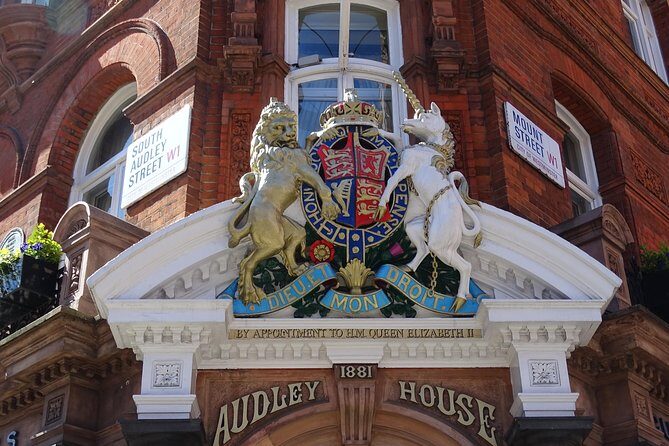
- Stop 8: Shepherd Market, James II, Mayfair’s name, and a reputation story
- The pacing and distance: fitting it into your London day
- Who this tour is best for (and who might prefer something else)
- What makes this tour feel different
- Final call: should you book it?
- FAQ
- How long is the Mayfair private walking tour?
- What is the group size for this private tour?
- Where do we meet for the tour?
- What time does the tour start?
- Is food included?
- Does the tour include any time indoors?
- Is the tour offered in English?
- Does it run in bad weather?
- What is your cancellation policy?
Key things I’d plan around
- Up to five people, private pace: hear every answer without shouting over the sidewalk crush.
- Fortnum & Mason stop inside: you get the fast “what you’re seeing and why it matters” version in about 15 minutes.
- Aristocracy-to-fashion-to-legends: the route links royalty, commerce, and urban myths into one smooth story.
- Bonuses for curious minds: ask anything you want—whether it’s buildings, shopping, or how Mayfair got its shape.
- A tight area, smart walking: most of the experience lives within a few miles, so you don’t waste time crossing London.
- Rain or shine: it goes out outdoors, so dress for real street weather and comfortable shoes.
Mayfair, on a human scale
Mayfair is often sold as a pretty postcard: elegant streets, expensive windows, and the feeling that you should whisper. This tour keeps that glamour, but it also gives you the cause-and-effect. You start to see how the neighborhood grew from estates and private houses into a place where art institutions, department stores, and luxury retail became part of the same social machine.
I like that the guide doesn’t treat Mayfair as frozen in time. You get the older layers—people, money, and rules—and then the modern layers, where fashion and public-facing institutions shape what you see today. The result is practical. When you point at a building later, you’ll know what it used to be and why it ended up that way.
The whole structure is also built for conversation. Since it’s a private group of up to five, you don’t have to wait your turn to ask a question. If something hits your interest—an arcade, a square, a specific designer—you can steer the next few steps with the guide.
You can also read our reviews of more walking tours in London


Your guide: Sandy Rhodes and the small-group advantage
Your guide on this Mayfair tour is Sandy Rhodes. She focuses specifically on five areas of London, with Mayfair being one of them. That specialization matters. You’re not getting a generic “London overview.” You’re getting the neighborhood view, the kind that explains why details repeat and why certain families and institutions show up again and again.
Sandy is also described as a professional local guide accredited by ITG & the University of Westminster. In practice, that means the tour stays organized and paced for hearing. You’re outdoors for most of it, but the stops are timed so you don’t feel rushed at each location.
Small-group tours can sometimes be overly casual. This one stays upbeat and structured. You get a clear route, then enough flexibility to ask questions and react to what you’re seeing in real time.
Also, the tour is designed with comfort in mind. The guide notes that you can request a coffee stop or comfort break if you need one, and the tour can be up to 3 hours total. That’s a big deal in a city where “two hours” can turn into “hours plus a lot of standing.”
Price and what you’re really paying for
The price is $189 per group for up to 5 people. If you’re traveling solo, it’s not going to feel cheap, because you’re paying for guide time. But if you’re a couple, a small family, or a group of friends, it can start to look like good value fast—especially because the itinerary includes multiple major stops with admission listed as free for the points of interest on the route.
What you’re really buying isn’t just access to buildings. You’re buying interpretation. Mayfair’s charm is partly in what you can’t immediately see: who built what, why shopping arcades exist, why certain squares are shaped the way they are, and how the neighborhood’s reputation formed over time.
You’ll also save time planning. With a standard guide, you might bounce between places on your own and still miss why each one connects. Here, the route ties the landmarks together so it feels like one story, not seven unrelated photo stops.
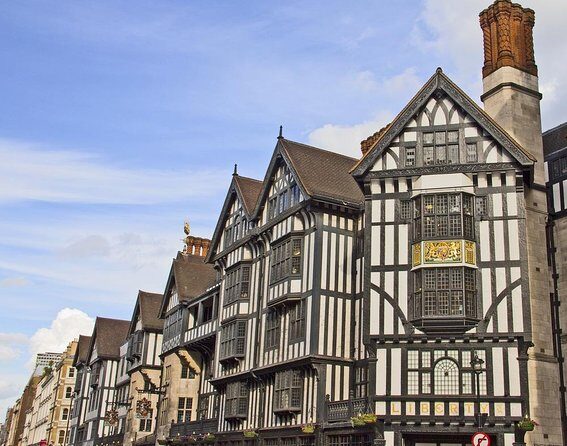
Stop 1: Fortnum & Mason and the quick lesson in prestige
You begin at Le Deli Robuchon on Piccadilly, then head to Fortnum & Mason. This stop is a short one—about 15 minutes—and it includes an internal look at the store’s ground floor.
What I like about the way this stop is framed is that it doesn’t start with luxury. It starts with origin: Fortnum and Mason began as a market stall. The guide shares the story of William Fortnum working as a footman for Queen Anne, then using what he took home—half-used royal candles—to sell through a new kind of venture. It’s a neat reminder that many famous institutions started small.
Even if you don’t plan to shop, you’ll get a sense of the store as theater: polished surfaces, old-school retail identity, and a brand that learned how to perform status. If you do want to buy something, you’ll know what you’re walking into before you start browsing.
Potential drawback here: if you’re expecting a long wandering session inside a department store, the timing is designed for context, not hours of shopping. Think “guided orientation,” not “shopping trip.”
Stop 2: The Royal Academy of Arts and the building’s many jobs
Next is the Royal Academy of Arts. You’re scheduled for about 10 minutes, free of any separate admission fee on the tour plan.
The big idea at this stop is transformation. The property began as a private home for the Earls of Burlington and dates back to the 1660s, and it went through multiple architectural changes—at least nine architects are part of the story—to become the glamorous public art institution you recognize today.
This is one of those stops where a guide can save you from feeling lost. The exterior looks like grandeur, sure, but the guide helps you read it. You begin to understand why the Royal Academy feels both historical and institution-like: it sits in the middle of Mayfair’s shift from private power to public cultural prestige.
If you’re an art fan, this stop will help you anchor the institution. If you’re not, you’ll still learn something useful: how buildings in Mayfair got repurposed as social priorities changed.
You can also read our reviews of more private tours in London



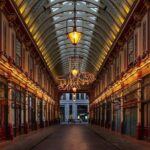
Stop 3: Burlington Arcade and the rules of polite shopping
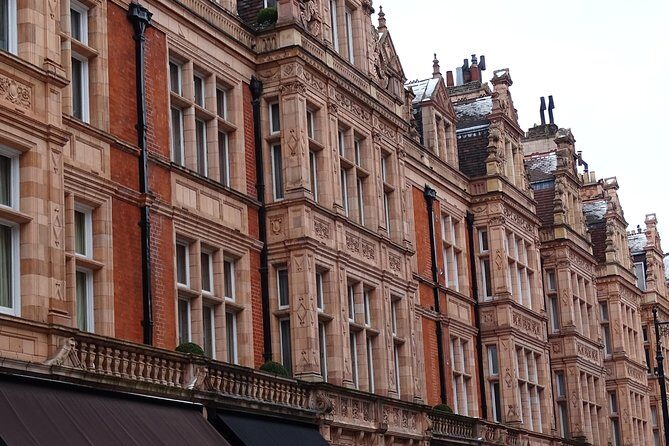
Then it’s Burlington Arcade. This one is timed at around 10 minutes, and you’ll get window shopping plus a key detail: it celebrated its 200-year anniversary.
The tour’s explanation hits a practical theme. The arcade was built by George Cavendish, one of the Earls of Burlington, so his wife and aristocratic friends would have somewhere to shop without being bothered by beggars. That sounds blunt, but it tells you exactly what kind of social sorting was happening in the background.
There’s also a visual element you’re pointed toward: the guardians called Beadles, who have a specific role in keeping the arcade rules intact. Even if you’re not a shopping person, you’ll probably enjoy the odd mix of old-world formality and casual tourist life around it.
One consideration: this stop is short. You’ll see the “main scene” and understand it. You won’t get time for a long browse, unless your guide stretches the schedule with your group’s energy.
Stop 4: Bond Street, Old Bond Street, New Bond Street, and Norman Hartnell
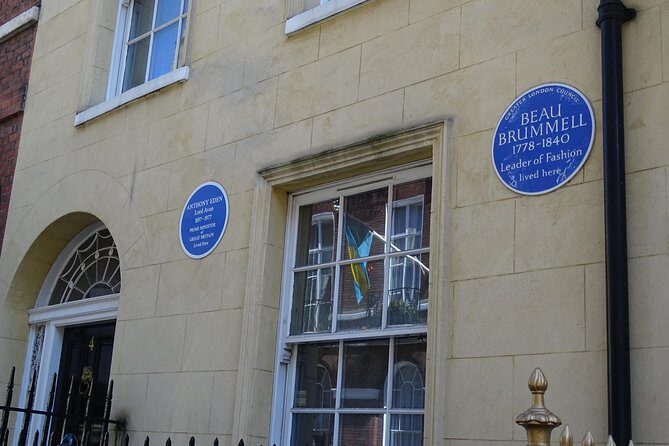
From the arcade you move into Bond Street, with about 10 minutes on Bond Street pavements before a turn off to see the home of Norman Hartnell, a major fashion designer from the 1950s and 60s.
Bond Street is one of those roads that makes you understand luxury geography. It is described as the only road joining Piccadilly and Oxford Street, and it’s known as one of the most expensive strips of real estate in the world. That alone can make people feel like they’re trespassing.
What I like here is that the guide keeps it grounded. You don’t just see expensive storefronts; you see why the street became important and how Mayfair’s aristocratic role fed into retail prestige. The windows aren’t only for consumption. They’re part of the neighborhood’s performance.
If fashion matters to you, Hartnell’s stop provides a human anchor. It’s a name you can connect to what you’re walking past, which makes the route more than sightseeing.
Stop 5: Bruton Street and the site of a royal birth
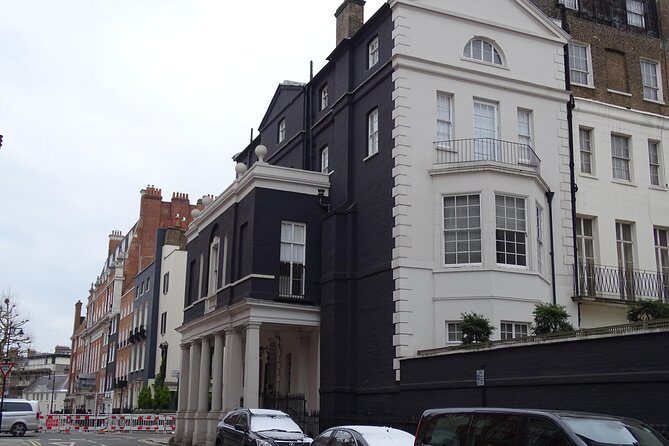
Next comes Bruton Street, with a short stop of about 5 minutes. The building no longer stands, but the guide takes you to the site where Queen Elizabeth II was born.
This stop is brief on purpose. It doesn’t try to turn into a memorial tour with long pauses. Instead, it gives you a factual anchor and a sense of scale. In a neighborhood that feels like it’s always been titled and curated, it’s striking to be reminded that key historical moments happened right there, at street level.
If you’re traveling with kids, this kind of stop often lands well because it’s direct and concrete.
Stop 6: Berkeley Square, plane trees, the nightingale legend, and a river you may not expect
At Berkeley Square, you get about 10 minutes. This square is framed as one of Mayfair’s most beautiful, with centuries-old plane trees and grade I listed buildings along the edges.
Here’s where it turns from architecture to storytelling. The tour mentions a famous legend about nightingale singing, and you’re also told that a river runs through the area—one of those facts that feels counterintuitive until you hear it and start noticing the layout with fresh eyes.
The guide also uses this stop as a walking pause to set tone. You’re not just collecting facts. You’re learning how Mayfair’s public spaces work: the square as a breathing zone inside a district famous for money and movement.
If you’re the type who likes “how the city is arranged” as much as “what it used to be,” this stop is a good payoff.
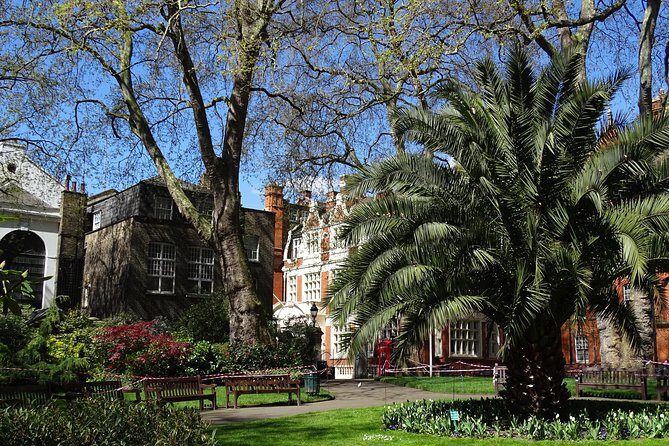
Stop 7: Mount Street Gardens and what lies beneath
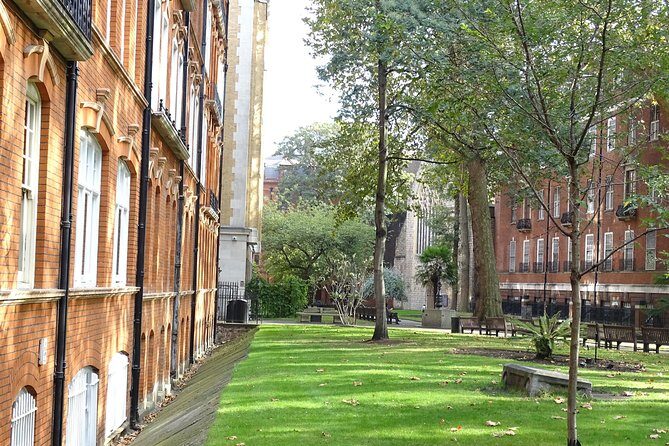
Next is Mount Street Gardens, again about 10 minutes. The tour calls it a tranquil oasis in the heart of a nonstop city, and it leans into the idea that Mayfair’s quiet corners had rougher predecessors.
You’re told the garden contains something to learn about what lies beneath your feet and what gruesome building used to grace the side of the gardens. That’s a classic Mayfair contrast: modern calm covering older mess.
This is a stop that can surprise people who think London’s most interesting layers are all about museums. Here, the interest is in the ground and the changes over time, which is a different kind of London literacy.
Potential drawback: if you want only big public landmarks, gardens might feel like a softer stop. But if you like the “wait, what used to be there?” feeling, you’ll probably like this one a lot.
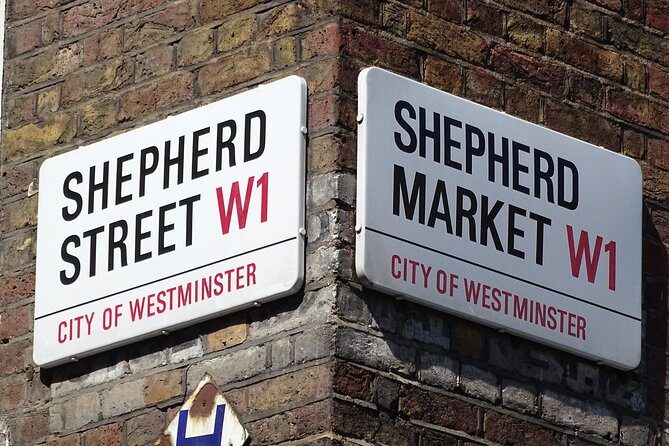
Stop 8: Shepherd Market, James II, Mayfair’s name, and a reputation story
The last stop is Shepherd Market, timed at about 10 minutes.
The tour connects Shepherd Market to James II’s reign, explaining that the market he set up gave Mayfair its name. That’s a useful bit of etymology that makes the neighborhood more than a brand.
Then it adds the part that people remember: for centuries, Shepherd Market was Mayfair’s much visited red light district. The guide also shares a reputation story involving an MP who lost his reputation here. The exact name isn’t provided in the tour info you’ll see, but the key is the type of anecdote: Mayfair’s high status didn’t eliminate all the messier human behavior—it just changed where it showed up.
If you’ve ever wondered how an elite neighborhood can contain contradiction, this stop answers that.
The pacing and distance: fitting it into your London day
This tour covers about 2 to 3 miles total and runs from 10:00 am for up to around 3 hours. Most of your time is spent walking between tight clusters of stops, which helps you keep momentum without feeling like you’re crossing half the city.
It includes an internal stop at one of Mayfair’s unique department stores. That gives your legs a chance to switch modes, even if it’s not long.
Because it goes ahead rain or shine, plan for weather. Comfortable shoes are a must. If the forecast looks wet, bring waterproofs and an umbrella.
A small but smart tip: if you have any comfort needs, tell the guide early. Sandy explicitly prioritizes your comfort, and you can ask for coffee or a break if you need one.
Who this tour is best for (and who might prefer something else)
This is ideal for you if:
- You want Mayfair focused, not “London highlights” across multiple neighborhoods.
- You like your history tied to real buildings and real names.
- You enjoy asking questions and steering the pace a bit within the route.
- You’re traveling with a small group and want everyone included.
It might be less ideal if:
- You dislike walking for most of your morning.
- You only want long museum-style stops rather than brief “high signal” orientations.
- You’re looking for a ticket-only experience with minimal talking.
What makes this tour feel different
In a city full of guide services, the biggest difference here is the combo of specialization and conversation. Sandy Rhodes doesn’t treat Mayfair like trivia. She treats it like a place with rules—social rules, shopping rules, power rules—and she explains how those rules shaped what you’re seeing.
The small-group size is also a real quality-of-life feature. You hear answers clearly, and your questions matter. That’s especially important in Mayfair, where some of the most interesting details are easy to miss if you’re just staring at the shiny bits.
Final call: should you book it?
If you’re choosing between a generic sightseeing walk and a focused Mayfair experience, I’d pick this one. The price makes sense best when you have up to five people sharing the group cost, and the inclusion of well-known stops plus story-driven less-obvious corners means you’ll leave with a clearer sense of how Mayfair works.
Book it if you want a morning that feels like walking with a Mayfair specialist—someone who connects Fortnum & Mason, royal sites, Bond Street fashion, and the darker side of the district into one easy-to-follow narrative.
Skip it only if you want long stops, lots of indoor museum time, or a very slow pace. Otherwise, this is a smart way to understand Mayfair beyond the postcard.
FAQ
How long is the Mayfair private walking tour?
It lasts up to about 3 hours, depending on your group’s pace and questions.
What is the group size for this private tour?
It’s a private tour for up to 5 people.
Where do we meet for the tour?
You meet outside Le Deli Robuchon at 82 Piccadilly, London W1J 8JA, on the corner of Piccadilly and Bolton Street. The exact meet time is to be agreed.
What time does the tour start?
The start time is listed as 10:00 am.
Is food included?
No. Food and drinks are not included.
Does the tour include any time indoors?
Yes, there is an internal stop at one of Mayfair’s department stores (Fortnum & Mason).
Is the tour offered in English?
Yes, the tour is offered in English.
Does it run in bad weather?
Yes, it goes ahead rain or shine, so wear comfortable shoes and bring waterproofs or an umbrella if needed.
What is your cancellation policy?
You can cancel for a full refund if you cancel at least 24 hours before the experience’s start time. If you cancel less than 24 hours before, the amount paid is not refunded.