REVIEW · LONDON
Photography Tour walking the back streets of London’s West End (3 hours)
Book on Viator →Bookable on Viator
London’s West End begs for photos. This 3-hour walking tour mixes practical camera help with story-driven street stops, so you’re not just taking pictures, you’re learning how to make them better. The only real drawback: it’s weather-dependent and the route involves solid street walking.
I also like the pace and size. You’re in a small group (up to 12) with guide Mike, an award-winning photographer who helps you try new techniques as you go, from Seven Dials to Denmark Street and then out to the British Museum. If you’re hoping for a fast-hit checklist with zero walking, this might feel like too much movement for the time.
In This Review
- Key Things I’d Prioritize on This West End Photo Tour
- Starting at Charing Cross: How the Tour Gets You Shooting Fast
- Seven Dials Stop: Spy-Novel Links and Photo Opportunities in One Place
- Denmark Street: Wizard-Linked Music, Stage Doors, and Street-Style Shots
- British Museum Finish: Outside Photos, Then Free Time to Explore
- What Makes the Photo Coaching Work (Techniques You Can Actually Use)
- Wandering Off for Better Shots: The “Don’t Get Lost” System
- Price and Value: Why $48.10 Can Make Sense
- Timing, Walking Pace, and Who Should Go
- Weather Reality: When London Turns, the Plan Holds
- Should You Book This West End Photo Tour?
- FAQ
- How long is the photography tour?
- What’s the price per person?
- Where does the tour start and end?
- What language is the tour offered in?
- Is the group small?
- What happens if weather is poor?
Key Things I’d Prioritize on This West End Photo Tour
- Hands-on photography coaching as you shoot, not after the fact
- Seven Dials with included entry time and spy-novel-linked storytelling
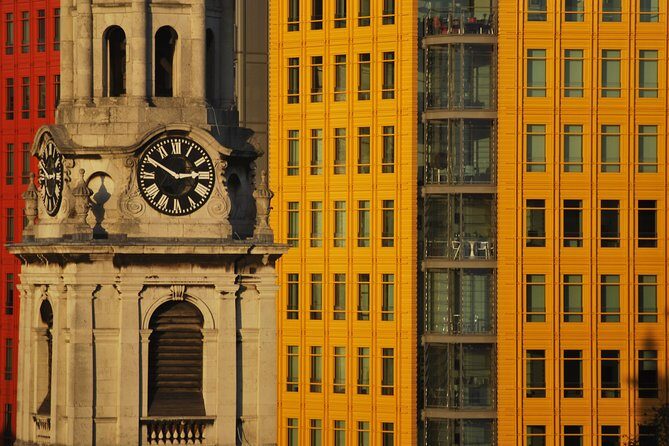
- Denmark Street photo moments built around stage doors, a secret garden, and a colourful building
- British Museum finish with time to explore on your own and photograph the exterior
- Small group energy that makes it easier to catch up if you wander for a shot
Starting at Charing Cross: How the Tour Gets You Shooting Fast
You meet at 48 Charing Cross Rd (near Charing Cross) and the tour starts at 10:30 am. The whole thing runs about 3 hours, give or take, and it’s designed for small-group pacing—close enough that you can ask questions, far enough that you still get space to frame your shots.
What I like most about this setup is how quickly it turns you from tourist-mode into photographer-mode. The guide’s role isn’t just to point at sights. It’s to help you use the sights—street textures, doorways, signage, crowds at the edges—to practice specific techniques while you’re walking. In a place like the West End, that matters. The streets are full of visual noise, so you need quick guidance on what to focus on and how to handle messy light.
If you’re traveling with a phone, don’t assume it’s only for people with fancy cameras. One review highlighted that someone came in as an experienced iPhone photographer and still got useful improvement. Another mentioned hands-on help for beginners with a camera new to them. That tells me the tour is set up to meet you where you are.
You can also read our reviews of more walking tours in London
Seven Dials Stop: Spy-Novel Links and Photo Opportunities in One Place
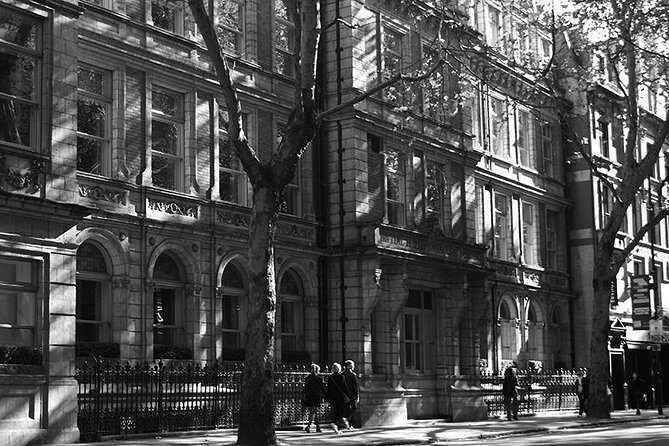
The tour’s first stop is Seven Dials, with about 30 minutes there and an admission ticket included. This is one of those London intersections that feels like it has layers—literary references, theatre energy, and public art all living close together.
Why it’s a strong photo stop: the geometry and detail are built for composition. You’ve got angles to play with and surfaces that catch light in different ways as you shift position. The storytelling here connects the area to one of the greatest spy novels written, which gives you a mental hook for why this corner of London feels so specific. That may sound abstract, but it changes what you notice. You’ll likely start looking for patterns and set-dressing details the way you would in a scene.
The tour also mentions a hidden area influenced by the Caribbean and Cuba. Even if you don’t know what you’re looking at yet, that kind of reference nudges you to slow down. Instead of only photographing the obvious landmark view, you start photographing the side details: textures, doorways, signage, and public artworks you might otherwise miss.
Possible consideration: admission time means you’re not just snapping from the curb. You should be ready to follow the group and then use the time you’re given for hands-on shooting rather than expecting unlimited roaming.
Denmark Street: Wizard-Linked Music, Stage Doors, and Street-Style Shots
Next up is Denmark Street for about 1 hour. There’s no admission ticket here, which makes it a good stretch for experimentation. This stop is where the tour leans into performance culture—musical history, a link to a famous wizard, and that classic London vibe of creative chaos.
The plan here is simple but effective for photography:
- You learn the background, so you know what you’re photographing.
- You practice technique while you hunt for angles.
- You get playful with the scenes.
One of the most fun parts is the stage-door focus. The tour says you might look for celebrities at a stage door, and while celebrities aren’t guaranteed, the group still creates paparazzi-style images anyway. That’s a smart teaching moment. Even without a famous face, you can still learn how to shoot “a moment”—using posture, timing, and framing to make a scene feel real.
The tour also includes looking for a secret garden and photographing one of London’s most colourful buildings. Those are exactly the kinds of subjects that help you practice colour control and contrast. In West End streets, colours can either flatten out or pop depending on how you expose and where you place your light source. With a coach watching your results, you can adjust faster than you would alone.
There’s also a very practical point from an enthusiastic review: the group handled rain by ducking into a guitar shop to keep shooting. That’s a classic London solution—when the weather turns, you pivot. If you carry a compact lens or just keep your camera ready, you can keep the momentum going instead of losing half your best light.
British Museum Finish: Outside Photos, Then Free Time to Explore
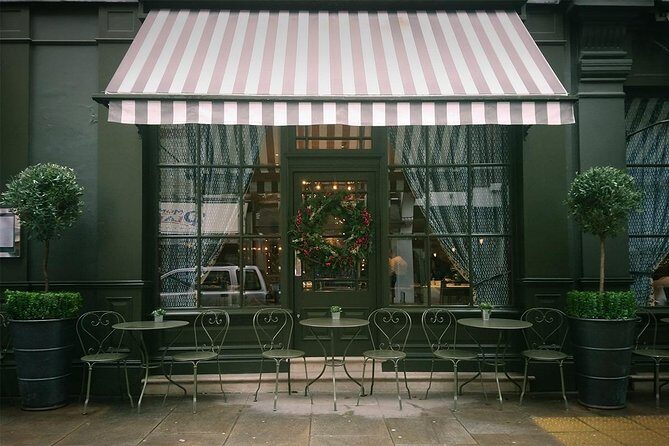
The tour wraps at the British Museum, finishing outside the building. You get a short, focused photo window for interesting images of the exterior, and then you’re free to explore inside on your own if you want.
This is a good way to end a photography tour. You don’t get a forced schedule that ends the moment the “official part” stops. Instead, you get a clean handoff: shoot the exterior with the guide, then decide how much time you want for the museum interior.
If you want to extend your day, the British Museum is well connected. Tottenham Court Road and Holbourn underground stations are both about a 5-minute walk away, which makes it easy to keep going to the next neighborhood without a long transit struggle.
Possible consideration: if you’re the type who wants instruction the entire time, the “go on your own” portion can feel like a gap. For photographers, though, that gap is useful. You can apply what you learned and test your eye in real-world museum spaces, where lighting and surfaces behave differently than streets.
What Makes the Photo Coaching Work (Techniques You Can Actually Use)

The biggest theme in the experience is learning techniques that improve your results during your trip—not just learning theory.
The guide, Mike, is described as personable and friendly, but the key detail is that he corrects common issues you’re likely to run into in London: lighting problems, flat-looking shots, and the frustration of getting the shot you see in your head but not on your camera.
Here’s how that helps you in practical terms:
- You can try a technique right away at each stop, instead of forgetting it later.
- You get quick feedback while the subject is still in front of you.
- You learn how to adjust for London’s changing light as you move from doorways to open streets.
One review specifically mentioned lighting corrections that made photos “pop,” which tells me the coaching isn’t only about where to stand. It’s about how to see light and exposure as part of your composition.
Another review noted the guide’s patience with someone figuring out a camera new to them. That’s a big deal for value. A good photo tour can’t only impress experienced photographers; it has to make beginners feel comfortable enough to keep shooting.
And because it’s a small group, you’re more likely to get personal guidance. Even if your question isn’t the loudest one, you can still catch the guide’s attention without feeling lost in a big crowd.
You can also read our reviews of more photography tours in London


Wandering Off for Better Shots: The “Don’t Get Lost” System
A standout detail in how the tour operates: you’re encouraged to wander off if you spot a photo opportunity. At the same time, the guide ensures you have each other’s numbers so you can catch up if you fall behind.
That matters because street photography often rewards the detour. The best shot might be two steps left, not straight ahead. The tour’s approach lets you chase those angles without turning the walk into a solo scavenger hunt.
If you’re nervous about managing group dynamics, this is a comfortable compromise. You get freedom, but you’re not stuck hoping you’ll find the group again on a busy London sidewalk.
Possible consideration: you’ll do best if you’re comfortable navigating on foot and using your phone for quick contact if needed.
Price and Value: Why $48.10 Can Make Sense
At $48.10 per person for roughly 3 hours, the tour lands in the “small price, high usefulness” category—especially if photography is one of your trip priorities.
Here’s where the value comes from:
- You’re paying for guidance from an award-winning photographer, not just a walk between landmarks.
- You get technique help you can apply on the rest of your trip (often the real money-maker for photographers).
- You get a stop with included entry time at Seven Dials, rather than only looking from outside.
The tour also runs with a maximum group size of 12. For a photography experience, that small cap usually means you spend less time waiting and more time shooting and learning.
Also, it’s offered in English, and tickets are handled via mobile ticket. That reduces friction and keeps you from wasting your first 20 minutes sorting paperwork.
If you’re comparing this to paying for multiple “generic sightseeing” experiences, the math shifts. You’re getting West End culture plus British Museum access time, but filtered through photography training.
Timing, Walking Pace, and Who Should Go
This is a morning tour starting at 10:30 am. With stops that total about 3 hours, you’ll be walking more than you’re sitting. The tour requests moderate physical fitness, so it’s not for someone who needs minimal walking.
It’s a good fit if you:
- Want to see the West End in a practical, photo-first way
- Like learning how to improve your camera or phone settings
- Enjoy street details like doorways, theatre-adjacent scenes, and public art
- Travel with teens who actually want to learn their way around a camera (at least one review said teenagers enjoyed it and learned a lot)
It also works well for couples or friends because the group size stays small enough for everyone to get attention. And because it finishes at the British Museum, you can turn it into a longer museum day without totally restarting your plans.
Weather Reality: When London Turns, the Plan Holds
The experience requires good weather. That’s not just a nice-to-have—your best street photo work depends on how the light looks and how comfortable you are walking outside.
The tour is designed to handle extreme weather changes: if cancellation happens due to extreme weather, you get a full refund. If the tour is canceled due to poor weather, you’re offered a different date or a full refund.
Practically, I’d think of this as a reliable plan when the forecast looks decent. If the sky is uncertain, keep your schedule flexible enough to switch dates if offered.
Should You Book This West End Photo Tour?
Book it if you want more than sightseeing photos. This is the kind of tour that teaches you how to see—how to frame, how to manage light, and how to make ordinary subjects more interesting with real technique. The fact that multiple people praised both Mike’s patience and his hands-on help is a strong sign the coaching is practical.
Pass or think twice if your travel style is strictly low-walking, you want a purely museum-style indoor experience, or you’d hate the idea of being outdoors unless the weather is perfect.
If you’re somewhere in the middle—curious photographer, casual shooter with a phone, or someone traveling with a teen who’s starting to care about images—this tour is a solid use of your time in London.
FAQ
How long is the photography tour?
The tour lasts about 3 hours.
What’s the price per person?
It costs $48.10 per person.
Where does the tour start and end?
It starts at 48 Charing Cross Rd, London WC2H 0BS and ends outside the British Museum at London WC1E 7JW.
What language is the tour offered in?
The tour is offered in English.
Is the group small?
Yes. The tour has a maximum of 12 travelers.
What happens if weather is poor?
The experience requires good weather. If it’s canceled due to poor or extreme weather, you’ll be offered a different date or a full refund.