REVIEW · LONDON
Private Ghosts and Gore Walking Tour of London
Book on Viator →Operated by Tours Of The UK · Bookable on Viator
London gets spookier after dark. This private City of London walking tour strings together famous churches, grim street corners, and haunted pubs into one guided route for history buffs and scare-seekers. You’ll get a safe night out on foot, guided place by place, with the macabre always tied to what happened there.
Two things I’d strongly back: first, the tour format is truly personal. With up to 15 people per group, the guide can pace the story to your questions instead of rushing everyone through. Second, the lead guide Michael earns serious praise for sounding like a historian, not just a storyteller, and for explaining the historical context that makes the ghost tales feel grounded (and not random).
One consideration: this is a 2-hour night walk across multiple stops. It’s listed for moderate physical fitness, so if you get tired fast on uneven pavements and you want long indoor breaks, plan for it.
In This Review
- Key points you’ll notice on this City of London ghost-and-gore tour
- Why this private ghosts-and-gore walk fits the City after dark
- Start at the Monument to the Great Fire, then walk into the darker City
- St Magnus The Martyr to St Mary Woolnoth: the churchyard haunting route
- Cornhill to Paternoster: Jimmy the Mummy and a Lord Mayor with a feline friend
- Haunted pubs and cursed bells: Williamson’s Tavern and St Mary Le Bow
- Noble Street to St Anne & St Agnes: Roman walls and plague-pit orbs
- Greyfriars to Temple Bar to Amen Court: rebellions, dismemberment, and prison walls
- From the Viaduct Tavern’s Fred to the Old Bailey’s Black Dog
- Holy Sepulchre execution bell to Cock Lane’s spirit ending
- Golden Boy of Pye Corner and West Smithfield: resurrection men to the Hanged, Drawn, and Quartered
- Rising Sun and Charterhouse: disturbed ghosts and a huge plague pit
- Price and value: $247.70 for up to 15 people over 2 hours
- Who should book this, and who should skip it
- Should you book Private Ghosts and Gore in London?
- FAQ
- How long is the Private Ghosts and Gore Walking Tour of London?
- How much does the tour cost?
- Is this tour private?
- Where does the tour start and end?
- What languages is the tour offered in?
- Do I need to buy admission tickets for the stops?
- Is the tour wheelchair and stroller accessible?
- Are service animals allowed?
- What is the cancellation policy?
Key points you’ll notice on this City of London ghost-and-gore tour
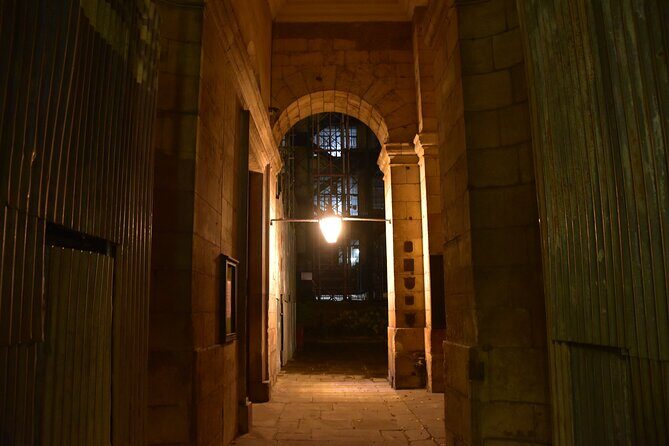
- Private group size (up to 15) keeps the pace and questions under control
- 24 stops in about 2 hours means lots of short, punchy stops instead of long waits
- Major City locations like Bank, the Old Bailey area, and Farringdon-area streets
- Admission-free stops are built into the route, so you mainly pay for the guide
- No-nonsense night navigation: the route is designed to help you orient fast
Why this private ghosts-and-gore walk fits the City after dark
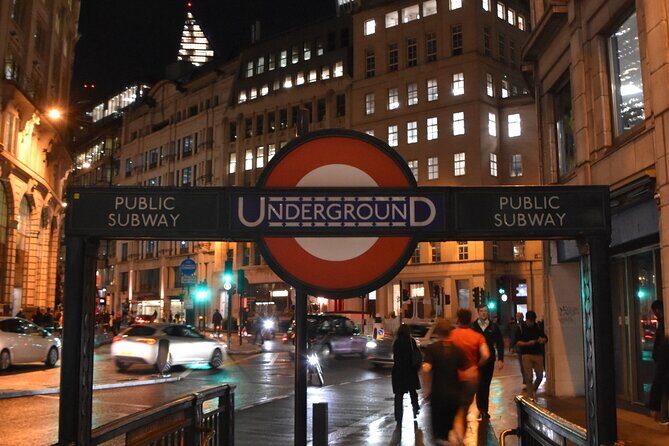
The City of London is compact, but it’s dense with layers: medieval streets, churches that survived, and sites tied to executions and grave-robbing. A group tour by day can feel like a list. This one feels like a guided walk with a point.
Because it’s private (your group only), you’re not competing with other voices or forced into a rigid script. You’re walking with a guide who can keep the tone creepy while also grounding you in what you’re actually looking at: a church corner, a grave marker, a street junction, a pub doorway.
Also, this tour leans into a smart balance. You get ghosts and gore themes, but you’re not left staring at spooky shadows with no context. The stories are tied to specific sites like St Magnus The Martyr, the Cornhill churches, Bank-area churchyards, and the execution belt around the Old Bailey.
You can also read our reviews of more walking tours in London

Start at the Monument to the Great Fire, then walk into the darker City
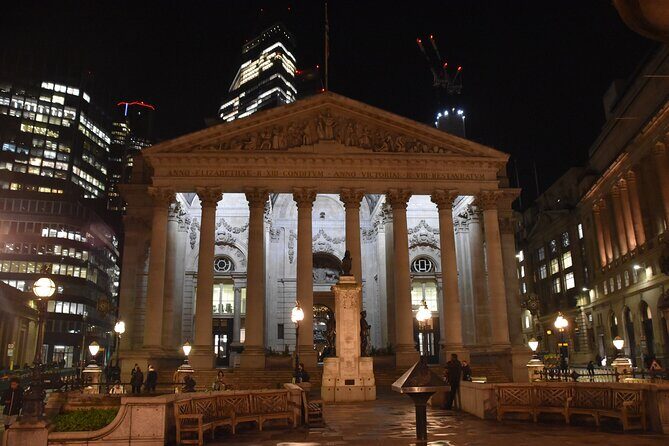
Your meeting point is the Monument to the Great Fire of London, Fish St Hill, London EC3R 8AH. That location matters because it anchors your brain: you’re in the City, not just wandering London in the dark.
The tour ends near the Elizabeth Line entrance to Farringdon Station, Cowcross St, London EC1M 6BY, so you can naturally connect to transit afterward. It also helps you plan your night: you’ll finish in a major rail corridor rather than miles away from anything.
Timing is also straightforward: expect about 2 hours, with each stop running about 5 minutes. That means you’ll see a lot, but you won’t get stuck at any one location for too long.
St Magnus The Martyr to St Mary Woolnoth: the churchyard haunting route
This first stretch is all about the City churches—small spaces that pack big stories.
Stop 1: St. Magnus The Martyr
You’ll start at a church tied to a ghost sighting with a pointed obsession. A spiritual medium visited in 1951, and the story revolves around who the shadowy figure is and why it keeps pointing to one particular grave. Even if you’re skeptical, the guide’s job here is to help you look at the layout and understand why people would fixate on one spot.
Stop 2: 54-55 Cornhill
Next you’ll look upward, but not for angels. The details of the story focus on devils hidden in the design, and on how this detail becomes part of local lore. This is one of those stops that reminds you London’s spooky legends often live in architecture.
Stop 3: St Peter-upon-Cornhill Church
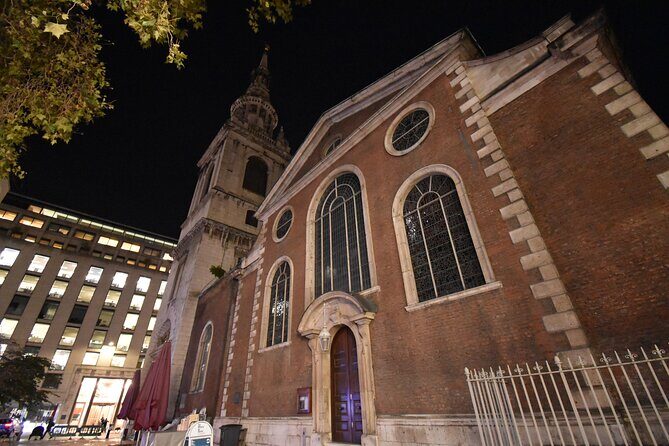
Here the ghost story connects to literature. You’ll learn about the churchyard where Ebenezer Scrooge is said to be horrified to see his own grave, linking the site to A Christmas Carol and the longer tradition of City hauntings showing up in fiction.
Stop 4: St. Michael’s Cornhill
This one turns to weather and evil: the day the devil visited London during a storm. It’s short, punchy, and designed to keep you moving without losing the theme.
Stop 5: St. Margaret Lothbury Church
Bank-area horror time. A tall ghost is described as revenge for disturbed bones and fears that came true, with a vivid image of guards, stairs, rattling guns, and terrified tellers. The value here is how the story ties a church setting to the practical world of finance nearby.
Stop 6: St. Mary Woolnoth Church
This stop is built around the famous Black or Bank Ghost. The legend is linked to Bank Station and the Bank of England area, with the recurring moment where a woman in black asks about a brother. If you like legends with a repeatable scene, this is one. You’ll also hear about the secret of the Bank Station Booking Hall, which adds a modern layer to the old-city mood.
What to expect in this stretch: more brief stories than long lectures. That’s the whole point: you’ll build a sense of the City’s haunted geography quickly.
Cornhill to Paternoster: Jimmy the Mummy and a Lord Mayor with a feline friend
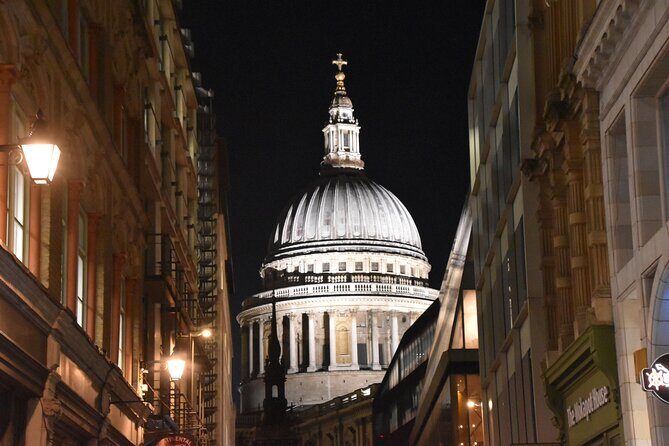
After Woolnoth, the tour keeps moving through historic church corners, where the legends feel stranger—and sometimes oddly wholesome in a dark way.
Stop 7: St. Michael Paternoster Royal Church
You’ll hear about the most famous Lord Mayor of London and his feline ratter. The guide helps you connect the story to the idea of a persistent presence: the ratter is said to still roam between this location and the next. It’s a clever twist in tone—less courtroom doom, more under-the-radar urban legend.
Stop 8: St James Garlickhythe
Then you get Jimmy the Mummy. In 1835, workers discovered a mummified body placed on public display until roughly twenty years ago. Children from the church would play with the remains, and the legend says Jimmy still haunts the church and can be seen pointing to the burial spot. This is the kind of stop that makes you look twice at a simple church interior/exterior without needing expensive museum tickets.
How to enjoy these stops: keep your expectations flexible. These are legends, yes, but they’re also examples of how communities shape stories around unusual remains, local figures, and church spaces.
Haunted pubs and cursed bells: Williamson’s Tavern and St Mary Le Bow
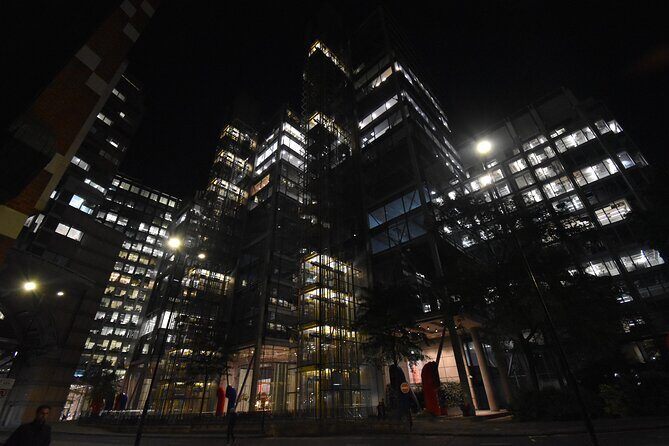
Now the tour shifts from church walls to street-level characters—pub doors, bell lore, and the kind of superstition London does well.
Stop 9: Williamson’s Tavern
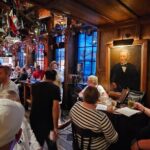
This is one of the most haunted pubs on the route. The story includes Lord Mayors, poltergeists, and phantom activity that petrifies any police dogs trying to enter. Doors regularly bang, steps are heard, and there’s only one way out—so the guide frames it like a slow walk into trouble. If you like your ghosts with atmosphere (not just anecdotes), this fits.
Stop 10: St. Mary Le Bow Church
This church isn’t framed as haunted so much as cursed. You’ll hear about burnings, collapses, accidents, and murders tied to the site. The bell lore also turns into identity lore: being born within the sound of the bells makes you a Cockney in the classic sense. It’s one of the few stops where the superstition feels like part of everyday cultural language.
You can also read our reviews of more private tours in London


Noble Street to St Anne & St Agnes: Roman walls and plague-pit orbs
Here the tour leans into sites where history is physical. It’s not just a ghost story; it’s a story about the ground under your feet.
Stop 11: Noble Street
This street is linked to death from the moment it was founded, according to the legend. It also connects to Roman garrison life and to the original City of London walls, with part of the Roman Wall and the Medieval Wall tied to the street. The route mentions orb photos and strange occurrences—so you’ll get the kind of stop where people want to test their cameras.
Stop 12: St Anne & St Agnes Garden
Below the church is a plague pit. You’ll learn how plague affected London and how orbs are still regularly captured in modern photos. The practical takeaway is simple: bring your phone strap and be ready for a quick picture moment, because the stop is short and photo-ready.
Greyfriars to Temple Bar to Amen Court: rebellions, dismemberment, and prison walls
These stops are where the tour’s gore themes get more direct—execution-era imagery and bodies in the public sphere.
Stop 13: Christchurch Greyfriars Church Garden
This ruined church garden hosts a mix of ghost figures: Queen Isabella and a lover tied to rebellion, an arguing married couple, a religious prophetess, a monk, and a greyhound. The guide’s goal is to help you understand why this garden area becomes a magnet for so many names and sightings.
Stop 14: Temple Bar London
You’ll learn about Sir Christopher Wren’s design and how this was once a main entrance to the City. The gruesome element: traitors and crooks had their severed heads placed on public display. The gateway is said to be haunted by the souls of the condemned. This is not a stop for anyone who wants lighthearted humor.
Stop 15: Amen Court
Here you can see remaining walls of Newgate Prison. The legend talks about children singing and playing over bones of men condemned to death, and asks why the people living there have no awareness that their homes sit on bones. It’s a sharp reminder of how layered the City is: play spaces and prison foundations can overlap in ways that feel impossible until you see the spot.
From the Viaduct Tavern’s Fred to the Old Bailey’s Black Dog
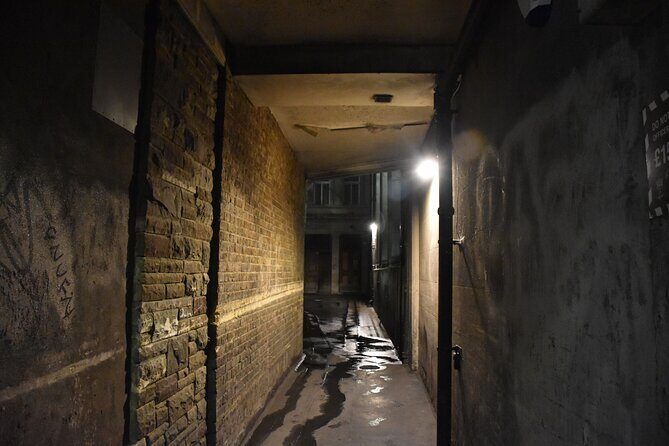
This stretch feels like it’s accelerating your senses: more haunted pubs, then straight into the courtroom-and-prison zone.
Stop 16: The Viaduct Tavern
This pub is framed as the most haunted in London on the route. A mischievous ghost called Fred is said to do harmless but confusing things, like flushing the ladies’ loos while the ghost is using the space. A medium questioned Fred’s identity, which adds a more investigative flavor to the pub legend.
Stop 17: Old Bailey
You’ll get the Central Criminal Court story as a continuation of Newgate prison history. Hanging in the street is mentioned until 1868, and the stop ties in the Black Dog of Newgate. The guide’s takeaway here is practical and dramatic: if you see a large black dog, you’d better update your will. Even without believing, the imagery sticks.
Holy Sepulchre execution bell to Cock Lane’s spirit ending
The next cluster brings you into the realm of ritual and spiritual testimony—where the ghost stories are shaped by witnesses and formal customs.
Stop 18: Holy Sepulchre Church
This church houses an execution bell. You’ll hear about the custom of tolling just before an execution at the nearby Newgate Prison and Old Bailey, and a clerk connected to an infamous ghost story that began in the churchyard here. The guide also explains the practice of ringing the bell, adding a chilling sense of timing to the legend.
Stop 19: Cock Lane
This is where the story reaches its dramatic conclusion. The murder investigation includes major minds working to save a man’s life, and a young girl acts as a channel for a spirit of a dead woman insisting she was murdered. It’s a different kind of ghost tale: more about belief, evidence, and testimony than just a haunting presence.
Golden Boy of Pye Corner and West Smithfield: resurrection men to the Hanged, Drawn, and Quartered
These two stops bring the tour’s gore themes into full view, and they do it through well-known London-era practices described right on the spot.
Stop 20: Golden Boy of Pye Corner
This statue marks the furthest west point of the Great Fire of London. The story links it to a notorious pub once on the same spot where stolen bodies were displayed for doctors to buy and dissect. You’ll hear about grave robbing and resurrection men, and how the demand for fresh corpses is tied to a series of murders.
Stop 21: West Smithfield
You’ll be told this is one of the most famous execution sites. Rebels like William Wallace and Wat Tyler are mentioned as having been hung, drawn, and quartered. The stop also includes burning at the stake and even boiling alive, plus the idea that butcher’s market smells made it even worse. The guide then keeps the theme rolling to St Bartholomew’s hospital nearby with talk of poltergeists, a haunted lift, and students reporting strange goings on late at night.
If you’re squeamish, this is the part where you’ll want to control your distance mentally, even if you’re brave enough to be here physically.
Stop 22: St Bartholomew the Great
Now you shift back slightly from gore to a founder ghost. Rahere is described as haunting the church and hobbling around, with a story about why he limps after centuries. If you want proof that the tour can be spooky without being gross, this stop helps.
Rising Sun and Charterhouse: disturbed ghosts and a huge plague pit
The final two stops finish the tour with disturbed pub legends and then a big dose of plague-era haunting.
Stop 23: Rising Sun
This pub is also described as a resurrectionist pub and is tied to one of the most disturbing ghosts on the route, nicknamed as the sex pest ghost. The story raises uncomfortable themes about finding female staff willing to live on-site. For some people, that means the vibe turns heavier than pure shock.
Stop 24: The Charterhouse
The last stop is the Charterhouse, near Farringdon-area transit. It’s tied to one of London’s largest plague pits, with an estimate of 50,000 people buried underneath. You’ll also hear about monks executed during the Reformation and a phantom monk usually seen praying. The tour wraps with talk of a Duke who lost his head and mentions how modern medical science might explain strange goings on because a prestigious school of psychiatry is part of the square’s modern presence.
This final stop is a good landing: you go from execution-era stories into plague-era imagery, then you end with a nod to modern explanations so you’re not just left with dread.
Price and value: $247.70 for up to 15 people over 2 hours
At $247.70 per group (up to 15), this isn’t cheap on a per-person basis if you’re just one person. But it’s priced like a true private format. When you split the cost among friends or a small family group, the value jumps fast.
Here’s what you’re actually paying for:
- A private guide to keep pacing tight (about 2 hours)
- All guiding fees included in the cost
- A route with admission ticket free stops, so you’re mostly covering the stories and navigation, not entry fees
- A concentration of City-of-London sites: churchyards, execution-area streets, and haunted pubs, all in one run
Also, this tour is booked on average 45 days in advance, which usually means demand is real. If you’re traveling in peak season or want a specific night slot, don’t wait until the last minute.
Who should book this, and who should skip it
This tour is a strong fit if you’re a history buff who likes the real-world places where stories were born. It’s also great for scare-seekers who want a guide to lead the mood, instead of you trying to piece together rumors alone.
It may not be your best pick if you want a quiet walk with long indoor stops, or if heavy themes make you uncomfortable. A couple of the pub and execution-adjacent stops lean into gore and disturbing imagery.
On the logistics side, it’s listed as wheelchair and stroller accessible, service animals are allowed, and it’s near public transportation. It’s also rated for moderate physical fitness, so wear shoes with grip.
Should you book Private Ghosts and Gore in London?
I’d book this if you want one night where you cover a lot of the City’s darkest lore with a guide who treats the setting like more than spooky wallpaper. The private size, the fast stop rhythm, and the way the route moves from churchyards to Bank to Old Bailey to plague pits all help you leave with a clear mental map of where the legends live.
I’d skip it if you’re easily rattled by execution-era gore themes or if you need lots of sitting time. For everyone else, it’s a fun, focused way to see central London after dark—creepy, but organized.
FAQ
How long is the Private Ghosts and Gore Walking Tour of London?
The tour lasts about 2 hours.
How much does the tour cost?
The price is $247.70 per group (up to 15 people).
Is this tour private?
Yes. It is a private tour, and only your group participates.
Where does the tour start and end?
It starts at the Monument to the Great Fire of London, Fish St Hill, London EC3R 8AH, and ends close to the Elizabeth Line entrance to Farringdon Station, Cowcross St, London EC1M 6BY.
What languages is the tour offered in?
The tour is offered in English.
Do I need to buy admission tickets for the stops?
The tour notes admission ticket free for the listed stops.
Is the tour wheelchair and stroller accessible?
Yes. It is listed as wheelchair and stroller accessible.
Are service animals allowed?
Yes, service animals are allowed.
What is the cancellation policy?
You can cancel for a full refund with free cancellation up to 24 hours in advance of the experience’s start time. If you cancel less than 24 hours before, the amount paid is not refunded.