REVIEW · LONDON
Private Harry Potter Walking Tour of London
Book on Viator →Operated by Tours Of The UK · Bookable on Viator
A chilly London street plus a wand-level storyline. This private Harry Potter walk maps key film moments onto real corners of the city, with flexible timing and a guide who can tailor the pace to your group.
I like how this tour is truly private (just your group, up to 15), so you’re not stuck listening behind strangers. I also like that it pushes past the usual photo stops with spots that feel genuinely local, like Cecil Court and Leadenhall Market. The main thing to consider is that some stops list admission as not included, and you’ll also want to budget extra for public transport between areas.
In This Review
- Key highlights worth your time
- Why this Harry Potter tour feels different in London
- The route: from the Monument to Platform 9¾ in about 3 hours
- The Monument of the Great Fire: where the wizarding story meets London history
- Leadenhall Market: the Diagon Alley feel you can actually walk into
- The Thames chase views: Tower Bridge, HMS Belfast, and film tricks
- Shakespeare’s Globe: a surprising pivot that still makes sense
- Millennium Bridge moment: the Half-Blood Prince attack setting
- St Paul’s Cathedral: Hogwarts architecture without the ticket line
- Trafalgar Square: turning London’s center into magical mayhem
- Cecil Court: the bookstreet that feels like Diagon Alley’s cousin
- Whitehall: Ministry of Magic style security meets real government buildings
- King’s Cross Station and Platform 9¾: finishing the story where it starts
- Price and value: when $247.70 per group makes sense
- Should you book this Harry Potter London tour?
- FAQ
- FAQ
- How long is the Private Harry Potter Walking Tour of London?
- What does the tour cost?
- Is this tour private?
- What’s included and what costs extra?
- Where do I meet the guide, and where does it end?
- What language is the tour offered in?
- Can I cancel and get a full refund?
Key highlights worth your time
- Private, group-only experience with a guide who can keep the pace and attention on you
- Off-the-usual-trail locations like Cecil Court and Leadenhall Market
- Film-to-street connections explained at each stop, not just name drops
- Flexible departure times planned around your group
- Strong guide quality often noted with guides like Olivia and Dewi
Why this Harry Potter tour feels different in London
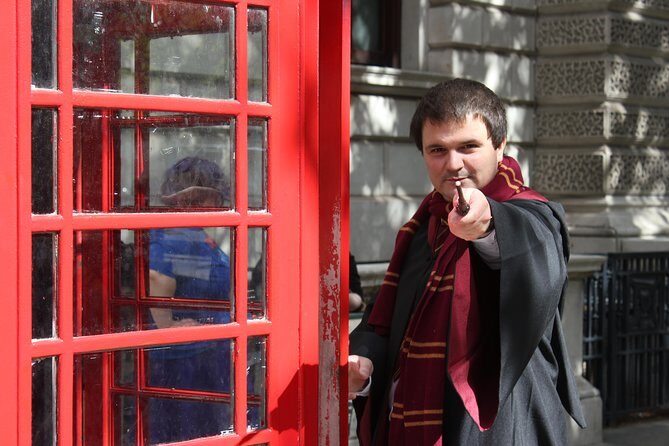
London is packed with Harry Potter merch and quick-hit landmarks. This tour takes a different angle: you’re not just collecting pictures, you’re building a sense of how the films borrow from real architecture and public spaces.
Because it’s private, you’re more likely to ask questions and get straight answers—like how a certain London staircase detail gets read on screen, or why a busy square becomes a tense set. You’ll also get that friend-with-a-bigger-worksheet feeling when the guide uses movie clips. In particular, Dewi is noted for showing the corresponding scenes for each location, which is a smart way to connect what you’re seeing with what you remember.
One other small but meaningful point: the route is designed as a linear storyline, ending at King’s Cross. It makes the whole thing feel like one continuous chapter, rather than a pile of unrelated stops.
You can also read our reviews of more walking tours in London
The route: from the Monument to Platform 9¾ in about 3 hours
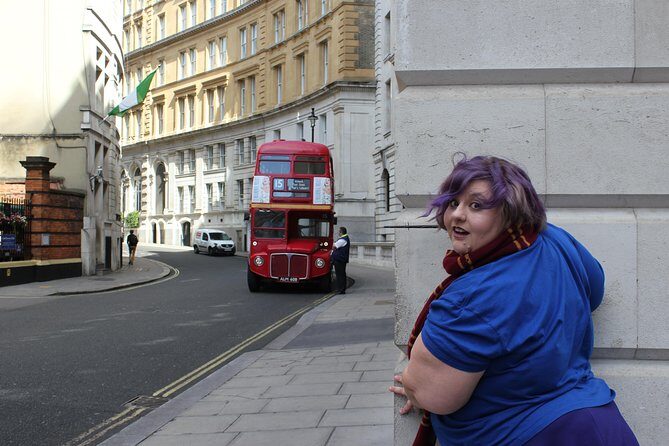
You start by the Monument (18 Fish St Hill, London EC3R 6DB). From there, you’ll work your way across central London and finish outside Platform 9 3/4 at King’s Cross (end point at Euston Rd., London N1C 4AP). The tour runs about 3 hours, and it’s paced for moderate physical fitness—so think comfortable shoes, not hiking boots.
For cost planning, the headline price is $247.70 per group (up to 15). That’s actually where the value math starts to work in your favor: if your group is small, the per-person cost stays high; if you fill it with a larger party of friends or family, it can turn into a bargain compared to multiple separate guided tours.
Two practical adds you should know before you go:
- Public transportation is not included and is listed as £10 per person.
- Some locations list admission ticket not included, so you may pay extra if you choose to go inside specific sights.
The Monument of the Great Fire: where the wizarding story meets London history
Your first stop rises above the City of London: The Monument to the Great Fire of London. On the surface it’s pure real-world story—1666, London’s flames, the column designed by Sir Christopher Wren. But this tour frames it like a turning point, and not the simple version.
Here’s the fun angle the guide brings: the rumor that something more magical interfered with the blaze. That theme matters because it sets the tone for the whole walk. You’re encouraged to read London’s “muggle” landmarks like they could also be movie sets—built for drama, fear, and sudden reversals.
Practical tip: this is a viewpoint moment. Look around before you tune the story into your brain. Notice how the column dominates the area; that’s exactly the kind of structural certainty filmmakers love.
If you’re expecting the most famous Harry Potter stop first, you won’t get that. Instead, you get context—history as the skeleton for later magic.
Leadenhall Market: the Diagon Alley feel you can actually walk into
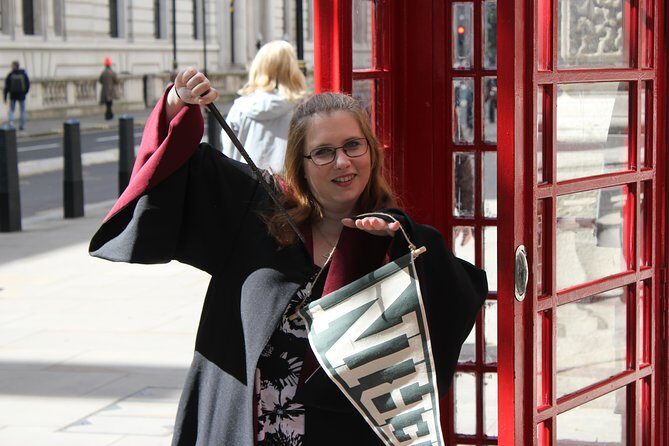
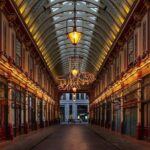
Next, you step into Leadenhall Market, a Victorian covered market with ironwork, glass panels, and twisting passageways. Even without the wizarding context, it’s the kind of place you’d want to browse slowly.
The Harry Potter link is why fans get excited: this market served as one of the filming locations for Diagon Alley in Harry Potter and the Philosopher’s Stone. The guide points out where key characters (including Harry and Hagrid on their way to the Leaky Cauldron) were placed, and explains why the filmmakers picked this kind of geometry—narrow alleys, dramatic archways, and angles that naturally look like they’re hiding something.
Admission is listed as free for this stop, so you can treat it as a real-world break in the walking rhythm. Also, it’s a smart stop for photos that don’t look like every other tourist shot. You’ll get corners and textures that feel older than the film edits.
If you’re sensitive to crowds, keep in mind markets can get busy. But the indoor roofline helps, and it’s still a strong payoff.
The Thames chase views: Tower Bridge, HMS Belfast, and film tricks
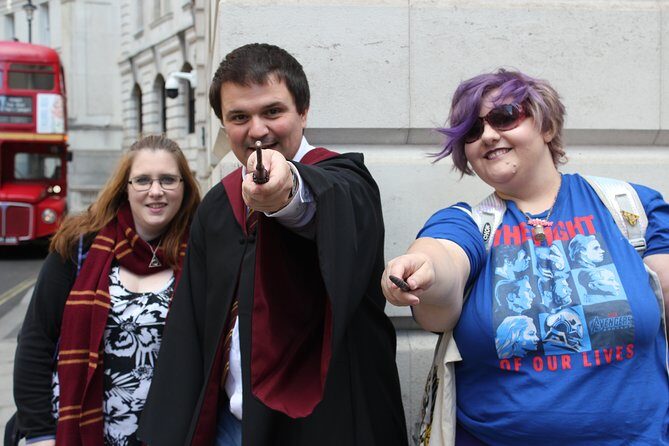
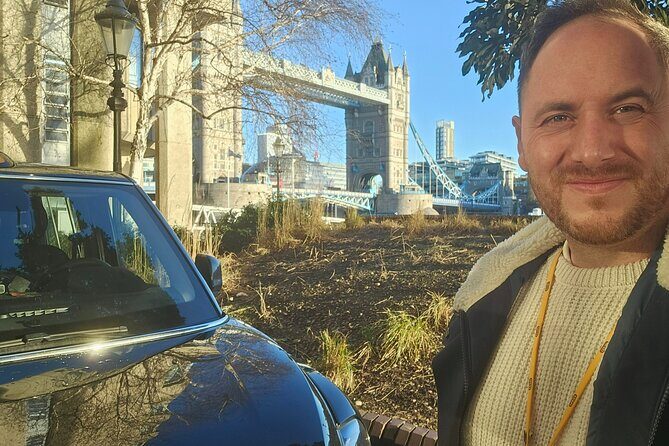
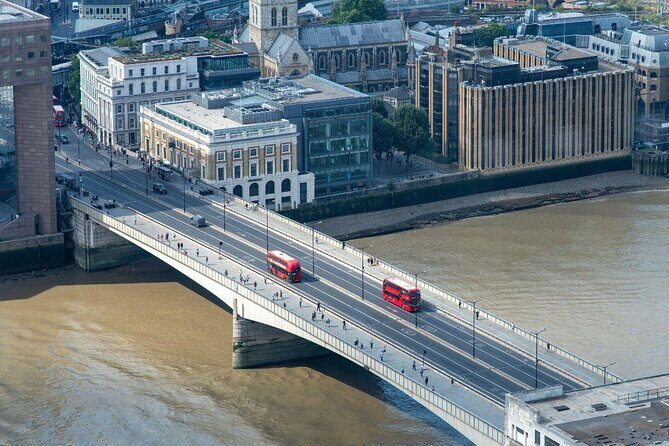
From the London Bridge area, the tour aims you toward one of the most cinematic river stretches in town: Tower Bridge with HMS Belfast and the Pool of London below. This is the kind of skyline view where your brain instantly recognizes the movie vibe—even if you can’t place the exact frame right away.
The Harry Potter connection here lands from Harry Potter and the Half-Blood Prince, where this river stretch appears during an aerial chase in The Order of the Phoenix. Your guide then does something useful: they explain how the film crew turned the Thames into a dramatic backdrop for broomstick-flight energy, and they even flag what the movie-makers did that wouldn’t make perfect magical sense.
This stop is great for fans who love production details, not just plot. It’s also a reminder that movies often borrow from London’s existing drama—then exaggerate it.
Practical consideration: river views can be windy. Bring something light for cool evenings or breeze. And if you’re short on time, stand where the guide instructs first. The “best angle” matters more here than with a street you can just wander.
You can also read our reviews of more private tours in London

Shakespeare’s Globe: a surprising pivot that still makes sense
Then you head to Shakespeare’s Globe Theatre. The films don’t give it much screen time, and it’s not an obvious book-world match. That’s why it works as a fresh beat in the tour: it broadens the “magic” conversation beyond wizarding locations.
What you’ll hear is the idea that the Globe has magical links in spirit. Shakespeare wrote about themes that feel close to spellcraft—prophecy, fate, dramatic transformation. And the guide also points out how parts of Shakespeare’s work show up in Prisoner of Azkaban. On top of that, several actors from the Wizarding World have performed on this historic stage.
Admission is listed as not included here, and you may not be doing an indoor visit. Either way, the value is in the explanation: it helps you notice how English storytelling traditions feed into the films’ tone.
If you’re a Harry Potter fan but not a theater person, don’t worry. This is not a theater lecture. It’s a “how the UK’s creative DNA matches the franchise” stop.
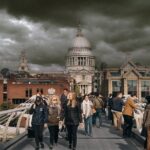
Millennium Bridge moment: the Half-Blood Prince attack setting
Next you approach a steel bridge across the Thames—world-famous for a chilling Half-Blood Prince moment. The tour sets up the approach with behind-the-scenes context about how the filmmakers brought that terrifying scene to life, and then the guide holds back the spookiest specifics until you’re past the most direct view.
That pacing is smart. It keeps it fun, and it also prevents you from getting so focused on one dramatic scene that you miss the overall geography of the river.
What makes this stop work in real terms is the mix of film memory and physical orientation. From here, you start seeing how the river becomes an action corridor. That helps you mentally map the franchise’s movement—who’s coming from where, and what kind of tension a bridge creates.
Admission is again listed as not included for this spot (at least as presented on the tour information you have). So treat it as a viewing and explanation pause, not a ticketed attraction.
Weather note: if it’s wet, the river air can feel sharp. Stay close to the guide’s chosen spot so you’re not losing the thread while you’re looking for the exact frame.
St Paul’s Cathedral: Hogwarts architecture without the ticket line
At St. Paul’s Cathedral, the tour leans into design and structure. The big idea: this real London landmark served as a real-world stand-in for parts of Hogwarts. The guide points out which spiral staircase detail becomes part of Hogwarts’ interior feel, and how the cathedral’s architecture got pulled into the magical world on screen.
This is one of the most satisfying stops for fans who love “how did they do that?” questions. Instead of just saying it’s similar, the guide explains why the similarity is believable—shape, lighting, and how eyes read dramatic stair and corridor geometry.
Admission is listed as not included. So the realistic expectation is that you’ll be learning from viewing and architectural interpretation rather than expecting the full inside experience to be part of the deal.
Practical suggestion: if stairs and heights make you uneasy, tell the guide early. A private tour is built for adjustments, and you can still enjoy the story without pushing through anything you’d rather skip.
Trafalgar Square: turning London’s center into magical mayhem
Now you hit Trafalgar Square, right in the heart of London—dominated by Nelson’s Column and guarded by four bronze lions. This square has hosted big public moments for generations, so it’s the perfect stage for a story about crowds, confusion, and power.
For Harry Potter fans, the square is recognizable from the opening sequence energy in Half-Blood Prince, where dark forces sweep through London and Muggles watch without understanding what’s happening. Your guide explains how filmmakers transformed a very public space into a place where tension feels personal and immediate—even though you’re in one of London’s busiest open areas.
There’s also a film-industry note tied to this stop: the premiere of The Deathly Hallows Part Two took over this landmark, and the tour explains why the traditional area for a London-based world premiere wasn’t used for that final film.
Admission is listed as free. That matters because it means your time here isn’t gated by tickets. It’s a clean, high-impact stop.
One caution: this area can be noisy. The guide will keep you moving, but plan on raising your listening game.
Cecil Court: the bookstreet that feels like Diagon Alley’s cousin
Cecil Court sits just off Leicester Square and is easy to miss if you’re only scanning for big signs. That’s why it’s such a good choice for a Harry Potter tour: it feels like London with its guard down.
This is known as Booksellers’ Row, and the tour leans into why it matches Diagon Alley’s look and mood. You’ll see vintage signage, antique-map and rare-book style shops, and that gentle “wand tap away” feeling that comes from old storefronts and tight alley angles.
A key point you’ll hear: many fans believe Cecil Court inspired how Diagon Alley looks. Even if you treat that as a theory, the street layout supports the idea. And the guide goes further by talking about local shop owners and their experience with Harry Potter tours coming through.
Admission is free here, so you can also ask for extra time if you want to browse antique bookstores. If books are your thing, this is the spot where you’ll probably want to slow down the most.
Just be ready for the fact that some shops may not be set up for long stops at the door. If you want pictures, ask the guide for the best timing so you don’t block foot traffic.
Whitehall: Ministry of Magic style security meets real government buildings
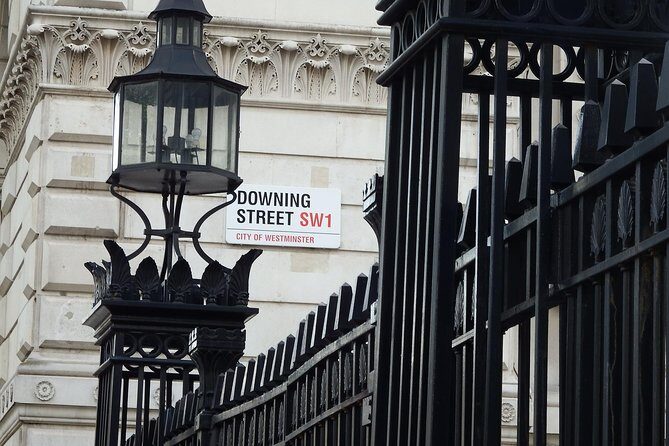
Next is Whitehall, home to the Muggle Government and (in the Harry Potter universe framing) the Ministry of Magic. This stop is about secrecy and contrast. In a real political setting, security and logistics are obvious even when you don’t see guards at every angle.
Your guide explains how filming took place in a highly secure area, and how movie magic helped hide parts of buildings so the set could read correctly for the story. You’ll also hear differences between the Minister of Magic and the Muggle Prime Minister, plus subtle book-to-film differences.
Then there’s a more grounded twist: the guide points out an aspect of British life that’s missing from both books and films. The point isn’t a gotcha—it’s a reminder that adaptations always simplify, and reality leaves fingerprints even when stories are fantastical.
Admission is listed as free. This is a great stop for fans who like story structure and production choices more than just costumes and props.
King’s Cross Station and Platform 9¾: finishing the story where it starts
Your tour ends at King’s Cross Station, outside Platform 9 3/4. This is the emotional finish line—where the Hogwarts Express journey begins for so many readers and viewers.
The tour includes a key reality check: the platforms can look different from what you see on screen, and that’s where the guide’s value shows up. You’ll learn the filming location details and get help spotting how the movie version was created from the station’s real layout.
Admission is listed as not included. In practical terms, expect explanation and orientation more than a ticketed attraction moment. The experience is still memorable because you’re in the actual transit hub, with all the movement that makes it feel alive.
If you’re doing this as a standalone outing, plan what you’ll do right after you finish. King’s Cross is busy, and it’s easy to lose time if you need snacks, transit changes, or a change of plans.
Price and value: when $247.70 per group makes sense
Let’s break down the value in plain terms. You pay $247.70 per group and the cap is up to 15 people. Your “value sweet spot” depends on your group size:
- If you book with 10–15 people, the cost per person drops a lot, and you’re effectively getting a mini-private production of the Harry Potter city map.
- If you book as a couple or small family, it’s still a nice experience, but you’re paying more for the privilege of privacy and customization.
On top of that, you’ll likely pay extra for public transport (£10 per person), and some sights list admission as not included. So the true budget is the group price plus any optional entries and transit.
Where this tour justifies itself best is the guide component: personalized pacing, flexible departure times, and production-linked explanation that helps you connect what you see with what you remember.
Should you book this Harry Potter London tour?
I’d book it if you fit at least two of these:
- You love the Harry Potter films and you enjoy production details like locations, angles, and set logic.
- You want a private group experience with flexible timing instead of a crowded meet-up.
- You like going beyond the postcard stops and getting practical street-level context in spots like Leadenhall Market and Cecil Court.
- You’re happy with a route that ends in a major transit hub and you can handle a bit of walking across central London.
I’d think twice if you’re hoping for a ticket-heavy, inside-everywhere checklist. This tour is more about seeing and understanding than about collecting paid attractions at every stop. And if you dislike stairs or long outdoor waiting, you’ll want to wear comfy shoes and keep your pace realistic.
FAQ
FAQ
How long is the Private Harry Potter Walking Tour of London?
It’s about 3 hours long (approx.).
What does the tour cost?
The price is $247.70 per group for up to 15 people.
Is this tour private?
Yes. It’s a private tour/activity, and only your group participates.
What’s included and what costs extra?
The tour includes a passionate guide and a mobile ticket. Public transportation is not included and is listed as £10.00 per person. Admission ticket details vary by stop, with some marked as not included.
Where do I meet the guide, and where does it end?
Start: The Monument, 18 Fish St Hill, London EC3R 6DB.
End: outside Platform 9 3/4 at King’s Cross (Euston Rd., London N1C 4AP).
What language is the tour offered in?
The tour is offered in English.
Can I cancel and get a full refund?
Yes. There’s free cancellation and you can cancel up to 24 hours in advance for a full refund.