REVIEW · LONDON
Private Spy Walking Tour of London
Book on Viator →Operated by Tours Of The UK · Bookable on Viator
Spy history in London feels uncomfortably real. This private walking tour strings together real espionage landmarks with MI6 and James Bond links, so you see London’s power blocks and back alleys through a spy lens.
What I like most is the way it mixes big Cold War stories (think Waterloo Bridge) with the nuts-and-bolts world of intelligence work. I also like that guides such as Eian and Michael are described as personable and not rushed, and they’ll help you wrap up smoothly near transit. One thing to consider: it’s a solid 3-hour walk with some stops where you’ll be standing outdoors, so plan for a moderate fitness pace.
In This Review
- Key things to know before you go
- Why a spy-themed walk works so well in London
- Getting started at Somerset House (and why the private setup is the point)
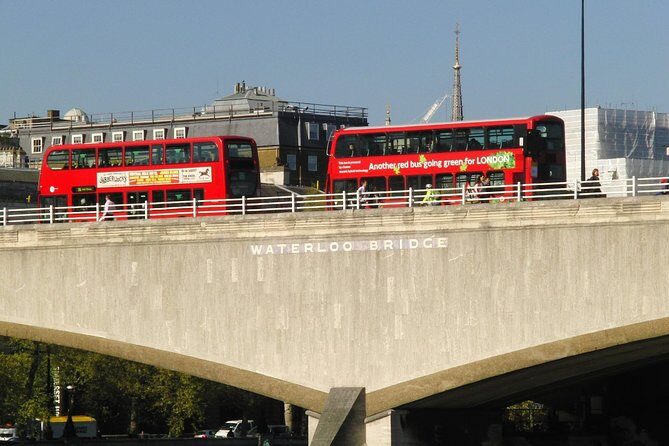
- Waterloo Bridge: Georgi Markov and the Cold War assassination you can feel
- The Savoy and espionage glow-ups: Bond links and WWII secrecy
- Edith Cavell: a nurse, execution claims, and the problem of certainty
- The High Commission of Canada: MI6 warning and the early-1919 tension
- The Old Admiralty Building: naval intelligence, coded impacts, and a body-based plan
- Whitehall: Downing Street, spying roots, and how oversight fits
- Parliament Square: Churchill’s pivot and the Westminster burial detail
- Riverside Walk Gardens to MI6: photos, MI6 basics, and pop-culture crossovers
- Price and logistics: how to judge value for your group size
- Who should book this spy walking tour (and who might not love it)
- Should you book this private spy walking tour of London?
- FAQ
- How long is the private spy walking tour of London?
- What does the tour cost?
- Is this a private tour or a shared group tour?
- Where does the tour start and where does it end?
- Is the tour offered in English?
- What’s included in the price?
- Is TFL transport included?
- Is it stroller-friendly and are service animals allowed?
- Can I cancel for a full refund?
Key things to know before you go
- Cold War to modern spycraft: starts with a famous poisoning story, then moves toward MI6’s later era.
- James Bond links without the fluff: you’ll connect Bond-world imagery to real locations and institutions.
- Big landmarks, short stops: many stops are about 5–15 minutes, so the route keeps momentum.
- Whitehall and oversight themes: you’ll hear how UK government scrutiny fits into spy history.
- Photo time at Riverside Walk Gardens: good sightlines plus MI6 context in one place.
- Private-group pacing: up to 15 people per booking, with your group doing only the group’s tour.
Why a spy-themed walk works so well in London
London makes espionage easy to picture. The city concentrates government offices, old intelligence-linked buildings, and iconic bridges in a tight geography. When you walk it with a spy focus, familiar skyline views turn into clues.
This tour is built around that effect: you don’t just pass notable places, you learn the specific incidents and institutions tied to them. It’s ideal if you’re a true spy-history fan. It’s also good for casual James Bond viewers because the tour constantly translates Bond-style drama back into the real-world world of intelligence tradecraft, secrecy, and propaganda.
The private format also matters. With only your group participating, you can absorb the stories at your pace. If you like questions, you’ll usually get room to ask. If you’d rather just listen, the shorter stop times keep things moving.
You can also read our reviews of more walking tours in London
Getting started at Somerset House (and why the private setup is the point)
You meet at WatchHouse Somerset House East Wing, London WC2R 1LA. From there, the route runs west-to-southwest and finishes near Vauxhall Bridge. The tour runs about 3 hours and is in English, with a mobile ticket.
The value here comes from the pricing structure: it’s $245.48 per group (up to 15 people). That’s not cheap if you’re booking just one or two people, but it can turn into a bargain if you’re traveling with a small crew or family. If you’re filling most of the group size, your per-person cost drops a lot, and you still get a true private experience instead of blending into a mass departure.
Also, keep transit in mind. The tour does not include travel on the TFL network. The route includes riding a famous London double-decker bus and using train steps as part of the day, so bring a way to pay contactless or via Apple/Android pay (Oyster/contactless are the typical options mentioned).
If you’re planning stroller use, the tour is described as stroller-friendly, and service animals are welcome. The physical fitness level is marked as moderate, which usually means you’ll be on your feet for long stretches even if each stop is brief.
Waterloo Bridge: Georgi Markov and the Cold War assassination you can feel
The tour begins with Waterloo Bridge, tied to one of the Cold War assassination stories that refuses to feel like history. You’ll learn about Georgi Markov, a man killed by a poisoned ricin pellet reportedly fired from a needle-tipped umbrella. It’s the kind of detail that makes the whole concept of clandestine operations feel immediate.
This stop does more than recount a headline. It also gives you a clean entry point into the theme of the day: how state intelligence services operate through methods that look like accidents and leave investigators chasing a ghost. Markov is presented as part of a broader pattern of Russian agents carrying out assassinations at the request of Russian intelligence.
The practical advantage of starting here is mental momentum. You’re not warming up with generic “London is interesting” chatter. You start with a specific incident, then the rest of the walk builds the institutional story behind it.
One small consideration: this is a bridge area, so expect open-air conditions and wind off the river. If you’re visiting on a breezy day, dress accordingly.
The Savoy and espionage glow-ups: Bond links and WWII secrecy
Next up is The Savoy, one of those grand London hotels that seems like it should be purely for glamour. But spy history loves glamour because it draws people in and hides agendas behind service.
You’ll hear how the hotel ties into James Bond’s creator, along with a surprising spy-ish connection to the tradition of the Christmas Tree in Trafalgar Square. The Savoy also gets a World War II angle: during the conflict it’s described as a favorite residence of a spy so secretive that Winston Churchill was unaware of his identity.
That mix is the tour’s strength. It doesn’t treat espionage as only violence or only coded messages. It shows how spies can live inside social settings, use the normal world as cover, and exploit who is watching (and who isn’t).
Tip for enjoying this stop: if you’re even a little curious about how Bond translates into real life, this is where the tour makes the jump from fiction to institutions. Hotels, government buildings, and media spectacle are all tools in the same toolbox.
Edith Cavell: a nurse, execution claims, and the problem of certainty
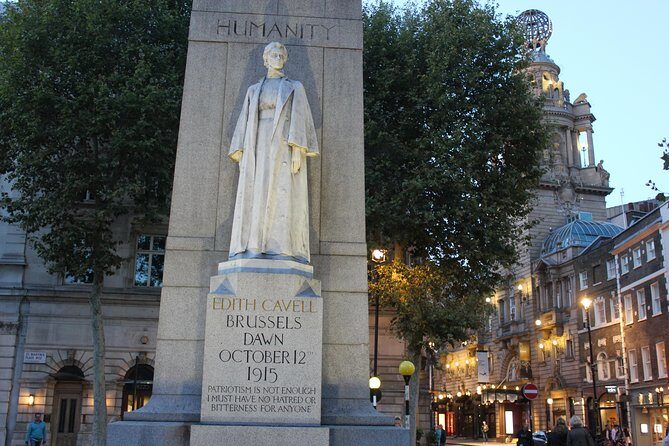
The third stop is the Edith Cavell Memorial. Cavell was a nurse in occupied Belgium during the First World War. The tour explains that she was executed by Germans on charges of spying, while the British government denied those charges—then she became a martyr and a symbol of German inhumanity.
But the story doesn’t stop at 1915-style propaganda. You’ll also hear that newly declassified documents suggest a different version of events. That’s a key lesson of the whole spy-history approach: intelligence stories often have missing pieces, shifting narratives, and “official truth” that might not be the final truth.
This stop is emotionally heavier than the others, and it’s also one of the most thought-provoking. If you’re traveling with teens or an inquisitive partner, it can spark great questions about evidence, bias, and how nations craft stories to hold public trust.
A practical note: memorial stops can mean standing still for a bit. Wear shoes you’ll be comfortable in, and don’t rush your photos.
You can also read our reviews of more private tours in London

The High Commission of Canada: MI6 warning and the early-1919 tension
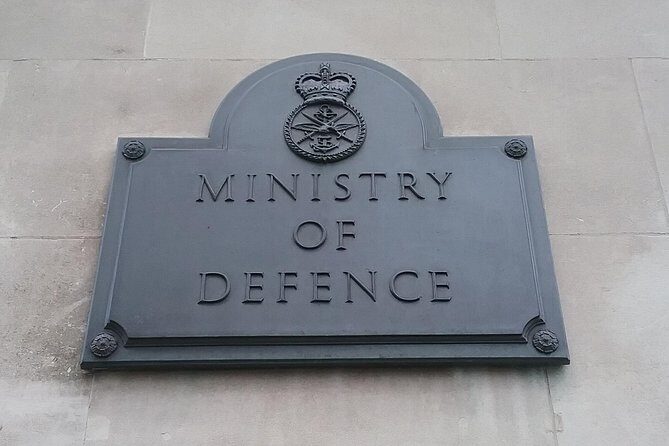
At the High Commission of Canada in the United Kingdom, the tour zooms into an intelligence warning: how a Canadian MI6 spy warned the British government about possible renewed war with Germany as early as 1919.
This stop matters because it adds a “timing” lens. Espionage isn’t only about present danger. It’s also about anticipating what comes next—reading intentions, scanning for patterns, and trying to prevent history from repeating itself.
It’s also a helpful waypoint in the route. After the emotional Edith Cavell stop, you get a shift toward decision-making. It’s less about martyrdom and more about policy and prevention.
The Old Admiralty Building: naval intelligence, coded impacts, and a body-based plan
Then you’ll move to the Old Admiralty Building, where some of the Directorate of Naval Intelligence was based during both World Wars. This is where the tour starts connecting dots between different secret services and how intelligence work can change major events.
You’ll hear how this secretive military organization supported the establishment of two of Britain’s secret services. You’ll also learn that intelligence deciphered here helped bring America into World War One—again reinforcing that espionage can affect not just one battlefield, but who enters the war at all.
The story gets even stranger at the end of this stop. A plan created in this building, described as using a dead body, is said to have both fooled the Germans and inspired the best-reviewed British musical of all time. The point isn’t to turn the day into a trivia contest. It’s to show that deception can be theatrical, memorable, and effective.
If you like “how did they think of that” moments, this is a highlight. And because this stop is only about 10 minutes, the guide typically keeps the momentum while still making the connections clear.
Whitehall: Downing Street, spying roots, and how oversight fits
Your longest stop is Whitehall, about 30 minutes. It’s linked to spying and spies since the early 20th century and connects to Downing Street and the Admiralty, both tied to the British Secret Service.
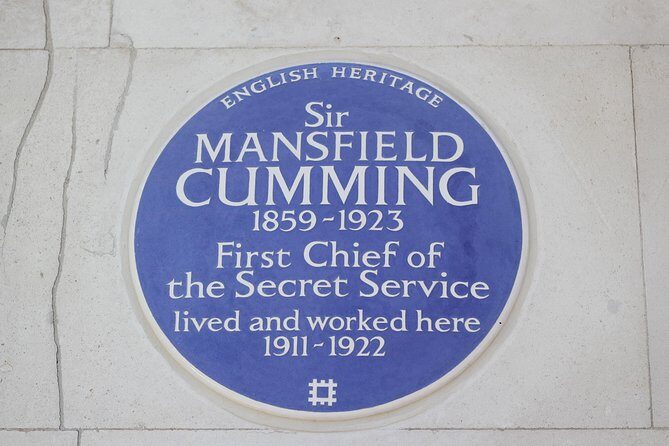
The tour also explains the machinery of domestic security. Whitehall is described as home to the first head of the Secret Service and the police force tasked with stopping foreign spies during both World Wars. That’s a big idea: espionage isn’t only about foreign operatives. There’s also an internal effort to detect, prevent, and disrupt.
This stop works especially well if you’re trying to understand the relationship between intelligence and democracy. You see the government core, then you learn it came with surveillance, counter-espionage, and political risk.
Tip: take a moment to look around before the facts start. Whitehall is visually busy, and a quick visual scan helps the stories stick.
Parliament Square: Churchill’s pivot and the Westminster burial detail
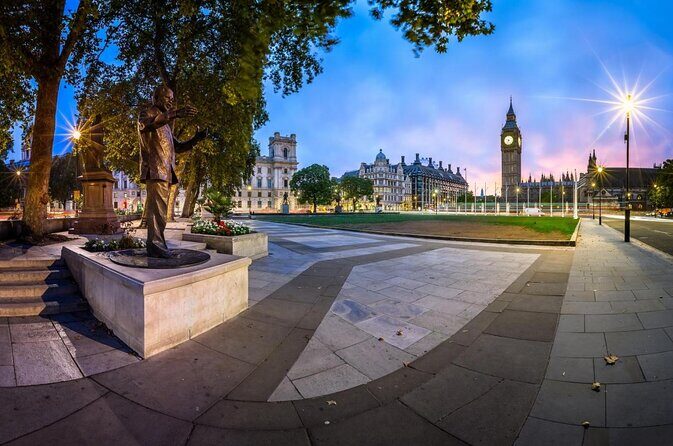
From Whitehall you head to Parliament Square for about 15 minutes. This is where the tour brings in leadership and institutional control. You’ll hear how Winston Churchill changed the way espionage played out through decisive World War II leadership.
Parliament Square also sets up the topic of oversight—how the UK parliament monitors spy organizations and how the country works with international allies. Then comes a location-specific detail that sticks: a spy ended up buried in Westminster Abbey, which the tour notes as part of UNESCO world heritage.
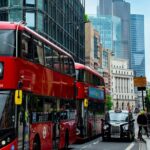
After that, the tour moves you along by boarding a famous London double-decker bus toward MI6. That bus segment is useful in two ways. It breaks up the walking, and it lets you see the city shift as you approach the modern intelligence center.
Riverside Walk Gardens to MI6: photos, MI6 basics, and pop-culture crossovers
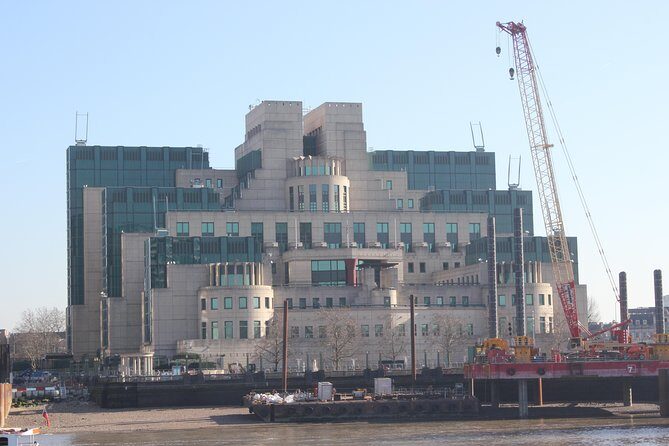
Your next area is Riverside Walk Gardens, about 20 minutes. This is explicitly a great photography spot, but it’s also where the tour makes the modern spy world easier to understand.
You’ll learn about the Security Intelligence Service (MI6)—its history and how it works alongside sister organizations: the Security Service (MI5) and Government Communications Headquarters (GCHQ). In other words, you’ll get a simple framework for who does what, rather than treating every secret agency as the same thing.
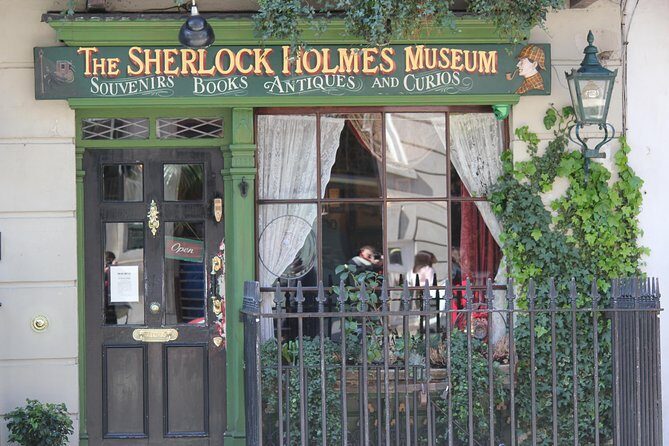
And because London is London, the tour ties these institutions back to entertainment. You’ll hear how MI6 and the headquarters area have been used in James Bond films and TV series like Sherlock. This part is especially fun if you’ve watched those productions before. Even if you’re not a super-fan, it gives you a way to recognize why certain locations feel familiar.
After Riverside Walk Gardens, you cross Vauxhall Bridge and take the train to Waterloo, then you walk the short distance to the final location near Vauxhall Bridge. This end segment is handy because it gives you an easy exit route back into the city.
Price and logistics: how to judge value for your group size
The price is $245.48 per group for up to 15 people, with a tour duration of about 3 hours. That’s a great deal when you spread it across a larger group, but it needs a little math if you’re traveling as a couple or solo.
Here’s the practical way I’d think about it:
- If you’re a family or group, private means you’re paying for a focused experience, not for a seat on a crowded walk. The value can be excellent.
- If you’re just one or two, the cost per person rises fast. In that case, decide whether the spy-specific route and guide time are worth paying extra versus doing standard guided sightseeing.
What helps the value is the structure. Many stops are short and focused, which keeps you from spending half the tour in transit alone. The guide also covers both the dramatic incidents (like Markov) and the institutional machinery (like naval intelligence and counter-espionage).
Since TFL travel isn’t included, budget for it. The good news: the tour route is near public transportation, so you’re not locked into one expensive plan.
Who should book this spy walking tour (and who might not love it)
Book it if you:
- Want a London walk with clear spy themes instead of generic sightseeing.
- Like real-world intelligence history, but also enjoy the James Bond bridge between fiction and place.
- Want something your group can do that still feels special and private.
You might want a different plan if:
- You need very low walking overall. Even though the stop times are short, it’s still a 3-hour outdoor route with standing and city pavement.
- You want a slow museum-style tour with lots of indoor time. This is mostly built around landmarks and streets.
It’s also a solid choice for a stroller-friendly outing and for service animals, since the tour is described that way. Still, stroller users should be ready for regular street conditions and brief standing moments at each stop.
Should you book this private spy walking tour of London?
If you’re choosing between a standard sightseeing walk and something with a spine, this one has a spine. It links Cold War assassination, naval intelligence, Whitehall counter-espionage, and MI6’s modern role into a route you can walk without feeling lost.
I’d book it when you’ll benefit from a guide turning landmarks into stories, and when your group can make the per-group price work. If your idea of fun is Bond vibes mixed with real institutions and real “how did they pull that off” moments, this tour fits like a well-used file folder.
FAQ
How long is the private spy walking tour of London?
It lasts about 3 hours.
What does the tour cost?
The price is $245.48 per group, up to 15 people.
Is this a private tour or a shared group tour?
It’s private. Only your group participates.
Where does the tour start and where does it end?
It starts at WatchHouse Somerset House East Wing, London WC2R 1LA, and finishes at Vauxhall Bridge (near Vauxhall).
Is the tour offered in English?
Yes, it is offered in English.
What’s included in the price?
The guide is included.
Is TFL transport included?
No. Travel on the TFL network is not included, and the tour suggests paying using Apple or Android pay, an oyster card, or contactless.
Is it stroller-friendly and are service animals allowed?
The tour is stroller-friendly, and service animals are welcome.
Can I cancel for a full refund?
Yes. Free cancellation is available if you cancel up to 24 hours in advance for a full refund. If you cancel less than 24 hours before the start time, the amount paid is not refunded.