REVIEW · LONDON
Private Tour, The British Museum, popular with Families & Small Groups
Book on Viator →Operated by Let me show you London · Bookable on Viator
Two hours can feel like a time machine. This private British Museum tour turns a huge, crowd-heavy museum into a family-focused story, with engaging prompts and clear pacing from Egypt to the mummies. You’ll also get that crucial boost from guides such as Lucy, Marina, Lawrence, Denisa, and Ainura, who know how to keep attention on the objects, not the stress.
I especially like the Blue Badge guide setup, since line chaos is the last thing you want when kids have questions (and grown-ups are also eager). The other standout is the built-in break time, because even the most history-enthused crew gets museum-fatigue. One thing to consider: you’re on a guided route in a short window, so if you prefer total wandering freedom, this may feel a bit structured.
In This Review
- Key things to know before you go
- Why this British Museum private tour is so good for families
- The meeting point that prevents the classic first-moment headache
- Ground-floor highlights: Egypt, Assyria, Athens, and the Elgin Marbles
- The built-in comfort break (and why it’s not a small detail)
- Upstairs mummies: object-hunting and comparing two kinds of mummification
- British and Roman highlights: Sutton Hoo and the engineers of ancient Britain
- From empires to everyday objects: tablets and the quick math test
- Ending in the Great Court: how to use the last 10 minutes well
- Price and value: is $286.41 per person worth it?
- Who should book this tour (and who might prefer another approach)?
- The practical checklist before you go
- Should you book this British Museum private tour?
- FAQ
- FAQ
- How long is the British Museum private tour?
- Is museum admission included?
- Do we skip the long lines?
- Where do we meet the guide?
- Is this tour private?
- What language is the tour offered in?
- Are food and drinks included?
- Are service animals allowed?
- What is the cancellation window?
Key things to know before you go
- Blue Badge skip-the-line access with guaranteed entry through your guide
- Family-friendly storytelling with interactive quizzes and spooky-gory moments
- Designed pacing, including a planned comfort and refreshment break
- A highlight route across Egypt, Assyria, Greece, Rome, and Britain
- Upstairs time for mummies, plus object-hunting challenges
- Ends back in the Great Court, so you can reset before leaving
Why this British Museum private tour is so good for families

The British Museum is amazing, and it’s also big enough to make you feel lost fast. This is why I like this format: it compresses the best “I can’t believe that’s real” objects into a manageable route, with a guide steering you toward the moments that kids usually remember.
For families, the magic is the way the guide uses interaction instead of lecturing. There are quizzes, short prompts, and those memorable little challenges that get kids pointing instead of drifting. The tour also leans into dramatic storytelling, including gory stories that kids tend to find hilarious once they understand the context. That tone matters. It keeps curiosity alive without turning into a parade of facts nobody can use.
The other big win is the private part. Even with small groups, you’re not competing with other tour groups to ask a question or to figure out what you’re looking at. I also appreciate that the tour is built for real breaks. History can pile up quickly, and the plan includes downtime instead of pretending you can power through everything.
You can also read our reviews of more private tours in London



The meeting point that prevents the classic first-moment headache
You meet your guide at your allocated start time at the main museum gates, standing next to the phone box opposite the Museum Tavern. That single detail saves a lot of scrambling. When you’re arriving with kids, or you’re juggling schedules, “find the guide” can turn into a mini-expedition on its own.
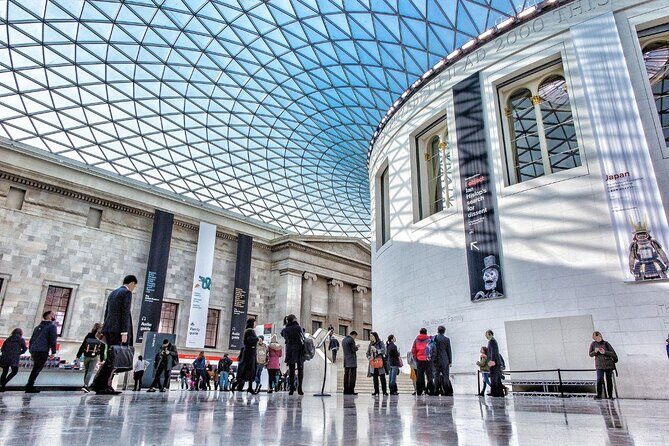
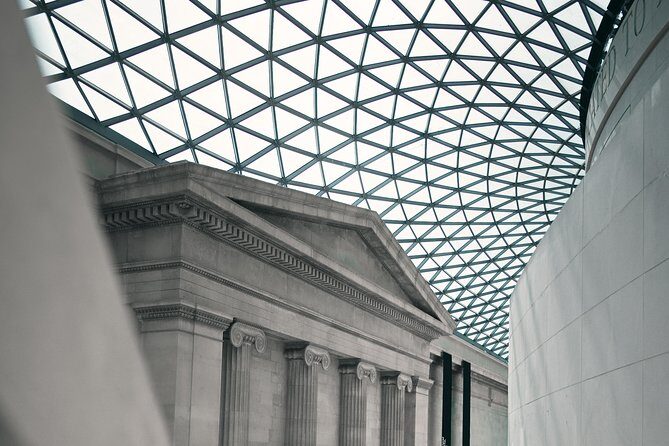
Once you’re inside, the tour begins with a payoff: you get treated to a spectacular first look at the Great Court. It’s a great moment for photos because it gives everyone orientation. You’re not just stepping into random galleries—you’re seeing the museum’s layout in one glance, and that makes the rest of the route feel more logical.
Ground-floor highlights: Egypt, Assyria, Athens, and the Elgin Marbles
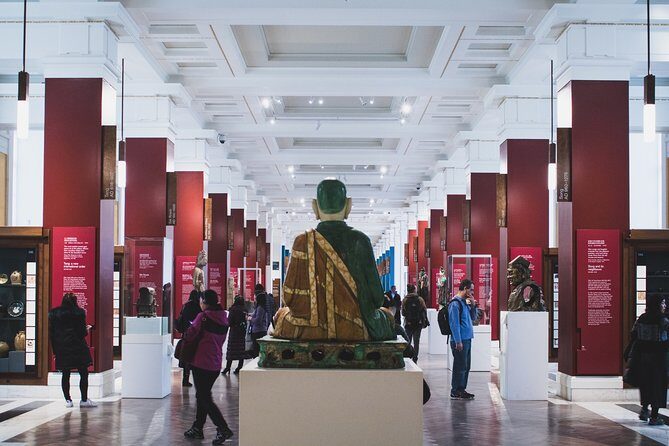
After the Great Court introduction, the tour typically starts on the ground floor in the Egyptian gallery. This is a smart place to begin, because it delivers instant recognition. You’ll spend time around the famous Rosetta Stone, and the guide helps you read the idea behind hieroglyphics in a way that’s easy for kids to grasp. One fun challenge is spotting how a simple word like cat appears in hieroglyphics, which turns the writing system from something intimidating into something you can actually play with.
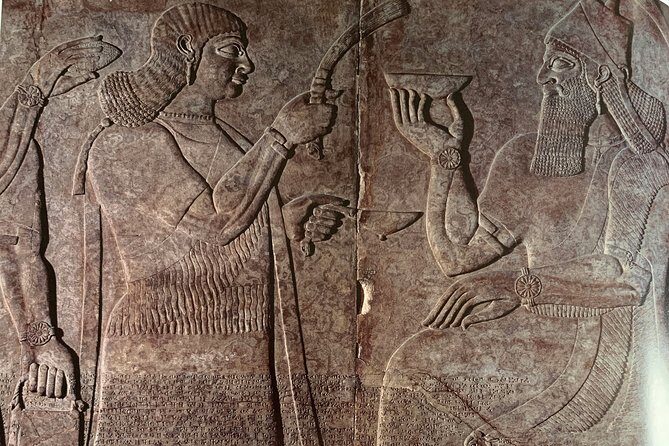
From Egypt, you move into Assyria, where you’ll see the scale and drama of empire life. The tour points out winged bulls guarding cities, and it also brings in the theme of hunting lions—royal entertainment with real power behind it. This is one of those sections where the guide’s storytelling matters, because it helps you connect what you’re seeing to the people who made it.
Next comes the route through Athenian artifacts and the question of what connects the Acropolis, the Parthenon, and the objects you’re looking at today. You’ll also explore the Duveen galleries, currently known for housing the magnificent Elgin Marbles. This stop is where you’re likely to hear a lot of “wait, that’s from where?” reactions, because these sculptures feel both grand and strangely personal once you realize they were made for specific spaces and beliefs.
One practical note: the ground floor can still be busy. The skip-the-line setup helps with entry, but galleries themselves can have foot traffic. The private format keeps you from wasting time orbiting the room trying to figure out where to go next—your guide decides the route and pace.
The built-in comfort break (and why it’s not a small detail)
Midway through the ground-floor loop, you get a quick comfort/refreshment break. This matters more than it sounds. A museum visit can become a chain of “keep walking, keep looking” until everyone’s tired and nobody’s retaining much.
The break is part of the tour’s pacing strategy. You return back to the Egyptian areas before moving upstairs, which helps you keep continuity instead of making the experience feel chopped up. It also gives you a moment to reset attention—especially useful if you’re traveling with younger kids, or if you’re trying to keep energy steady for a full 2 to 2.5 hours.
Upstairs mummies: object-hunting and comparing two kinds of mummification
Once you’re ready, the tour moves upstairs for the mummies. This is usually the section families wait for, and it’s handled well here because it’s not only about fear. It’s about observation.
You’ll compare two different styles of mummification, which gives the tour depth beyond a single wow moment. Then you shift into interactive spotting: the guide turns it into a scavenger vibe where you try to find a mummy of an Ibis, a baboon, or even a young woman. That mix is useful for families because it creates a game. Kids don’t just hear about ancient beliefs—they actively search for evidence inside the gallery.
A quick piece of advice: if your group has one child who gets restless, assign that child the job of tracking the mummy clues. It sounds simple, but it works because attention becomes task-based, not mood-based.
You can also read our reviews of more museum experiences in London




British and Roman highlights: Sutton Hoo and the engineers of ancient Britain

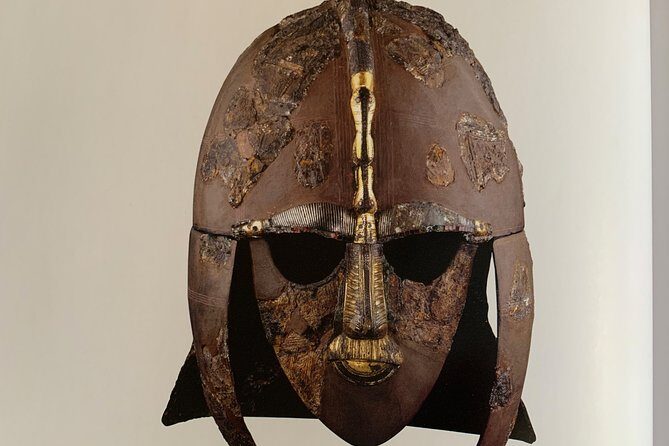
The tour doesn’t stay locked in overseas empires the whole time. You also get a stop connected to Britain through the Sutton Hoo treasure. This is a great anchor for families because it ties the museum to local roots in a way that feels less abstract than faraway timelines.
After Sutton Hoo, the tour shifts to the Roman influence on these islands. You’ll see how advanced Roman culture was—especially through building, engineering, and artistic skills. For kids, this often lands because the Roman story connects to real-world things they already recognize: roads, construction, and how societies organize power.
This section is valuable for adults too. It helps you spot the patterns that make museums feel more coherent. Instead of seeing unrelated artifacts as random surprises, you begin to notice how different periods reuse ideas—materials, designs, and the way societies signal status.
From empires to everyday objects: tablets and the quick math test
If you still have energy after mummies and Romans, the tour heads toward more modern-seeming materials: tablets laid out so you can see them as physical objects rather than footnotes.
There’s a built-in question that makes the moment stick: the guide asks you to guess how many tablets the average human consumes during their life. It’s a clever way to connect everyday language to ancient writing, so the shift from history to objects feels less like whiplash and more like a smooth bridge.
Even if you don’t love the “guessing game,” it does something important. It turns the abstract concept of writing into a tangible thing. You’re looking at surfaces and symbols, not just hearing about them.
Ending in the Great Court: how to use the last 10 minutes well
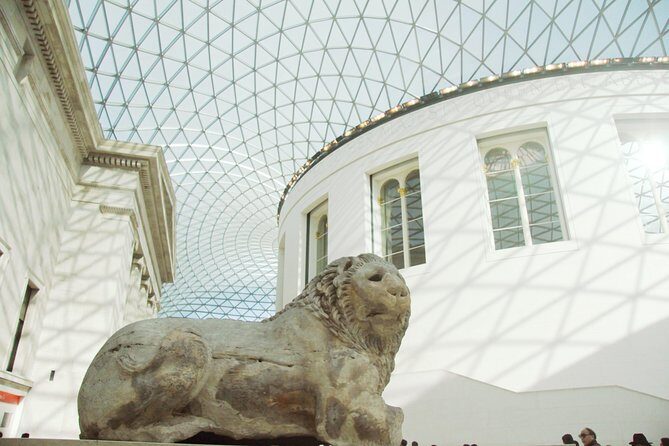
The tour ends back at the Great Court, where you can sit, breathe, and take stock. This last stop is more than a convenient meeting point. It gives you one final view of the museum’s scale, and it helps you transition out of guided mode.
If you want to keep momentum, use that time to pick one extra gallery nearby that you actually care about. If you’re traveling with kids, this is also a great moment to let them cool down before you head back out.
Price and value: is $286.41 per person worth it?
At $286.41 per person, this is not the cheapest way to see the British Museum. So here’s the honest way to judge value: this price buys you time, attention, and a plan.
You’re paying for:
- Skip-the-line access guaranteed through your Blue Badge guide
- A route built to fit about 2 to 2.5 hours
- Private guiding with family-focused storytelling, quizzes, and targeted stops
- Pacing that includes a comfort break (so you don’t lose your group to fatigue)
- A guide who helps you pick what matters most instead of leaving you to gamble on your own priorities
If you’re a family where kids get restless, the cost can feel reasonable fast because it prevents wasted hours. If you’re an adult traveling with another adult and you prefer to read everything at your own pace, you might prefer self-guided exploring. But if you want your museum time to feel organized and memorable, this setup is strong for the price.
Also note the tour is offered in English and uses a mobile ticket, which can reduce friction once you arrive.
Who should book this tour (and who might prefer another approach)?
This tour is a good match if:
- You’re traveling with families and want a guide to manage attention
- You want the museum highlights without spending hours figuring out logistics
- You like stories and object-based games (not just a lecture)
- You want a planned break so the experience stays enjoyable
You might consider skipping this specific format if:
- You want to spend half a day choosing galleries independently
- Your group has no interest in mummies, ancient empires, or Roman Britain
- You prefer a slower, reading-heavy pace where you control every turn
The practical checklist before you go
A few small things help this tour run smoothly:
- Wear comfortable shoes. You’ll be moving through multiple galleries in a short time.
- Bring water and snacks only if you already know the museum timing that works for your group. Food and drinks are not included on the tour.
- If you’re traveling with kids, set expectations early: this is a guided highlight route with games and stops, not an open-ended roam.
If you’re booking for a group, the tour also notes group discounts, which can make the per-person cost feel less sharp.
Should you book this British Museum private tour?
I’d book it if you want the British Museum experience to feel guided but not stiff—with interactive moments for kids, smart pacing, and a route that hits the objects most likely to spark questions. The Blue Badge skip-the-line part is a real advantage, and the planned break helps protect the mood of the whole day.
Skip it if your goal is maximum freedom to wander, or if your group would rather spend time deep reading than playing the guided quiz game. For many families, though, this is a fast, well-shaped way to see why the British Museum is famous.
FAQ
FAQ
How long is the British Museum private tour?
It lasts about 2 hours to 2 hours 30 minutes.
Is museum admission included?
The tour description notes admission as free.
Do we skip the long lines?
Yes. The tour includes guaranteed skip-the-line access with a Blue Badge guide.
Where do we meet the guide?
The guide meets you at the main museum gates, next to the phone box opposite the Museum Tavern.
Is this tour private?
Yes. It’s a private tour/activity, meaning only your group participates.
What language is the tour offered in?
The tour is offered in English.
Are food and drinks included?
No. Food and drinks are not included.
Are service animals allowed?
Yes, service animals are allowed.
What is the cancellation window?
You can cancel for a full refund up to 24 hours in advance of the experience start time.