REVIEW · LONDON
Slavery and City of London Walking Tour
Book on Viator →Operated by Sam's Walks · Bookable on Viator
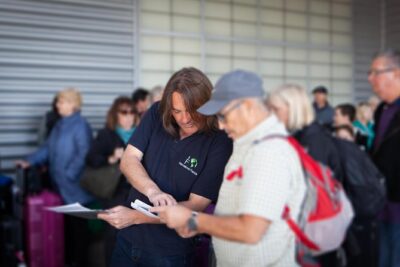
London has layers, and this walk reads them out loud. You’ll trace how forced labor helped shape the United Kingdom, then watch the city’s famous landmarks reframe themselves under new light. It’s a tight route, led by Sam’s fast, funny, story-driven approach, with stops that include the Tower of London area and St Paul’s.
Two things I especially like: you cover big institutions in just 90 minutes, and you get specific people and places tied to slavery and abolition (not vague hand-waving). The walk also keeps you moving through the working geography of the City of London, so the history feels like it’s happening around you, not behind glass.
One consideration: this is heavy subject matter. You’ll want to go in with the mindset that the goal is truthful education and context, and the pace may feel like a lot if you’re sensitive to these themes.
In This Review
- Key highlights to look for
- A City of London walk where landmarks come with receipts
- Starting at Tower Hill: Granville Sharp and the Tower’s anti-slavery link
- Roman Londinium wall: slavery starts long before the Atlantic
- East India House site: where corporate wealth and slave labor intersect
- Fenchurch Street and Fen Gardens: the Gilt of Cain abolition marker
- Jamaica Wine House and the Jamaica Coffee House: sugar money in plain sight
- St Mary Woolnoth Church and John Newton: abolition through the pulpit
- Bank of England Museum: apology, statues, and civic responsibility
- Finishing near St Paul’s: what to notice on the way out
- Price and time: is $27.43 worth 90 minutes of truth?
- Who this walk fits best (and who may want a different pace)
- The quick practical checklist before you go
- Should you book the Slavery and City of London Walking Tour?
- FAQ
- How long is the Slavery and City of London Walking Tour?
- What does it cost?
- Where does the tour start and end?
- What kind of ticket do I need?
- How big is the group?
- What landmarks are included?
- What’s the weather policy?
- What if I need to cancel?
Key highlights to look for
- Granville Sharp at the Tower of London: an anti-slavery figure placed right at an Ordnance Office site.
- Roman wall remnants of Londinium: slavery isn’t treated as a single era in this story.
- East India Company headquarters area: corporate power linked to trafficked labor from Africa.
- Fen Gardens and the Gilt of Cain sculpture: a visual marker for the abolition of the transatlantic slave trade.
- Jamaica Wine House and the Jamaica Coffee House: sugar-plantation money hidden in a place people casually visit.
- Bank of England Museum plus an apology: the tour points you to the museum’s public acknowledgement and planned removals.
A City of London walk where landmarks come with receipts
Most walking tours in London help you spot the photo ops. This one also helps you spot the systems behind them. You’ll move through the City of London, where old civic power and modern finance sit close together, and the story of slavery threads through both.
The tone is direct but not performative. Sam’s style is built for clarity: he connects architecture, street-level details, and names you can actually track, then he turns history into a conversation you can follow. The result is that famous places like St Paul’s Cathedral start to feel less like standalone monuments and more like part of a larger web.
Because it’s only about 1 hour 30 minutes, it’s also a good “add-on” if you already plan to spend time in central London. You’ll leave with new context for several spots you might otherwise just glance at.
You can also read our reviews of more walking tours in London



Starting at Tower Hill: Granville Sharp and the Tower’s anti-slavery link

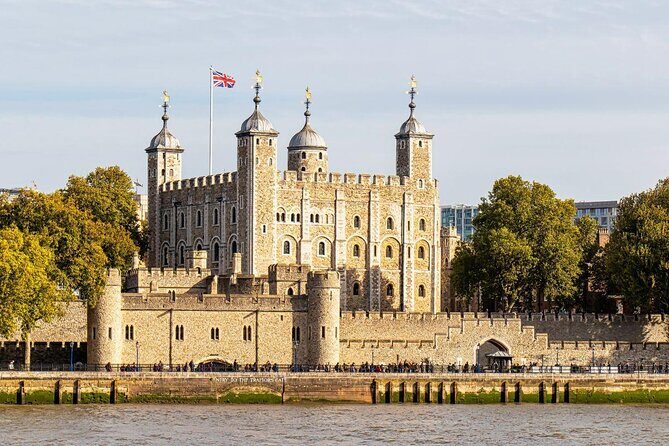
The tour begins at Tower Hill Tram, Trinity Square (EC3N 4TH) at 12:00 pm, and it starts by grounding you in a very specific human story. One of the first stops ties to the Ordnance Office at the Tower of London, where Granville Sharp was employed—an important anti-slavery voice in 18th-century Britain.
This matters because it prevents a common trap: the topic can feel abstract when it’s only discussed as an economic system. By anchoring the narrative in a known figure, the walk shows you that abolition work wasn’t just political policy—it was made by real people working within real institutions.
You’re also in the right geographic mood immediately. Tower Hill has that “this is where power was handled” feel, and the tour uses that atmosphere to set up the rest of the route.
Roman Londinium wall: slavery starts long before the Atlantic
After the Tower-area introduction, you hit one of the tour’s most surprising pivots: the Roman wall of Londinium. This is the kind of sight that most visitors miss because it’s not always presented like a major attraction.
The guide explains that this wall helped mark Londinium’s founding roughly 2,000 years ago. Then comes the uncomfortable reminder: the Romans took Britons as slaves, and the story doesn’t pretend that forced labor belonged only to later centuries.
One detail that sticks with people is the guide’s framing of the wall through an African Roman emperor connection—presented as part of the way the City’s story can be read differently when you stop assuming the past was culturally uniform. Even if you’ve heard Roman London facts before, this angle changes what you notice.
You also get a useful practical outcome: you learn to look for borders and remnants in the urban fabric. The City of London has long physical lines and legal lines, and the walk keeps returning to the idea that those lines mattered.
East India House site: where corporate wealth and slave labor intersect
From ancient London, you jump forward to the 1600s and beyond, using a location that most people would simply pass by: the site where East India House once stood.
This was the headquarters for the East India Company, and the tour makes a clear connection: the company relied on slave labor and trafficked enslaved people from East and West Africa. That’s a key point because it widens the story beyond the usual focus on just one trade route or one port.
The value here is perspective. If you’ve only learned about Britain’s slave past through a single storyline, this stop helps you see how empire-driven commerce created incentives across different networks. You start noticing the “infrastructure of profit” in the city layout: where decision-makers likely met, where wealth was managed, and how power could travel without anyone needing to name it on a street sign.
This is also where the tour’s format helps. It’s walking at street speed, and the story stays grounded in what the city still shows.
Fenchurch Street and Fen Gardens: the Gilt of Cain abolition marker
Next you move into Fenchurch Street, where the walk uses Fen Gardens to point out something easy to overlook: a sculpture called the Gilt of Cain.
The tour connects this artwork to the commemoration of the abolition of the transatlantic slave trade. That turns a common sightseeing habit on its head. Instead of asking what a landmark looks like, you ask what it remembers.
This stop is useful for another reason: it shows you how abolition appears in public space. You’re not only learning dates in a lecture; you’re seeing how memory gets built into parks and corners—sometimes quietly—inside a working financial city.
You can also read our reviews of more city tours in London
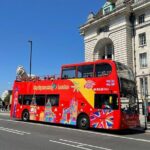





Jamaica Wine House and the Jamaica Coffee House: sugar money in plain sight
Then you reach the Jamaica Wine House area, described as the location of London’s first coffee house, the Jamaica Coffee House.
Here, the guide ties the site to a trade world that many visitors never associate with coffee: it functioned as a hub in the sugar trade and in the plantation economy of the West Indies, supported by enslaved labor.
This is one of those stops that makes you look twice at normal city life. Coffee houses sound modern and everyday. The tour shows how “ordinary” can be the surface layer covering very unordinary violence.
If you’ve ever wondered why abolition took so long, this connection helps. It’s not just moral debate. It’s a deep economic interest with everyday meeting places.
St Mary Woolnoth Church and John Newton: abolition through the pulpit
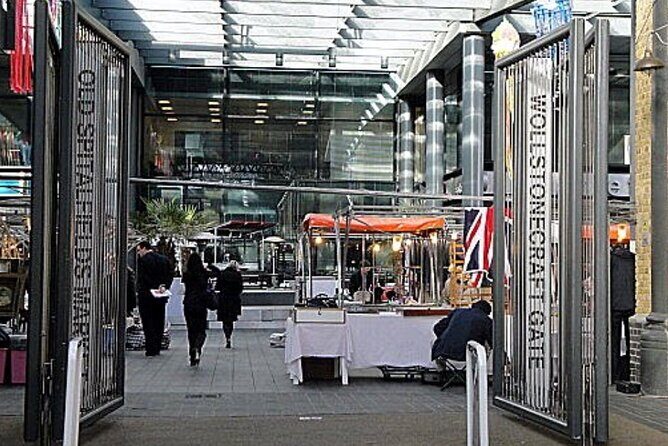
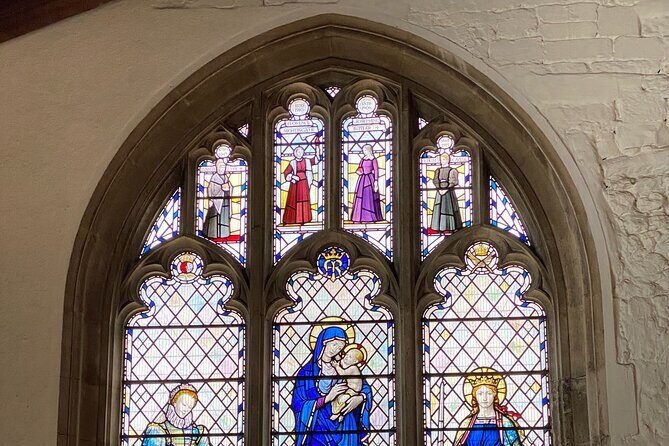
At St. Mary Woolnoth Church, the tour shifts from commerce to conscience, using a real name: John Newton, who was a rector of this church and an abolitionist.
This stop changes the emotional texture without turning the walk into a sermon. You get a reminder that Britain’s anti-slavery movement included persuasion, religion, and moral argument—layers that worked alongside activism and law.
You also get a practical takeaway: churches in the City of London often feel like brief photo pauses, but they can function as story anchors. If you’ve only glanced at the exterior of places like this, the walk helps you see them as points where social change became public.
Bank of England Museum: apology, statues, and civic responsibility

You then come to the Bank of England Museum, and this is where the tour brings the story into the present. The Bank has apologised for involvement by some past directors and governors in the slave trade, and it has promised to remove statues and paintings of them from public display in its Threadneedle Street building.
Even if you don’t plan to go inside every museum in London, this stop gives you something valuable: a live example of how institutions are handling historical guilt and public memory. It’s not only about what happened. It’s about what a place does after it acknowledges harm.
The guide also connects the Bank area to the mechanics of the trade: sheriffs, mayors, and aldermen of the City of London met there as shareholders of the Royal Africa Company. That’s the kind of sentence you remember, because it makes civic leadership feel directly entangled with enslavement—not an indirect byproduct.
And this is where the City of London detail from the guide’s broader framing lands. The City is its own legal entity with its own traditions and civic identity, and the tour points out how that separate civic structure helped those decisions live alongside the rest of the UK’s story.
Finishing near St Paul’s: what to notice on the way out
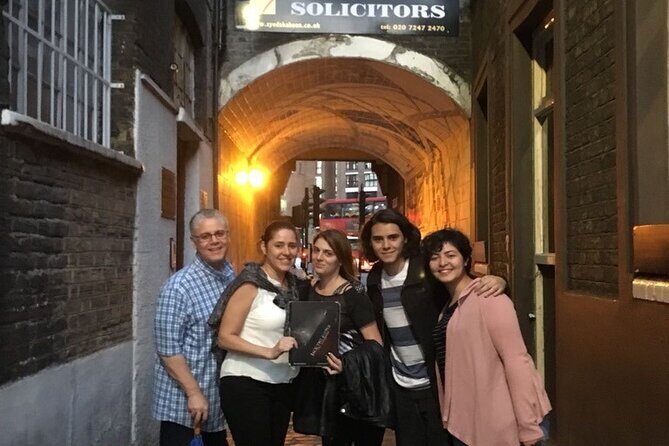
The route ends near the St Paul’s Underground station area (the Central line is noted for access). That’s a smart finish location: it gives you an easy way to get moving after the walk without crossing the city again.
Even if you’re heading onward to another stop, take a moment near St Paul’s to look back at what you’ve just connected. The cathedral is still a cathedral, but now it sits inside a bigger map of power, trade, and moral struggle.
This finish also does something subtle: it keeps the walking loop “simple.” You start with the Tower and move through dense City streets, then you land near one of London’s most recognizable transport hubs.
Price and time: is $27.43 worth 90 minutes of truth?
At $27.43 per person for about 1 hour 30 minutes, this tour is priced like a value-friendly walking experience. But the real question isn’t the math—it’s what you get for your attention.
You’re paying for a concentrated route that covers multiple eras (Roman, corporate empire, abolition, and modern institutional acknowledgement) and multiple landmark types (major civic buildings, churches, and remembered public art). You’re also not stuck in long museum time. The “time value” is strong because the walk is built to keep the story moving.
A couple of practical perks also add value: it uses a mobile ticket, and the itinerary’s listed stops are mostly free to view (marked as admission free where applicable). On top of that, the group size is capped at 35 people, which usually keeps the guide’s pace conversational instead of rushed.
The best use case is when you want a meaningful City of London education without sacrificing half a day.
Who this walk fits best (and who may want a different pace)
This is a good match if you:
- want more than surface-level London sightseeing
- like history that ties to specific buildings and specific names
- enjoy a guide who explains with clarity and a sense of humor
It may feel like a lot if you:
- want a light, upbeat walk with minimal heavy topics
- prefer long museum reading time over street-level context
- get tired quickly in dense City streets
Since the tour requires good weather and you’re outdoors for most of the route, bring basic walking comfort: shoes that handle cobblestones and a plan for shade or rain.
The quick practical checklist before you go
If you’re booking, I’d plan your afternoon around this as a “core learning stop” rather than a bonus photo walk. You’ll get the most from it when you let the guide’s connections land, especially once the route moves from Tower history to company wealth to abolition memory.
Also, consider timing. Starting at 12:00 pm, it’s well-placed before late-day crowds and can slot neatly into a City-centered day.
Should you book the Slavery and City of London Walking Tour?
Yes, if you want a City of London walk that changes how you see the place. This is not just about Britain’s slave past in general terms. It’s about using landmarks and institutional sites to show the links between forced labor, commerce, and abolition—and then pointing you toward modern public accountability, including the Bank of England’s acknowledgement and planned removals.
I’d book it if you enjoy guided conversation and street-level storytelling, and if you’re prepared for history that’s emotionally serious but explained clearly. Skip it only if you want a purely “fun photos” walk with little emotional weight.
FAQ
How long is the Slavery and City of London Walking Tour?
It runs for approximately 1 hour 30 minutes.
What does it cost?
The price is $27.43 per person.
Where does the tour start and end?
It starts at Tower Hill Tram, Trinity Square, London EC3N 4TH and ends at Aldgate Underground Station, Aldgate High St, London EC3N 1AH.
What kind of ticket do I need?
You’ll use a mobile ticket.
How big is the group?
The tour has a maximum of 35 people.
What landmarks are included?
You’ll see major City of London landmarks during the walk, including St. Paul’s Cathedral and stops connected to places like the Tower of London area, the Bank of England Museum, and other City sites.
What’s the weather policy?
The tour requires good weather. If it’s canceled due to poor weather, you’ll be offered a different date or a full refund.
What if I need to cancel?
You can cancel for a full refund up to 24 hours before the experience’s start time.