REVIEW · LONDON
Expert Archaeologist – Private Stonehenge, Bath and Avebury Tour
Book on Viator →Operated by Archaeologist Guided Tours · Bookable on Viator
Megaliths feel less mysterious on a private day. You get a real archaeologist guide and a hotel pickup that keeps the morning drama-free. Plus, it is structured so you can ask questions without losing time to trains, buses, or group herding.
I especially like that you do not just hit the one big name. You also get Woodhenge and Durrington Walls first, so Stonehenge lands in context instead of feeling like random rocks. That makes the whole day feel more like learning than checking boxes.
One possible drawback: you will walk. The pace is comfortable, but there is moderate walking and some uneven surfaces, so bring proper shoes.
In This Review
- Key Things That Make This Tour Worth Your Time
- A Private Stonehenge Day That Actually Feels Like Understanding
- Hotel Pickup and a Two-Role Team (Guide + Driver)
- Woodhenge: The Wooden Prequel to Stonehenge
- Durrington Walls: The Builder’s Village Idea Gets Real
- Stonehenge: How to Use Your Two Hours Wisely (Plus the Ticket Cost)
- Bath Time: A Real Lunch Break in a Roman-to-Georgian City
- Silbury Hill: The Largest Man-Made Tumulus You Can Actually Size Up
- West Kennet Long Barrow: Stepping Into a 5,500-Year-Old Tomb
- Avebury Stone Circle: World’s Largest Circle Meets a Real Village
- Price and Value: What $1,775.64 Buys for Up to 6
- Practical Tips So Your Day Runs Smooth
- Who This Tour Fits Best
- Should You Book This Private Stonehenge, Bath and Avebury Tour?
- FAQ
- How many people are in this private tour?
- What time does the tour start?
- Do you get hotel pickup in London?
- Is Stonehenge admission included in the price?
- Are the other sites included in the admission cost?
- How long is the tour?
- Is walking involved?
- When can you visit the West Kennet long barrow?
- What kind of vehicle is used?
- What if weather changes or plans go sideways?
Key Things That Make This Tour Worth Your Time
- An expert archaeologist guide who can explain what you are seeing in plain English
- Hotel pickup plus a separate professional driver, so your guide can focus on you, not the road
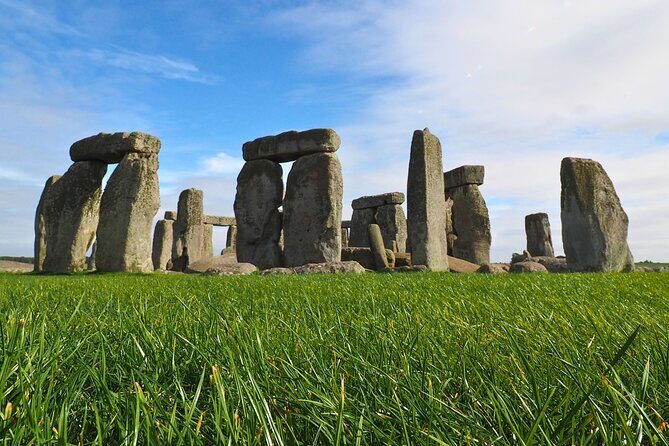
- Multiple megalith sites beyond Stonehenge, including Woodhenge, Durrington Walls, Silbury Hill, West Kennet, and Avebury
- Most admissions are free, with Stonehenge entry as the main extra cost
- Private format for up to 6, letting you move at your own pace and keep questions flowing
A Private Stonehenge Day That Actually Feels Like Understanding
Stonehenge is famous for a reason, but fame can be a distraction. On this tour, the timing and sequencing matter. You start with lesser-known sites that show how the area’s prehistoric people thought, built, and gathered, then you reach Stonehenge with better context in your head.
I like that this is designed for a small group. Up to 6 people means you are not shouting over the loudest person in the crowd. And because it is private, your archaeologist can slow down for the questions that pop up along the way.
You can also read our reviews of more private tours in London


Hotel Pickup and a Two-Role Team (Guide + Driver)
You start early, with pickup around 7:30am from your hotel lobby. The driver waits with a signboard, and you should be ready about 10 minutes before the pickup time. It is a small detail, but it sets the tone for the day: calm, organized, and ready to go.
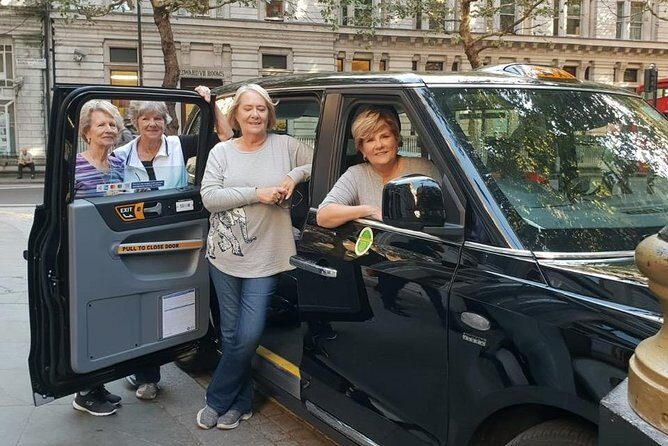
The smartest logistics feature is the separation of roles. You travel in an air-conditioned vehicle (Mercedes E–Class, V–Class, or Sprinter), but you also have a professional driver so your guide can stay fully on the history. That means you spend your time hearing what you came for, not scanning road signs and timing stops.
One more practical perk: you get a mobile ticket. That helps keep things simple once you are out in the countryside and not hunting for paperwork at the last second.
Woodhenge: The Wooden Prequel to Stonehenge
Woodhenge is not as widely photographed as Stonehenge, which is exactly why it works so well on this route. It is a prehistoric monument from the Late Neolithic period, built as six concentric rings of wooden posts. In total, there are 168 posts, arranged symmetrically, and the posts were likely connected by lintels.
Here’s what your archaeologist will help you notice: this site suggests that big ceremonial building did not start with stone. Woodhenge was likely used for ritual purposes, and it may have had alignments related to the movements of the sun and moon. It was excavated in the 1920s, and the posts were found to be made from oak.
The free admission also makes it a low-pressure stop. You can take your time, absorb the scale, and let the idea of prehistoric engineering settle in before you face Stonehenge with its iconic stones.
Durrington Walls: The Builder’s Village Idea Gets Real

From Woodhenge, you head to Durrington Walls, often described as the Stonehenge builder’s village. This is a large henge in Wiltshire with a big circular earthwork—over 500m in diameter—that gives you a sense of how much land-change this culture could manage.
Inside the earthwork are two large timber circles, also tied to ceremonial use. Durrington Walls is believed to date to around 2600 BC, and it is considered one of the earliest known examples of this type of monument. It helps bridge a common gap in people’s understanding: it shows the human scale of construction—community work, ritual planning, and gathering—not just the monument itself.
This stop is free, and it is brief enough to keep the day moving. In a good way, it makes Stonehenge feel less like a standalone mystery and more like the headline in a longer prehistoric story.
Stonehenge: How to Use Your Two Hours Wisely (Plus the Ticket Cost)
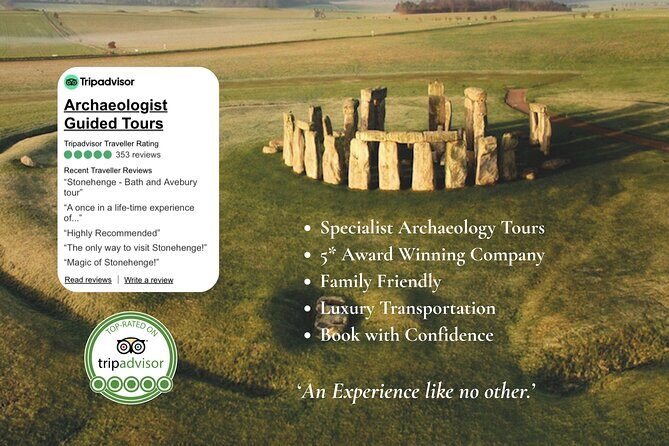
Stonehenge is where you feel the pull, whether you come for history, archaeology, or the sheer weirdness of it all. This tour gives you about 2 hours at the site, which is long enough to hear key explanations and still walk around without feeling rushed.
A big thing your archaeologist can do here is connect the myth to the evidence. Archaeological indications suggest Neolithic and Bronze Age people traveled—sometimes over weeks or months—to stand among the stones. The idea is that this was a shared destination across Britain and even continental Europe.
Practical note: Stonehenge admission is not included. You will need the ticket at £12.70 per person. Since everything else is listed as free, this is the one cost you should budget for up front so there are no surprises at the counter.
Also, plan for weather and wind. Stonehenge is open, and the countryside can switch moods quickly. If you want nice photos, go for layered clothing—you’ll be glad you can adjust without changing your whole plan.






Bath Time: A Real Lunch Break in a Roman-to-Georgian City
After Stonehenge, you drive about 1 hour to Bath. This is one of those moments where the day gives you a breather. You get about 1 hour 30 minutes in Bath, and the tour sets you up for an independent lunch.
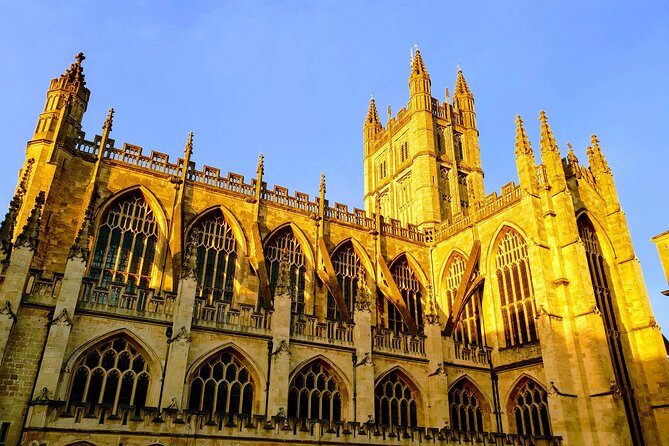
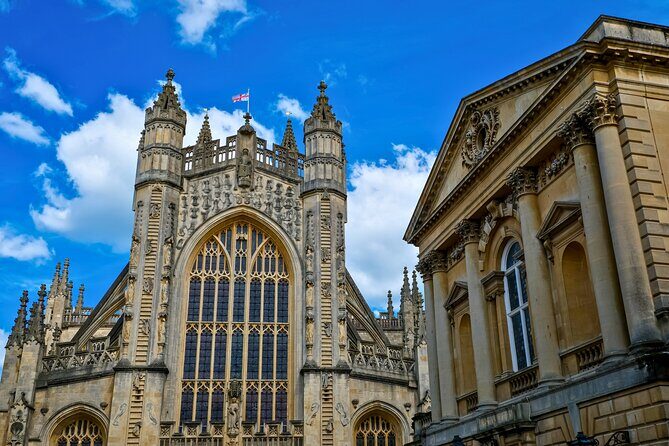
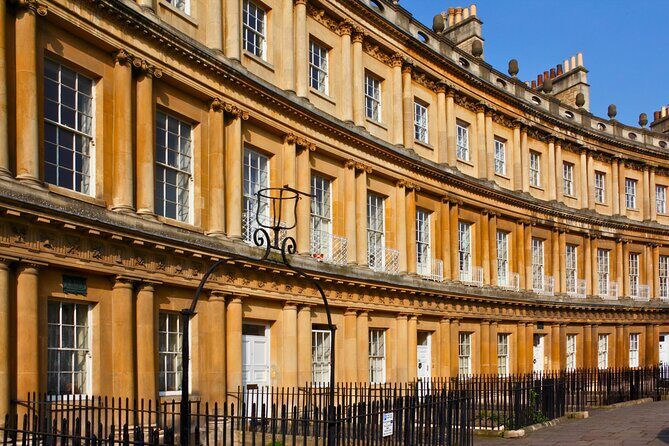
Bath is famous for its Roman hot springs, which were developed into a resort-style city. Then, in the 18th century, visiting Bath became fashionable, and architects transformed the city into the version you see today.
Because your time is limited, you will do best with a simple approach: pick one area to walk, get your lunch, and avoid trying to conquer the whole city on a timed schedule. If megaliths made you want to ask big questions, Bath gives you a different kind of satisfaction—architecture you can see and measure with your own eyes.
Silbury Hill: The Largest Man-Made Tumulus You Can Actually Size Up
Next up is Silbury Hill, described as the largest man-made tumuli in prehistoric Europe. This is not a small mound. It rises 37 meters (about 130 feet) tall, with a base diameter around 160 meters (about 520 feet).
What makes it exciting is how it was built. Silbury Hill is made from chalk and clay, and the construction used a technique called terrazzo, or pounded earth. The method involved mixing water with dry chalk and clay and then pounding it into place using wooden beams or stone hammers. That is ancient engineering without modern machinery.
Your archaeologist can help you connect this mound to the people behind it. A project like this is not casual. It signals organization, commitment, and shared purpose—exactly the kind of human story that turns “interesting rocks” into something more meaningful.
Silbury Hill is admission free on this tour, and it is an excellent change of pace. It is big, visual, and a reminder that prehistoric Britain did massive things that were not always stone circles.
West Kennet Long Barrow: Stepping Into a 5,500-Year-Old Tomb
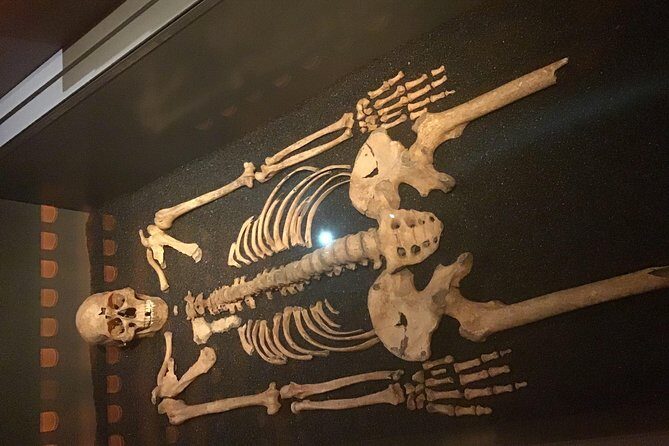
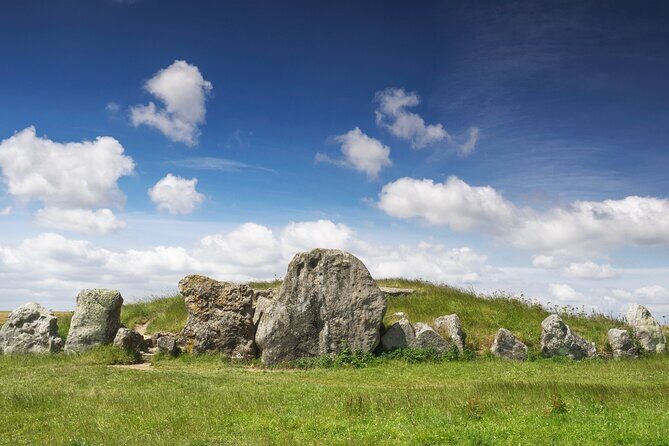
You then visit West Kennet Long Barrow, a Neolithic tomb in the Avebury area. This is a serious age marker: it is about 5,500 years old, dating around 3750 BC.
The barrow includes a burial chamber with an attached passageway and side chambers. Large slabs of stone roof the structure, and the entrance is flanked by two massive upright stones. It is one of the largest and best-preserved examples of its type, and it has seen archaeological excavations in recent years. It is open to the public during the season.
Important seasonal detail: visits to the West Kennet long barrow occur between March 1 and October 31. Outside that window, you would want to expect the visit to be unavailable, even though the rest of the day still runs.
This stop is also admission free, which makes the value here feel especially strong. You are not paying extra to access one of the most tangible, physical pieces of prehistoric life in the whole region.
Avebury Stone Circle: World’s Largest Circle Meets a Real Village
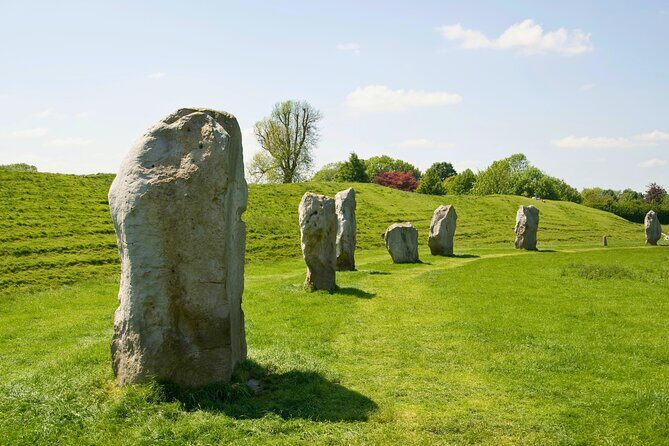
You finish with Avebury, home to the world’s largest stone circle, plus a medieval village inside the circle. It is a different vibe than Stonehenge. At Avebury, stones sit in a living community, and that changes how the place feels in your mind.
Avebury is a UNESCO World Heritage Site. The stone circles include:
- an outer circle (the largest),
- two smaller circles (northern and southern),
- and an avenue.
The stones are thought to have been erected between 2600 and 2400 BC, with possible astronomical or ritual uses. Your time here is not just a quick walk past rocks. You get to explore the stone circles, walk along the avenue, and wrap up with time at the Red Lion pub.
And yes, the pub finish is actually a good way to end. After a long day of monuments, you get a chance to decompress and let the stories you heard earlier land.
Price and Value: What $1,775.64 Buys for Up to 6
The price is $1,775.64 per group, up to 6 people, for about 11 hours including travel time. On a per-person basis, that depends on your group size. With 6 people, it works out to roughly $296 per person, before the Stonehenge ticket.
So is it expensive? It can be, if you are traveling solo or as a couple. But the value is real if you are filling the group and want the day done properly: private transportation from London, parking fees handled, an air-conditioned vehicle, and an archaeologist guide who stays with you all day.
Also, most stops are listed as admission free (Woodhenge, Durrington Walls, Bath, Silbury Hill, West Kennet long barrow, and Avebury). The main ticket cost is Stonehenge at £12.70 per person. If you were doing this with separate tickets and separate transport, the costs can add up fast—plus you would be dealing with schedules instead of spending your energy learning.
One more value signal: this tour is booked about 65 days in advance on average. That usually means it is a popular, limited-capacity format, so planning early helps.
Practical Tips So Your Day Runs Smooth
Here’s how to get the most out of it without turning your day into a logistics game.
- Wear shoes with grip. The tour notes uneven surfaces and moderate walking, so don’t rely on fashion sneakers.
- Dress for weather. It runs in all weather, so bring layers. If you get cold, you’ll stop enjoying the stops.
- Plan for the Stonehenge ticket. It is not included, so budget £12.70 per person.
- Keep luggage light. No large items are allowed, and the luggage compartment is limited.
- Charge your phone. You’ll use a mobile ticket, and you’ll want battery for directions and quick ticket checks.
- Get your start time right. Be ready 10 minutes early for pickup, especially when you are staying in a hotel with a busy lobby.
This is also a nice match for people who prefer a structured day but still want freedom within it. You can explore at your own pace inside the route windows.
Who This Tour Fits Best
This tour is a strong match if you want:
- real expert context (not just a driver with a pamphlet),
- a day that connects multiple prehistoric sites, not one monument in isolation,
- and private, small-group comfort.
It is also a good pick for families with older kids who can handle moderate walking (children must be accompanied by an adult).
If you are very mobility-limited or want zero uneven ground, you might find the walking requirements challenging. The tour is designed for “most travelers,” but it still expects you to get out and move.
Should You Book This Private Stonehenge, Bath and Avebury Tour?
If you like archaeology that you can actually understand, yes—this is one of those rare days where the guide is the star, not the timetable. The big win is sequencing: you see wooden and earthwork predecessors before Stonehenge, then you shift into tombs and earth mounds, and end at Avebury with a lived-in village feel.
I would book it if you have a group (up to 6) and you want the day handled end-to-end: hotel pickup, a separate driver, parking taken care of, and an archaeologist guiding your questions from site to site.
I would pause if you are traveling solo on a tight budget, since most of your cost is the private group price and only Stonehenge adds a separate fee. Also, be honest about your comfort with uneven ground.
FAQ
How many people are in this private tour?
It is a private tour for your group, with a maximum of 6 people.
What time does the tour start?
The start time is 7:30am.
Do you get hotel pickup in London?
Yes. Pickup is offered from the lobby of your hotel, and the driver will wait with a signboard.
Is Stonehenge admission included in the price?
No. Stonehenge admission is not included, and it is £12.70 per person.
Are the other sites included in the admission cost?
The tour listing indicates admissions are free for stops like Woodhenge, Durrington Walls, Bath, Silbury Hill, West Kennet long barrow, and Avebury.
How long is the tour?
It runs for about 11 hours, including travel time.
Is walking involved?
Yes. There is a moderate amount of walking and some uneven surfaces.
When can you visit the West Kennet long barrow?
Visits to the West Kennet long barrow occur between March 1 and October 31.
What kind of vehicle is used?
You travel in an air-conditioned luxury vehicle, such as a Mercedes E–Class, V–Class, or Sprinter.
What if weather changes or plans go sideways?
The tour operates in all weather conditions. For cancellations, free cancellation is offered if you cancel up to 24 hours in advance for a full refund.