REVIEW · LONDON
Jack the Ripper Private Day Time Walking Tour
Book on Viator →Operated by Ye Olde England Tours · Bookable on Viator
Street corners turn eerie in Whitechapel. This private day walk tracks Jack the Ripper’s East End trail through real streets, markets, pubs, and alleyways, with a guide setting the scene from Victorian life to the unanswered questions of 1888.
I especially like two things. First, you get the freedom of a private pace—if you want a photo moment or a longer stop, you can slow down without holding up a crowd. Second, the route stays grounded in specific places tied to victims, inquests, and the few famous clues, so the story lands as a walkable timeline rather than campfire myth.
One consideration: you’ll be on foot for about 3 hours, including cobbled lanes and short hops between neighborhoods. Wear shoes you trust, because East London isn’t built for sprinting from stop to stop.
In This Review
- Key things to know before you go
- Whitechapel to Aldgate: what this 3-hour private walk feels like
- Price and private value: is $240.86 per person worth it?
- Getting oriented: meeting point, pickup, and timing that actually helps
- Stop-by-stop: the Whitechapel murder trail, alleyways, pubs, and markets
- East End orientation: Whitechapel, Spitalfields, and Aldgate
- Durward Street: Mary Ann Nichols and a rare open street moment
- Royal London Hospital area: deaths, inquests, and other famous residents
- Henriques Street: the first moment of the Double-Event night
- Whitechapel Bell Foundry and nearby suspect homes
- Gunthorpe Street: cobbles tied to Martha Tabram and Emma Smith
- Brick Lane Hotel: a key connection to Mary Ann Nichols’ last night
- The White Hart pub area: where the tour starts and old-time connections
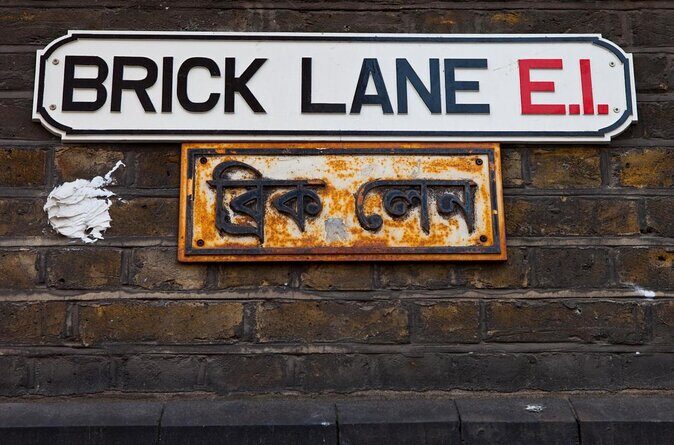
- Brick Lane: passing through the wider Jack era neighborhood
- 29 Hanbury Street: Annie Chapman and the wider chain
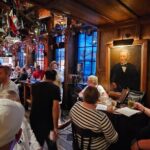
- The Ten Bells: another pub tied to Jack and victims
- London Fruit & Wool Exchange: Mary Kelly and a police legacy
- Brick Lane Mosque/Synagogue context: Jewish community landmarks
- Christ Church Spitalfields: church life in a world of poverty
- Old Spitalfields Market: a market space still in motion
- Petticoat Lane Market: where identity meets rumor
- Goulston Street Food Court: the real evidence spot
- Soup Kitchen for the Jewish Poor: first-stop institutional life
- Mitre Square Garden: the final “exact” stand point
- Aldgate Pump of Death: the optional leg-work finale
- What makes the East End feel real (and not just spooky)
- The unanswered identity: how the tour handles theories without getting lost
- Who should book this private Jack the Ripper walking tour
- Should you book?
- FAQ
- How long is the Jack the Ripper private day walking tour?
- Where do I meet the guide?
- Where does the tour end?
- Is this tour private?
- Is pickup available?
- What language is the tour offered in?
- Are any tickets or admissions included?
- Is transportation to and from the attractions included?
- Can I cancel for a full refund?
- Is this tour suitable for most people?
Key things to know before you go
- Private, just you and your guide: no group shuffle, no forced pace.
- Whitechapel Gallery is your anchor point: you start with orientation in the heart of the story.
- A stop-by-stop route built around people and places: Nichols, Stride, Chapman, Kelly, and more show up as you walk.
- Markets and real street life are part of the tour: you see Whitechapel as it is now, not only as it was.
- Some sights include tickets while many are viewed from the street: know what’s inside vs outside.
- Guides like Kevin or Stephen are often highlighted for local history detail—helpful when you want context beyond the murders.
Whitechapel to Aldgate: what this 3-hour private walk feels like
This is a daylight walking tour through Whitechapel and the East End, built to move at a human pace. You meet at 277 Whitechapel Rd, London E1 1BY, near Whitechapel Underground, then you’ll finish near Aldgate Station (with a short walk back from there). It’s designed to be about three hours, so you’re not doing an all-day marathon—just a focused stretch of London where the past still pushes up against the present.
Your guide starts by putting you in the right frame: Victorian-era Whitechapel, what daily life was like, and why these particular streets became infamous. Then the tour shifts into a walk-along narrative: you follow the geography of the attacks and the investigation, while your guide points out what’s still visible today—street patterns, corners, and landmarks that help you make sense of the timeline.
Because it’s private, the experience is easier to manage. You’re not scanning faces for the next cue or trying to hear over a loud group. If you want to ask questions, you can—especially about how the murders were investigated and why the killer’s identity was never confirmed.
You can also read our reviews of more walking tours in London

Price and private value: is $240.86 per person worth it?
At $240.86 per person for about 3 hours, this isn’t a bargain-basement tour. But it’s priced like what it is: a private route with a local guide and a tightly planned set of stops tied to the 1888 case.
Here’s the value logic I’d use before booking:
- Private pacing saves time and frustration. In a crowded group, you often lose minutes waiting or trying to catch up. Here, you can slow down at the stops you care about most.
- You’re paying for interpretation, not just location dots on a map. The route connects victims, inquests, and police work to streets and buildings you’d miss on your own.
- Part of the itinerary has ticketed access. Some places include an admission ticket, so you’re not just looking through fences and hoping for good sight lines.
If you’re the type who wants London context—markets, churches, and what the area is like now—this format tends to pay off fast. If you only want a quick spooky highlights reel, you might feel the cost is steeper than necessary. Still, for the people who want the full East End story with room to ask questions, private tends to be the right choice.
One more practical note: this tour is booked well in advance (on average 117 days). If your dates are flexible, you’ll often find more options. If they’re not, plan early.
Getting oriented: meeting point, pickup, and timing that actually helps
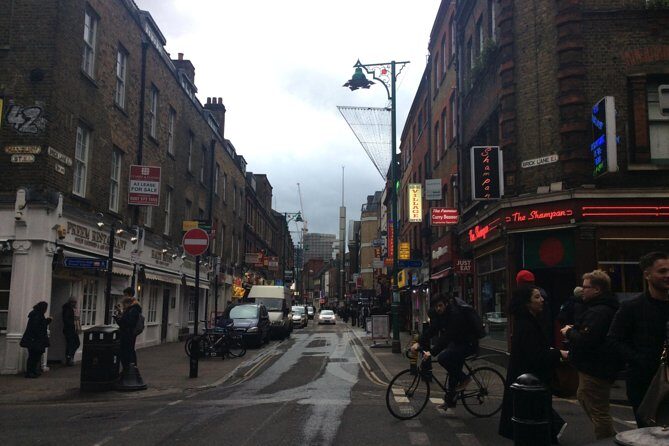
You start at 10:00 am and you’ll be met at 277 Whitechapel Rd. Pickup is offered either at that starting point or at a central London hotel, if you prefer to be collected.
This matters because Whitechapel is easiest when you’re not hunting for the meeting spot after you’re already tired. If you can, meeting at the tour starting point outside Whitechapel Underground usually keeps the start clean and predictable.
There’s also a timing suggestion you should take seriously. The operator notes that private walking routes can be started a bit later (around 10:30–11:00 am) to help you avoid rush-hour crowds and make social distancing easier. If you’re traveling with family or you just hate commuting stress, that later start can improve the whole vibe of the walk.
Stop-by-stop: the Whitechapel murder trail, alleyways, pubs, and markets
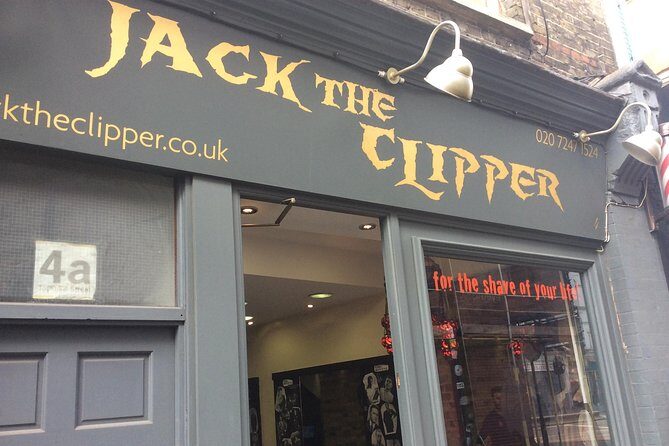
Below is the walking story in the same order you’ll experience it, with why each stop matters and what to watch for.
East End orientation: Whitechapel, Spitalfields, and Aldgate
Your first block explores the streets around Whitechapel, Spitalfields, and Aldgate, including locations strongly linked with the 1888 murders. This is the setup phase—when your guide gives you the map in your head, then starts attaching names and dates to the street layout. An admission ticket is included here for about 20 minutes, so expect a short, focused visit rather than a long wander.
What to watch for: listen for how the guide explains movement through the neighborhood. When you understand the geography, everything that follows makes more sense.
You can also read our reviews of more private tours in London


Durward Street: Mary Ann Nichols and a rare open street moment
Next, you go to Durward Street, described as open for the first time in almost a decade. This stop is tied to the murder location of Mary Ann Nichols and is brief—about 5 minutes—with entry free.
Why it’s special: you’re seeing a specific place connected to the first victim in the Whitechapel murders, not just hearing about her in general terms.
Royal London Hospital area: deaths, inquests, and other famous residents
You then head toward the Royal London Hospital, where the first victim died and where an investigation into a body part revealed terrible findings. Nearby, your guide shows where inquests into several murders took place. There’s also context that the Elephant Man lived here during these years, and decades later, these streets were associated with the Krays.
This stop is about 10 minutes and admission is not included.
Good to know: if you’re sensitive to graphic context, tell your guide you’d like to keep it lighter. You’ll still get the historical framework.
Henriques Street: the first moment of the Double-Event night
On Henriques Street, you’ll find the location where Elizabeth Stride met her end—the first in the infamous Double-Event night of murders. It’s another short visit, about 5 minutes, with entry free.
Why you’ll remember it: the guide uses the street geometry to explain how events unfolded, so you’re picturing the scene instead of reciting names.
Whitechapel Bell Foundry and nearby suspect homes
At the Whitechapel Bell Foundry you’ll look at an East End icon, plus nearby places where a chief suspect lived. This is around 10 minutes and admission is not included.
Practical tip: you’ll want your camera ready here. Even if you don’t go inside, the building and surroundings give you real texture.
Gunthorpe Street: cobbles tied to Martha Tabram and Emma Smith
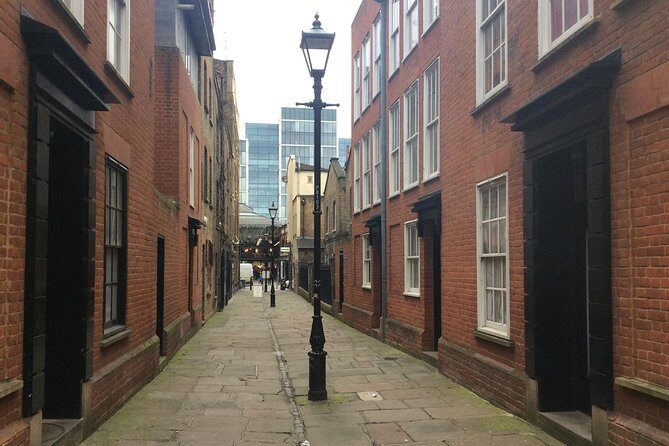
Next comes Gunthorpe Street, described as an eerie cobbled lane. Your guide links it to Martha Tabram, including the idea that she never made it to the end of the street. You’ll also see where Emma Smith was fatally attacked.
This lasts about 10 minutes with entry free.
Wear-your-shoes tip: cobbles can be unforgiving. Bring footwear with grip and give yourself a slower pace on the uneven sections.
Brick Lane Hotel: a key connection to Mary Ann Nichols’ last night
At the Brick Lane Hotel, you’ll stop for about 5 minutes tied to a key spot on Mary Anne Nichols’ last night (spelled Mary Ann Nichols elsewhere in the route). Admission is not included.
This is one of those “small stop, big meaning” moments. The address is the anchor; your guide provides the context you’d otherwise miss.
The White Hart pub area: where the tour starts and old-time connections
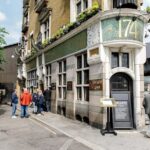
You then visit The White Hart, described as a pub closely associated with Jack and one of the key starting spots. It’s about 5 minutes with admission not included.
Why pubs matter on this route: they were social nodes—places people passed through. Your guide uses that to connect the murders to the neighborhood rhythm, not just to isolated streets.
Brick Lane: passing through the wider Jack era neighborhood
You’ll pass down Brick Lane, once central to Jack’s territory, for about 15 minutes. Entry here is free, and the stop is as much about the area’s community as it is about the crimes.
The guide’s goal is to help you see continuity: the neighborhood changes, but the “why here” logic remains.
29 Hanbury Street: Annie Chapman and the wider chain
At 29 Hanbury St, you’ll reach the site of Annie Chapman’s murder. Your guide also explains nearby deaths that connect indirectly to Jack. This stop is about 10 minutes, with entry free.
What I like about this style: instead of making everything about one moment, the route shows how multiple attacks fit into a broader web of fear and investigation.
The Ten Bells: another pub tied to Jack and victims
Next is The Ten Bells, a pub with one of the strongest associations to Jack and his victims. This is about 10 minutes with admission not included.
Even if you just stand nearby and look, your guide helps you place it in the movement of that night, so it’s more than spooky branding.
London Fruit & Wool Exchange: Mary Kelly and a police legacy
At London Fruit & Wool Exchange, you’ll visit the site tied to Mary Kelly’s murder. Your guide also connects it to the location’s wider importance for police work beyond the immediate case—how procedures and investigation ideas spread.
This is around 5 minutes with entry free.
This is a value stop: it shifts the tour from story to process. You start to see how the case changed how law enforcement thought.
Brick Lane Mosque/Synagogue context: Jewish community landmarks
The tour then touches on Brick Lane Mosque (where in 1888 it was described as Brick Lane Synagogue), highlighting the area’s Jewish community as it grew. It’s about 5 minutes with admission not included.
This stop helps you understand something easy to forget: the victims and neighborhoods weren’t abstract. They were living communities with their own institutions.
Christ Church Spitalfields: church life in a world of poverty
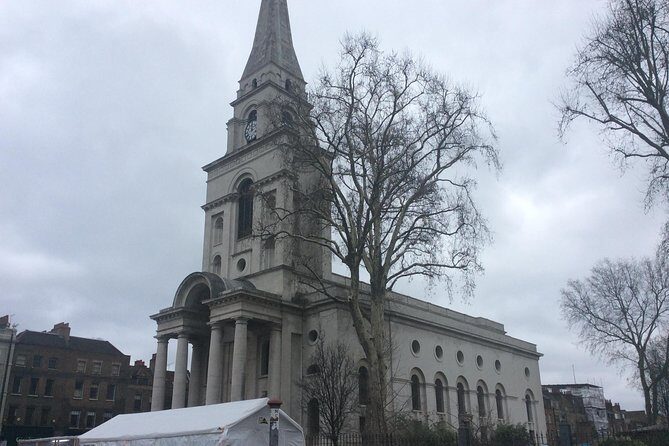
At Christ Church Spitalfields, you’ll see the church that played a pivotal role for people in 19th-century Whitechapel, with focus on the poverty around the area. Expect about 10 minutes and admission not included.
Why it matters: your guide uses the church setting to show how ordinary aid and community structure existed alongside the terror that made the headlines.
Old Spitalfields Market: a market space still in motion
Then you’re back into the neighborhood engine: Old Spitalfields Market. Your guide helps you pass through the same market area that existed in 1888 and relates this space to murder locations you’ll see nearby. This is about 10 minutes, with admission ticket included.
Good to know: markets can be noisy and crowded depending on the time. Since this is a private tour, you won’t have a mob force you along, but you may still want to plan for movement.
Petticoat Lane Market: where identity meets rumor
At Petticoat Lane Market, you’ll stop around 5 minutes with admission ticket included. This is tied to the claim that James Maybrick stayed at the hotel connected to the Diary of Jack the Ripper.
How to approach it: treat it as part of the lore your guide frames, and listen for how the guide separates confirmed facts from theory.
Goulston Street Food Court: the real evidence spot
At Goulston Street Food Court, you’ll visit the place described as the only real evidence left by Jack on the night of the Double-Event murders. It’s about 10 minutes and includes an admission ticket.
This stop is a reality check. The guide uses it to show why people obsess over the surviving clues.
Soup Kitchen for the Jewish Poor: first-stop institutional life
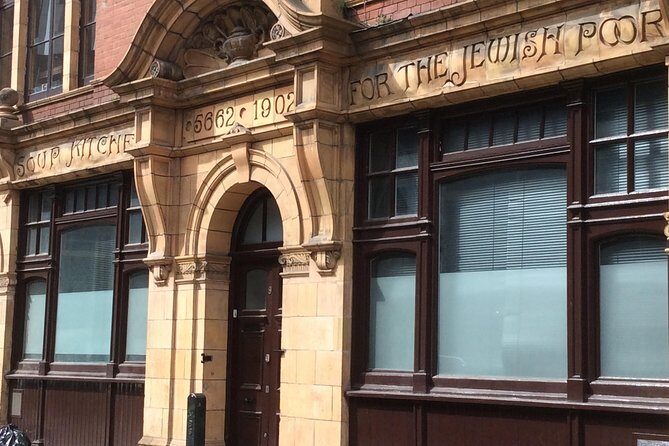
Next is the Soup Kitchen for the Jewish Poor, focused on how Whitechapel was a Jewish area and on visiting the first Jewish soup kitchen. This is about 5 minutes with admission not included.
Why it works: it brings you closer to what the neighborhood needed day-to-day, not only to what it feared.
Mitre Square Garden: the final “exact” stand point
You’ll finish close to the oldest synagogue in the area, at Mitre Square Garden. Your guide frames this stop as the only place where you can be certain you’re standing exactly where Jack stood when he murdered. It’s about 10 minutes with admission ticket included.
This is a strong closing moment because it tightens the story into one final location rather than ending with a vague panorama.
Aldgate Pump of Death: the optional leg-work finale
Finally, there’s Aldgate Pump, sometimes described as the Aldgate Pump of Death. This is about 5 minutes and entry is free, but your guide offers it as a small diversion if your legs are okay.
What makes the East End feel real (and not just spooky)
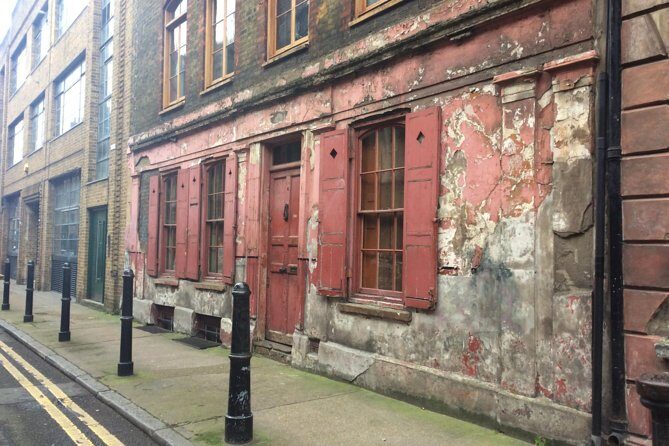
The big win of this tour is balance. You get the Jack the Ripper narrative, yes, but you also get Whitechapel as a lived-in place: markets, street life, community institutions, and buildings that people still use.
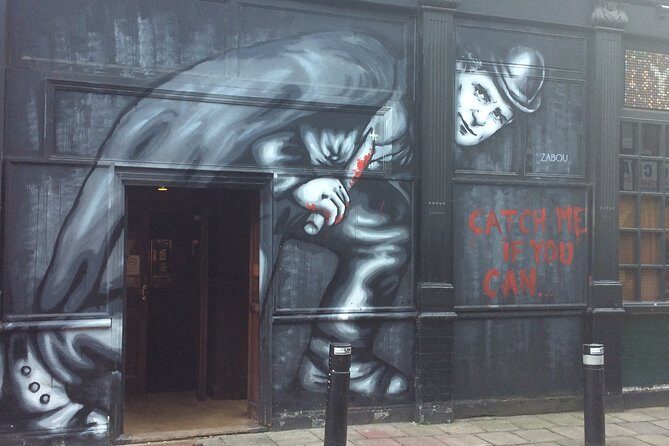
Your guide also uses modern details—like street art and the feel of today’s markets—to help you understand how the neighborhood has evolved. That matters because it keeps the story anchored. You’re not only picturing grim Victorian corners; you’re seeing how those same streets function now.
And if you want a guide who can add extra context, look for the ones that local history fans highlight, like Kevin or Stephen. The consistent theme in their style is that they don’t just recite the murders. They connect East End history to other big London landmarks you might otherwise walk right past.
The unanswered identity: how the tour handles theories without getting lost
Jack’s identity was never confirmed, and this tour leans into that reality. Your guide lays out the facts of 1888 while acknowledging the many theories—without treating them like proven truth.
That approach is important for you because it changes the experience from “spot the suspect” to “understand the investigation.” When you see evidence locations like the Goulston Street clue spot, the unanswered question stops feeling like a gimmick and starts feeling like a genuine historical mystery.
Who should book this private Jack the Ripper walking tour
Book it if:
- You want a private route with time for questions.
- You like history that’s tied to real addresses, not only famous names.
- You’re comfortable walking for about 3 hours and you enjoy street-level context.
You might skip it if:
- You want a short, light overview with minimal walking.
- You’re not interested in Victorian social conditions and the inquest/investigation context.
- Cobblestones and close-quarters streets are an issue for you.
Should you book?
Yes, if you’re aiming for an East End experience that feels organized and grounded. The price is steep, but the private format, the specific stops, and the mix of murder sites with community landmarks make this more than a spooky walk.
If you can do it, I’d also plan your start around the suggested later time window when possible. Then you can enjoy the streets without rush-hour stress—and get the most out of a guide-led story that’s built to be heard clearly at a walking pace.
FAQ
How long is the Jack the Ripper private day walking tour?
It runs for about 3 hours.
Where do I meet the guide?
You meet at 277 Whitechapel Rd, London E1 1BY, near Whitechapel Underground.
Where does the tour end?
It ends near Aldgate Station, at Aldgate High St, London EC3N 1AH. You’ll walk a few minutes back to the station area.
Is this tour private?
Yes. It’s a private tour/activity, and only your group participates.
Is pickup available?
Yes. Pickup is offered either at a central London hotel or at the tour starting point.
What language is the tour offered in?
The tour is offered in English.
Are any tickets or admissions included?
Some stops include an admission ticket, while others are free or not included. The tour includes ticketed visits at several key points, and many landmarks are viewed from the street.
Is transportation to and from the attractions included?
No. Transportation is not included.
Can I cancel for a full refund?
Yes, you can cancel up to 24 hours in advance for a full refund.
Is this tour suitable for most people?
Most people can participate. Service animals are allowed, and the tour is described as near public transportation.