REVIEW · LIVERPOOL
Liverpool Slavery Walking Tour – Commercial Side
Book on Viator →Operated by LiverpoolGO · Bookable on Viator
Liverpool’s story here is about money, paper, and ships. This 2-hour walk connects Liverpool’s banks, cotton trade, and dock world to the machinery that profited from slavery. You’ll move through working streets and iconic buildings, learning how commerce helped make a catastrophe possible.
I especially like the focus on the commercial side, not just the obvious docks and ships. And I like the pacing and scale: a small group (max 12) makes it easier to ask questions and keep the walk from feeling like a hurried slideshow.
One thing to consider: it’s a fast, mostly outdoor walking route with frequent city-street crossings, and the tour depends on good weather—so plan for shoes you can trust.
In This Review
- Quick hits
- Liverpool’s Commercial Side: Why This Walk Works
- Start at the Liver Building and Finish at Thomas Steers Way
- Churches and Churchyards: Where Traders Worshipped and Were Buried
- Hargreaves Building and William Brown’s Banking Power
- Rumford Place and the Confederate Embassy: Liverpool’s Spy and Supply Web
- Cotton Exchange and the Liverpool Rules That Lasted
- Exchange Flags and the Nelson Monument Meaning
- Sir Alfred Lewis Jones: Shipping Monopoly Meets Philanthropy
- Liverpool Water Street Banking Houses: Built on Transatlantic Trade
- Dale Street, Castle Street, and the Narrow Streets That Survived
- Queen Victoria Monument: Where Liverpool Castle Once Stood
- Town Hall and the Depictions on the Frieze
- Graving Dock and the Hidden Work After the Voyage
- Salthouse Dock to Thomas Steers Way: Walk the Stone of Old Dock Life
- James Street Back Streets and a Modern Sculpture Reference
- The International Slavery Museum Option at the End
- Price and Value: What $38.19 Gets You
- Who Should Book This Tour (and Who Might Want a Different Fit)
- Should You Book LiverpoolGO Commercial Side Slavery Walking Tour?
- FAQ
- How long is the Liverpool Slavery Walking Tour – Commercial Side?
- Where does the tour start and where do you end?
- How much does the tour cost?
- Is the tour offered in English?
- Do I need a printed ticket?
- How big is the group?
- Are admission tickets included?
- Does the tour include time at the International Slavery Museum?
- Is the tour near public transportation?
- What happens if weather is bad?
Quick hits
- Small group size (up to 12) keeps the discussion human and question-friendly
- Key indoor stops include timed entry at places like the churchyard and the graving docks
- Confederate-era Liverpool ties show up through Rumford Place and the Confederate Embassy site
- Cotton trading meets finance at the Cotton Exchange and through banking founders like William Brown
- You walk over the physical dock story, including cobbles around Salthouse and Canning Docks
- You can add the International Slavery Museum free after the walk at Merseyside Maritime Museum
Liverpool’s Commercial Side: Why This Walk Works
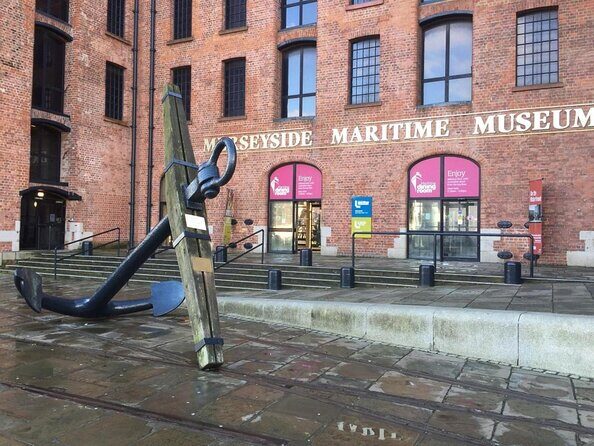
If you’ve only heard Liverpool linked to slavery in broad strokes, this tour gives you the wiring diagram. You’re not just looking at a monument and moving on. You’re tracing how wealth was arranged, measured, insured, financed, and shipped—right alongside the public-facing institutions people still admire today.
That commercial angle matters because it shows how systems function. Enslaved people suffered because of ships and plantations, yes. But Liverpool’s role was also about the professionals who arranged credit, negotiated terms, and moved goods through global networks. It’s an uncomfortable idea, and the tour handles it plainly.
You also get a “big city, real street” feeling. The walk stays tied to addresses and buildings you can still see, not just museum panels. So when the story turns from churches to banks to docks, it doesn’t feel like jumping chapters—it feels like walking through the same city that once did the paperwork for all of it.
You can also read our reviews of more walking tours in Liverpool


Start at the Liver Building and Finish at Thomas Steers Way
The tour begins at the Liver Building in the Pier Head area. You’ll end at 2 Custom House Pl, at the site of Liverpool’s Old Dock area (Thomas Steers Way) within the L1 shopping centre.
A few practical points I like:
- It’s designed for a tight timeframe (about 2 hours), with lots of short stops rather than long museum sessions.
- You get a mobile ticket, which keeps check-in simple.
- It’s offered in English, and the group stays small enough that the guide can adjust to your questions.
Wear proper footwear. Even though each stop is only about 5–10 minutes, the day adds up fast on city streets and historic stone areas. If you’re the type who likes to linger, you may find yourself doing a “head up, read, and keep moving” rhythm.
Churches and Churchyards: Where Traders Worshipped and Were Buried
The first stop is Our Lady and Saint Nicholas Church and Garden. This is where the story starts with something people often don’t expect: many slave traders worshipped here and were buried in the churchyard.
That detail changes the tone. It stops the story from feeling like it belongs to distant villains and puts it back into a lived community space—one that included respected families and institutional religion. You’ll spend a short, focused time here, and it’s likely to be the moment that forces your brain to catch up with the rest of the route.
If you prefer blunt clarity, this stop delivers it quickly. If you’d rather start with architecture or street views, you’ll still get plenty of that later—but this one sets the moral context.
Hargreaves Building and William Brown’s Banking Power
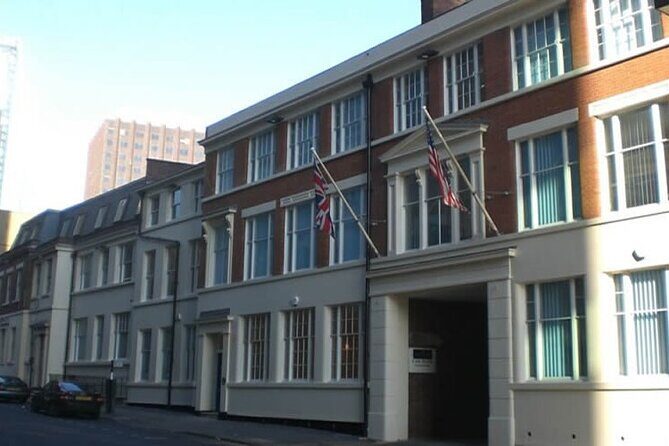
Next up is the Hargreaves Building, connected to cotton broker and banker William Brown. You’ll hear how he founded the Bank of Liverpool and also the merchant banking firm Brown & Shipley.
This is a key stop because it shows that the link to slavery wasn’t only about shipping crews. It was also about finance. When you see a building that looks like it’s built for stability and trust, it hits harder to learn that these same systems helped underpin the trade networks.
A practical bonus: this stop is shorter and more direct, so it won’t overwhelm you early in the walk. It also makes the later dock stops easier to understand, since you’ve already met the banking side of the equation.
Rumford Place and the Confederate Embassy: Liverpool’s Spy and Supply Web

Then you shift to Tithebarn Street, where Rumford Place and the Confederate Embassy of the American Civil War area come into view. The guide’s job here is to connect Liverpool to the Confederate side of the Civil War story—especially through networks like Bulloch’s spy system in Liverpool and how Confederate forces were supplied with weapons and ships.
This is one of the more complex parts of the route, and it can feel like a history lesson that’s wider than slavery alone. But that’s exactly why it’s useful. The transatlantic story didn’t pause in one era. It rolled into the next, carried by ports, financiers, and supply chains.
The drawback? If your main interest is strictly the Liverpool slave-trading years, you might want to mentally label this as the “related machinery” chapter so it doesn’t blur the timeline.

Cotton Exchange and the Liverpool Rules That Lasted
At the Cotton Exchange building, you’ll learn how Liverpool became a world leader in cotton trading. You’ll also hear about the Liverpool Rules—an arrangement that is said to still exist today.
This stop helps you grasp why the city’s commercial identity was so durable. Cotton wasn’t just an item on a manifest. It shaped contracts, standards, and business customs. And when you understand how rules govern trade, you start seeing how moral harm can be hidden inside paperwork and procedures.
Since some stops here are more about what the buildings represent than what you can physically enter, keep your eyes up. Look for the details the guide points out, because that’s where the “why this matters” part shows itself.
Exchange Flags and the Nelson Monument Meaning
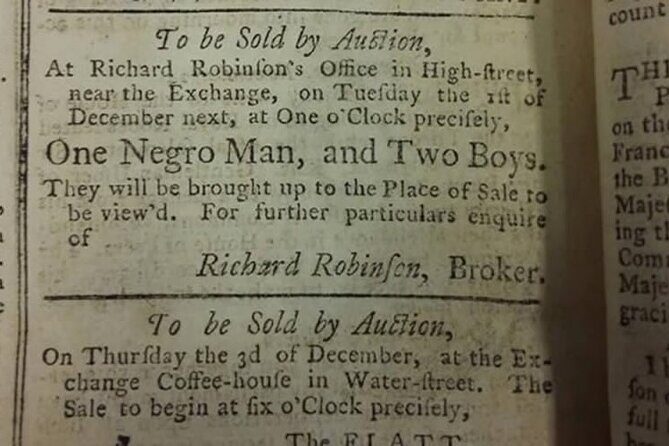
At Exchange Flags, you’ll stand near the original Exchange where traders conducted business—and where enslaved people were sold. This is one of the most direct “commerce in public” moments on the route.
You’ll also see the Nelson Monument and hear about its history and meaning. That pairing is powerful: a civic symbol tied to naval might placed near a place where human lives were treated as market goods. It’s not meant to shock for shock’s sake. It forces comparison—how cities choose which stories to celebrate and which to bury.
Sir Alfred Lewis Jones: Shipping Monopoly Meets Philanthropy
The memorial to Sir Alfred Lewis Jones is where the story turns to wealth creation and how it converts into influence. You’ll hear how Jones obtained vast wealth and the monopoly of the Elder Dempster Shipping Line. You’ll also learn about his philanthropy and how he funded the setting up of the School of Tropical Medicine.
This is an important emotional swing in the tour. You’re not only looking at a past filled with cruelty; you’re also seeing how money gained through coercive systems can later fund institutions people still view as good.
That doesn’t excuse anything. It does explain the world that produced the contradictions. If you like your history with hard edges and no easy moral shortcuts, this stop lands well.
Liverpool Water Street Banking Houses: Built on Transatlantic Trade
Walking through Liverpool Water Street, you’ll see the business and banking sector of the 18th and 19th century Liverpool. Here the theme is how bankers grew wealthy on the back of American trade, and how that money built ornate banking buildings.
You’ll also spot the Martins Bank Building and the old Bank of Liverpool building. This part of the walk is about noticing scale and design. The architecture isn’t just pretty; it’s evidence of how serious the financial world was about projecting permanence.
Because admission isn’t included for some of these stops, your payoff comes from exterior viewing and the guide’s connections. Go with a “look and listen” mindset rather than expecting a museum-style experience.
Dale Street, Castle Street, and the Narrow Streets That Survived
Dale Street brings you into 18th-century streets that escaped demolition during Victorian widening. This is one of the more atmospheric sections because you’re not only learning names and institutions—you’re walking a form of Liverpool that still feels human-scaled.
You’ll also visit a public house that existed (and was likely visited) by Liverpool’s early slave traders in 1726. The idea is simple: these people lived, ate, talked business, and socialized in the same spaces. There’s even a hint that you might enjoy a drink there. I’d treat that as optional, but it’s a strong “place-based” way to understand daily life.
Then you reach Castle Street, learning about buildings connected to merchants and slavery. You’ll also see the building that housed the first branch of the Bank of England outside London. That’s a big deal, because it underlines Liverpool’s standing as more than a shipping town—it was a financial hub.
If you’re craving a more reflective pace, this is where you can take a breath. These are short stops, but the streets help you reset.
Queen Victoria Monument: Where Liverpool Castle Once Stood
At the Queen Victoria Monument area, you’re at the place where Liverpool Castle once stood before being demolished in 1726. St George’s Church was built on the site, and it served as a place of worship for Liverpool mayors and town councillors.
This stop helps tie civic power to the city’s commercial rise. When leadership worshipped at the same place where traders were connected to slavery, it reinforces the tour’s main thesis: the systems weren’t anonymous.
It’s brief, but it’s the kind of stop that sticks because it changes how you interpret the surrounding landmarks.
Town Hall and the Depictions on the Frieze
At Liverpool Town Hall, you see the Mansion House of Liverpool’s Lord Mayor and learn how the building was funded and used. You’ll also see depictions of African people on the frieze.
Admission isn’t included here, so expect more outside observation or views based on what’s open at the time. Still, this is a strong “look carefully” stop because public art can carry political messages across centuries—sometimes without anyone realizing what they’re looking at.
Graving Dock and the Hidden Work After the Voyage
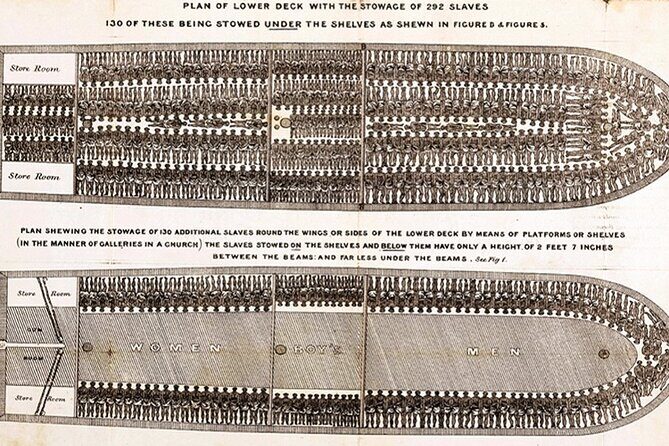
Then you reach the graving docks. The tour explains the process after a slave ship completed the brutal journey from Liverpool to Africa, then to America, and back again to Liverpool. After that, ships needed refitting because of damage and wear. That repair work happened in graving docks, and the original mid-1700s docks remain.
This stop is often the most unsettling, because it’s so practical. The docks aren’t abstract. They’re infrastructure designed to keep ships moving, profitable, and able to return for more voyages. You can spend a short time here, but it’s the kind of stop where your mind keeps rewinding the idea of maintenance as part of the supply chain.
Admission is included at this point, so you’ll get access that you might not get on your own. It’s one of the strongest reasons this tour feels worth the price.
Salthouse Dock to Thomas Steers Way: Walk the Stone of Old Dock Life
Salthouse Dock brings you to the Salthouse and Canning Docks built in quick succession to handle rapidly rising trade with America. Some parts of these docks were constructed using massive stones from Liverpool Castle. You’ll be treading on cobbles and stones that slave traders and merchants trod when attending to ships’ cargo.
That tactile detail matters. It turns the story from “someone else’s history” into “this ground held those footsteps.” It’s also visually satisfying because docks are physical spaces—you can point to the shape of trade.
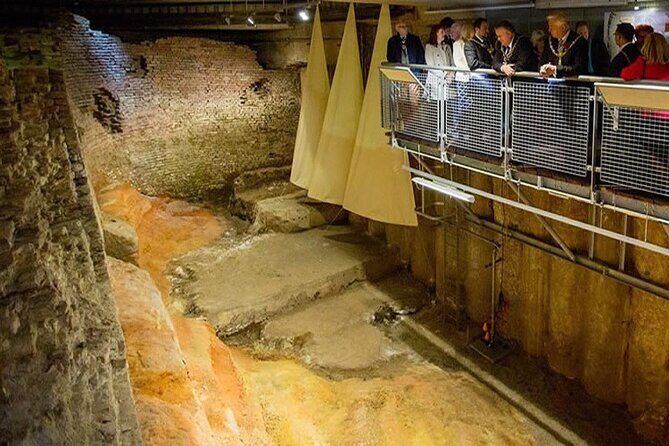
Then at Thomas Steers Way, you’ll learn where Liverpool’s Old Dock was built by Thomas Steers in 1715. There’s an observation window that lets you see part of the old dock, and it’s possible to arrange a guided look at the actual dock beforehand.
This is a good stop for photography-minded visitors. It also rewards curiosity: if you want to understand how a port map translates into real-world movement, this section helps.
James Street Back Streets and a Modern Sculpture Reference
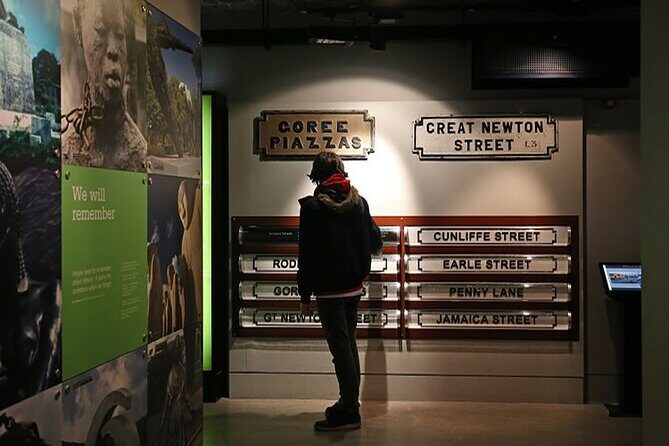
On James Street, you’ll pass through Victorian back streets and see classic architecture of old banking houses. You’ll also visit a modern sculpture that evokes a slave house on Goree Island.
This is where the tour allows memory to echo forward. It’s not only about what happened—it’s about how communities choose to remember. Because the sculpture is modern, it can feel like a pause point after the older institutional spaces around you.
Some of this section is exterior and short, so your main payoff comes from the guide connecting the architecture and symbols back to trade and power.
The International Slavery Museum Option at the End
The tour passes by the Merseyside Maritime Museum, which houses the International Slavery Museum. The good news is you can visit that museum free of charge at the end.
If you want a deeper follow-up, this pairing is smart: the walk gives you street-level context and key institutions, then the museum can supply broader exhibits and objects. It’s a classic “context first, details second” combination.
Price and Value: What $38.19 Gets You
At $38.19 per person for about two hours, you’re paying for more than a guide. You’re buying focused route planning plus access at several stops where admission tickets are included.
The biggest value drivers:
- Entry included at major sites like Our Lady and Saint Nicholas Church and the graving docks
- Multiple stops with admissions built into the schedule, plus several free-to-view exterior locations
- Small group size (max 12), which can make the tour feel less like you’re squeezed into a crowd
Is it budget travel? No. But it doesn’t feel like a money-grab either. It feels like you’re paying for guided interpretation plus ticketed access where it matters.
If you’re visiting Liverpool only once and you want one organized “commercial slavery story” overview, this price can make sense. If you’re already museum-heavy, you might choose to spend money there instead—but then you’d miss the street-level logic of how these places connect.
Who Should Book This Tour (and Who Might Want a Different Fit)
This tour fits you best if:
- You like city history told through buildings, streets, and institutions
- You want the commercial/financial side of the slavery story, not just the ship-and-plantation version
- You enjoy asking questions and keeping a small pace
It may be less ideal if:
- You prefer long museum hours instead of a brisk walk between sites
- You want minimal discomfort and you don’t handle heavy topics in close proximity
- You need very flexible timing, since the route is built around a structured two-hour sequence
A helpful tip: bring the mindset of a researcher. Look at the details the guide points out, then connect them in your head—churchyard to bank, cotton exchange to dock. The tour is built for that kind of mental linking.
Should You Book LiverpoolGO Commercial Side Slavery Walking Tour?
I’d book it if you want a serious but readable introduction to Liverpool’s commercial role in slavery-era wealth. The route ties together banks, cotton trading, dock infrastructure, and Civil War-era connections in a way that helps you understand how systems work, not just what happened.
But I’d choose another option if you’re looking for a light, family-friendly walk or if you dislike walking quickly outdoors in variable weather. Heavy topics are part of the deal here, and the tour doesn’t soften them.
If you’re on the fence, consider this: the small group size, the ticketed access at major sites like the graving docks, and the free option to visit the International Slavery Museum after make it a strong one-two history plan.
FAQ
How long is the Liverpool Slavery Walking Tour – Commercial Side?
It runs for about 2 hours.
Where does the tour start and where do you end?
It starts at the Liver Building on Pier Head (Liverpool L3 1HU) and ends at 2 Custom House Pl (at the site of Liverpool’s Old Dock, Thomas Steers Way, in the L1 shopping centre).
How much does the tour cost?
The price is $38.19 per person.
Is the tour offered in English?
Yes, it’s offered in English.
Do I need a printed ticket?
No. It uses a mobile ticket.
How big is the group?
The tour has a maximum of 12 travelers.
Are admission tickets included?
Some stops include admission tickets, while others are free to view. For example, admission is included at Our Lady and Saint Nicholas Church and the graving docks, and some stops are free like the Cotton Exchange building.
Does the tour include time at the International Slavery Museum?
The tour passes by the Merseyside Maritime Museum, which houses the International Slavery Museum, and you can visit it for free at the end of your tour.
Is the tour near public transportation?
Yes, it’s near public transportation.
What happens if weather is bad?
The tour requires good weather. If it’s canceled due to poor weather, you’ll be offered a different date or a full refund.