REVIEW · LONDON
Run the Thames Bridges
Book on Viator →Operated by Secret London Runs · Bookable on Viator
London bridges plus an app guide is a smart combo. This self-run along the Thames uses GPS-triggered audio so the prompts follow your movement, not some rigid group pace. And you get the kind of London-view payoff that usually requires paying for a proper guided tour—great landmarks, plus the story behind them.
Two things I really like: you can run at your pace (even pause and finish on another day), and if you drift off route the GPS is designed to bring you back. The main drawback to consider is that this is best for people with at least moderate fitness and comfort running outdoors for stretches that can feel exposed, especially in hot or windy weather.
In This Review
- Why This Thames Bridges Run Works So Well
- The GPS-Triggered Audio: Your Pace, Not a Group Pace
- Price and Time: Is $23.31 Good Value?
- Starting at Tower Hill and Ending Outside Putney Station
- The Route in Plain English: London Bridge, Tower Bridge, and the Thames West
- Stop 1: London Bridge Segment (About 30 minutes)
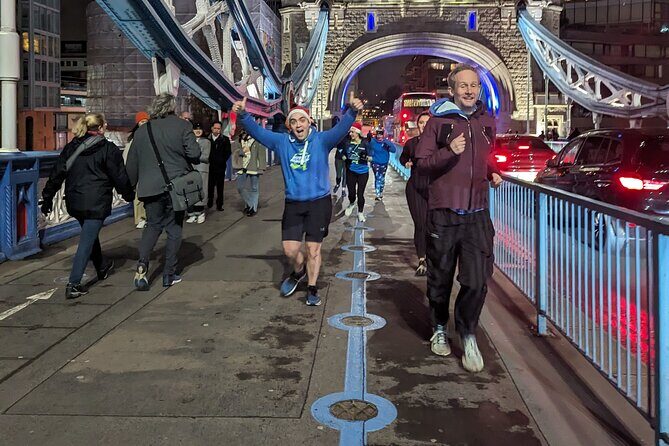
- Stop 2: Tower Bridge Segment (About 20 minutes)
- Past Shakespeare’s Globe (About 10 minutes travel time)
- Big Ben and Westminster Bridge Crossing (About 20 minutes travel time)
- Houses of Parliament View on the South Bank (About 20 minutes travel time)
- Stop 3: Waterloo Bridge Segment (About 30 minutes)
- Stop 4: Battersea Power Station (About 20 minutes)
- Stop 5: Battersea Park Visibility (About 20 minutes)
- Tate Modern and Tate Britain Pass-By Moments (About 5 minutes each)
- What’s Special About the Landmark Timing (and Why You Don’t Feel Lost)
- Can You Split It Across Days? Yes, If That’s Your Style
- Pacing, Fitness, and What to Wear for a Thames Run
- Accessibility and Group Size: Private, Simple, and Focused
- Who This Thames Bridges Run Is Best For
- Should You Book Run the Thames Bridges?
- FAQ
- FAQ
- How long does the Thames Bridges run take?
- Where does the run start and end?
- Is it a private tour?
- What language is the tour offered in?
- Do I need admission tickets for the landmarks?
- What if I get off the route?
- Is the tour refundable if I cancel?
Why This Thames Bridges Run Works So Well
This tour is built for a simple idea: London is best seen on foot, but you still want history in the right place and at the right time. Instead of locking you into a timetable, it turns the walk-run into a moving audio guide. You get landmarks as you pass them, and the audio cues are designed to keep you flowing.
The biggest win is the GPS-triggered system. You’re not constantly checking your phone map while you’re breathing hard. The prompts are timed to where you are on the route, and the system is meant to reduce that annoying moment of staring at your screen and second-guessing which way to go.
The GPS-Triggered Audio: Your Pace, Not a Group Pace
Secret London Runs outfits this experience with audio guidance that follows you along the river crossings and landmark stretches. That means you’re not waiting for faster runners or slowing down for slower ones. You can jog, walk, mix both, and take a minute when you want a better photo.
One of the most praised parts of these GPS-style runs is the clarity of the prompts. You’ll hear route guidance and factual commentary in a way that’s easy to separate. That matters because bridges and river paths in central London can look similar when you’re moving. Clear guidance helps you keep your momentum without turning your run into a navigation project.
You can also read our reviews of more tours and experiences in London.



Price and Time: Is $23.31 Good Value?
At $23.31 per person, this is priced like an activity, not like a transport-and-ticket day. The math comes down to what you’re getting: a self-guided run lasting about 2 to 3 hours, with GPS navigation support and audio history built around major Thames landmarks.
Also, the landmarks on the route are listed as free to access, so you’re not paying separate admission fees just to see the highlights. You’re essentially paying for the route planning and the audio layer that explains what you’re running past.
If you’ve ever tried to piece together a bridge-to-bridge walking plan on your own, you already know the hidden cost: time. This tour gives you structure and reduces the effort of figuring out where to be at each moment.
Starting at Tower Hill and Ending Outside Putney Station
You begin at the Sundial at Tower Hill (Tower Hill, London EC3N 2LY). The tour ends immediately outside Putney Station on Putney High Street (London SW15 1RT).
That end point is a big practical advantage. Putney is well connected, so finishing your run and getting back into London is usually straightforward. The tour is also listed as near public transportation, which helps if you’re planning a morning start.
The running window is 05:00 AM to 10:00 PM, every day. That gives you flexibility depending on weather and crowds—early can be quieter, later can be scenic if you’re running with daylight.
The Route in Plain English: London Bridge, Tower Bridge, and the Thames West
This is a Thames corridor run with major bridge crossings and landmark viewing moments. The itinerary is laid out as a sequence of timed segments, with landmark stops and short travel transitions between them.
Here’s how the route reads on the ground.
Stop 1: London Bridge Segment (About 30 minutes)
London Bridge is the early anchor. You’ll run over it and pick up context on the area around the bridge and nearby river spaces.
Why this works: London Bridge is a fast way to understand how the Thames shaped the city’s movement and trade. It also breaks your run into a clear before-and-after moment: you’re not just running along water; you’re crossing a milestone.
What to watch: This is often where the run starts feeling real. If you’re pacing for endurance, keep your effort controlled here rather than going out too hard.






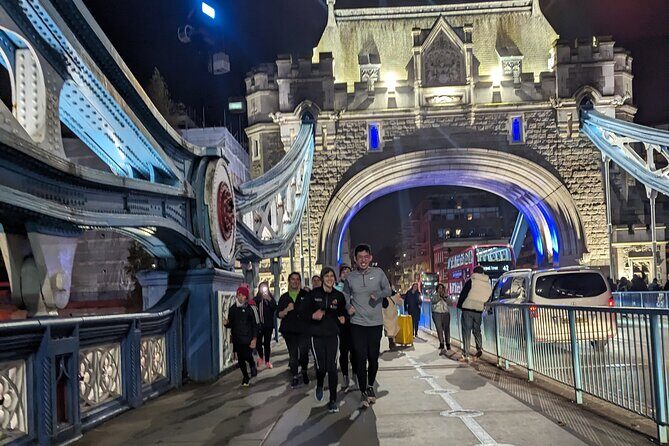
Stop 2: Tower Bridge Segment (About 20 minutes)
Next comes Tower Bridge, which is also described as the run’s beginning point. Tower Bridge is impossible to miss, and the route also connects you to the Tower of London area as you go.
Why this works: Tower Bridge is the “postcard” bridge, but the value here is the pairing: you’re seeing the famous bridge while the audio helps you connect it to the history and geography of the Tower of London area.
Photo tip: You’ll get enough time to look up and around, but you’re still moving. If you stop for a long photo, just make sure you restart at a pace that doesn’t wreck your later timing.
Past Shakespeare’s Globe (About 10 minutes travel time)
As you continue, the route takes you by Shakespeare’s Globe theatre. This is a quick fly-by moment, but it adds variety: theatre and culture appear right on the river route instead of only bridge architecture.
Why this works: It reminds you the Thames isn’t just infrastructure. It’s also where London’s arts and public life show up.
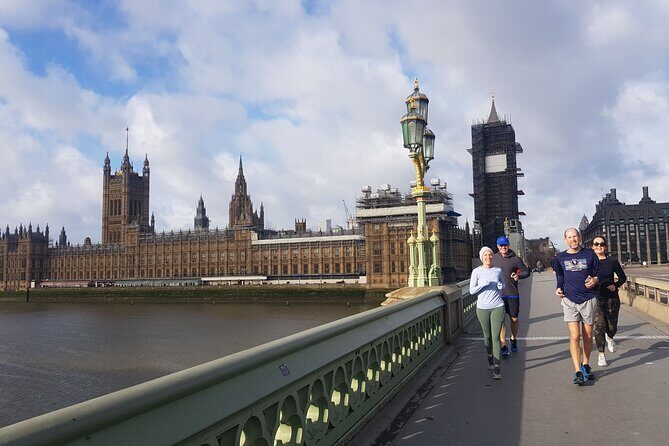
Big Ben and Westminster Bridge Crossing (About 20 minutes travel time)
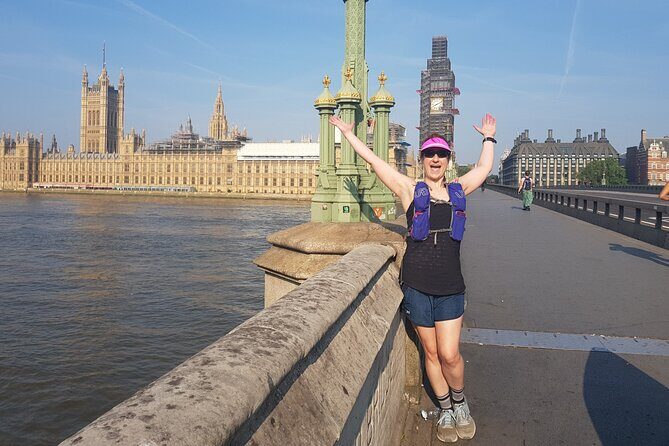
The route runs past Big Ben as you cross Westminster Bridge.
Why this works: Westminster Bridge is a wide, dramatic crossing with strong views. Crossing here naturally creates a change in scenery and direction, which helps keep the run mentally interesting.
What to expect: This part can feel more exposed because central river corridors often open up for views. If it’s windy, plan for that and dress for it.
Houses of Parliament View on the South Bank (About 20 minutes travel time)
You’ll have full visibility of the Houses of Parliament while you run across the South Bank.
Why this works: This is one of the easiest “wait, that’s right there” moments on the route. The audio context makes it more than just sightseeing through your peripheral vision.
Stop 3: Waterloo Bridge Segment (About 30 minutes)
Then you reach Waterloo Bridge. After crossing, you also run through the nearby Southbank area.
Why this works: Waterloo to Southbank is where the Thames feels like a corridor of public space. The route keeps you moving, but the environment around you tends to feel livelier and more varied than a pure riverside track.
Stop 4: Battersea Power Station (About 20 minutes)
The run explores the new Battersea Power Station development as you go.
Why this works: Battersea Power Station is one of those London landmarks that changes how you see the river. Instead of only “old London,” it’s modern reuse and redevelopment right alongside the water.
Stop 5: Battersea Park Visibility (About 20 minutes)
You’ll also have views of Battersea Park from across the Thames while you run along the north bank.
Why this works: This is a nice balance after heavy landmark clusters. Park views can also help you reset your breathing and pacing as the route stretches west.
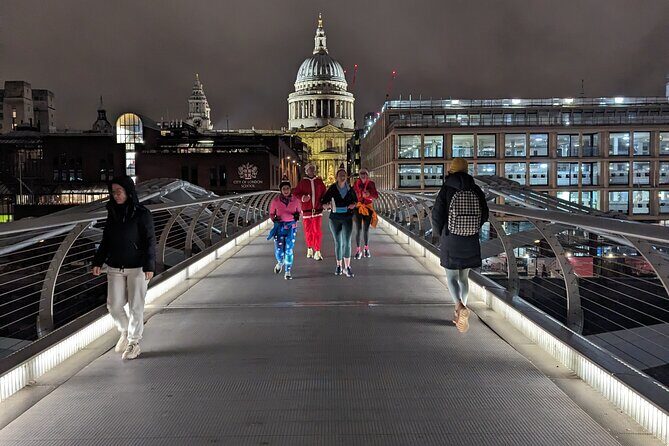
Tate Modern and Tate Britain Pass-By Moments (About 5 minutes each)
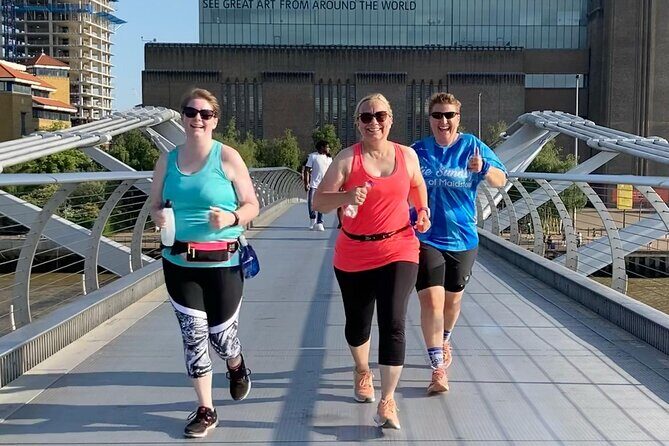
The route also includes passing by Tate Modern and Tate Britain.
How to think about it: These are quick sighting moments rather than a sit-down museum visit. Still, it helps break up the run with cultural landmarks that match the “London by water” theme.
What’s Special About the Landmark Timing (and Why You Don’t Feel Lost)
The tour is structured around short landmark segments and travel transitions, with GPS prompts supporting you between points. That timing matters because a bridge-and-river route can get repetitive fast if you don’t have narrative checkpoints.
Here’s the practical benefit: each bridge crossing is like a chapter break. You get the bridge, you get the context, and then you move on. It keeps your mind engaged enough that the time passes faster than you’d expect for something that’s mainly movement outdoors.
If you go off-route, your GPS will guide you back. That’s not just convenience; it protects your run plan. It keeps you from turning an hour of effort into a detour that costs you your energy and your day.
Can You Split It Across Days? Yes, If That’s Your Style
One of the standout highlights is that you can break up the run across several days if you need to. That’s ideal if you want the landmark experience but don’t want to force a long run in one go.
This is also helpful for visitors doing London in a busy schedule. You can pick a morning with better weather, then finish later instead of cramming everything into a single tight window.
Pacing, Fitness, and What to Wear for a Thames Run
This experience is set for people with moderate physical fitness. That means it’s not a couch-to-5k event, but it’s also not pitched as a hardcore training session.
You’re outdoors, mostly exposed to the elements, and the route includes bridge crossings that can feel like natural pacing points. Dress for wind and sun as much as for comfort. If it’s a warm day, plan for hydration even if you’re not running nonstop.
Also, you’ll want basic running or walking gear: shoes with grip, layers you can adjust, and headphones that stay secure. The tour is offered in English, and you’ll be listening as you move, so audio volume matters. Set it so you can hear prompts clearly without blocking your ability to notice where you’re stepping.
Accessibility and Group Size: Private, Simple, and Focused
This is listed as a private tour/activity, meaning only your group participates. That’s a big deal for people who prefer personal space, quiet listening, or a schedule that doesn’t get hijacked by a larger group’s rhythm.
Service animals are allowed, and the start and end points are described as near public transportation. It’s designed to be practical for visitors and locals alike.
Who This Thames Bridges Run Is Best For
This tour fits you if you like structure but not crowds.
- You’re a runner or strong walker who wants GPS guidance instead of a map project.
- You enjoy history in small, timed pieces while moving, not a long lecture after you park.
- You want a route that hits famous bridges and cultural stops without extra museum planning.
It might be less ideal if you’re looking for a fully hosted, face-to-face guide experience. This is an audio-led self-run, so the interaction is between you and the app—not between you and a person.
Should You Book Run the Thames Bridges?
I’d book it if you want a smart way to see the Thames bridge corridor with less stress and more story along the way. The value is strongest when you like the idea of following a carefully planned route at your pace while GPS keeps you on track.
Skip it if you don’t want to run or walk for 2 to 3 hours, or if you prefer a traditional guided walking tour with lots of on-the-spot Q&A. For everyone else, it’s a very efficient London day: major landmarks, clear navigation support, and audio history timed to your movement.
FAQ
FAQ
How long does the Thames Bridges run take?
The experience is listed as about 2 to 3 hours total, with travel time added to that duration.
Where does the run start and end?
It starts at the Sundial at Tower Hill (London EC3N 2LY) and ends immediately outside Putney Station on Putney High Street (London SW15 1RT).
Is it a private tour?
Yes. It’s listed as a private tour/activity, so only your group participates.
What language is the tour offered in?
The tour is offered in English.
Do I need admission tickets for the landmarks?
Admission tickets are listed as free for the stops shown in the itinerary.
What if I get off the route?
The GPS is designed to guide you back if you go off-route.
Is the tour refundable if I cancel?
No. The experience is non-refundable and cannot be changed for any reason.
If you tell me your approximate pace (run vs walk) and which day/time you’re thinking, I can suggest how to plan your start so the route feels enjoyable instead of rushed.