REVIEW · BIRMINGHAM
Experience Birmingham – The Historic Highlights
Book on Viator →Operated by The Birmingham Historic Touring Company · Bookable on Viator
Birmingham can feel like two cities at once: proud skyline ambition and heavy Civil Rights memory. This 3 to 4 hour small-group tour is built to move you between both sides fast, with air-conditioned comfort and admission tickets for the key stops.
I especially like how you get more attention from your guide because the group maxes at 3. And you get a practical pace that covers more than a walking loop without feeling like you are just being shuffled along.
One thing to keep in mind: the vehicle comfort varies, and there have been reports of pet hair or smell in the car, so if you have allergies (or you just hate stale odors), it is worth asking about the vehicle before you go.
In This Review
- Quick hits worth knowing
- Entering Birmingham’s “big picture” without the guesswork
- Getting your bearings at Vulcan Park and Museum
- Heaviest Corner on Earth: Birmingham’s early skyscraper flex, explained
- Morris Avenue Victorian district: cobblestones and gaslights
- Alabama Peanut Co.: the quick snack stop with a story twist
- The city in motion: the food revolution and a controversial artwork
- Vulcan to the antebellum era: Arlington Antebellum Home and Gardens
- The Oldest Ballpark area and Civil Rights surroundings
- 16th Street Baptist Church: the day’s emotional anchor
- Price and logistics: is $100 worth it?
- Who this tour suits best
- Should you book Birmingham – The Historic Highlights?
- FAQ
- How long is the Birmingham Historic Highlights tour?
- What is the price per person?
- Where does the tour start and end?
- Is pickup available?
- Is the tour ticket mobile?
- Are admissions included?
- How many people are in the group?
- What language is the tour offered in?
- What kind of fitness level do you need?
- Are service animals allowed?
Quick hits worth knowing
- Small group (max 3) keeps the stops conversational and helps the guide adjust on the fly
- Air-conditioned rides plus snacks and bottled water make the schedule feel easier than you expect
- Heaviest Corner on Earth gives you a street-level lesson on Birmingham’s early skyscraper boom
- Vulcan Park & Museum mixes big views with a fun science/history angle
- 16th Street Baptist Church and the Civil Rights sites are the emotional center of the day
- $100 price point can be a good deal when you factor in included admissions and pickup
Entering Birmingham’s “big picture” without the guesswork
This tour is aimed at one thing: helping you understand Birmingham quickly, using real places instead of generic facts. You start at Vulcan Park and Museum, then work your way through early-20th-century downtown ambition, well-preserved Victorian streets, and major Civil Rights landmarks.
The smartest part for me is the pacing. You cover multiple areas in one morning, but you still get real time at stops like Vulcan Park & Museum and 16th Street Baptist Church. It feels like you are getting the highlights, not just checking boxes.
It also helps that the tour runs with an air-conditioned vehicle and includes snacks and bottled water. In the Alabama heat, that matters. You’re less likely to show up frazzled, and you’re more likely to actually enjoy the stories instead of thinking about water and shade all day.
Finally, the day’s structure balances “see it” stops with “understand it” stops. The skyline corner and Victorian streets help you see the city’s old identity. Then the Civil Rights sites give you the reason Birmingham’s story is world-famous, and painful.
You can also read our reviews of more historical tours in Birmingham

Getting your bearings at Vulcan Park and Museum
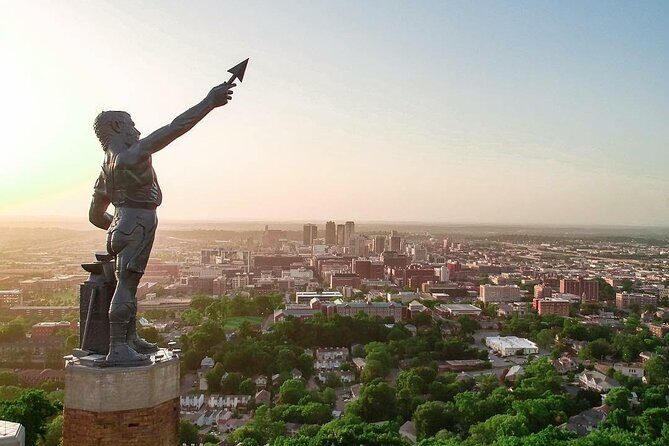
The day starts at Vulcan Park and Museum at 1701 Valley View Dr. That is a good move because Vulcan is Birmingham’s recognizable visual anchor. The experience here is not just about taking a photo. You get the largest cast iron statue in the world and a viewpoint that helps you read the city from above.
Plan for about 30 minutes at Vulcan Park & Museum, with admission included. The guide should connect what you see to the bigger Birmingham pattern: the city’s confidence, its industrial identity, and how that ambition sits alongside the harder chapters.
There’s also a detail that sounds almost like a trivia detour but lands well in real life: you learn about the moon that never sets. If you like learning that feels a little unusual, this is one of those stops where the information sticks because the setting is memorable.
Practical tip: wear comfortable shoes and be ready for sun. Even if the tour has breaks, you’ll want to walk around the park area and take in the views while you can.
Heaviest Corner on Earth: Birmingham’s early skyscraper flex, explained
Stop 1 is the Heaviest Corner on Earth at the intersection of 20th Street and 1st Avenue North. This name is tied to the early 1900s when four of the South’s tallest buildings appeared in a tight stretch of time.
You’ll see this as a quick but meaningful briefing stop, about 10 minutes, and it’s free. The buildings are part of the point:
- Woodward Building (1902), 10 stories
- Brown Marx Building (1906), 16 stories
- Empire Building (1909), 16 stories
- American Trust and Savings Bank Building (1912), 21 stories
What I like about this stop is that it teaches you how cities grow upward, not just outward. At street level, those old towers can feel like background. With a guide tying them together, you start seeing Birmingham’s skyline as a story of timing, money, and ambition.
Possible drawback: because the stop is short, you’ll want to stay mentally switched on. If you tend to wander during quick photo stops, you could miss the thread of the explanation.
Morris Avenue Victorian district: cobblestones and gaslights
Next up is Morris Avenue, often described as the best-preserved Victorian district in the city. You’ll get around 20 minutes here, and admission is free.
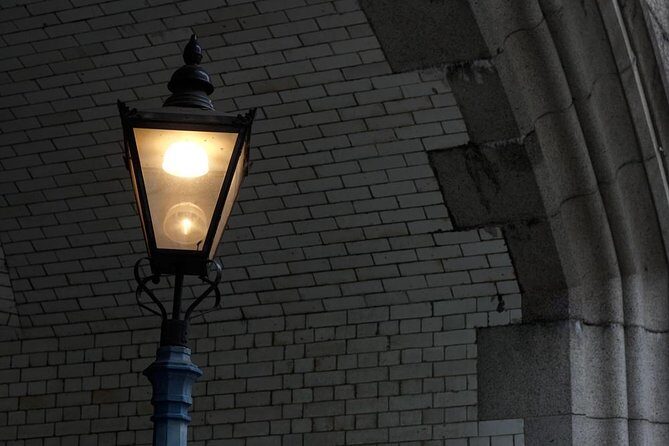
This is the kind of neighborhood stop that works because the details do the talking. Expect gaslights and cobblestone streets, plus the feeling of stepping into an earlier Birmingham rhythm. Even if you are not a hardcore architecture person, you’ll notice how streetscape and preservation change what a city feels like to walk through.
What you should look for during your short time:
- how the street layout guides movement
- how the buildings maintain a consistent old style
- how the area still reads as a “real” neighborhood, not just a theme set
A small note on expectations: 20 minutes is enough to absorb the look and hear the main framing, but it is not enough for deep wandering. If you want longer neighborhood time, think of this stop as an orientation stop that sparks curiosity, not a full-day exploration.
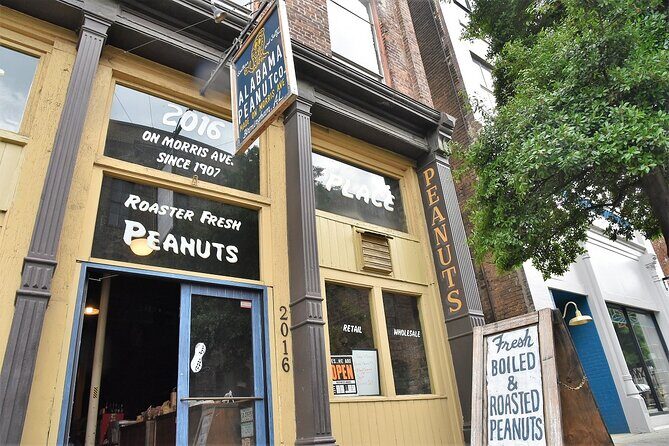
Alabama Peanut Co.: the quick snack stop with a story twist
Then you swing by Alabama Peanut Co. for about 5 minutes. It is free, and the concept is simple: grab a bag of roasted peanuts while you’re in the preserved Victorian area.
This stop works best if you treat it like a flavor break and a memory builder. You’ll learn that the building has its own mysterious history, and the snack becomes part of the day’s texture. It’s also a practical move. When you have a packed schedule, a quick edible reset can make later, heavier stops feel easier.
If you have food restrictions, do not guess. You’ll want to check what is being roasted or packaged in the moment, since the tour only frames it as a quick stop.





The city in motion: the food revolution and a controversial artwork

Between the big-ticket landmarks, the route includes passes through areas that show how Birmingham is changing. You’ll hear discussion about the city becoming a major food destination and also see an intriguing, controversial artwork.
These two elements are easy to skip over if you prefer only “major museum” stops. But I like them because they keep the tour honest. Birmingham is not just a set of historical plaques. It is living, arguing, evolving.
How to get value here: even if you do not love modern art, pay attention to why people debate it. The purpose is not to decide who is right in the van. It is to help you understand how memory, identity, and public space collide.
Vulcan to the antebellum era: Arlington Antebellum Home and Gardens
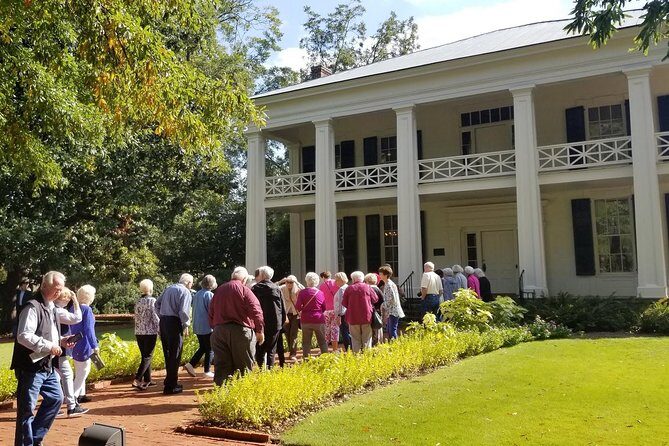
Stop 4 is Vulcan, then later you move to Arlington Antebellum Home and Gardens. Expect about 45 minutes here, and admission is included.
Arlington is described as the only remaining Southern Plantation House, and that detail matters. A site like this can turn into a simple photo opportunity if you treat it that way. The better approach is to let the guide anchor you in what the building represents, and how it fits into the larger Birmingham and Southern story.
This is a longer stop than most roadside stops, so you can actually slow down. You’ll likely see how the architecture is laid out and how the gardens support the overall presentation. Even if you focus on the visuals, the guide’s framing should steer you toward understanding the site as history, not as romance.
A consideration: plantation sites can be emotionally heavy for many people, even when the focus is architectural. If you know you need lighter moments to balance the day, this is a good place to mentally pace yourself.
The Oldest Ballpark area and Civil Rights surroundings
One of the most interesting timing quirks is that the tour area includes the Oldest Ballpark in America. It’s associated with both White and Negro League teams and has been used as a location in several movie productions.
But there’s a clear catch: that ballpark area is currently undergoing renovations for a major League game in 2024 and is closed to visitors. That means you should expect more viewpoint-style learning and street-level context than full entry into the ballpark.
Still, this area is also described as a center of the Civil Rights struggle that defined Birmingham in the 60s and continues to matter. And based on what you’ll hear from the guide, this is where the day connects sports, segregation, and civic change in one geographic pocket.
One smart strategy for you here: listen for how the guide ties the ballpark’s mixed-team legacy to the wider Civil Rights fight. It turns the stop from a movie-location trivia moment into a real-world example of how culture and law collided.
If you’re a sports fan, this could be especially satisfying even with closures. You’ll still get the context, and you’ll be able to see why people care about the site’s past.
16th Street Baptist Church: the day’s emotional anchor
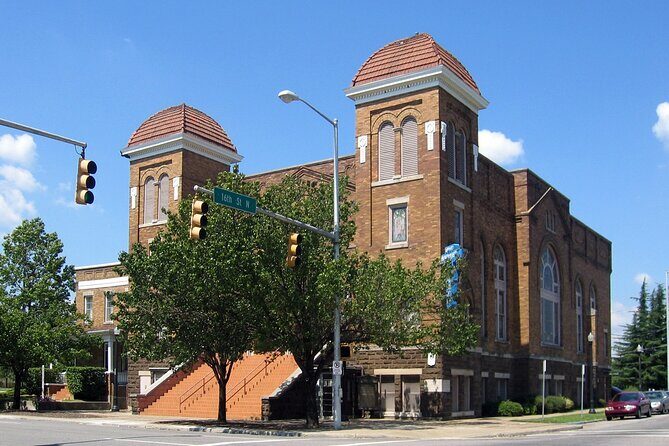
Stop 6 is 16th Street Baptist Church. Admission is included, and you’ll have around 30 minutes.
This is the moving, essential part of the tour. The church is the site of the bombing that killed four children and helped cement the Civil Rights Act of 1964. If you only remember one stop from the whole day, make it this one.
I like that the tour doesn’t rush past it. 30 minutes is enough time to stand in the place, listen, and let the guide’s explanation land. It also gives you time to steady yourself before heading back through the rest of Birmingham’s story.
A practical note: this is not the time for multitasking or treating it as a quick photo opportunity. If you go in with respect and a calm pace, you’ll get more meaning out of it.
Price and logistics: is $100 worth it?
The price is $100 per person for about 3 to 4 hours. On paper, that might feel like a lot for a short city tour. In practice, it can make sense because you’re paying for four things at once:
- transportation in an air-conditioned vehicle
- small-group attention (max 3 travelers)
- snacks and bottled water
- included admission fees at major stops
Some stops are free (like Heaviest Corner on Earth and Morris Avenue), while others include tickets (like Vulcan Park & Museum, Arlington Antebellum Home and Gardens, and 16th Street Baptist Church). When you bundle transportation plus admissions, you’re not just buying commentary. You’re buying time and access.
Also, the pickup system is designed to reduce friction. The tour starts at Vulcan Park and Museum, but you can be picked up from any downtown Birmingham area hotel or B&B. That makes the day easier if you are staying centrally.
One more value point: the reviews’ strongest praise centers on the guide’s ability to keep things engaging and flexible, and on how the tour covers a lot without feeling rushed. That matters for your day. If your time is limited, this tour is built for efficiency.
If you have specific accessibility needs or prefer a very comfortable vehicle, be aware that a couple of past comments point to comfort issues with the van. It’s a reasonable consideration before you book.
Who this tour suits best
This experience fits best if you want a guided overview that still feels human. The small-group setup is ideal if you like asking questions and getting back-and-forth rather than watching a slideshow from the window.
It is also a strong match if you want to understand Birmingham’s full story in one morning: skyline beginnings, Victorian streets, the city’s modern shift, and the Civil Rights core that shaped national history.
You should consider another format if:
- you want an all-day walking tour where you control every step
- you are very sensitive to vehicle comfort issues
- you have allergies and need reassurance about pet hair or odors
If your goal is to get bearings fast and see the places that matter, this tour is built for you.
Should you book Birmingham – The Historic Highlights?
I’d book it if you want a guided route that balances movement with real time at the landmarks, especially the stops tied to Civil Rights. The $100 price is easier to justify when you count included admissions, the air-conditioned ride, snacks, and the small-group feel.
I would hesitate only if vehicle comfort and cleanliness are dealbreakers for you. If that’s your concern, send a quick note about the vehicle and ask what you can expect.
If you like thoughtful explanations, a pace that covers a lot without rushing the emotional sites, and you want Birmingham’s story in one organized morning, this tour is a smart bet.
FAQ
How long is the Birmingham Historic Highlights tour?
It runs about 3 to 4 hours.
What is the price per person?
The price is $100.00 per person.
Where does the tour start and end?
It starts at Vulcan Park and Museum, 1701 Valley View Dr, Birmingham, AL 35209, USA, and it ends back at the meeting point.
Is pickup available?
Yes. Pickup is offered from any downtown area in Birmingham, including hotels and B&Bs.
Is the tour ticket mobile?
Yes, you’ll use a mobile ticket.
Are admissions included?
Admission is free for some stops, and included tickets are listed for others such as Vulcan Park & Museum, Arlington Antebellum Home and Gardens, and 16th Street Baptist Church.
How many people are in the group?
The tour has a maximum of 3 travelers.
What language is the tour offered in?
The tour is offered in English.
What kind of fitness level do you need?
You should have a moderate physical fitness level.
Are service animals allowed?
Yes, service animals are allowed.