REVIEW · BIRMINGHAM
The Sacred Ground of 1963: Birmingham’s Civil Rights Struggle
Book on Viator →Operated by The Birmingham Historic Touring Company · Bookable on Viator
Four little girls changed America. This 1 to 1.5 hour Birmingham walking tour moves through the places where the Civil Rights struggle hit hardest, and where Black life shaped the city long before national attention arrived. You’ll cover key stops tied to protest, community, culture, and the businesses that kept people going.
I love the local perspective I’m drawn to here, especially the way guide Wilhelmina ties street-level details to what life was like in Birmingham during that turbulent decade. I also like the tour format: a walking route that keeps you moving while you connect the dots between downtown streets, theaters, and memorial sites.
The one drawback to plan for is emotional intensity. You’re visiting sites linked to real violence, including the bombing at 16th Street Baptist Church, and you’ll want to be ready for heavy material.
In This Review
- Key things to know before you go
- What this 1963 Birmingham walk is really about
- Starting at 3rd Ave and 20th St N: the route that maps power
- Eddie Kendrick Memorial Park and the city-within-a-city story
- Carver Theater and the Prince Hall lodge: entertainment with political weight
- Kelly Ingram Park: sculptures that force you to slow down
- 16th Street Baptist Church: the bombing site you can’t treat lightly
- A.G. Gaston Motel and the Lyric Theatre: where first-class life fit under segregation
- Timing, walking pace, and what to wear downtown
- Price and value: what $65 buys you here
- Should you book? Here’s my call for the right traveler
- FAQ
- How long does the Birmingham Civil Rights walking tour take?
- Where does the tour start and end?
- Is the tour offered in English?
- How much does the tour cost?
- Are admission tickets included for each stop?
- How many people are on the tour?
- What walking fitness level do I need?
- Are service animals allowed?
- What happens if the weather is bad?
Key things to know before you go
- A tight downtown route: Most stops are quick, so the story stays focused even in 60–90 minutes.
- Wilhelmina’s lived-in storytelling: A Birmingham native guide brings context that’s hard to get from plaques alone.
- Culture and civil rights side-by-side: You’ll see theaters, masonic links, and community spaces alongside protest landmarks.
- Kelly Ingram Park’s sculptures hit hard: They’re designed to make the struggle feel immediate.
- Not all admissions are included: 16th Street Baptist Church requires your own admission ticket.
- Moderate walking pace: You’ll cover several blocks, so comfortable shoes matter.
What this 1963 Birmingham walk is really about
This tour is built around one idea: Birmingham’s Civil Rights story doesn’t live only in textbooks. It lives in street corners, churches, and blocks that once functioned like separate worlds. In just about an hour and a half, you’ll connect policy, segregation, community institutions, and protest into one moving timeline.
The value here is the way the route balances the dramatic moments with the daily infrastructure of Black life. You’ll hear about things like zoning policies and hospitality, then you’ll swing into cultural hubs like theaters and performance circuits. That mix helps you understand that the movement wasn’t only marches and headlines. It was also neighborhoods, local leaders, and institutions people depended on.
You can also read our reviews of more tours and experiences in Birmingham.

Starting at 3rd Ave and 20th St N: the route that maps power
You begin at the corner of 3rd Ave and 20th Street North (285 20th St N, Birmingham, AL 35203). From there, the walk follows 20th Street toward 4th Ave North, focusing on Black contributions to the founding of Birmingham and how the city grew around them.
This first stretch matters because it sets the pattern. The tour doesn’t jump straight to 1963. It gives you earlier context—especially the 1926 Red Line Zoning laws—which shaped who could live where and what economic chances were available. That’s the kind of background that makes later scenes make more sense, because segregation wasn’t just an attitude. It was engineered into the city.
You’ll also hear about the Palm Leaf Hotel and the Chitlin’ Circuit. If you’ve only ever heard the Civil Rights Movement as a national political story, these stops widen your lens. They show how Black entrepreneurship, entertainment, and hospitality created strength and community, even under strict limits.
Eddie Kendrick Memorial Park and the city-within-a-city story
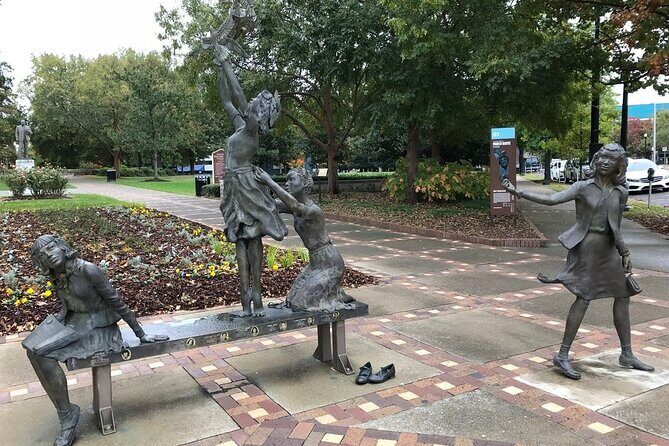
Next you’ll head to Eddie Kendrick Memorial Park, where you’ll see statues dedicated to Eddie Kendrick, described here as a local founder of the Temptations. It’s a quick stop, but it’s a smart one. It reminds you that Civil Rights history isn’t separate from arts history. In many places, music and performance helped define identity and provide emotional relief during hard times.
After that, the tour points out remnants of Birmingham’s once dynamic city-within-a-city. You may make additional stops depending on how the route fits that day, including Nelson Brothers and Green Acres. Even if you don’t get inside anything, the meaning of this part is in what you can still see and what you can’t. The gaps are part of the story.
This section centers on the Civil Rights National Historic Monument area. I like it because it helps you understand that this isn’t just a list of landmarks. It’s a defined historic landscape with multiple layers of social life, built space, and activism.
Carver Theater and the Prince Hall lodge: entertainment with political weight
At Carver Theater, you’ll visit one of the best-known Black theaters in Birmingham—now connected with the Jazz Hall of Fame. The message is clear: entertainment wasn’t passive. It was community leadership, a gathering place, and a cultural anchor.
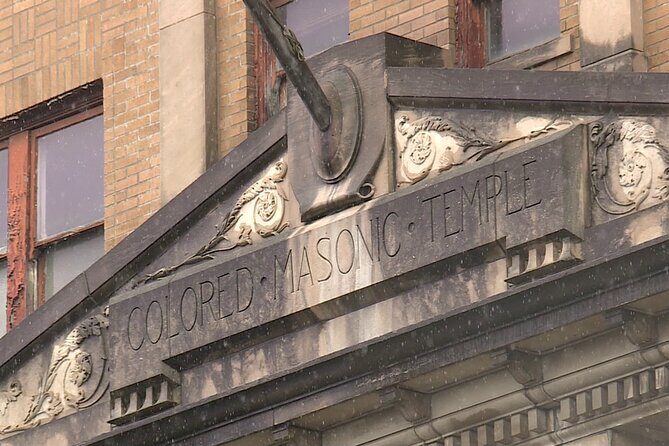
You’ll also see the Prince Hall “Colored” Masonic Lodge. This is one of those details that can be easy to skip if you’re only looking at the big, famous sites. But for me, it’s exactly the kind of local institution that explains how organizing happened. Fraternal networks and community spaces often provided structure, connections, and trust during the years when outsiders tried to control the narrative.
This stop is brief, but it works well if you want a tour that stays moving. You’ll be close enough to feel the importance of the buildings, without spending half your day indoors.
Kelly Ingram Park: sculptures that force you to slow down
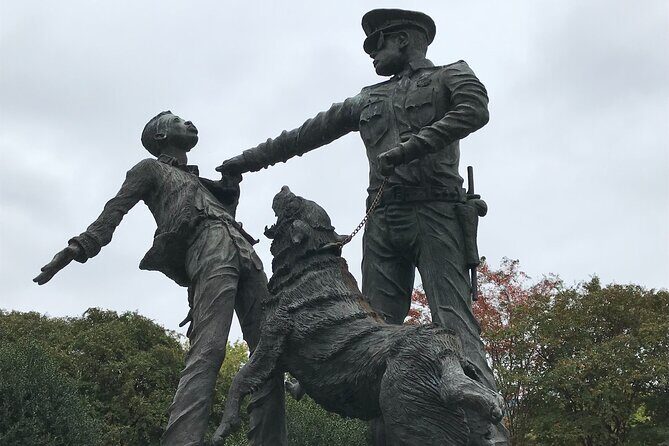
Kelly Ingram Park is the emotional center of the walk. It’s an improved public park filled with sculptures depicting the civil rights struggle in Birmingham. It’s hard to describe the effect before you see it, but the whole point is that the art doesn’t let you stay comfortable. It’s meant to show tension, confrontation, and resolve.
This park also served as an assembly spot for activities involving the Southern Christian Leadership Conference and other groups. That context matters. You’re not just looking at monuments after the fact. You’re standing at a place where movement energy gathered and decisions likely happened in real time.
Practical note: plan for this as the stop where your phone camera may suddenly feel less important. Give yourself a little space here. You’ll get more out of the story if you’re willing to stand and read and look.



16th Street Baptist Church: the bombing site you can’t treat lightly
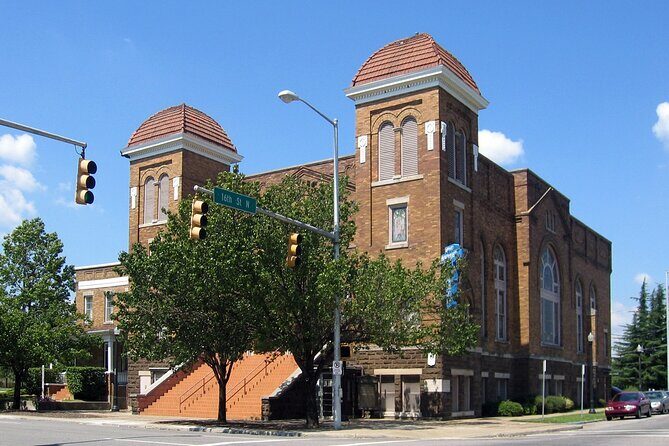
Then you reach 16th Street Baptist Church, one of the most powerful symbols of the Civil Rights Movement in the U.S. The church is marked by its tragic history: the 1963 bombing that killed four young girls. The site remains a focal point for the ongoing journey toward racial equality.
This is also the stop where admission is not included in your tour price. If you want to spend extra time here, you’ll need your own ticket. I’d treat this like the one “anchor” you plan around. The surrounding route stays efficient, but this moment deserves patience.
Even if you already know the story from school, seeing the place in person changes the scale. The building and the memorial elements make it feel less like a chapter and more like a wound the community carried forward. That’s why it can be emotional. It’s also why the tour is so meaningful for people who want more than surface-level learning.
A.G. Gaston Motel and the Lyric Theatre: where first-class life fit under segregation
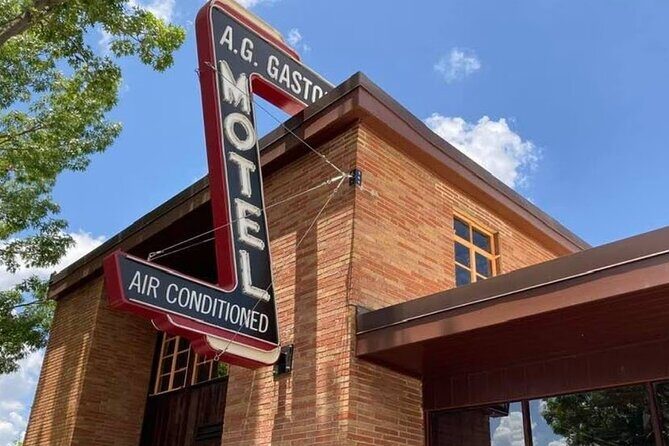
After the church, the tour shifts into two stops that show another side of Birmingham. First is the A.G. Gaston Motel, built by entrepreneur Arthur George Gaston. The motel provided first-class lodging and dining for African American travelers, and it opened in 1954. The architect is listed here as Birmingham-based Stanley B. Echols.
This matters because it reframes the Civil Rights story as something more than protest. It includes the practical work of building alternatives—places where you could sleep, eat, and travel with dignity despite exclusion. When the tour points out that the lodging and dining were designed to be first-class, I think it helps you feel how much people were trying to protect normal life in abnormal conditions.
Finally, you’ll see the Lyric Theatre, described as Birmingham’s only standing theater that allowed mixed audiences, though still segregated. That wording is important. It tells you the “progress” wasn’t clean or equal. It was constrained by the same systems that enforced segregation everywhere else.
These two stops are a good reminder that Civil Rights didn’t move in one straight line. It moved through lawsuits, organizing, and also through building and survival.
Timing, walking pace, and what to wear downtown
This tour typically runs 1 hour to 1 hour 30 minutes, with short time windows at each stop. Most stops are around 10–15 minutes, which is ideal if you want a structured overview without turning your day into a full museum marathon.
You should plan for moderate walking. The route is downtown and designed to be manageable, but you’ll still be on your feet. Comfortable shoes are a must, especially if you’re traveling in cooler or rainy weather, since this experience requires good weather.
One practical tip: the meeting point at 285 20th St N can be easier if you arrive a few minutes early and take a careful look at your surroundings. A past visitor noted that it’s close to a parking garage about a block away, which can help if you’re driving.
Price and value: what $65 buys you here
At $65 per person, this isn’t a free-stroll tour. But it also isn’t priced like an all-day museum program. For the length and the number of major sites covered, the best part of the value is the human piece—time with a guide who can connect policies and culture to what you’re standing near.
Also, many stops are listed as admission ticket free. The major exception is 16th Street Baptist Church, where you’ll need your own admission ticket. So your money mostly goes to guidance, context, and the walking route that keeps you from feeling lost among downtown buildings.
You’ll also benefit from the small-group feel. The tour caps at 30 travelers. That size is big enough for logistics, but small enough that questions don’t always disappear into the crowd.
And if you’re a bit of a planner, this is on the kind of schedule that gets booked ahead. On average, it’s reserved about 22 days in advance, so it’s smart to lock in your date before your plans harden.
Should you book? Here’s my call for the right traveler
Book this tour if you want a short, high-impact overview of Birmingham’s 1963 Civil Rights story—one that also explains the earlier forces shaping the city. It’s especially good for anyone who likes local storytelling and wants to see cultural institutions alongside protest landmarks. The walk format is ideal if your time is limited and you still want more than a drive-by.
Don’t book it if you’re looking for a “light” history stop. The tour includes the bombing site at 16th Street Baptist Church, and Kelly Ingram Park can be emotionally intense. You don’t need to be fragile, but you do need to be ready.
Also, keep your expectations realistic about timing. This experience relies on good weather and can be canceled if conditions aren’t right. If the date is non-negotiable for your trip, I’d build in Plan B—especially around rainy seasons.
If you match that profile, I think you’ll feel the payoff quickly: you’ll come away with a clearer map of Birmingham, plus a deeper understanding of how community life and civil rights pressure were intertwined.
FAQ
How long does the Birmingham Civil Rights walking tour take?
Plan on about 1 hour to 1 hour 30 minutes, depending on how the walk flows and time spent at stops.
Where does the tour start and end?
It starts at 285 20th St N, Birmingham, AL 35203. It ends back at the meeting point.
Is the tour offered in English?
Yes, the tour is offered in English.
How much does the tour cost?
The price is $65.00 per person.
Are admission tickets included for each stop?
Most stops are listed as free admission tickets. Admission for 16th Street Baptist Church is not included.
How many people are on the tour?
The tour has a maximum of 30 travelers.
What walking fitness level do I need?
You should have a moderate physical fitness level since it is a walking tour.
Are service animals allowed?
Yes, service animals are allowed.
What happens if the weather is bad?
The experience requires good weather. If it’s canceled due to poor weather, you’ll be offered a different date or a full refund.