REVIEW · LONDON
Private DJ Class
Book on Viator →Operated by London Sound Academy · Bookable on Viator
Mixing sounds better when it is private. This private DJ class in London gives you hands-on time with Pioneer DJ decks and a trainer who can focus on your questions. You get a full 2-hour lesson that covers real DJ basics, without the pressure of a room full of strangers listening.
I also like that it is easy to show up and start: you meet at 93a Bayham St in central London, and you get a mobile ticket after booking. One consideration: at $137.13 per person for about 2 hours, it is best if you value direct coaching time more than stretching the experience out for less money.
In This Review
- Key things to know before you go
- Getting to Bayham St: your meeting point and first win
- A real 2-hour DJ lesson: what the private class actually means
- Pioneer DJ decks: why the equipment choice matters
- Beatmatching and blending: the skill pair that makes tracks lock in
- Beyond basics: phrasing, harmonic mixing, EQing, and filters
- Phrasing
- Harmonic mixing
- EQing
- Filters
- Private coaching: how to get comfortable with the tech
- What you’ll do, step by step (the practical flow)
- London Sound Academy: why the studio setup feels like the real thing
- Price and value: is $137.13 per person fair for what you get?
- Who should book this private DJ class in London?
- Booking tips: how to get ready before the 2-hour session
- Should you book this private DJ class?
- FAQ
- How long is the private DJ class?
- Where do I meet for the experience?
- Is this a private class or a group lesson?
- What DJ equipment do you use?
- What skills will I learn during the lesson?
- Is the class offered in English?
- Do I need to bring a physical ticket?
- Is cancellation free if plans change?
Key things to know before you go
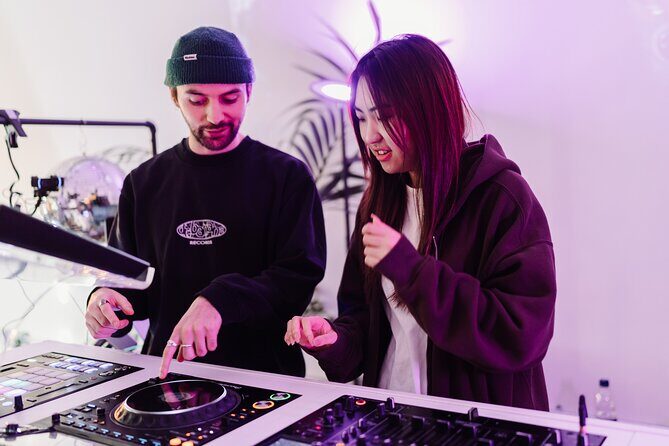
- Truly private instruction: only your group participates, and you can mix without worrying about others hearing.
- Pioneer DJ decks: you practice on industry-standard gear, so what you learn is easier to transfer elsewhere.
- A full skills list: beatmatching, blending, phrasing, harmonic mixing, EQing, and filters.
- Set meeting point on Bayham St: 93a Bayham St, London NW1 0AG, so you are not chasing vague directions.
- English-language lesson: the class is offered in English, with confirmation sent at booking.
Getting to Bayham St: your meeting point and first win
Your session starts at 93a Bayham St, London NW1 0AG. That street address matters more than people think. It helps you plan around London’s variable walking times and transit options, and it keeps the whole experience from turning into a mini scavenger hunt.
The class is near public transportation, so you should be able to arrive without a long detour. That is a big deal in London, where even small time losses can make the day feel stressful. Also, the activity ends back at the meeting point, so you are not stuck figuring out where to go after your lesson.
A practical note: you’ll receive confirmation at the time of booking, and the ticket is mobile. If you travel with a phone and basic digital habits, this is straightforward. Service animals are allowed too, which is good to know if you travel with one.
You can also read our reviews of more private tours in London


A real 2-hour DJ lesson: what the private class actually means
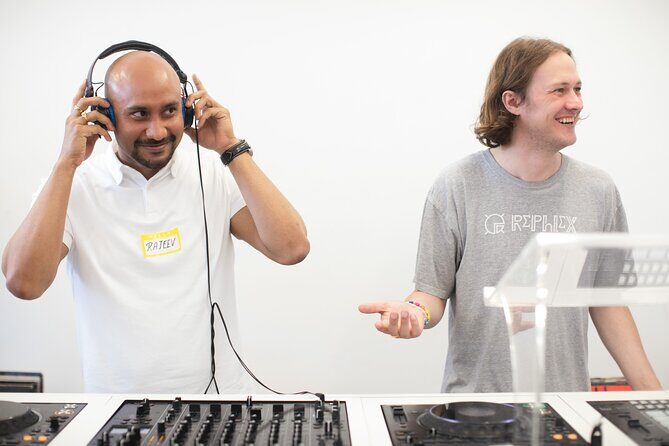
This is a private tour/activity, meaning only your group participates. That changes the whole vibe. Instead of sharing attention with a larger class, you get personalized attention from your trainer, and you can repeat steps that do not click the first time.
The structure is built around a two-hour block. In that time, you’ll learn how to mix on Pioneer DJ decks and practice the core mechanics of transitioning between tracks. The lesson is taught in English, which is helpful if you want to focus on technique without translating in your head.
The biggest day-to-day benefit of private lessons is psychological. You can test, make mistakes, and ask small questions without feeling like you are holding up a group. And yes, you do not have to worry about anyone else hearing your mixing, since it is private. That removes a common fear for first-timers and even for people who have mixed before but still feel self-conscious.
Pioneer DJ decks: why the equipment choice matters
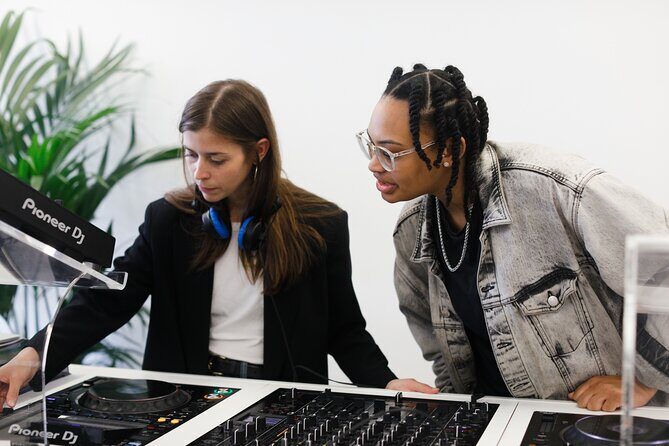
You learn on industry-standard Pioneer DJ decks, not a sketchy “close enough” setup. That matters because DJ software and controller layouts often behave differently across brands and models. When you train on gear that is widely used, your muscle memory and your mental checklist are more likely to carry over when you encounter new systems later.
In a lesson like this, the goal is not just to watch someone else perform. You want time to work knobs, adjust levels, and hear what changes in real time. Pioneer decks are common enough that the terminology and controls you practice are easier to recognize in the real DJ world.
Also, this kind of studio training tends to connect the technical dots. One person’s feedback highlighted feeling comfortable with the high-end software and technology on a 1:1 course. That is exactly the kind of confidence you want when you are trying to learn something that is part music, part timing, and part gear management.
Beatmatching and blending: the skill pair that makes tracks lock in
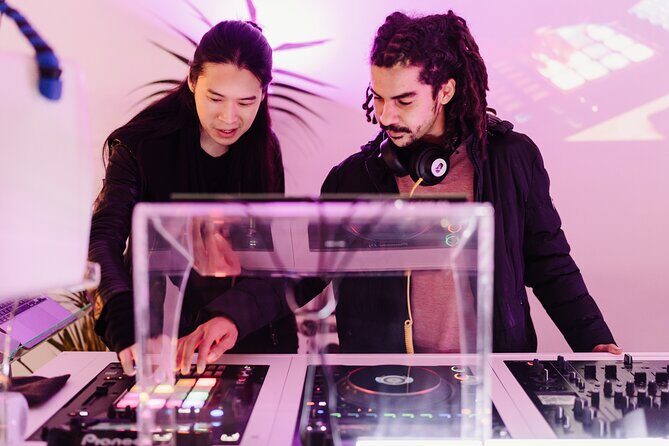
Beatmatching and blending are the headline skills in this class, and for good reason. Beatmatching is how you get two tracks moving at the same pace. Blending is what you do after that—how you transition so it sounds smooth instead of abrupt.
What I like about this lesson is that it does not stop at one moment of “success.” It treats the transition as a process. You learn beatmatching, then you learn how to blend tracks together, which is where most people hear the difference between mixing that feels clunky and mixing that feels intentional.
In plain terms, you’re training your ears and your hands together:
- you listen for tempo alignment
- you adjust to keep the beat grid in sync
- you build a transition that feels natural
The lesson format is designed to be fun and hands-on. That matters because DJ technique becomes easier when you repeatedly practice real transitions rather than only learning theory.
Beyond basics: phrasing, harmonic mixing, EQing, and filters
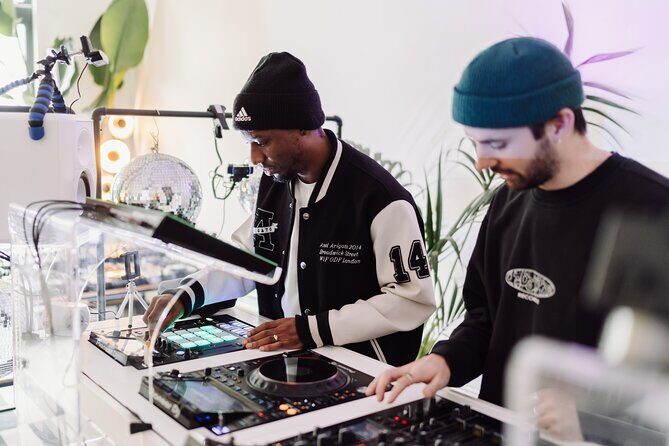
This 2-hour class covers more than the entry-level mechanics. You’ll also work on phrasing, harmonic mixing, EQing, and filters. These are the tools that help your mixes sound musical, not just timed.
Here’s what each part typically changes for you:
A few more London tours and experiences worth a look



Phrasing
Phrasing helps you line up track sections in a way that respects how songs are structured. Even when the beats match perfectly, a transition can still sound wrong if you bring in the new track at an awkward musical moment.
Harmonic mixing
Harmonic mixing focuses on the tonal relationship between tracks. When it goes well, the mix feels smooth because notes and chords support each other rather than clash. You might not fully master harmony in one short session, but you can leave with a practical framework for making better choices.
EQing
EQing lets you control frequency ranges—so vocals don’t fight with vocals, and bass doesn’t swamp everything. It is the “balancing” part of DJ mixing, and it is one of the fastest ways to improve how clean your transitions sound.
Filters
Filters are a dramatic but controllable effect. They help you shape what the listener hears during the transition. Used well, filters make mixes feel more intentional and less like track A abruptly becoming track B.
The value here is that you get a compact toolkit. You learn the basics, then you get the extra layers that make mixes sound better right away.
Private coaching: how to get comfortable with the tech
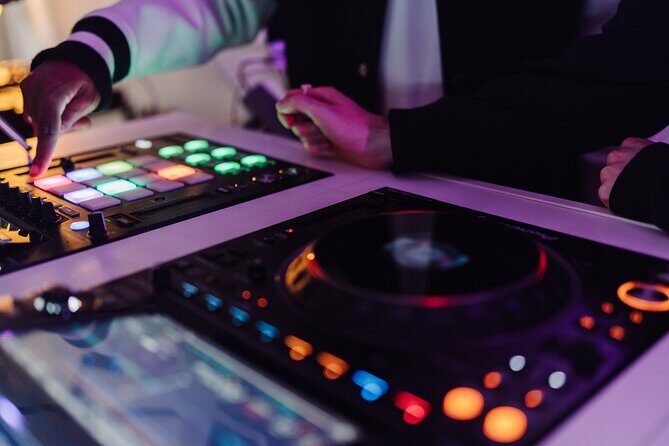
A private 1-on-1 style lesson is often the difference between learning and just being entertained by the lesson. The feedback around this class points strongly to comfort and confidence with the tech—people specifically called out being made to feel comfortable with the high-end software and technology during a 1:1 course.
That’s not just a nice feeling. Comfort with the controls helps you learn faster. When you are relaxed, you try more adjustments. When you try more adjustments, you learn what matters. It is that simple.
Also, in a private class, your trainer can tailor the pacing. If something feels too fast, you can slow down. If something is easy for you, you can move forward to the next skill without waiting for others.
What you’ll do, step by step (the practical flow)
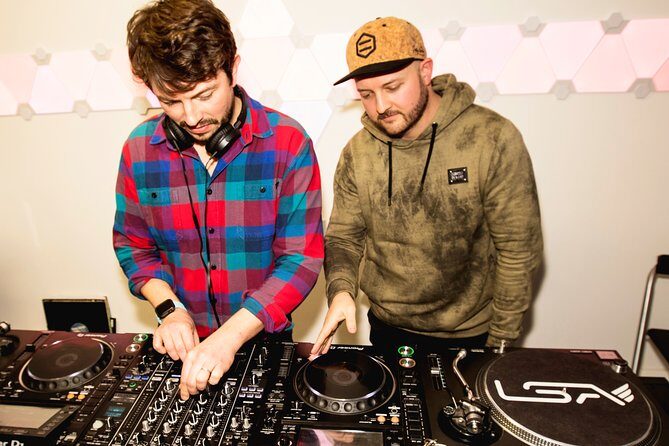
Even though the class is only about two hours, it follows a logical path. You start with learning how to mix on Pioneer DJ decks, then you practice the core transitions that DJs use in real sets.
A likely flow looks like this:
- arrive at the studio and get set up at the decks
- learn beatmatching and practice aligning tracks
- move into blending so transitions sound smooth
- work on phrasing and harmonic mixing to improve musicality
- apply EQing and filters to shape the sound
- finish with a wrap-up so you leave with a usable set of skills
The lesson ends back at the meeting point, so you can plan your day without needing extra travel puzzles after class.
One minor consideration: it is an approx. 2 hours. That is enough to learn fundamentals and start building confidence, but it is not enough to turn you into a club-ready DJ. Think of this as a strong start and a great momentum-builder.
London Sound Academy: why the studio setup feels like the real thing
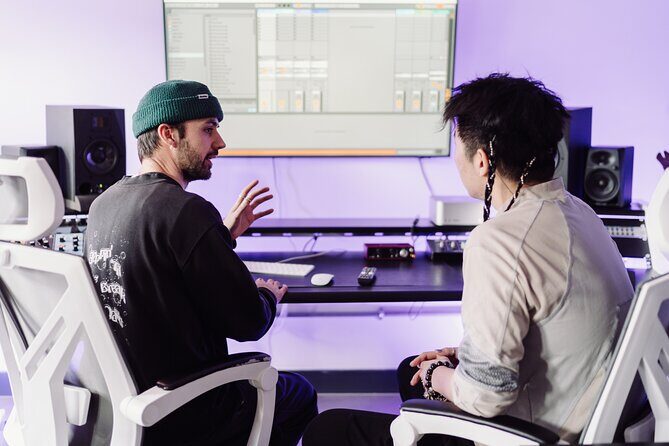
This experience is provided by London Sound Academy. The studio setting matters because DJing is physical: hands on controls, ears on sound, eyes on levels. A dedicated studio space is built for that, not for a quick demo.
When training happens in a real studio, you also learn the etiquette of using equipment—how to stay organized, how to prepare yourself before you touch the controls, and how to focus on sound instead of chaos. That may sound small, but it’s what separates casual mixing from actual performance habits.
One of the strongest bits of feedback attached to the experience described getting nitty/gritty with high-end software and technology on a 1:1 course, and another note said someone was made to feel comfortable and blown away by the DJ studios. That theme matches the format: private attention plus serious equipment tends to create that “I can do this” feeling.
Price and value: is $137.13 per person fair for what you get?
At $137.13 per person for about 2 hours, this is not a budget activity. But it can be good value if you care about instruction quality.
Here is why the cost can make sense:
- You get a private class, so you are paying for direct time with a trainer.
- You practice on Pioneer DJ decks, so you are learning on real industry gear.
- The lesson covers multiple key skills (beatmatching, blending, phrasing, harmonic mixing, EQing, filters), not just one trick.
Where the price might not feel great is if your goal is purely entertainment. If you want a long sightseeing-style experience, two hours can feel short. And if you already DJ confidently, you might want a longer or more advanced session. But if you want a structured start with hands-on coaching, the pricing lines up with what you’re actually receiving.
Also, booking tends to happen around 15 days in advance on average. If you want a specific slot, plan ahead instead of waiting until the last minute.
Who should book this private DJ class in London?
This class fits best if you:
- want a hands-on DJ lesson rather than watching from the sidelines
- like the idea of learning mixing fundamentals with personal attention
- want to practice on Pioneer gear
- feel nervous about mixing in front of others and prefer a private setting
It also works well for couples or small groups who want shared time. Since only your group participates, you can keep the focus on your learning instead of absorbing someone else’s schedule.
And if you are new, the lesson’s “basic DJ skills” focus is exactly what you need. If you already have some experience, you’ll still benefit from time spent on the standard building blocks: beatmatching, phrasing, harmonic mixing, EQ, and filters.
Booking tips: how to get ready before the 2-hour session
You’ll get a confirmation at booking and a mobile ticket. That means your biggest prep task is simple: make sure your phone battery is charged and you know where to meet at 93a Bayham St.
Since the class is in English, it helps if you’re comfortable following instructions and questions in English. The experience is designed so most participants can take part, which is reassuring when you’re unsure about whether a DJ class might feel too technical.
One last practical idea: if you come with one or two questions (for example, what you struggle with when transitioning tracks), you can get more out of the time you have. In a private session, questions are like extra practice time.
Should you book this private DJ class?
Yes, if you want a structured, hands-on way to learn mixing fundamentals on Pioneer DJ decks in a genuinely private setting. The best part is not just the equipment—it is the attention and comfort you can get during a 1-on-1 style lesson, plus the fact you can mix without worrying about others hearing.
Skip it or think twice if:
- you expect more than two hours of training depth
- you’re mainly looking for a social club experience rather than skill-building
- you’re not interested in learning the basics listed in the curriculum (beatmatching, blending, phrasing, harmonic mixing, EQing, filters)
If your goal is to leave with usable DJ technique and better ears, this is a smart London activity. It is short, focused, and built around real mixing skills.
FAQ
How long is the private DJ class?
The class is approximately 2 hours.
Where do I meet for the experience?
Meet at 93a Bayham St, London NW1 0AG, UK.
Is this a private class or a group lesson?
It is a private tour/activity. Only your group will participate.
What DJ equipment do you use?
You learn on industry-standard Pioneer DJ decks.
What skills will I learn during the lesson?
You’ll learn beatmatching and blending, plus basic DJ skills including phrasing, harmonic mixing, EQing, and filters.
Is the class offered in English?
Yes, the class is offered in English.
Do I need to bring a physical ticket?
No. You’ll have a mobile ticket.
Is cancellation free if plans change?
Yes. You can cancel for a full refund if you cancel up to 24 hours in advance of the experience’s start time.